Running an e-bike rental fleet without real-time data is a huge gamble. You're constantly worried about lost bikes, dead batteries, and high operational costs, flying completely blind.
The real value of IoT for e-bike rental management1 isn't just about being "smarter." It’s about giving operators the power to see, manage, and adjust every single bike in their fleet. This visibility helps find problems early, lowers theft risk, and boosts bike usage.
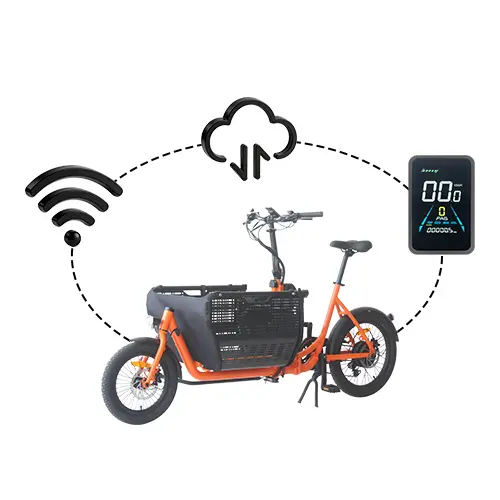
It’s easy to throw around terms like "smart" and "connected." But what do these words actually mean for your daily operations and, more importantly, your profit? As a manufacturer, we don't just add tech for show; we integrate it to solve real-world problems. Let’s break down the practical ways IoT transforms a rental business from a logistical headache into a well-oiled machine. This isn't about fancy features; it's about making your business more efficient and profitable from day one.
How Does IoT Make Your Entire E-Bike Fleet Visible?
You can't manage what you can't see. When your e-bikes are scattered across a city, they become a black box of assets, creating stress and uncertainty for your team.
With IoT, you get instant visibility into your entire fleet. You can track each bike's exact location, check its battery level, spot any strange movements, and see which bikes are just sitting idle. This isn't a bonus; it's a basic management tool for any serious rental operation.
For a rental business, "visibility" is the foundation for everything else. Before IoT, a lot of operations were based on guesswork and phone calls. Now, you can make decisions based on real, live data. This shift from guessing to knowing is a complete game-changer. The most critical data points provided by IoT give you direct, actionable insights. For example, knowing a bike's battery is low allows you to send a team for a swap before a customer finds it dead. Seeing a bike move outside of service hours can trigger an immediate theft alert. This isn't just data; it's control. It transforms your team from reactive problem-solvers into proactive fleet managers.
| Visibility Data | Operational Action |
|---|---|
| Real-Time Location | Dispatch staff to the exact spot for maintenance or recovery. |
| Battery Level (%) | Plan efficient battery-swapping routes and avoid customer complaints. |
| Abnormal Movement Alerts | Immediately investigate potential theft or unauthorized use. |
| Idle Time Tracking | Identify underused bikes and consider moving them to a better location. |
Can IoT Really Shift Your Maintenance from Reactive to Proactive?
Waiting for a rental bike to break down is expensive. You lose rental income for every minute it's out of service, and emergency repairs add up quickly.
Yes, IoT completely changes the maintenance game. Instead of fixing bikes after they fail, you get alerts for potential issues like battery problems or component errors. This lets you schedule maintenance ahead of time, which cuts down on downtime and saves you money on both repairs and lost rental income.
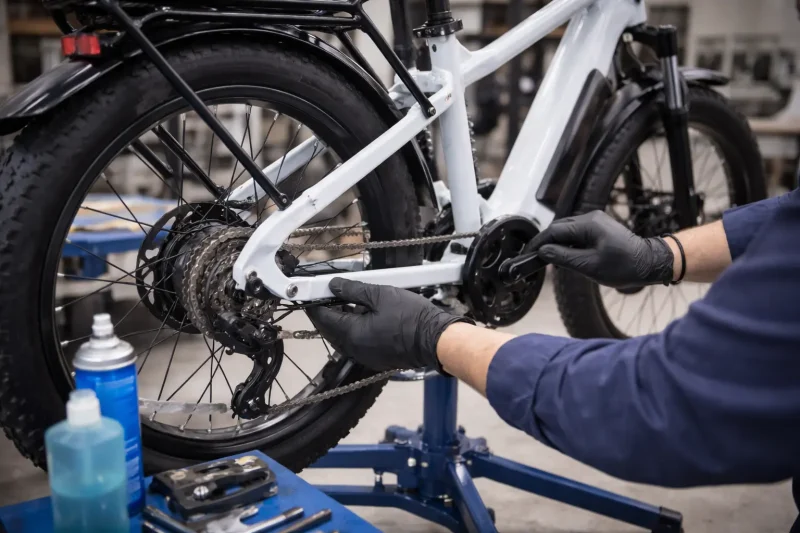
The old way of doing maintenance was simple: wait for something to break. A customer would report a problem, and then you'd have to find the bike, bring it back to the shop, and fix it. All that time, the bike wasn't making you any money. IoT flips this whole process around. Now, the system itself tells you what needs attention. For instance, the Battery Management System (BMS)2 can flag a battery that isn't holding its charge properly, long before it leaves a rider stranded. The bike's controller can send a specific fault code to your dashboard, telling your mechanic exactly what's wrong. This lets you move from a "fix what's broken" model to a "prevent breakdowns" strategy, which keeps more bikes on the road and your customers happy.
| Aspect | Reactive Maintenance (Without IoT) | Proactive Maintenance (With IoT) |
|---|---|---|
| Trigger | Customer complaint or reported breakdown. | Automated alert from the system (e.g., low battery health). |
| Downtime | High and unpredictable. | Minimal and scheduled during off-peak hours. |
| Cost | Higher due to emergency repairs and lost revenue. | Lower due to planned service and fewer breakdowns. |
| Customer Impact | Negative; rider is stranded or finds a broken bike. | Positive; bikes are consistently reliable and available. |
How Does IoT Directly Boost Your E-Bike Utilization Rate?
Some of your e-bikes are probably working hard all day, while others are just sitting there, costing you money. This imbalance hurts your revenue and slows down your return on investment.
IoT boosts how much you use each bike by giving you clear data on which bikes are used the most and where. This lets you move idle bikes to high-demand areas. It also helps you make sure bikes are always charged and ready to go, which directly increases your number of rides and your income.
At the end of the day, the success of a rental business comes down to how much money each bike makes. If a bike is sitting idle, it's not making you money. IoT gives you the tools to make sure every asset is working as hard as it can. The data helps you do three very practical things. First, you can see which locations are hotbeds for rentals and which are not. Second, you can act on this information by rebalancing your fleet—moving bikes from quiet corners to busy transit hubs or popular parks. Third, you can reduce the chances of a customer finding a bike that's unavailable due to a dead battery or a maintenance issue. These actions aren't just about efficiency; they directly speed up how quickly you earn back your initial investment.
| IoT Data Point | Impact on Utilization |
|---|---|
| Ride Start/End Locations | Helps identify high-demand zones for fleet deployment. |
| Individual Bike Usage | Shows which bikes are underutilized and need to be relocated. |
| Real-Time Battery Status | Ensures bikes are always charged and ready for the next rider. |
| Offline/Online Status | Minimizes downtime by quickly identifying bikes that need attention. |
What Is the Best Way to Reduce E-Bike Theft and Misuse with IoT?
The fear of theft or vandalism is a huge risk for any rental business. Losing even one bike is a big financial hit that can hurt your bottom line.
The best way is to use a mix of IoT security features3. Real-time GPS tracking tells you where your bikes are at all times. Geofencing creates virtual borders and alerts you if a bike leaves a set area, while remote locking can stop a stolen vehicle from being used.
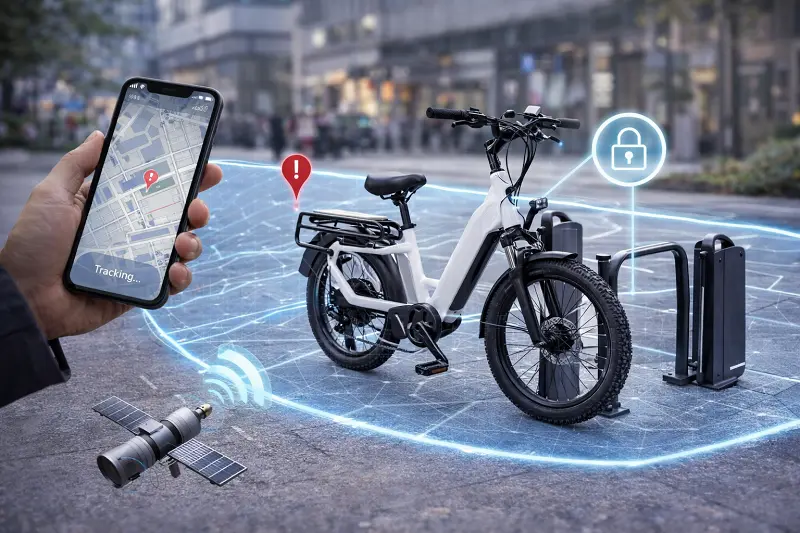
When we build rental e-bikes, we don't think of these security features as "smart" gadgets. We see them as essential tools for managing risk. They are your first line of defense in protecting your valuable assets out in the field. Real-time GPS is the most basic layer, giving you a location pin on a map. But true security goes deeper. With geofencing4, you can draw a virtual boundary around your operating zone. If a bike crosses that line, you get an instant alert. This allows you to act fast, not hours later. Even more powerful is the remote lock function. With the click of a button in your dashboard, you can disable the motor, making the bike useless to a thief. These tools are not just for show; they directly protect your investment and give you peace of mind.
| Security Feature | How It Protects Your Asset |
|---|---|
| Real-Time GPS Tracking | Always know the exact location of every bike in your fleet. |
| Geofencing | Get instant alerts if a bike is taken outside your designated service area. |
| Remote Locking/Unlocking | Immobilize a stolen bike to prevent further movement and aid recovery. |
| Abnormal Movement Alarms | Receive notifications for tampering or movement when the bike is locked. |
Why Is IoT More Than Just an Add-On for E-Bike Manufacturers?
You might think that adding IoT to an e-bike is as easy as just attaching a GPS tracker you bought online. This simple approach often leads to unreliable systems and a lot of frustration.
From a manufacturer's viewpoint, IoT is not an afterthought; it's a core part of the bike's design. A reliable IoT solution needs to be deeply connected with the battery management system (BMS), controller, display, and locks. This total-system approach makes sure everything works together without any problems.
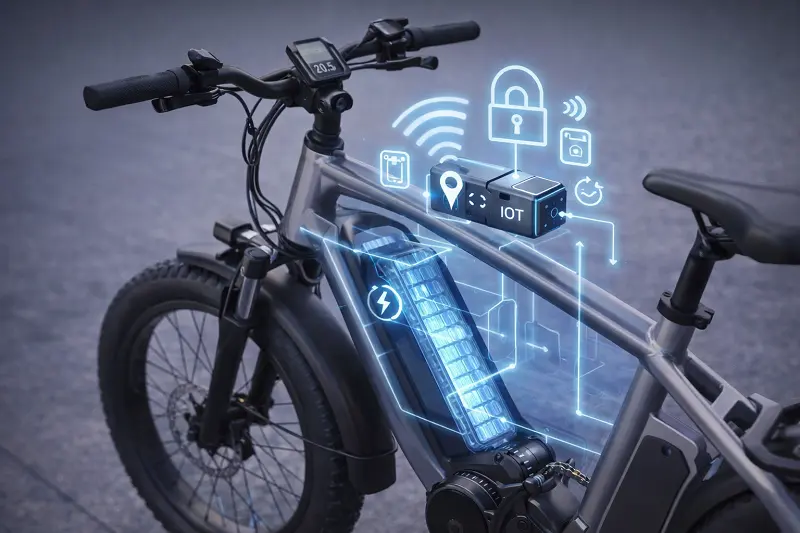
As a manufacturer with over 20 years of experience, I can tell you that a poorly integrated IoT system is worse than no IoT at all. A separate GPS tracker can tell you where a bike is, but it can't tell you its battery percentage, if the motor has a fault, or allow you to lock it remotely. True integration means the IoT module talks to every key component of the e-bike. This deep connection is planned from the very first design drawings. It's how we ensure that the data you see on your dashboard is accurate and that the commands you send are executed reliably. That is why choosing a manufacturing partner who understands this is so important. You are not just buying a bike with a tracker; you are investing in a complete, reliable rental solution designed to work from day one.
| Component | Reason for Integration with IoT |
|---|---|
| Battery Management System (BMS) | To get precise battery health data and charge levels. |
| Motor Controller | To receive diagnostic fault codes and enable remote motor lock. |
| Display & Backend | To show correct information to both the rider and the operator. |
| Electronic Lock | To ensure reliable remote locking and unlocking for rentals. |
| Rental Platform API | To make sure the hardware works perfectly with your management software. |
Conclusion
Ultimately, IoT transforms your e-bike fleet from a set of disconnected items into a visible, manageable, and profitable asset, directly improving your efficiency and return on investment.
IoT provides operators with visibility and control over their fleet, enhancing efficiency and profitability. ↩
BMS provides crucial battery health data, enabling proactive maintenance and efficient operations. ↩
Security features like GPS tracking and geofencing protect assets and reduce operational risks. ↩
Geofencing creates virtual boundaries, alerting operators to unauthorized bike movements. ↩