You've seen a perfect e-bike sample, but worry if mass production will match. Inconsistent quality can destroy your brand's reputation. The secret lies in stable welding standards.
For OEM e-bike projects, stable welding standards are essential because they ensure every frame can be consistently replicated into mass production. This replicability is the key to preventing assembly issues, maintaining brand quality, and minimizing long-term after-sales risks for your business.
When I show clients a sample, they often focus on the visual details. They run their fingers over the welds, checking if they are smooth and polished. I understand this impulse completely. But after more than 20 years in this industry, I always steer the conversation toward something far more critical for their success: consistency. A single beautiful sample is just a display piece. An entire production run of consistently high-quality frames is what builds a brand. The real challenge isn't making one great frame; it's making a thousand of them exactly the same. Let's explore why this standard of replication is so important.
What's More Important Than a "Perfect" Weld on a Sample?
A beautifully smooth weld on a sample frame looks impressive. But what if the 1000th frame isn't the same, causing assembly chaos? Focus on replicability, not just aesthetics.
For any OEM project, consistency is far more important than a single perfect weld. You need every frame to be identical in key areas like welding position, strength, and alignment. This ensures that mass production runs smoothly and your final product is reliable for every customer.
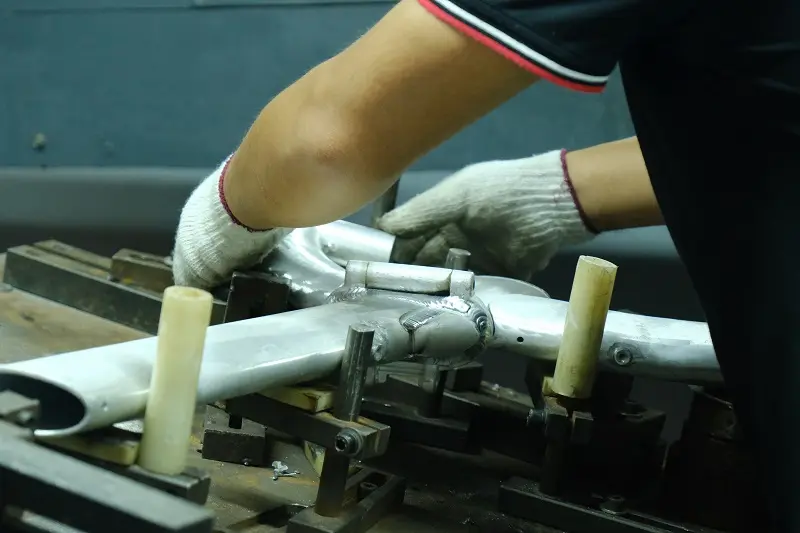
In my experience, what an OEM client needs is not just "one well-welded frame," but the ability to stably replicate every batch of frames to the exact same standard. When you are building a brand, your customers expect a uniform product. This uniformity begins at the most fundamental level: the frame. While a client might inspect a sample for aesthetic qualities, the real factors that determine success in mass production are technical and repeatable. These include the exact welding positions, the structural strength of each weld, the precision of all drilled holes, the accuracy of the frame's geometry, and the integrity of key stress points. I remember a client who was obsessed with the polished look of a weld on a cargo bike sample. Later, their assembly line had major issues with rear rack installation because the mounting hole positions varied by a few millimeters from frame to frame. The root cause was not poor welding skill, but inconsistent welding jigs during production. This taught us both a valuable lesson.
| Focus Area | Sample Inspection (Client's View) | OEM Production (Manufacturer's Reality) |
|---|---|---|
| Welds | Are they smooth and clean? | Are they in the correct position and strong? |
| Frame | Does it look good? | Are all angles and dimensions within tolerance? |
| Goal | A visually impressive prototype | Thousands of identical, reliable units |
How Can Unstable Welding Derail Your Entire Assembly Line?
Your assembly line is facing frustrating delays and component fit issues. You might blame the assembly team, but the real problem is often hidden in the frame itself.
Unstable welding standards cause a domino effect in production1. A slightly warped frame can prevent batteries from fitting, misalign wheels, cause brake rub, and make accessories impossible to install correctly. These seemingly small assembly issues often stem directly from a lack of welding consistency.
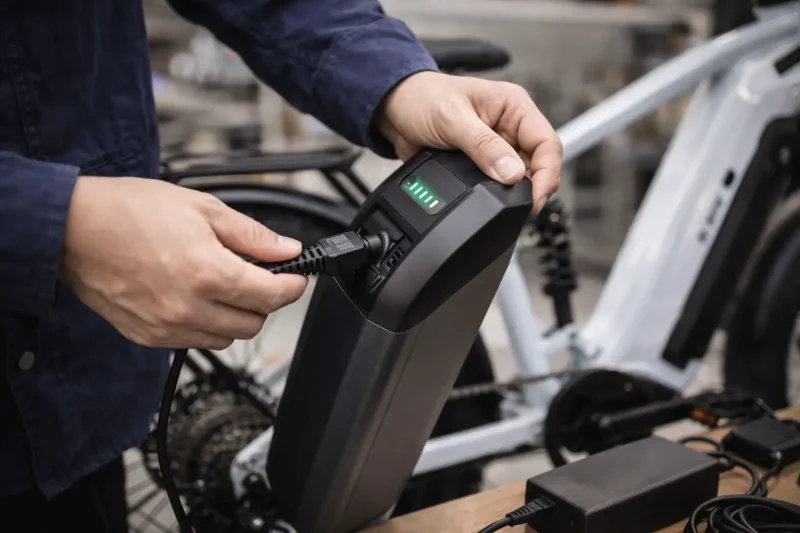
Many of our B2B clients initially overlook a critical point: unstable welding standards will disrupt every single assembly step that follows. A frame is the skeleton of the e-bike, and if it's not right, nothing else will be. We once had a project where the client reported that their mechanics were spending too much time adjusting brake calipers. After investigating, we traced the problem back to the frame's rear triangle being slightly out of alignment due to heat variations during welding. It looked like an assembly or component problem, but the root cause was the welding process. By implementing a post-welding alignment check for every frame2, we solved the issue at its source. These are the kinds of hidden problems that can inflate labor costs and delay shipments.
Battery and Component Fit
If the frame is slightly twisted or bent, the battery housing might not be perfectly straight. This can make it difficult to slide the battery in and out, or prevent the lock from engaging properly. This is especially true for frames with integrated batteries, where tolerances are very tight.
Drivetrain and Brake Alignment
A misaligned rear triangle is a common result of inconsistent welding. This can cause the rear wheel to sit off-center, leading to poor shifting, chain-line problems, and persistent brake disc rubbing that is impossible to adjust away.
Folding Mechanisms and Accessories
For folding e-bikes, the hinge points are critical. If the welding positions for these hinges are not perfectly consistent, the folding mechanism can feel too loose or too tight. Similarly, mounting points for racks, fenders, and lights must be in the exact same spot on every frame3, or your customers won't be able to install accessories.
Why Do E-Bikes Demand Higher Welding Standards Than Regular Bicycles?
You might think a bike frame is just a bike frame. But an e-bike frame carries much more stress from added weight and power, requiring superior, stable welding for safety.
E-bikes require higher welding standards because they handle extra stress from the battery's weight, the motor's torque, and stronger braking forces4. Inconsistent welds can become weak points and fail under this constant load, especially on complex frames like cargo or folding e-bikes.
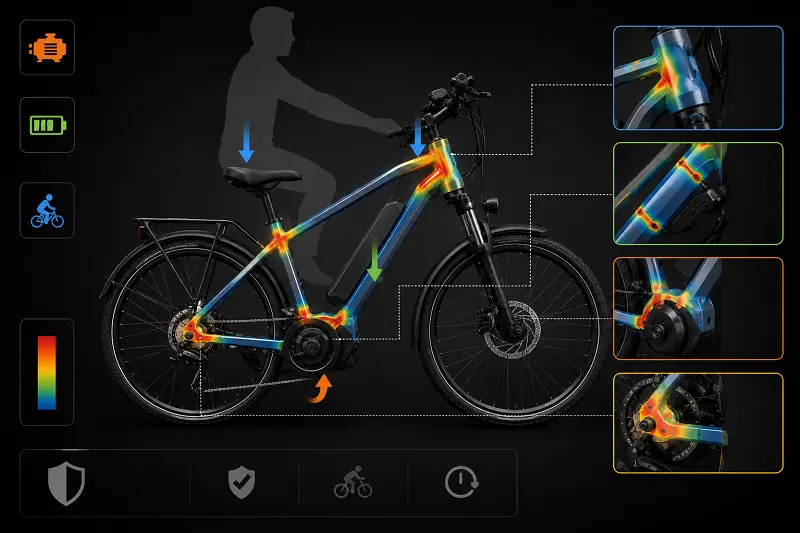
An electric bicycle frame is subjected to forces that a traditional bicycle never experiences. The added weight of the battery and motor, the torque from the drive system5, and the higher speeds all place significant stress on the frame's structure6. This is why stable, high-quality welding is not just a matter of quality control—it's a matter of safety and long-term durability. A weak weld that might hold up on a regular bike could easily become a point of failure on an e-bike after months of carrying a heavy battery and absorbing vibrations from the road. The risk gets even higher for specialized models. For example, cargo e-bikes must support hundreds of pounds of weight7, putting enormous stress on the head tube and rear triangle. Frames with integrated batteries have large sections of the down tube removed8, so the welds around that area become absolutely critical for maintaining structural integrity.
| Stress Factor | Regular Bicycle | Electric Bicycle |
|---|---|---|
| Weight | Rider's weight only | Rider + Battery + Motor |
| Torque | From pedaling only | Pedaling + High motor torque |
| Vibration | Standard road vibration | Increased vibration from higher speeds |
| Braking | Standard braking forces | Higher forces due to more mass/speed |
This is why, as a manufacturer, we cannot treat e-bike frames and regular bike frames the same. The materials, tube shapes, and especially the welding processes must be elevated to handle these increased demands.
How Can You Ensure Your OEM Partner Has Stable Welding Standards?
You know stable welding is crucial, but how do you verify it? Choosing the wrong partner based on a nice sample can be a costly mistake. Look for their processes and tools.
To ensure your partner has stable welding standards, look beyond the skill of individual welders. A reliable factory uses jigs and fixtures, has documented process parameters, performs post-weld alignment checks, and maintains a strict quality inspection process for every batch produced.
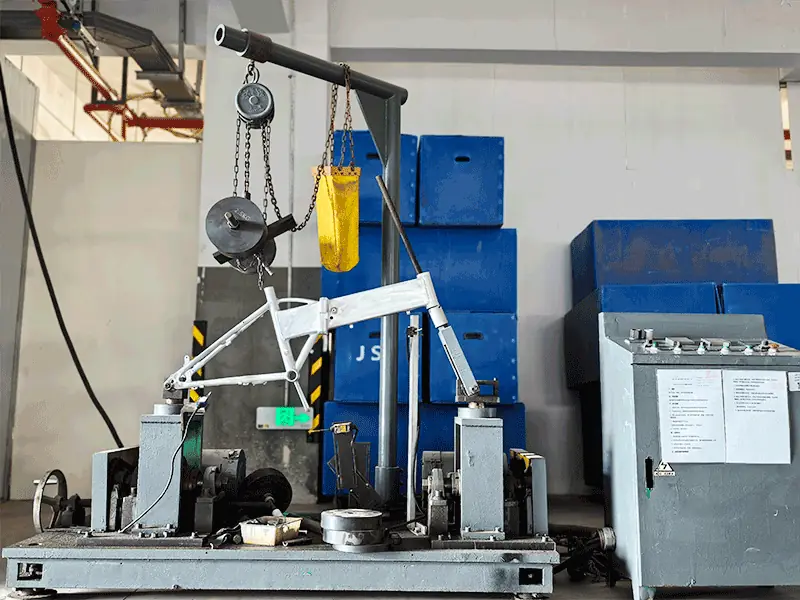
The most reliable way to judge a factory's capability is to look at its systems, not just its people. A star welder can make a beautiful sample, but a robust system ensures that every welder produces a consistent product every day. When customers visit our factory, I don't just show them a finished bike. I walk them through our production floor to show them the proof of our consistency. Here is what you should look for:
Ask About Jigs, Fixtures, and Tooling
A jig is a heavy-duty tool that holds all the frame tubes in the exact same position and angle during welding9. This is the single most important element for ensuring geometric consistency from one frame to the next. A factory that invests in precise, well-maintained jigs is serious about quality.
Inquire About Process Control and Documentation
Ask to see their process control documents. At each welding station, there should be clear parameters for welding current, speed, and gas flow. This shows that the process is standardized and not left to the individual judgment of the welder on any given day. Certifications like ISO 9001 are a good sign that these systems are in place10.
Verify Post-Weld Correction and Inspection
Heat from welding naturally causes frames to warp slightly11. A good factory will have a dedicated station after welding to check every single frame for alignment and make minor corrections. This step is crucial for preventing the assembly problems we discussed earlier. Ask to see their inspection tools and records. A partner who can show you these systems is a partner you can trust to replicate your sample into a successful product line.
Conclusion
In short, stable welding is the foundation of a successful OEM e-bike project. It ensures your sample can be perfectly replicated, protecting your brand's quality and future success.
"Six Types of Welding Defects | UTI - Universal Technical Institute", https://www.uti.edu/blog/welding/six-types-of-welding-defects. Unstable welding standards can lead to production issues such as misaligned components and increased assembly time, as documented in manufacturing defect studies. Evidence role: mechanism; source type: research. Supports: Unstable welding standards cause a domino effect in production.. ↩
"A Geometry-Based Welding Distortion Prediction Tool - PMC", https://pmc.ncbi.nlm.nih.gov/articles/PMC8432552/. Post-welding alignment checks are critical for ensuring geometric accuracy in frame production, as outlined in quality control practices. Evidence role: mechanism; source type: institution. Supports: Post-welding alignment checks ensure geometric accuracy in frame production.. ↩
"Bicycle Requirements Business Guidance | CPSC.gov", https://www.cpsc.gov/content/bicycle-requirements-business-guidance. Consistent placement of mounting points is crucial for accessory compatibility, as noted in manufacturing standards for bicycle frames. Evidence role: mechanism; source type: institution. Supports: Mounting points for racks, fenders, and lights must be consistently placed for accessory compatibility.. ↩
"Frames | Science Behind the Sport - West Virginia University", https://sciencebehindthesport.wvu.edu/cycling/frames. E-bikes demand higher welding standards due to increased stress from added weight, torque, and braking forces, as outlined in engineering analyses of electric bicycle frames. Evidence role: mechanism; source type: education. Supports: E-bikes require higher welding standards due to added stress factors compared to regular bicycles.. ↩
"What is electric bike torque, and how much do I need? - Electroheads", https://electroheads.com/blogs/news/electric-bike-torque. E-bike drive systems generate significant torque, which impacts frame stress, as detailed in mechanical engineering studies. Evidence role: mechanism; source type: research. Supports: E-bike drive systems generate significant torque, impacting frame stress.. ↩
"Risk Riding Behaviors of Urban E-Bikes: A Literature Review - PMC", https://pmc.ncbi.nlm.nih.gov/articles/PMC6651001/. Higher speeds in e-bikes contribute to increased structural stress, as supported by studies on vehicle dynamics and frame durability. Evidence role: mechanism; source type: research. Supports: Higher speeds in e-bikes contribute to increased structural stress.. ↩
"Cargo Bikes are not inherently designed for heavier riders. : r/ebikes", https://www.reddit.com/r/ebikes/comments/zlvmmr/weight_capacity_psa_cargo_bikes_are_not/. Cargo e-bikes are designed to support significant weight loads, often exceeding hundreds of pounds, as detailed in product specifications and engineering studies. Evidence role: statistic; source type: research. Supports: Cargo e-bikes must support hundreds of pounds of weight.. ↩
"Battery Integrated Composite Structures - Stanford University", https://sacl.stanford.edu/battery-integrated-composite-structures. Frames with integrated batteries often feature modified down tubes to accommodate battery placement, as described in e-bike design guidelines. Evidence role: mechanism; source type: education. Supports: Frames with integrated batteries have modified down tubes to accommodate battery placement.. ↩
"Jig (tool) - Wikipedia", https://en.wikipedia.org/wiki/Jig_(tool). Jigs are essential tools for maintaining geometric consistency in welding processes, as described in manufacturing equipment guidelines. Evidence role: definition; source type: encyclopedia. Supports: A jig is a tool used to ensure geometric consistency during welding.. ↩
"ISO 9001 explained", https://www.iso.org/home/insights-news/resources/iso-9001-explained.html. ISO 9001 certification indicates adherence to standardized quality management systems, as outlined by the International Organization for Standardization. Evidence role: definition; source type: institution. Supports: ISO 9001 certification is a good indicator of standardized quality management systems.. ↩
"Investigation of thermal influence on weld microstructure and ...", https://www.sciencedirect.com/science/article/pii/S0921509322010747. Heat-induced warping during welding is a common issue in metal fabrication, as noted in materials engineering research. Evidence role: mechanism; source type: research. Supports: Heat from welding causes frames to warp slightly.. ↩