Are you worried that the quality of your bulk order won't match the perfect sample? The secret to consistency isn't just skill; it's the engineering behind the production process.
Welding jigs improve e-bike frame consistency by locking every tube and component into a precise, standardized position before welding.1 This system minimizes human error and deformation, ensuring that every frame from mass production is built to the exact same specifications as the approved sample.
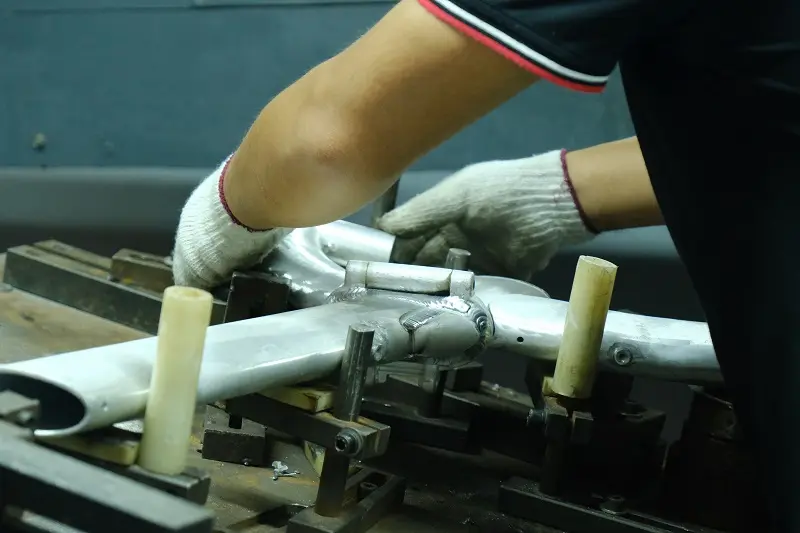
It’s a common mistake to think that a team of experienced welders is all you need for a high-quality production run. While their skill is definitely important, it's the system supporting them that truly guarantees quality at scale. Relying on manual experience alone can introduce tiny errors that become big problems down the line. So, what really goes on behind the scenes, and how do jigs turn a potential problem into a reliable outcome? Let's explore how this essential tool makes all the difference.
Why Can't Skilled Welders Alone Guarantee Frame Consistency?
You trust your supplier’s experienced welders to deliver quality. But what happens when small human errors creep into a large order, causing costly assembly problems and project delays?
Skilled welders can create a beautiful, functional frame.2 However, relying on the human hand and eye to replicate exact angles and positions hundreds or thousands of times is impossible. Jigs transform this "craft" into a "manufacturing standard," removing guesswork and ensuring every frame is built to the same blueprint.
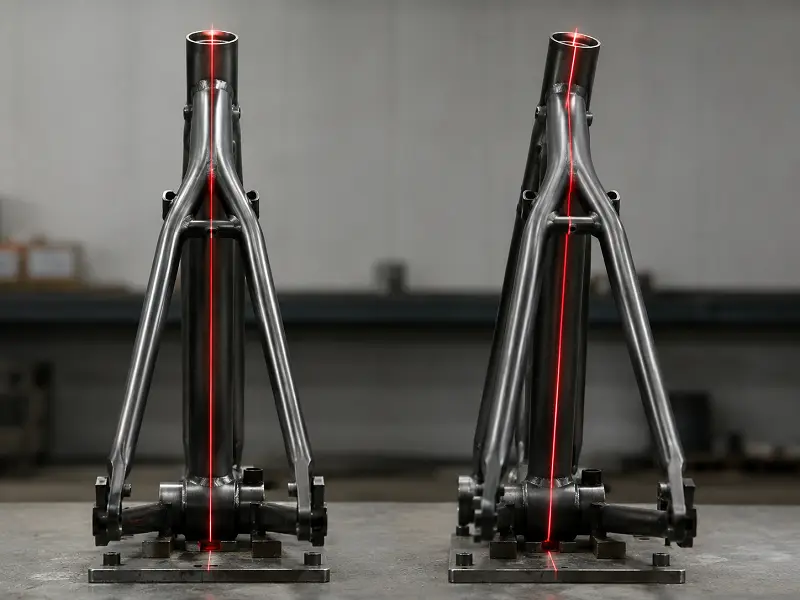
An electric bike frame is made of many parts: the head tube, down tube, bottom bracket, rear fork, battery holder, and connection points for racks. If a worker positions these parts by feel, problems are almost certain to appear during mass production, even if the initial sample looks great. I’ve seen it happen. We once took over a project where the previous supplier had produced a batch of frames with rear forks that were slightly off-center. It was a nightmare for our client because it caused wheel alignment issues and an unstable ride. The root cause wasn't a lack of skill, but the absence of a proper jig system. A good welding jig ensures every part is held in its exact place, preventing these kinds of deviations.
Here is a simple breakdown of the difference:
| Feature | Manual Positioning (No Jig) | Jig-Assisted Welding |
|---|---|---|
| Angle Accuracy | Relies on worker's eye; high variance | Mechanically fixed; highly consistent |
| Hole Alignment | Prone to shifting during welding | Locked in place; precise and repeatable |
| Batch Consistency | Varies between workers and batches | Standardized across all units |
| Assembly | May require adjustments and rework | Smooth, predictable fit-up |
Ultimately, frame consistency is not guaranteed by asking a "master welder to be more careful." It is guaranteed by a robust system of jigs, documented processes, and strict inspection flows.
Are Jigs More Critical for Certain E-Bike Frame Types?
You're developing a complex e-bike, like a cargo or folding model. You know that even tiny inaccuracies in these frames can lead to major functional failures or safety issues.
Yes, for certain designs, high-precision welding jigs are not just helpful—they are absolutely essential. For frames with internal batteries, folding mechanisms, or heavy-duty cargo mounts, precision is non-negotiable.3 Any small deviation in a battery bay, hinge point, or load-bearing connection gets amplified during assembly and use.
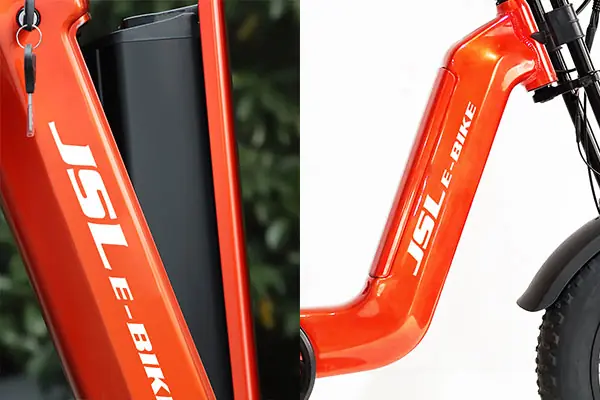
These specialized e-bike designs push the limits of manufacturing, and that's where jigs become the most important player. I remember working on a folding e-bike project where the first prototypes were a headache. The hinge alignment was off by just a fraction of a degree, making the bike difficult to fold and lock securely. It felt flimsy and unsafe. For the mass production run, we engineered a custom, high-precision jig specifically for that hinge assembly. The problem vanished. Every frame folded smoothly and locked with a solid, reassuring click. This experience taught me how critical jigs are for specific applications.
1. Internal Battery Frames
The battery compartment needs to be perfect.4 A deviation of just one millimeter can mean the battery won't fit, or it will rattle and disconnect on bumpy roads. Jigs ensure the battery tube and mounting points are welded with flawless precision.
2. Folding E-Bike Frames
The hinge mechanism is the heart of a folding bike.5 Its alignment must be perfect for the bike to fold smoothly and lock securely. Jigs control the exact geometry of these critical connection points, ensuring safety and functionality.
3. Cargo E-Bike Frames
These frames are built to handle heavy loads.6 The mounting points for front and rear racks must be incredibly strong and perfectly aligned to distribute weight safely and prevent stress fractures over time. Jigs guarantee these load-bearing points are positioned correctly every single time.
How Can You Evaluate a Manufacturer's Frame Production Capability?
You're visiting a potential OEM partner and need to assess their real capabilities. It’s easy to be impressed by a clean workshop and a single, perfect "golden sample."
Don't just look at the shiny, finished weld seams on a sample bike. Ask to see their welding jigs.7 A factory with a robust system of well-maintained, custom jigs for different models demonstrates a deep commitment to repeatable quality. This is how you verify they can scale that sample quality to your entire order.
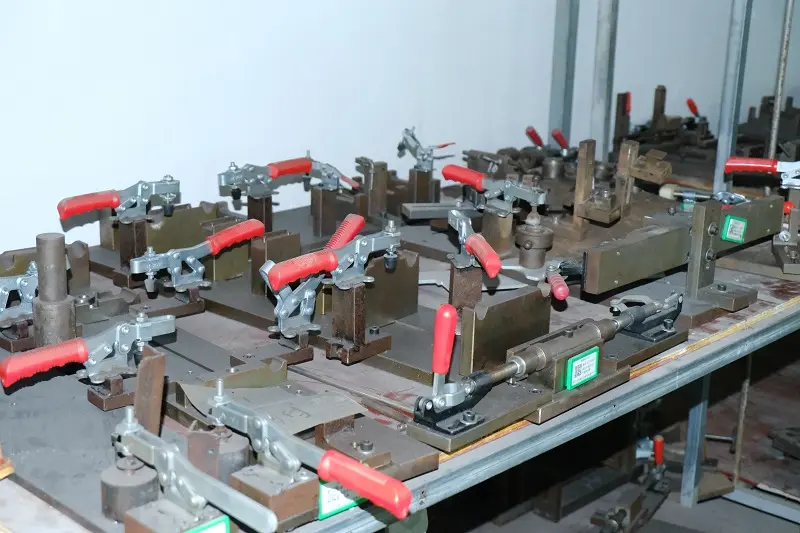
When I visit a potential manufacturing partner, I spend less time looking at their showroom and more time on the factory floor. The real story of their capability is written in their tooling and processes. A beautiful weld can be made by one skilled person, but consistently producing thousands of frames with that same quality requires a system. The jig is the core of that system. It’s the physical embodiment of the blueprint, turning a drawing into a repeatable, physical product. So, when you're doing your due diligence, here’s what you should look for.
Your Factory Evaluation Checklist:
- Inspect the Jig System: Do they have dedicated jigs for each model and frame size?8 Are the jigs robust and made from heavy-duty steel, or are they flimsy and makeshift? Ask how they are maintained and calibrated.
- Understand the Process: Ask them to walk you through how a frame goes from raw tubes to a welded product.9 How do they ensure each tube is placed correctly in the jig before welding? Is the process documented?
- Question the Inspection Flow: What are their quality control checkpoints?10 Crucially, do they have a frame alignment table to check the finished, welded frame against the technical drawings? This is a non-negotiable step for verifying geometric accuracy.
- Demand Production Proof: Ask to see and compare several random frames from a recent production batch, not just the perfect sample they have on display. Do the weld locations, hole placements, and overall geometry look identical?11 This is the ultimate test of their consistency.
The key takeaway is this: making one great frame is art.12 Reliably mass-producing thousands of great frames is manufacturing science. Your job is to find a partner who has mastered the science.
Conclusion
Ultimately, welding jigs are what transform an e-bike frame from a handcrafted item into a consistently manufactured product, ensuring every bike in your order meets the exact standard you approved.
"Jigs and Fixtures in Production: A Systematic Literature Review", https://www.sciencedirect.com/science/article/pii/S0278612523002078. This source explains how welding jigs are used in manufacturing to ensure precision and consistency in mass production. Evidence role: mechanism; source type: education. Supports: Welding jigs improve e-bike frame consistency by locking every tube and component into a precise, standardized position before welding.. ↩
"Why Welding is an Important Industry - All-State Career School", https://www.allstatecareer.edu/blog/skilled-trades/why-welding-is-an-important-industry.html. This source discusses the role of skilled welders in creating high-quality frames and the limitations of manual welding in mass production. Evidence role: expert_consensus; source type: education. Supports: Skilled welders can create a beautiful, functional frame.. Scope note: The source may focus on general welding practices rather than e-bike frames specifically. ↩
"eBike Frame Design and Manufacturing | Custom by ... - Cemoto", https://www.cemotobike.com/comm03/High-Performance-eBike-Frame-Design-and-Manufacturing.htm. This source highlights the importance of precision in manufacturing specialized e-bike frames, such as those with internal batteries or folding mechanisms. Evidence role: mechanism; source type: research. Supports: For frames with internal batteries, folding mechanisms, or heavy-duty cargo mounts, precision is non-negotiable.. Scope note: The source may not cover all types of specialized e-bike frames. ↩
"How to design a battery compartment for an electric motorcycle?", https://www.facebook.com/groups/electricmotorcyclebuilds/posts/3794087820728561/. This source discusses the importance of precision in battery compartment design for e-bikes. Evidence role: mechanism; source type: research. Supports: The battery compartment needs to be perfect.. Scope note: The source may not address specific manufacturing techniques for battery compartments. ↩
"Folding Bike Mechanisms: How Hinges & Locks Actually Work", https://de.dahon.com/blogs/news/how-folding-bike-mechanisms-work?srsltid=AfmBOooXTv-wxZuuTuUuCSr6W5L8XS87vhBv_kxHHHrvZDMwRNXAhhCT. This source explains the critical role of hinge mechanisms in folding bike functionality and safety. Evidence role: mechanism; source type: encyclopedia. Supports: The hinge mechanism is the heart of a folding bike.. Scope note: The source may focus on general folding bike designs rather than e-bikes specifically. ↩
"Electric cargo bikes' future | UW Department of Civil & Environmental ...", https://www.ce.washington.edu/news/article/2023-12-15/electric-cargo-bikes-future. This source explains the structural requirements for cargo e-bike frames to safely handle heavy loads. Evidence role: mechanism; source type: research. Supports: These frames are built to handle heavy loads.. Scope note: The source may focus on general cargo bike designs rather than e-bikes specifically. ↩
"Improvement of manufacturing jigs design for reduction of welding ...", https://www.sciencedirect.com/science/article/abs/pii/S0920379619304740. This source outlines the importance of inspecting welding jigs to assess manufacturing capabilities. Evidence role: case_reference; source type: education. Supports: Ask to see their welding jigs.. Scope note: The source may not specifically address e-bike manufacturing. ↩
"How to Make Your Own Custom Jigs and Fixtures - Formlabs", https://formlabs.com/blog/jigs-and-fixtures/. This source explains the role of dedicated jigs in ensuring consistency across different models and sizes in manufacturing. Evidence role: mechanism; source type: education. Supports: Do they have dedicated jigs for each model and frame size?. Scope note: The source may not cover e-bike frame manufacturing specifically. ↩
"Eyewear Frame Fabrication Processes | Hala Optical", https://www.halaeyewear.com/eyewear-frame-fabrication-processes. This source provides insights into the step-by-step process of frame manufacturing, from raw materials to finished products. Evidence role: mechanism; source type: education. Supports: Ask them to walk you through how a frame goes from raw tubes to a welded product.. Scope note: The source may focus on general frame manufacturing rather than e-bike frames. ↩
"The Importance of Quality Control in Manufacturing - PTC", https://www.ptc.com/en/blogs/plm/quality-control-in-manufacturing?srsltid=AfmBOorDA7wIlp5ZRbVr7hXdB-onkS1-NhKNzjn1G3ctf-S6gwuuxS1r. This source discusses the importance of quality control checkpoints in manufacturing processes. Evidence role: mechanism; source type: education. Supports: What are their quality control checkpoints?. Scope note: The source may not specifically address e-bike frame production. ↩
"Frames | Science Behind the Sport - West Virginia University", https://sciencebehindthesport.wvu.edu/cycling/frames. This source explains how consistency in weld locations and geometry is critical for high-quality manufacturing. Evidence role: mechanism; source type: research. Supports: Do the weld locations, hole placements, and overall geometry look identical?. Scope note: The source may not specifically address e-bike frame geometry. ↩
"10 Reasons Why Craftsmanship Is Better Than Mass Production", https://www.jz-handmade.com/blogs/blogs/10-redenen-handgemaakte-producten-vs-massaproductie. This source discusses the distinction between craftsmanship and mass production in manufacturing. Evidence role: historical_context; source type: encyclopedia. Supports: making one great frame is art.. Scope note: The source may focus on general manufacturing rather than e-bike frames. ↩