You think a welded frame is a finished product, ready for assembly. But hidden stresses from the welding process can cause assembly nightmares and an unstable ride1, frustrating your team and your customers.
Frame alignment after welding isn't about fixing flaws. It's a crucial process to control the minor structural deformations caused by welding heat. This ensures every frame is perfectly ready for assembly, safe to ride, and consistent enough for mass production, protecting your brand's quality and reputation.
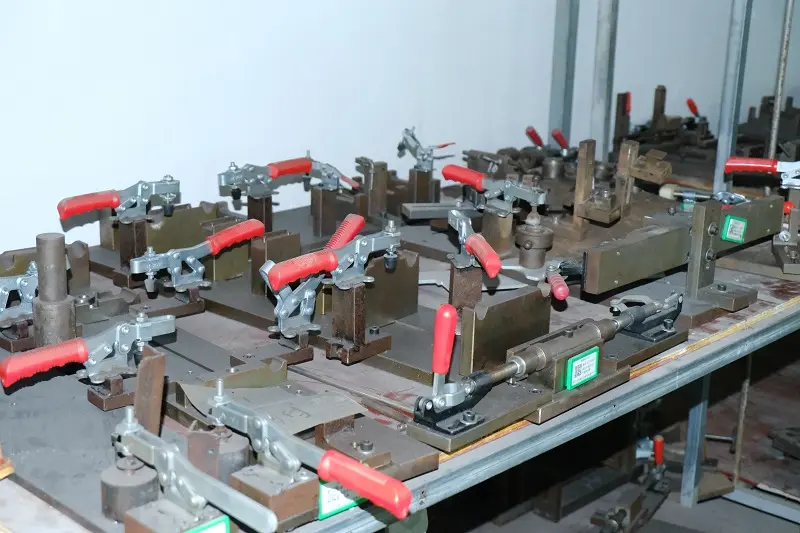
It might seem like a small, internal factory detail, but this alignment process has a huge impact on everything from your production line efficiency to the final customer's satisfaction. It's a non-negotiable step that separates professional manufacturing from amateur work. Let's dig into why this process is so critical, especially for OEM/ODM partners who need to deliver consistent quality at scale.
What Happens if a Frame Isn't Aligned After Welding?
You've received a batch of frames that look perfect. But during assembly, nothing fits right, causing delays and frustration. This common problem often points back to one missed step: post-weld alignment.
If a frame is not aligned, the heat from welding causes small but critical deformations2. This can lead to misaligned wheels, rubbing brake rotors, batteries that won't fit, and mounting points that don't line up3, making assembly a nightmare and the final bike unsafe to ride.
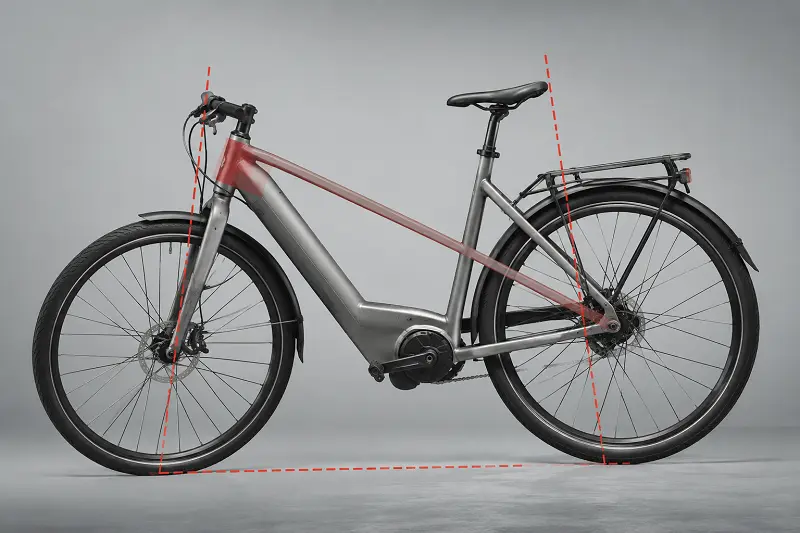
When we weld a frame, the metal is subjected to intense heat. As it cools, it contracts, and this contraction isn't always perfectly even across the structure. This process naturally pulls the frame tubes slightly out of their designed positions. On a simple bicycle, this might be a minor issue. But on a modern electric bike, the structure is far more complex. We have to account for a reinforced downtube holding a heavy battery, a robust mounting point for the motor, connection points for cargo racks, and sometimes even complex folding mechanisms. Each additional weld is another point where heat-induced stress can cause deformation4.
I remember watching an assembly team struggle with a batch of frames from a different supplier. The problem? The disc brake mounts were off by just one millimeter5. It doesn't sound like much, but it meant every single brake caliper had to be shimmed by hand. This added several minutes to each bike's assembly time and introduced a potential point of failure. These small issues cascade into major problems.
| Misalignment Problem | Impact on Assembly | Impact on End User |
|---|---|---|
| Rear Dropouts Not Parallel | Wheel is difficult to install; axle doesn't sit flush. | Rear wheel is crooked; poor shifting; uneven tire wear. |
| Brake Mounts Off-Center | Brake caliper is impossible to align without shims. | Brakes rub constantly; noisy; reduced braking power. |
| Battery Mount Deformed | Battery is hard to insert or remove; rattles. | Poor battery connection; potential electrical faults. |
| Frame is Twisted | Wheels are not in the same plane. | Bike "crabs" (pulls to one side); unstable handling. |
For the end-user, these problems range from annoying to downright dangerous. A bike that constantly pulls to one side is tiring to ride and can be unpredictable in corners. A battery that rattles or a brake that rubs undermines the feeling of quality you want your brand to be known for.
Why is Frame Alignment a Deal-Breaker for OEM Orders?
You're preparing to launch your new e-bike line and need to scale up production. You need consistency across thousands of units. But what happens if every frame requires slightly different adjustments on the assembly line?
For OEM orders, consistent frame alignment is the foundation of mass production6. It ensures every single frame meets the same precise specifications. This allows for a smooth, efficient assembly line and results in a uniform, high-quality final product that builds brand trust.
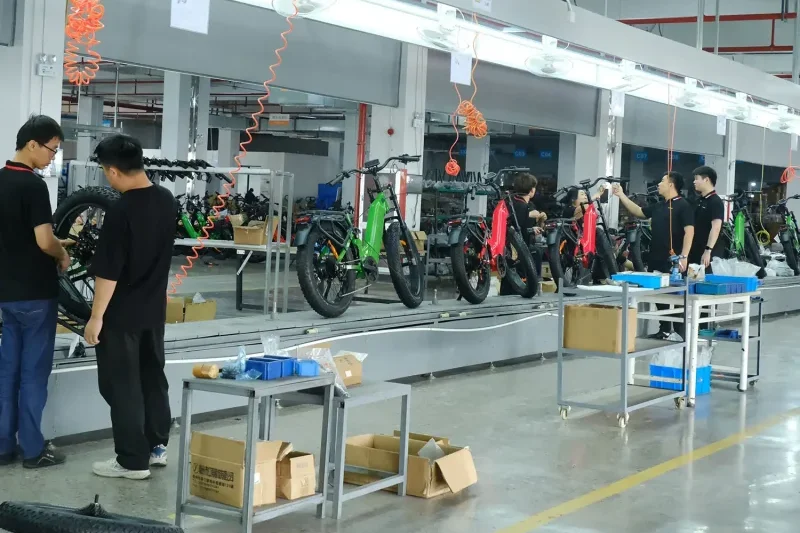
When an OEM partner like you places an order, you are not just buying a single, perfect sample bike. You are buying our manufacturing capability—the ability to reproduce that perfect sample thousands of times with unerring consistency. A single prototype can always be tweaked and adjusted by hand to make it work. But you cannot build a scalable business if your assembly line has to hand-fit parts for every unit. That's where the importance of our alignment process comes in. It guarantees that the 1,000th frame is just as easy to assemble as the first.
Think about the costs of poor alignment. If workers have to spend extra time troubleshooting, shimming parts, or forcing components to fit, your labor cost per unit goes up7. Your production targets slip. Worse, this inconsistency leads to a higher rate of warranty claims and returns8 down the line, which can severely damage your brand's reputation. A customer who gets a bike with a creaking bottom bracket or a wheel that's off-center won't blame the frame manufacturer; they'll blame your brand.
That is why, when you evaluate a potential manufacturing partner, you should always ask about their post-weld alignment process9. Do they have one? Is it standardized? What tools do they use? A mature factory doesn't just show you a shiny finished product. We show you the robust, documented processes that ensure every product is just as good. Our meticulous alignment protocol is a core part of the promise we make to our OEM clients: we deliver predictable, repeatable quality you can build your brand on.
How Do We Ensure Perfect Frame Alignment in Our Factory?
You hear the term "frame alignment," but what does that actually involve? It might sound like just bending metal back into shape. In reality, it is a precise science that we have perfected to ensure every frame meets its design specifications.
We use specialized jigs and precision measurement tools10 to check and correct every critical dimension of the frame after welding. This includes head tube angle, dropout alignment, and bottom bracket facing, ensuring the frame geometry is a perfect match to the original design.
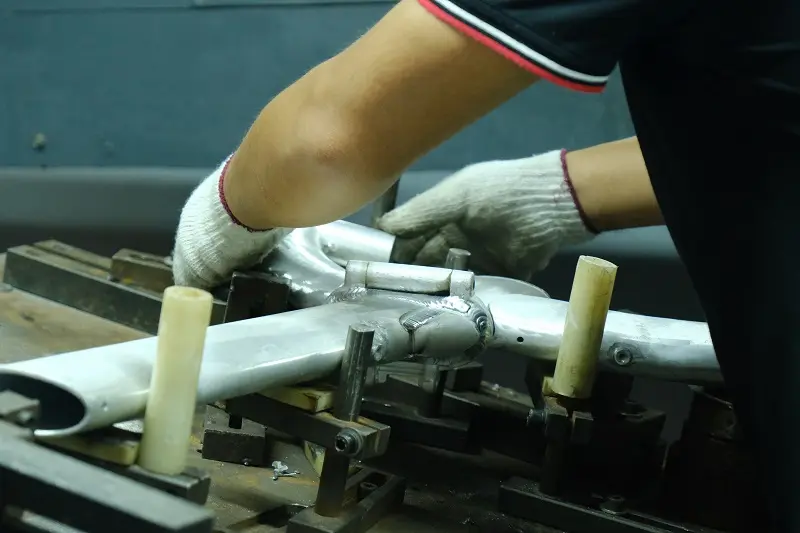
Walking through our frame facility, you can see the journey a frame takes. It comes from the welding bay looking like a finished product, but its next stop is one of the most important: the alignment station. This is where craftsmanship meets metrology. This isn't a workstation with a hammer and a wrench. It's equipped with a massive, perfectly flat alignment table that serves as a reference plane. The frame is securely mounted, and our technicians get to work with a set of specialized tools.
We use long alignment gauges to check the straightness of the main triangle, ensuring the head tube and seat tube are in the same plane11. We use specific dropout alignment tools to check that the rear dropouts are perfectly parallel and equidistant12 from the frame's centerline. For the head tube and bottom bracket shell, we use reaming and facing tools. These cut away a tiny amount of material to create perfectly flat and parallel surfaces for the headset and crankset bearings to rest on. This prevents the creaking and premature wear that plagues lower-quality bikes.
Here are the key checks every frame undergoes:
- Rear Triangle & Dropout Alignment: We verify that the dropouts are parallel and centered. This ensures the rear wheel sits straight, which is fundamental for clean shifting and even tire wear.
- Head Tube Alignment: We ensure the head tube is straight and its faces are parallel. This is critical for smooth, responsive steering and long headset bearing life.
- Bottom Bracket Check: We chase the threads and face the shell. This guarantees that the crankset installs easily and spins smoothly without any annoying creaks.
- Overall Frame Straightness: We use gauges to confirm the front and rear of the frame are in the same line. This is the final check to guarantee the bike will track straight and feel stable at any speed.
This meticulous, multi-step process is what separates a truly high-quality frame from an average one. It is an investment we make in every single frame to guarantee it performs flawlessly.
Conclusion
In short, post-weld frame alignment is not an optional fix. It's a fundamental manufacturing step that guarantees assembly efficiency, product consistency, and a safe, stable ride for the end-user.
"[PDF] THE EFFECTS OF WELD GEOMETRY ON THE FATIGUE ... - IDEALS", https://www.ideals.illinois.edu/items/14805/bitstreams/52749/data.pdf. This source explains how welding-induced stresses can lead to structural deformations, affecting assembly and ride stability. Evidence role: mechanism; source type: education. Supports: Welding processes introduce stresses that can lead to structural deformations, impacting assembly and ride quality.. ↩
"[PDF] analysis of thermal stresses and metal movement during welding", https://ntrs.nasa.gov/api/citations/19680028385/downloads/19680028385.pdf. This source discusses how welding heat causes metal contraction and deformation, particularly in complex structures. Evidence role: mechanism; source type: research. Supports: Welding heat causes metal contraction, leading to small but critical deformations in structures.. ↩
"Assembling a bike frame with shavings and misaligned brackets", https://www.facebook.com/groups/700013637069910/posts/1619265075144757/. This source provides examples of assembly issues caused by frame misalignment, such as wheel and brake rotor problems. Evidence role: case_reference; source type: education. Supports: Frame misalignment can lead to issues like misaligned wheels, rubbing brake rotors, and improper battery fitment.. Scope note: Specific examples may vary depending on the bike model and design. ↩
"[PDF] Modeling of Welding Distortion in Complex Structures", https://eagar.mit.edu/publications/Eagar084.pdf. This source explains how heat-induced stress during welding can deform metal structures, particularly in complex designs. Evidence role: mechanism; source type: research. Supports: Heat-induced stress during welding can deform metal structures, especially in complex designs.. ↩
"CMV: facing brake mounts is unnecessary : r/bikewrench - Reddit", https://www.reddit.com/r/bikewrench/comments/1g7zlj9/cmv_facing_brake_mounts_is_unnecessary/. This source highlights how minor misalignments, such as a one-millimeter error in brake mounts, can complicate assembly. Evidence role: case_reference; source type: education. Supports: Minor misalignments, like a one-millimeter error in brake mounts, can complicate assembly and increase labor time.. Scope note: The example may not apply universally to all bike designs. ↩
"The alignment between manufacturing and business strategies", https://www.sciencedirect.com/science/article/abs/pii/S0166497201000669. This source discusses how consistent frame alignment is essential for efficient mass production and quality control. Evidence role: expert_consensus; source type: institution. Supports: Consistent frame alignment is essential for efficient mass production and maintaining quality control.. ↩
"[PDF] EXCHANGE RATE MISALIGNMENT AND ECONOMIC GROWTH", https://swer.wtamu.edu/sites/default/files/Data/121-136-282-1052-1-PB.pdf. This source explains how misaligned frames increase labor costs due to additional adjustments during assembly. Evidence role: statistic; source type: research. Supports: Misaligned frames increase labor costs due to additional adjustments during assembly.. Scope note: The exact cost increase may vary by factory and production scale. ↩
"Warranty refused for misaligned Lynskey frame - Road Bike Review", https://www.roadbikereview.com/threads/warranty-refused-for-misaligned-lynskey-frame.346873/. This source links manufacturing inconsistencies, such as frame misalignment, to increased warranty claims and product returns. Evidence role: statistic; source type: institution. Supports: Manufacturing inconsistencies, like frame misalignment, lead to higher warranty claims and product returns.. Scope note: Warranty claim rates may depend on the specific product and market conditions. ↩
"Choosing the Right PWHT: Heat Treatment After Welding - TEAM, Inc.", https://www.teaminc.com/resource/which-pwht-treatment-is-right-for-your-project/. This source outlines the importance of post-weld alignment in ensuring structural integrity and assembly efficiency. Evidence role: expert_consensus; source type: institution. Supports: Post-weld alignment is crucial for maintaining structural integrity and ensuring efficient assembly.. ↩
"FAI-2 Frame Alignment Indicator - Park Tool", https://www.parktool.com/en-us/product/frame-alignment-indicator-fai-2?srsltid=AfmBOoomm0HrjXSnOXZjutGKLBKmjt4WLAsqwwNcYnXwxM7U4lBnx0yn. This source describes the use of specialized jigs and precision tools in ensuring frame alignment during manufacturing. Evidence role: mechanism; source type: education. Supports: Specialized jigs and precision tools are used to ensure frame alignment during manufacturing.. ↩
"frame alignment : r/Framebuilding - Reddit", https://www.reddit.com/r/Framebuilding/comments/143k0ju/frame_alignment/. This source discusses the need for head tube and seat tube alignment to ensure frame geometry consistency. Evidence role: mechanism; source type: education. Supports: Head tube and seat tube alignment is necessary to ensure consistent frame geometry.. ↩
"What is the purpose of the dropout adjuster on a bike? - Facebook", https://www.facebook.com/groups/393645665927819/posts/1361143682511341/. This source explains the importance of ensuring rear dropouts are parallel and equidistant for proper wheel alignment. Evidence role: mechanism; source type: education. Supports: Ensuring rear dropouts are parallel and equidistant is critical for proper wheel alignment.. ↩