You see a sleek e-bike with an integrated battery and think it looks premium. But you worry this design might hide problems like rattles or a weak frame. The secret is the battery tube, which is more than a cosmetic feature.
The battery tube in an integrated frame is crucial because it's a structural part, not just a holder.1 Its design directly impacts the e-bike's strength, safety, and reliability. It must handle riding stress while ensuring the battery is secure, waterproof, and easy for the user to access.
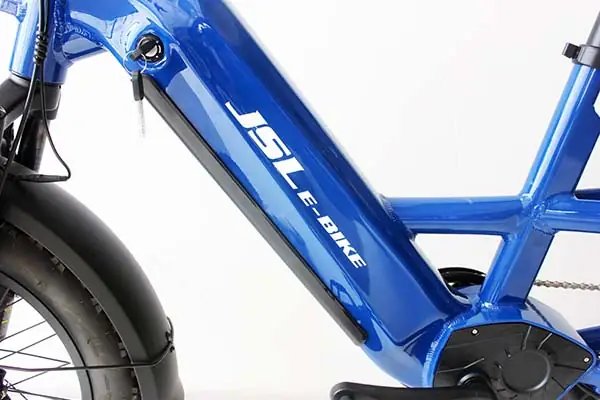
Many of our clients are first drawn to the clean look of integrated batteries. They see it as a sign of a modern, high-end e-bike. But from my 20+ years of manufacturing experience, I've learned that the real challenge isn't making it look good. The real challenge is making it work perfectly, every single time. Let's break down what really matters.
How does the battery tube affect the frame's strength and safety?
Cutting a hole in a frame's down tube for a battery seems risky.2 You imagine the frame flexing or creaking, creating a huge safety risk for riders. But a well-engineered battery tube actually reinforces the frame, turning a potential weakness into a source of stability.
The battery tube is a load-bearing part of the frame.3 It must compensate for the structural integrity lost by cutting the down tube. If designed poorly, the frame can lack stiffness, leading to poor handling, strange noises, and potential long-term fatigue failure, which is a serious safety concern.
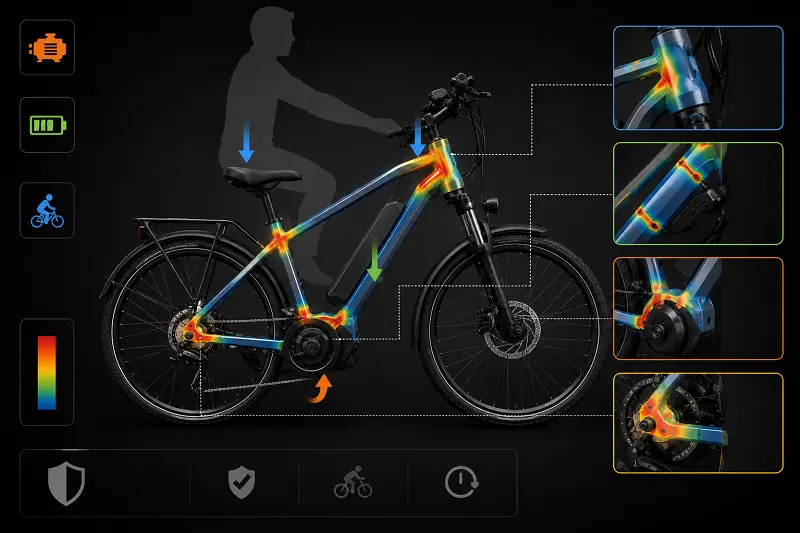
Think of a standard bike frame as a strong, closed triangle. When we cut a large opening in the down tube for a battery, we break that structure. The battery tube isn't just a box to hold the battery; it has to become part of the frame's skeleton. It must be strong enough to handle all the forces of riding. This includes the rider's weight, bumps from the road, and the stress from braking. I remember a project where an early prototype had a flexing issue. The bike felt unstable in fast turns. We had to go back and redesign the internal structure of the battery tube, adding reinforcements and changing the material thickness. This is why our in-house frame factory is so important. We control the entire process, from computer modeling to real-world stress testing, to ensure the frame is not just strong, but safe for years of use.
What problems arise from poor battery tube assembly and tolerance?
Your customers complain that their e-bike battery rattles or is hard to remove. These small annoyances quickly turn into big after-sales headaches, damaging your brand's reputation. The root cause is often poor manufacturing tolerance in the battery tube, a problem that needs to be solved at the factory.
Poor tolerance control in the battery tube causes many user-facing problems.4 A loose fit leads to rattling noises and potential connection issues. A tight fit makes the battery difficult to insert or remove. Unstable locking mechanisms can even cause the battery to fall out, which is incredibly dangerous.5
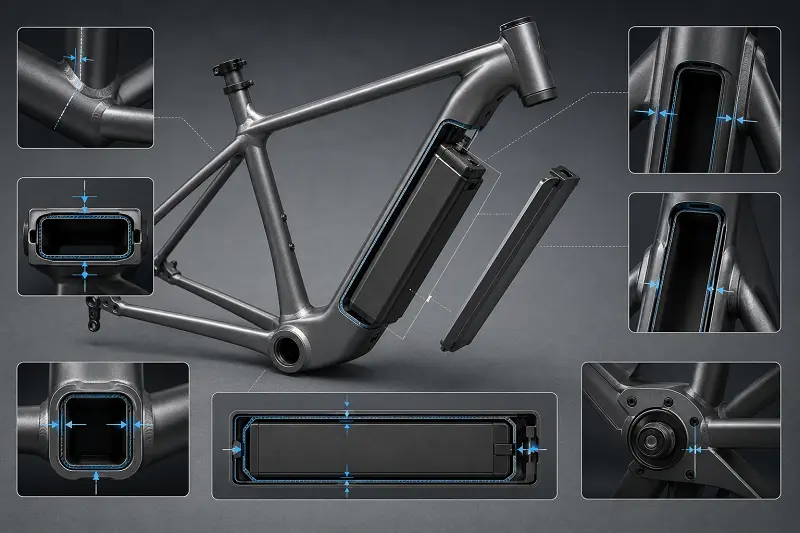
Precision is everything here. We're talking about fractions of a millimeter. If the battery tube's dimensions are even slightly off, a whole chain of problems begins. I once inspected a sample from another factory where the battery was a real struggle to get out. The customer would have to yank it hard. This kind of issue doesn't show up on a spec sheet, but it ruins the user experience. These problems get worse over time and lead to customer complaints. To avoid this, we use precise tooling and conduct rigorous assembly checks.
Here’s a breakdown of what can go wrong:
| Problem | Cause (Poor Tolerance) | Consequence for the User |
|---|---|---|
| Battery Rattle | Tube is too wide or long | Constant annoying noise, feels cheap |
| Difficult Removal | Tube is too narrow or bent | Frustration, potential damage to battery/connector |
| Unstable Lock | Lock mount is misaligned | Battery can disconnect or fall out |
| [Water Damage | Poor seal around the opening](https://www.colorado.edu/mechanical/2021/06/01/how-i-built-electric-bicycle)%%%FOOTNOTE_REF_6%%% | Risk of short circuits and battery failure |
We verify these tolerances on every single frame to make sure the battery fits perfectly—not too tight, not too loose. This attention to detail is what separates a truly premium product from one that just looks the part.
How do you identify a well-designed integrated battery system?
As a buyer, you see two e-bikes with integrated batteries that look identical. How can you tell which one is well-engineered and which one is just hiding future problems? You need to look beyond the surface and ask the manufacturer the right questions about their design and process.
A well-designed system is more than a clean look. Check for a secure locking mechanism, a smooth battery insertion and removal process, and clean, protected cable routing.7 Ask the manufacturer about their frame's structural testing, tolerance control, and waterproofing methods to gauge their expertise.
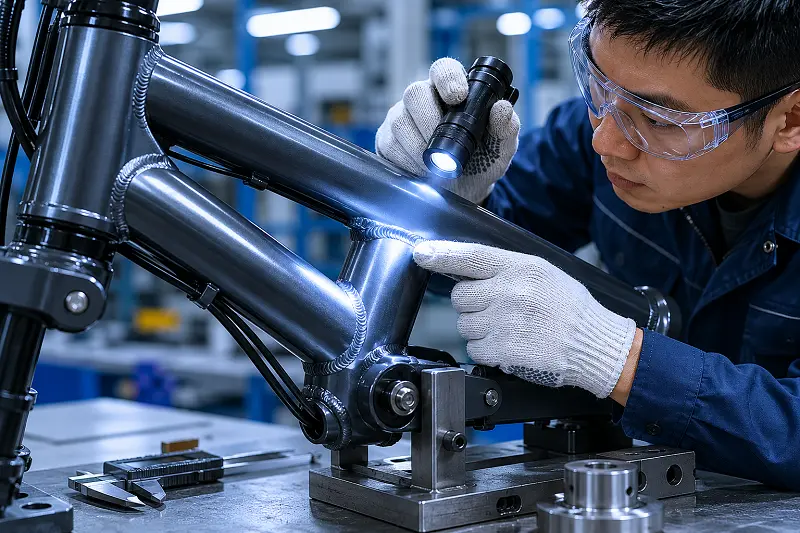
When you're evaluating an OEM partner for an integrated battery e-bike, don't just look at the final product. Ask about the process. I always encourage my clients to ask the tough questions. For example, ask to see their frame fatigue test reports. Ask how they control the dimensional accuracy of the battery tube during mass production.8 A good manufacturer will have clear answers and data to share.
Here are the key things I focus on to ensure quality:
- Strong Structure: We use computer-aided engineering (CAE) to simulate stress and then confirm it with physical tests that exceed industry standards.9
- Precise Dimensions: Our in-house tooling and quality control checks ensure every frame meets our strict tolerance specifications for a perfect fit.
- Stable Lock: We source high-quality locks from reputable suppliers and test them for thousands of cycles to ensure they remain secure.
- Effective Waterproofing: We design integrated seals and drainage channels to protect the battery and electronics from rain and washing.10
- Easy Maintenance: The battery and controller should be accessible for service without dismantling the entire bike.11
Choosing a partner with deep frame development and manufacturing experience is the best way to ensure your e-bike is not just beautiful, but also reliable and safe.
Conclusion
In short, the battery tube's design is what makes an integrated e-bike truly great. It ensures the bike is strong, reliable, and user-friendly, turning a stylish look into a lasting, quality product.12
"2024 E-Bike Battery Optimization - Team 13 | Design Projects", https://projects.eng.uci.edu/projects/2023-2024/2024-e-bike-battery-optimization-team-13. This source explains the structural role of battery tubes in e-bike frames, emphasizing their importance in maintaining frame integrity and safety. Evidence role: mechanism; source type: education. Supports: The battery tube in an integrated frame is crucial because it's a structural part, not just a holder.. ↩
"Structural Batteries: A Review - PMC", https://pmc.ncbi.nlm.nih.gov/articles/PMC8068925/. This source discusses the engineering challenges and solutions related to cutting holes in e-bike frames for integrated batteries. Evidence role: mechanism; source type: research. Supports: Cutting a hole in a frame's down tube for a battery seems risky.. ↩
"Rear Cargo Rack Battery vs. Down-tube ... - Electric Bike Forums", https://forums.electricbikereview.com/threads/rear-cargo-rack-battery-vs-down-tube-battery.3209/. This source provides evidence on how battery tubes are designed to bear loads and compensate for structural changes in e-bike frames. Evidence role: mechanism; source type: research. Supports: The battery tube is a load-bearing part of the frame.. ↩
"Systematic review and meta‐analysis evaluating the effects electric ...", https://pmc.ncbi.nlm.nih.gov/articles/PMC9546252/. This source outlines the impact of manufacturing tolerances on e-bike battery tube performance and user experience. Evidence role: mechanism; source type: education. Supports: Poor tolerance control in the battery tube causes many user-facing problems.. ↩
"Ensuring Battery Safety in Electric Vehicles - PMC - NIH", https://pmc.ncbi.nlm.nih.gov/articles/PMC12934390/. This source discusses the risks associated with unstable locking mechanisms in e-bike battery systems and their safety implications. Evidence role: mechanism; source type: research. Supports: Unstable locking mechanisms can even cause the battery to fall out, which is incredibly dangerous.. ↩
"How I built an electric bicycle | Paul M. Rady Mechanical Engineering", https://www.colorado.edu/mechanical/2021/06/01/how-i-built-electric-bicycle. This source explains how poor sealing in e-bike battery compartments can lead to water damage and electrical failures. Evidence role: mechanism; source type: research. Supports: Water Damage | Poor seal around the opening. ↩
"E-Bikes Certification: Evaluating and Testing to UL 2849", https://www.ul.com/services/e-bikes-certificationevaluating-and-testing-ul-2849. This source provides criteria for evaluating the quality of integrated battery systems in e-bikes, including locking mechanisms and cable routing. Evidence role: definition; source type: education. Supports: Check for a secure locking mechanism, a smooth battery insertion and removal process, and clean, protected cable routing.. ↩
"Why this premium e-bike maker glues its bike frames together", https://electrek.co/2026/06/03/why-this-premium-e-bike-maker-glues-its-bike-frames-together/. This source discusses methods for ensuring dimensional accuracy in e-bike battery tubes during manufacturing. Evidence role: mechanism; source type: education. Supports: Ask how they control the dimensional accuracy of the battery tube during mass production.. ↩
"[PDF] Summary of Electric and Non- Powered Bicycle Standards | CPSC", https://www.cpsc.gov/s3fs-public/Electric-and-Non-Powered-Bicycle-Standards-Summary-Report.pdf?VersionId=rZGs9tSONCKqT8AEaJJMZd_S1nDJpKEW. This source explains the use of computer-aided engineering (CAE) and physical testing in e-bike frame design. Evidence role: mechanism; source type: research. Supports: We use computer-aided engineering (CAE) to simulate stress and then confirm it with physical tests that exceed industry standards.. ↩
"Preventing water ingress in e-bike battery compartment - Facebook", https://www.facebook.com/groups/1065217981872077/posts/1262640135463193/. This source details the design of seals and drainage systems in e-bike battery compartments to prevent water ingress. Evidence role: mechanism; source type: research. Supports: We design integrated seals and drainage channels to protect the battery and electronics from rain and washing.. ↩
"E-Bike Engagement and Accessibility - Deep Blue Repositories", https://deepblue.lib.umich.edu/items/987e8ae8-2b2e-4bd1-ae9b-0a05bd7c435d. This source discusses the importance of accessibility in e-bike design for maintenance and servicing. Evidence role: definition; source type: education. Supports: The battery and controller should be accessible for service without dismantling the entire bike.. ↩
"External vs Integrated battery packs - which do you prefer and why?", https://forums.electricbikereview.com/threads/external-vs-integrated-battery-packs-which-do-you-prefer-and-why.31662/. This source supports the claim that integrated battery designs contribute to the strength, reliability, and user-friendliness of e-bikes. Evidence role: general_support; source type: education. Supports: It ensures the bike is strong, reliable, and user-friendly, turning a stylish look into a lasting, quality product.. ↩