Worried that a beautiful e-bike sample hides long-term structural flaws? This fear is valid, as frame failures can destroy a brand's reputation1. Comprehensive strength testing is your best insurance.
Frame strength testing isn't about proving a frame is "strong enough" for one ride. It's a critical process to identify and prevent long-term fatigue risks from repeated stress, vibrations, and heavy loads, saving you from catastrophic and costly failures down the road.
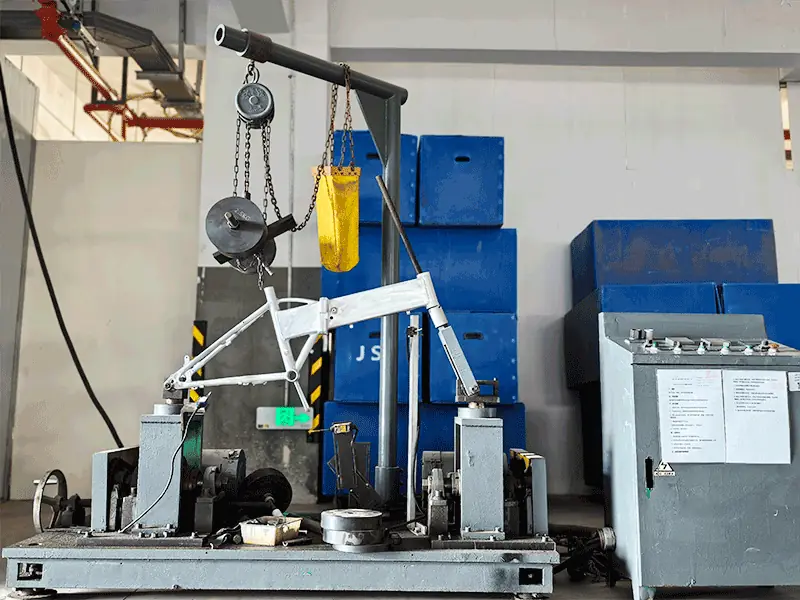
When my B2B clients visit our factory to inspect a new sample, their focus is often on the things you can see and feel. They check the paint job, the quality of the welds, the component specifications, and of course, they take it for a test ride. If it feels solid and looks great, they're happy. But I always have to remind them: a successful 15-minute ride tells you almost nothing about how that frame will perform after 15 months of daily use. The real value of a manufacturing partner isn't just in making a pretty sample; it's in proving that the design is durable for the long haul.
Why Do E-Bikes Need More Rigorous Frame Testing Than Regular Bikes?
Think an e-bike frame is just a slightly stronger bicycle frame? This common mistake can lead to serious structural problems and put riders at risk. Let's break down why this is a dangerous oversimplification.
E-bikes carry more weight and endure much higher forces from motor torque and faster braking. This powerful combination multiplies the stress on the frame, demanding a much higher standard of durability testing than any standard bicycle.
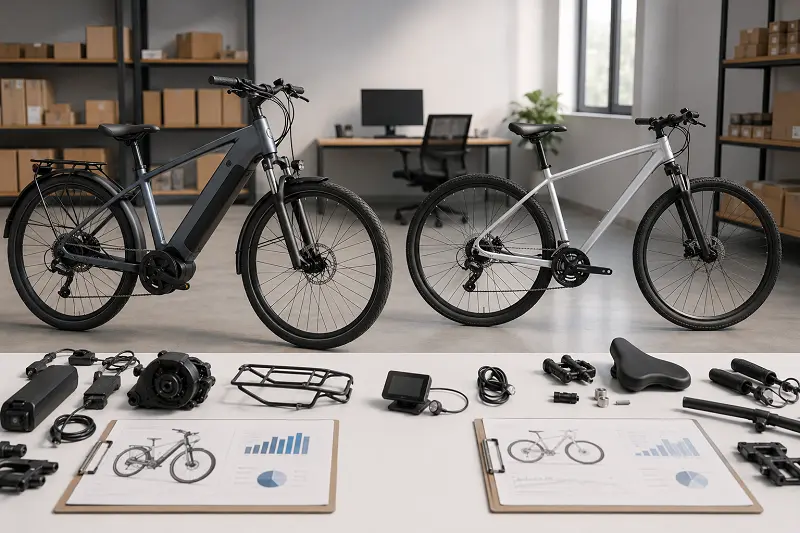
An electric bike is a completely different beast from its non-electric cousin. The demands placed on its frame are in another league entirely. First, there's the static weight. You have a heavy battery pack and a motor, which can add 10-15 kg (22-33 lbs) before a rider even gets on. This extra weight constantly pulls on the frame structure. Then, you have the dynamic forces. A mid-drive motor applies significant torque directly to the bottom bracket area every time the rider pedals, trying to twist the frame. Hub motors put stress on the dropouts. When you're traveling at higher speeds and hit the brakes, immense force is transferred through the fork and into the head tube. These forces are simply not present on a regular bike with the same intensity2. This is why we can't just "beef up" a normal frame; we have to engineer it specifically for these stresses.
| Stress Factor | Regular Bicycle | Electric Bicycle |
|---|---|---|
| Static Weight | Low (Frame only) | High (Frame + Motor + Battery) |
| Motor Torque | None | High (Especially on mid-drives) |
| Braking Force | Moderate | High (Due to higher speed & weight) |
| Vibration | Low to Moderate | High (From road and motor) |
What Hidden Frame Failures Can Testing Prevent?
That perfect-looking sample e-bike could be hiding a ticking time bomb. Small, invisible weaknesses in the frame can grow over time, leading to catastrophic failures3. Rigorous testing is how we find and eliminate them early.
Frame testing is designed to prevent long-term fatigue failures like microscopic weld cracks, head tube loosening, and rear fork deformation. These issues are invisible on a new sample but can cause major safety hazards and costly recalls later.
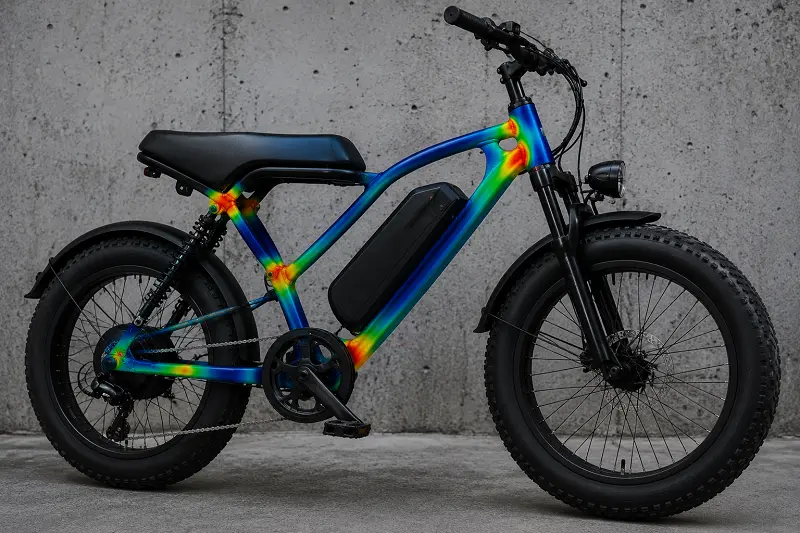
Frame problems are rarely sudden. They don't typically happen on the first ride. Instead, they develop slowly over thousands of stress cycles—every bump, every hard pedal, every time the brakes are applied. I once worked with a client who sourced frames from another factory that skipped fatigue testing to save money. The samples looked great, but a year after launch, they started getting reports of cracked chainstays. It became a recall nightmare. This is exactly what our testing protocols are designed to prevent. We simulate years of use in a matter of days4. We use machines to repeatedly apply force to key areas to see if microscopic cracks form in the welds or if any part of the frame starts to deform. These tests reveal weaknesses that the naked eye could never see on a sample.
| Potential Failure Point | The Hidden Risk |
|---|---|
| Weld Joints | Micro-cracks from vibration leading to a complete break. |
| Head Tube | Loosening or ovalizing, causing steering instability. |
| Battery Mounts | Cracks developing from battery weight and vibration. |
| Rear Dropouts | Deformation from motor torque and rider weight. |
| Folding Hinge | Wear and looseness, compromising the frame's integrity. |
How Does Frame Testing Protect Your Brand and Investment?
You're investing a huge amount of time and money to build your e-bike brand. A single, widespread frame failure could erase all your hard work5. How do you protect your reputation and your bottom line?
Frame testing is your most important quality control step. It stops defects before mass production, protecting your brand from safety recalls, negative reviews, and the massive cost of after-sales service for structural problems.

For any B2B client, especially those building a private-label brand, this is the most important conversation we can have. Frame strength testing isn't an "extra cost"; it's a fundamental part of risk management. Think about the math. The cost of a comprehensive testing protocol for a new frame design is a tiny fraction of the cost of a product recall. If a frame fails, you can't just send a customer a small replacement part. You often have to replace the entire bike. Now multiply that cost by hundreds or thousands of units. It's a financial disaster. Furthermore, choosing a manufacturing partner who insists on testing is a sign that you're working with true professionals. It shows we have the engineering capability and the quality control systems to be a reliable long-term partner, not just a factory that assembles parts. Your brand's reputation is built on the foundation of your product, and the frame is that foundation6.
| Investment Choice | Upfront Cost | Long-Term Risk & Cost |
|---|---|---|
| Skip Testing | Low (Saves a small amount) | Extremely High (Recalls, lawsuits, brand damage) |
| Invest in Testing | Moderate (Part of R&D) | Low (Ensures product safety and durability) |
Conclusion
In short, frame strength testing is not an optional extra. It is the essential safeguard that protects your customers, your brand, and your investment from long-term failure.
"Consumers blame both manufacturer and retailer when products fail ...", https://mendoza.nd.edu/news/consumers-blame-when-products-fail/. This source discusses how product failures, particularly in safety-critical industries, can lead to significant reputational damage for brands. Evidence role: general_support; source type: research. Supports: Frame failures can have a severe impact on a brand's reputation.. Scope note: The source may not specifically address e-bike frame failures. ↩
"Risk Riding Behaviors of Urban E-Bikes: A Literature Review - PMC", https://pmc.ncbi.nlm.nih.gov/articles/PMC6651001/. This source compares the structural demands on e-bikes versus regular bicycles, highlighting the unique stresses caused by motorized components. Evidence role: mechanism; source type: education. Supports: E-bikes experience unique forces that are not present on regular bicycles.. Scope note: The source may generalize the comparison without specific stress measurements. ↩
"fatigue strength - Properties of Materials", https://www.ae.msstate.edu/vlsm/materials/fatigue/fatigue.htm. This source discusses how material fatigue and stress can lead to the development of microscopic cracks and eventual structural failure. Evidence role: mechanism; source type: research. Supports: Small, invisible weaknesses in materials can lead to long-term structural failures.. Scope note: The source may not specifically address e-bike frames. ↩
"Accelerated Fatigue Test - an overview | ScienceDirect Topics", https://www.sciencedirect.com/topics/engineering/accelerated-fatigue-test. This source explains accelerated fatigue testing methods used in engineering to simulate long-term use. Evidence role: mechanism; source type: education. Supports: Accelerated testing can simulate years of wear and tear in a short period.. Scope note: The source may not specifically describe e-bike frame testing protocols. ↩
"Product Recall Management: Challenges and Best Practices", https://www.amu.apus.edu/area-of-study/business-administration-and-management/resources/product-recall-management/. This source discusses the financial and reputational risks associated with widespread product failures. Evidence role: general_support; source type: research. Supports: Widespread product failures can have devastating effects on a company's reputation and financial stability.. Scope note: The source may not specifically address e-bike frame failures. ↩
"The impact of brand image on customer satisfaction and brand loyalty", https://pmc.ncbi.nlm.nih.gov/articles/PMC11378958/. This source discusses how product quality directly impacts brand reputation, particularly in consumer goods. Evidence role: general_support; source type: research. Supports: Product quality is a critical factor in building and maintaining a brand's reputation.. Scope note: The source may not specifically focus on e-bike frames. ↩