You focus on big specs like motors and batteries. But hidden electrical issues can ruin your brand's reputation and spike service costs. The secret lies in the often-overlooked wiring harness.
A good wiring harness is the foundation for the long-term stability of an e-bike's entire electronic system. It's not just about connecting parts; it's about preventing failures from loose connections, water damage, and daily wear and tear, ensuring reliability for years.
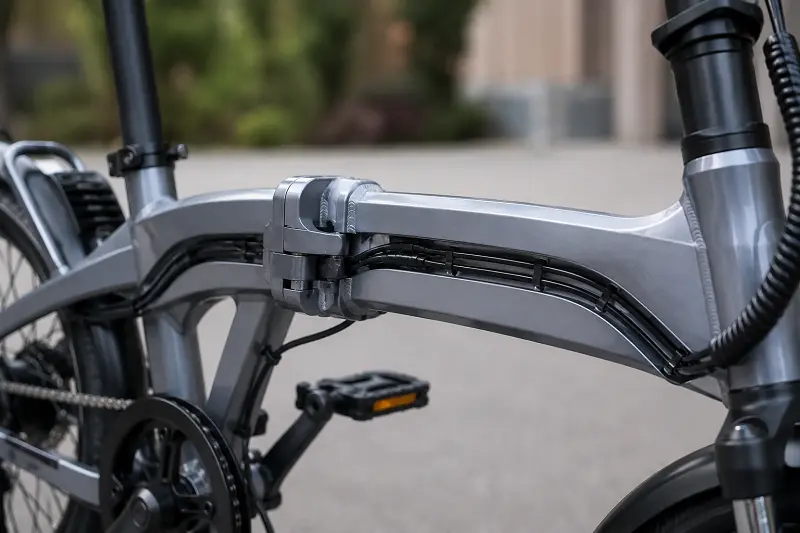
When I talk with B2B clients, the conversation often turns to motor power, battery capacity, or the look of the display. These are important, of course. But I've learned from over 20 years in this business that they rarely ask about the wiring harness. Yet, when we analyze after-sales data, so many "electrical failures" are not a broken motor or a dead battery.1 The real problem is a loose connector, a wire that has rubbed through, or a connection point that got wet. The wiring harness is an invisible detail that determines whether a bike is truly reliable or just a collection of good parts. It’s the difference between a product that builds your brand and one that creates service headaches.
What Hidden Failures Are Caused by Poor Harness Design?
Your customers report confusing electrical problems like sudden power loss or error codes. Your dealers struggle to diagnose the issue, wasting time, money, and frustrating everyone. The root cause is often the harness.
Poor harness design leads to failures that mimic major component issues.2 These include intermittent power loss from loose connectors, short circuits from water ingress, and error codes from wires worn by friction or repeated bending during steering and folding.
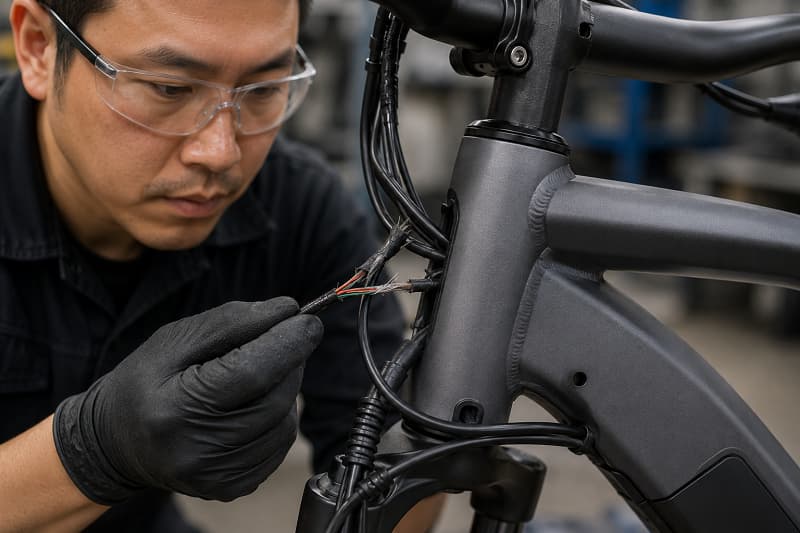
Let's dive deeper into the specific problems a bad harness can cause. These are not theoretical issues; these are real-world failures we've seen and engineered our systems to prevent. The biggest headache is what I call a "phantom" fault. A connection becomes slightly loose from road vibration. The bike works fine in the workshop, but the customer reports it cuts out randomly on bumpy roads. Your dealer can't find the problem, and the customer loses faith in your product. Another common issue is water damage. If connectors aren't truly waterproof or if the cable routing channels rain toward a connection point, you will get corrosion and short circuits. Finally, there's mechanical stress. Every time the handlebars turn or the bike is folded, the wires move. Poor design leads to pulling, pinching, or rubbing, which eventually causes a wire to break.3
Key Weak Points in Harness Design
| Feature | Poor Harness Design | Our Professional Harness Design |
|---|---|---|
| Connector Type | Non-waterproof, simple push-fit connectors. | Waterproof, locking connectors (e.g., Higo, Julet). |
| Cable Routing | Taut cables at steering tube, exposed to elements. | Sufficient slack for turning, routed internally. |
| Friction Points | Wires rubbing against the frame or battery case. | Protective sheathing, grommets at frame exits. |
| Folding Mechanism | Wires can be pinched or stretched when folded. | Specifically designed cable length and flex points. |
How Do We Evaluate a Mature E-Bike Harness System?
You know the harness is important, but how do you judge its quality during an inspection? Choosing a supplier based on looks alone can lead to a fleet of unreliable e-bikes for your brand.
A mature harness system isn't just about hidden wires. Evaluate it based on four criteria: logical routing with proper slack, reliable waterproofing on all connectors, stable connectors that resist vibration, and easy access for maintenance.
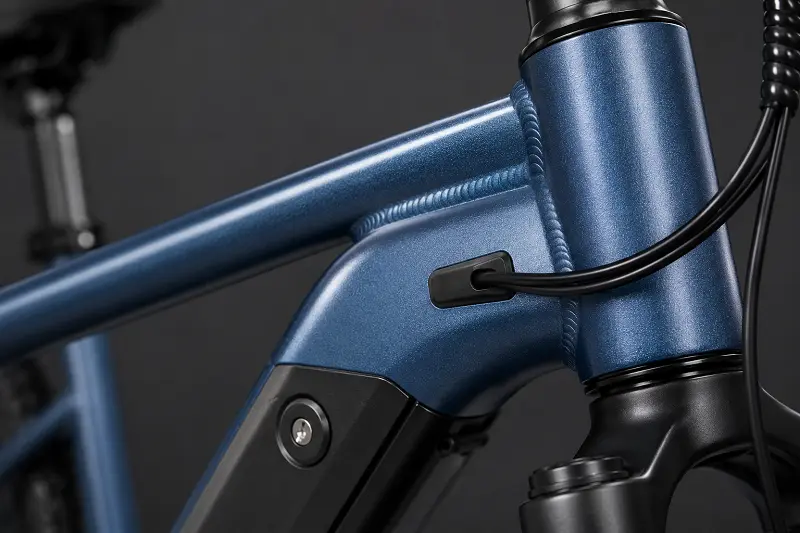
When I inspect a new prototype, I don't just look to see if the wires are tidy. I physically test the design. First, I check the routing and stress relief. I turn the handlebars from lock to lock. Do the cables pull tight or are they about to get pinched? I look where wires enter and exit the frame. Are there sharp metal edges, or are there smooth, protective rubber grommets? Second, I examine the connectors. We insist on using high-quality, automotive-grade waterproof connectors for all our OEM projects.4 It’s a small extra cost that prevents huge warranty problems later. I also check that every connection is sealed, not just the main ones. Third, a good system must be serviceable. A beautifully hidden harness is useless if a mechanic has to spend two hours just to replace a brake sensor. We design our systems with modularity in mind. Key components can be unplugged and replaced in minutes, not hours. This is a critical detail that makes your dealer network much more efficient and profitable.
Why is a Good Harness Design Crucial for OEM/ODM Projects?
For your OEM/ODM project, you want to maximize profit and build a strong brand. High after-sales service costs and negative customer reviews from electrical issues can destroy your margins and your reputation.
For OEM/ODM partners, a superior harness design directly translates to lower business risk. It minimizes batch-wide failures, reduces warranty claims, speeds up repairs, and protects your brand's reputation for quality, ensuring long-term profitability.
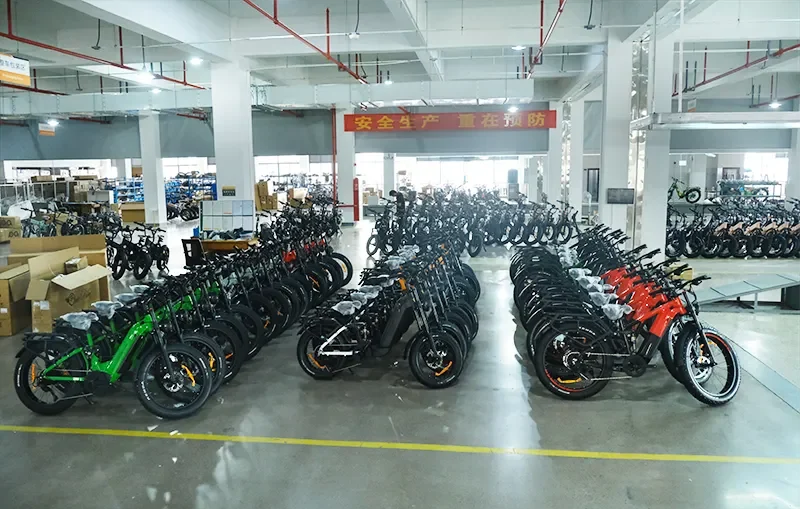
Let's talk business. The core goal of any OEM/ODM project is to build a successful product line. A robust wiring harness is your best insurance policy against failure.5 The small upfront investment in a better harness and higher-quality connectors is tiny compared to the cost of even one service call. Now, multiply that service cost by thousands of bikes in the market. A good harness design drastically lowers the total cost of ownership for your brand. It also protects your most valuable asset: your brand's reputation.6 A bike that is constantly in the shop for electrical glitches quickly gets a bad name online and among dealers. In contrast, a bike that is known to be reliable builds customer trust and loyalty. Finally, it streamlines your entire after-sales operation. When we design a harness, we think about the dealer. By using modular, plug-and-play connections, we empower technicians to make repairs quickly and easily.7 This keeps your dealers happy, your customers satisfied, and your service costs under control.
Conclusion
The wiring harness is not just a detail; it is the backbone of your e-bike's electrical reliability, directly impacting your after-sales costs, brand reputation, and long-term success.
"Electric bicycles (e-bikes) are an increasingly common pediatric ...", https://pmc.ncbi.nlm.nih.gov/articles/PMC10372360/. This source provides data on common causes of electrical failures in e-bikes, emphasizing the role of wiring harness issues. Evidence role: statistic; source type: research. Supports: Many electrical failures in e-bikes are caused by wiring harness issues rather than broken motors or dead batteries.. Scope note: The data may vary depending on the specific e-bike models or brands studied. ↩
"Wire Harness Failures: Hidden Costs and Real-World Recalls", https://resources.altium.com/p/wire-harness-failures. This source discusses how poor wiring harness design can lead to electrical failures that resemble major component malfunctions. Evidence role: mechanism; source type: education. Supports: Poor harness design can cause failures that mimic major component issues, such as intermittent power loss or error codes.. Scope note: The examples may not cover all possible failure scenarios in e-bikes. ↩
"Effects of Mechanical Stress on Insulation Structure and ... - PMC", https://pmc.ncbi.nlm.nih.gov/articles/PMC9317511/. This source describes how mechanical stress from movement can lead to wire damage in electronic systems. Evidence role: mechanism; source type: education. Supports: Mechanical stress from movement, such as pulling or rubbing, can cause wires to break in poorly designed systems.. Scope note: The examples may not be specific to e-bikes but are applicable to similar systems. ↩
"Automotive and Sealed PCB/Wire Connectors - Molex", https://www.molex.com/en-us/products/automotive-connectivity/automotive-pcb-wire-connectors. This source highlights the benefits of using automotive-grade waterproof connectors in electronic systems for durability and reliability. Evidence role: expert_consensus; source type: education. Supports: Automotive-grade waterproof connectors enhance the durability and reliability of electronic systems, including e-bikes.. Scope note: The focus may be on automotive applications, with indirect relevance to e-bikes. ↩
"Understanding Wiring Harnesses", https://www.conwire.com/cable-wiring-harnesses/. This source discusses how a well-designed wiring harness can prevent failures and ensure system reliability. Evidence role: general_support; source type: education. Supports: A robust wiring harness significantly reduces the risk of system failures in e-bikes.. Scope note: The discussion may not focus exclusively on e-bikes but is applicable to similar electronic systems. ↩
"The impact of brand image on customer satisfaction and brand loyalty", https://pmc.ncbi.nlm.nih.gov/articles/PMC11378958/. This source discusses the role of product reliability in safeguarding brand reputation, particularly in consumer electronics. Evidence role: expert_consensus; source type: research. Supports: Product reliability, supported by good harness design, is crucial for protecting a brand's reputation.. Scope note: The focus may not be specific to e-bikes but is relevant to similar consumer products. ↩
"Modular Connectors vs. Hardwiring - Positronic", https://www.connectpositronic.com/en/2021/07/23/modular-connectors-vs-hardwiring/. This source explains how modular, plug-and-play connections simplify maintenance and reduce repair times in electronic systems. Evidence role: mechanism; source type: education. Supports: Modular, plug-and-play connections simplify maintenance and reduce repair times in e-bike systems.. Scope note: The discussion may not specifically address e-bikes but applies to similar systems. ↩