Thinking an e-bike frame is just a regular bike frame? This oversight can lead to costly failures and damage your brand. True strength comes from dedicated e-bike frame engineering.
An e-bike frame handles more than just rider weight.1 It manages the combined stress of a heavy battery, powerful motor torque, higher speeds, and increased braking forces. This requires a fundamentally stronger and more robust design for long-term safety and durability.
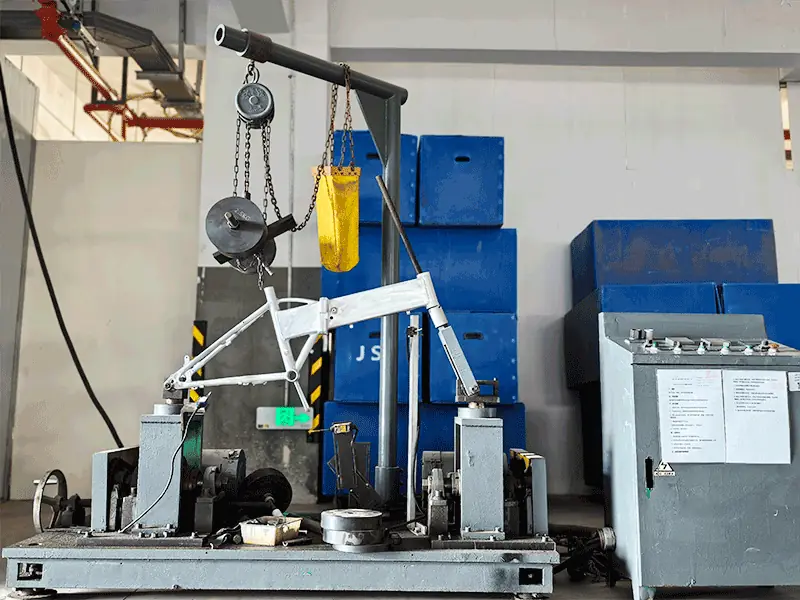
The difference isn't just about adding a bit more metal. The entire design philosophy has to change. When I first started in this industry over 20 years ago, many people made the mistake of simply modifying existing bicycle frames. We quickly learned that this approach was a recipe for disaster. From where the battery sits to how the motor twists the frame, every detail matters. Let's break down exactly what these differences are and why they are so critical for your OEM/ODM business.
What Hidden Forces Are Stressing Your E-Bike Frame?
Worried about customer complaints of strange noises or frame cracks? These aren't random failures. They often stem from misunderstanding the complex forces attacking the e-bike frame every single day.
An e-bike frame withstands a composite load: the static weight of the battery, the dynamic torque from the motor, impact from higher speeds, and significant braking stress. These forces combined create a much more demanding environment than what a regular bicycle frame experiences.
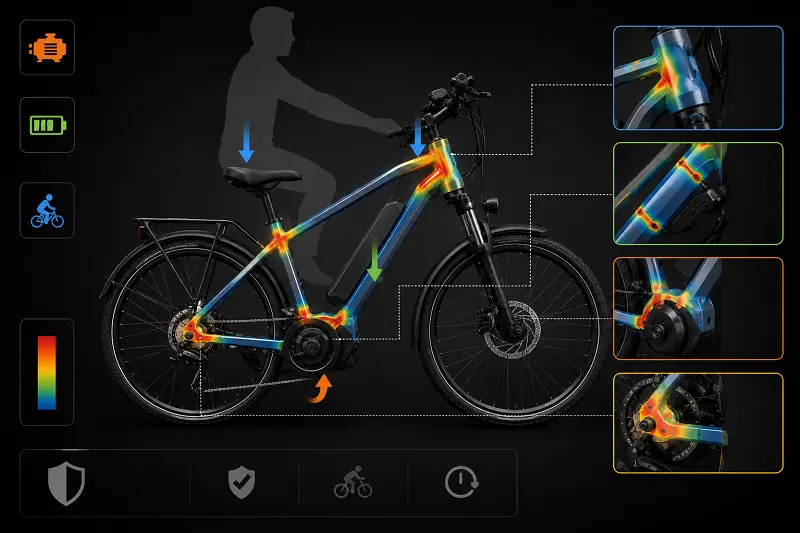
Let's dive deeper into these forces. A regular bicycle frame is engineered primarily for one thing: efficiently transferring a rider's pedaling power into forward motion while being as light as possible. An e-bike frame has a much harder job. It has to serve the rider, but it also has to serve the entire electrical system securely for years.
The Composite Stress Factors
The key difference is the combination of new and amplified forces.
- Static Weight: The battery and motor add significant dead weight, usually between 7-10 kg.2 This constant weight puts a permanent strain on the frame, especially around mounting points, even when the bike is just standing still.
- Dynamic Torque: A hub or mid-drive motor doesn't just push the bike forward; it twists the frame.3 This torsional force puts immense stress on the dropouts, chainstays, and bottom bracket area, something a standard bike frame is not designed to handle repeatedly.
- Impact from Speed & Weight: E-bikes are not only heavier, but they also maintain higher average speeds.4 This means when you hit a pothole, the impact force is significantly greater, sending shocks through the entire frame, especially the head tube and fork.
Here is a simple table to show the difference:
| Force Type | Regular Bicycle Frame | Electric Bicycle Frame |
|---|---|---|
| Primary Load | Rider's weight and pedaling force | Rider + Battery + Motor Weight |
| Torsional Stress | Minimal (from pedaling) | High (from motor torque) |
| Impact Stress | Standard | Amplified (due to higher mass & speed) |
| Braking Stress | Standard | High (stopping more weight from higher speed) |
How Does Frame Design Change For Different Types of E-Bikes?
A one-size-fits-all frame design is a recipe for failure in the e-bike market. Different models have vastly different needs, and ignoring this can compromise safety and performance for your customers.
Frame design must adapt to the e-bike's purpose.5 A city e-bike prioritizes lightweight balance, a fat tire e-bike needs to absorb shock and torque, and a cargo e-bike must be engineered for heavy loads and braking stability. Each requires a unique structural solution.
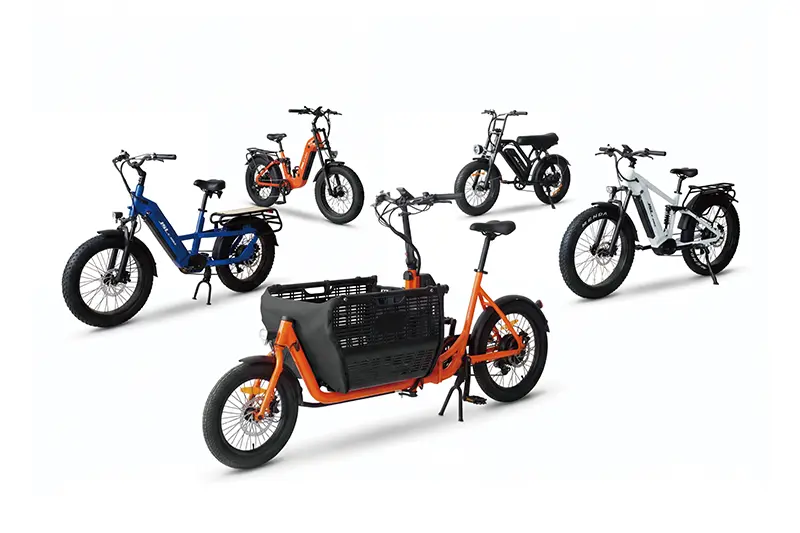
In my experience building thousands of custom e-bikes, I've seen firsthand that a successful product line depends on matching the frame engineering to the bike's specific job. Simply using a thicker tube is not engineering; it's a guess. True engineering involves redesigning the structure.
Tailoring Frames for Specific Uses
- City & Commuter E-Bikes: The challenge here is integration.6 Many customers want a sleek look with an integrated battery. This means cutting a large hole in the down tube, which is a critical structural element. We have to heavily reinforce this area and redesign the surrounding tubes to compensate for the loss of stiffness, all while keeping the bike feeling light and balanced.
- Fat Tire & Mountain E-Bikes: These bikes are built for abuse. The motor's torque combined with rough terrain puts enormous stress on the rear triangle and head tube.7 We use specific welding techniques and gussets to reinforce these areas. The frame must be stiff enough to handle the motor's power without flexing, which would feel unstable to the rider.
- Cargo E-Bikes: Safety is everything here. These frames are under constant, heavy loads. The challenge is not just carrying the weight, but stopping it. The frame must be incredibly stiff to prevent flexing when loaded and must transfer the immense braking forces safely from the wheels to the frame without failing. We often use oversized tubing and additional support trusses, especially for long-tail or front-loader designs.
Why is Your Supplier's Frame Expertise More Important Than Their Spec Sheet?
Are you choosing suppliers based on motor brands and battery capacity alone? This common mistake overlooks the most critical component for long-term reliability and customer satisfaction: the frame itself.
A great spec sheet means nothing if the frame fails. A supplier's expertise in frame engineering, stress testing, and welding quality control ensures the entire e-bike system is safe, durable, and reliable, protecting your brand and reducing long-term costs.
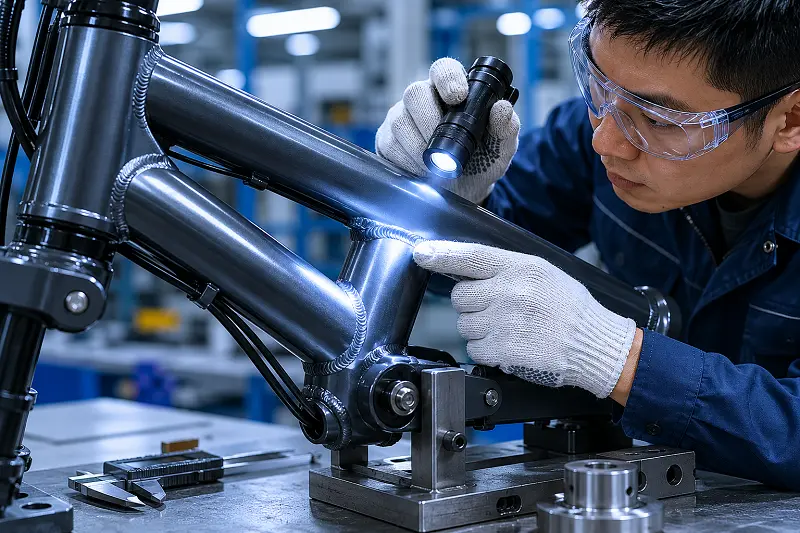
I’ve had many clients come to me after getting burned by a supplier who promised top-tier components but delivered them on a poorly designed frame. The problems don't show up in the sample. They appear six months later as a flood of warranty claims for cracked welds, bent frames, or persistent creaking noises. This is where a supplier's true value is revealed.
Looking Beyond the Components List
A factory that only assembles parts is not an engineering partner. A true partner, especially one with its own in-house frame factory like we have, understands the bike as a complete system.
- Development and Testing: Does your supplier use computer-aided stress analysis (like FEA) before making a prototype?8 Do they have physical testing labs to simulate thousands of miles of use, testing for fatigue and impact? Ask to see their testing equipment and reports. These are signs of a manufacturer who invests in reliability, not just looks.
- Welding and Manufacturing Control: The strongest design is useless if the welding is poor.9 We have strict controls and certified welders because we know a single bad weld can lead to a catastrophic failure. This is a level of detail you can't see on a spec sheet.
When you choose an OEM/ODM partner, you are trusting them with your brand's reputation. A powerful motor or a big battery might sell the first bike, but it's the frame's long-term reliability that creates a happy customer and a strong brand.
Conclusion
Investing in a properly engineered e-bike frame is not a cost; it's an investment in safety, reliability, and your brand's reputation. Choose partners with proven frame development expertise.
"Frames | Science Behind the Sport - West Virginia University", https://sciencebehindthesport.wvu.edu/cycling/frames. This source explains the additional stresses on e-bike frames, including battery weight, motor torque, and braking forces. Evidence role: mechanism; source type: education. Supports: E-bike frames must handle combined stresses from batteries, motors, higher speeds, and braking forces, requiring a stronger design.. ↩
"What's the heaviest component of an ebike? - Reddit", https://www.reddit.com/r/ebikes/comments/17iacvc/whats_the_heaviest_component_of_an_ebike/. This source provides data on the typical weight range of e-bike batteries and motors. Evidence role: statistic; source type: research. Supports: E-bike batteries and motors add a combined weight of 7-10 kg to the frame.. ↩
"Ebike Torque vs Speed: Understanding the Balance", https://us.engwe.com/blogs/news/ebike-torque-vs-speed. This source explains how hub and mid-drive motors exert torsional stress on e-bike frames. Evidence role: mechanism; source type: education. Supports: Hub and mid-drive motors exert torsional stress on e-bike frames, which standard frames are not designed to handle.. ↩
"Discover E-Bike Weight - Velotric", https://www.velotricbike.com/blogs/story-landing/how-much-does-an-ebike-weigh?srsltid=AfmBOoqy0v_bgSvHPxG-3Gmo98gmjDuwMUApyZsQHs-t2mM71qE2qTZg. This source discusses the increased weight and average speeds of e-bikes compared to regular bicycles. Evidence role: statistic; source type: research. Supports: E-bikes are heavier and maintain higher average speeds than regular bicycles.. ↩
"E-bike Frames Explained: Everything You Need To Know", https://us.engwe.com/blogs/news/e-bike-frames-explained. This source outlines how e-bike frame designs vary based on their intended use, such as city, cargo, or mountain biking. Evidence role: general_support; source type: education. Supports: E-bike frame designs must be tailored to their specific use cases, such as city commuting or cargo transport.. ↩
"What determines the batteries recycling behavior of e-bike citizens ...", https://pmc.ncbi.nlm.nih.gov/articles/PMC11078875/. This source explains the structural challenges of integrating batteries into e-bike frames, particularly for city and commuter models. Evidence role: mechanism; source type: research. Supports: Integrating batteries into e-bike frames, especially for city models, requires structural reinforcement to maintain stiffness.. ↩
"Ebike Frame Protection: How to Keep Your Bike New - Engwe", https://engwe.com/pt/blogs/news/ebike-frame-protection-how-to-keep-your-bike-new. This source details how motor torque and rough terrain stress specific areas of e-bike frames, such as the rear triangle and head tube. Evidence role: mechanism; source type: research. Supports: Motor torque and rough terrain create significant stress on the rear triangle and head tube of e-bike frames.. ↩
"Analysis of dynamics mechanical properties of electric bike frames ...", https://ui.adsabs.harvard.edu/abs/2021AIPC.2384g0005I/abstract. This source explains the role of computer-aided stress analysis (FEA) in e-bike frame development and testing. Evidence role: mechanism; source type: education. Supports: Computer-aided stress analysis (FEA) is used in e-bike frame development to simulate stress and improve design reliability.. ↩
"4 Common Methods of Welding Electric Bicycle Frames", https://www.kuakebicycle.com/4-common-methods-of-welding-electric-bicycle-frames/. This source highlights the importance of welding quality in the structural integrity of e-bike frames. Evidence role: mechanism; source type: education. Supports: Welding quality is critical to the structural integrity and safety of e-bike frames.. ↩