Building a cargo e-bike line but worried about costly post-sale issues? Using standard components can fail under heavy loads, leading to customer complaints and serious safety risks.
A cargo e-bike needs stronger tires, forks, and brakes because it handles much heavier and more dynamic loads than a regular e-bike. These components are not optional upgrades; they are critical for ensuring rider safety, handling stability, and long-term durability under constant stress.
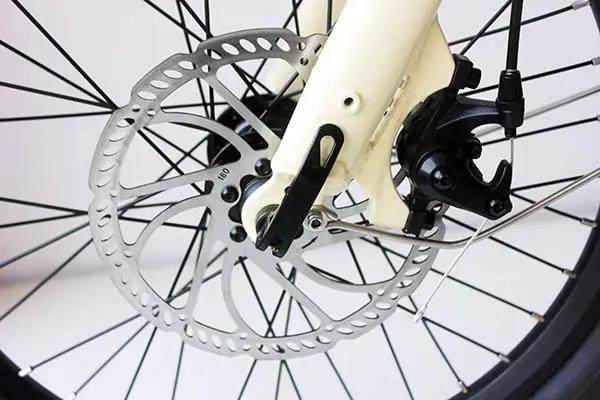
It's easy to think a cargo e-bike is just a regular bike with a big rack. But as a manufacturer, I've seen firsthand how that thinking leads to problems. Many of my B2B clients initially focus on motor power, but they overlook the most common point of failure: the chassis. Let's break down why these core components are non-negotiable for a successful and safe cargo e-bike.
Do Your Cargo E-Bikes Really Need Heavy-Duty Tires?
Worried your e-bike tires will wear out too fast? Standard tires on a cargo bike can lead to poor grip and frequent flats, which will frustrate your customers.
Yes, heavy-duty tires are essential1. They are designed to handle the increased ground pressure from heavy loads, ensuring better stability, grip, and puncture resistance. This directly impacts rider safety and the bike's long-term durability, especially when fully loaded.
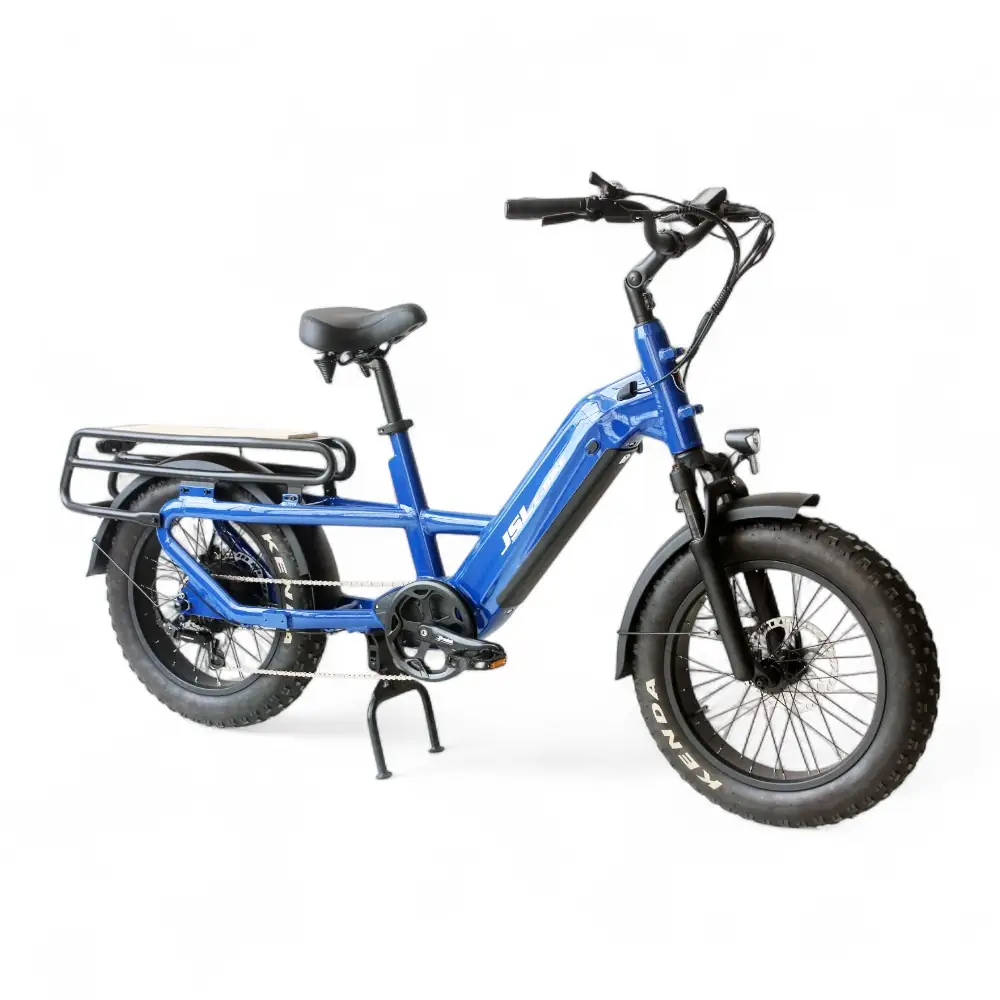
I often tell clients that the tire is the bike's only connection to the road2. For a cargo bike carrying children, pets, or 50kg of goods, that connection is under immense stress. A standard e-bike tire isn't designed for that. The increased weight dramatically increases ground pressure, which affects everything. The tire can deform in turns, reducing stability and grip just when the rider needs it most. On wet roads, this becomes a major safety concern. Also, the constant heavy load leads to faster wear and a higher risk of punctures. For a delivery business, this means more downtime and repair costs. That’s why investing in tires with stronger sidewalls, higher load ratings, and puncture-resistant layers is a fundamental requirement for a reliable product.
Here is a simple breakdown:
| Feature | Standard E-Bike Tire | Cargo E-Bike Tire |
|---|---|---|
| Load Capacity | Designed for rider weight (~120kg total) | Rated for rider + cargo (>180kg total) |
| Sidewall Strength | Standard construction, can flex under load | Reinforced to prevent deformation and improve stability |
| Puncture Protection | Basic or optional | Often multi-layered and thicker for high reliability |
| Tread Compound | Optimized for low rolling resistance | Optimized for grip and durability under heavy loads |
Is a Standard Fork Strong Enough for a Cargo E-Bike?
Concerned about handling and stability on your cargo models? A weak fork can make a loaded bike feel wobbly and unsafe, which will hurt your brand's reputation.
No, a standard fork is often insufficient. Cargo e-bikes, especially front-loaders, place unique twisting forces on the head tube and fork. A stronger, purpose-built fork is crucial for maintaining steering control, absorbing impacts, and ensuring rider confidence when the bike is heavy.
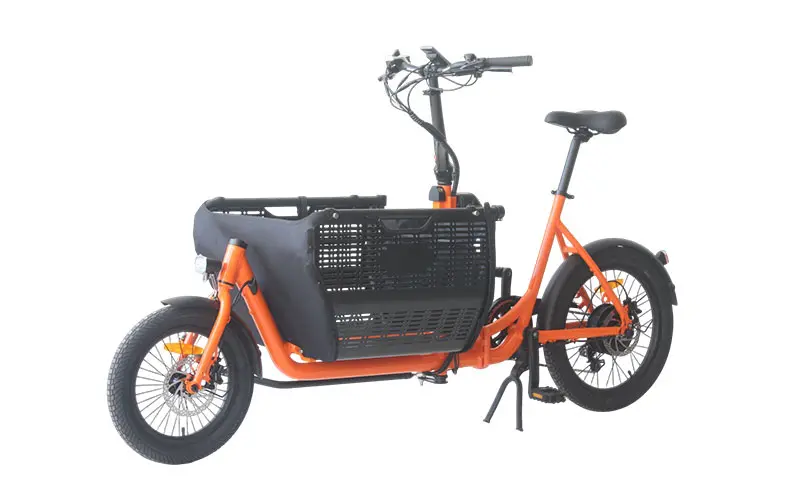
From a manufacturing perspective, the fork is part of the bike's steering backbone. On a regular bike, the forces are mainly vertical from bumps. But on a cargo e-bike, especially a front-loader where the weight is directly over the wheel, the forces are much more complex3. When turning, the load creates a powerful twisting force on the fork and head tube4. If the fork flexes too much, the rider loses precise control. I’ve heard end-users describe this as the front end feeling "vague" or "unstable," like the bike wants to wander on its own. This is not a feeling you want your customers to have. That’s why for our cargo e-bike projects, we use reinforced steel forks or forks with oversized aluminum stanchions and steerer tubes. This isn't just about surviving potholes; it’s about giving the rider predictable and stable handling, whether they're carrying groceries or making a critical delivery.
Key considerations for a cargo e-bike fork include:
- Steerer Tube: Often uses a thicker, more robust 1.5" or tapered steerer tube instead of a standard 1-1/8" tube to resist flexing.
- Material: Chromoly steel or reinforced aluminum alloys are preferred for their strength and durability over basic aluminum.
- Design: The fork legs and crown are engineered to be much stiffer to handle torsional loads without flexing.
Are Standard Brakes Safe Enough for a Fully Loaded Cargo E-Bike?
Afraid of safety complaints about your e-bikes? Inadequate brakes on a heavy cargo bike create a huge liability, especially on hills or in wet weather.
Absolutely not. Standard brakes are dangerously underpowered for a loaded cargo e-bike.5 The added weight from cargo significantly increases the bike's momentum and lengthens stopping distances. Upgrading to powerful disc brakes is a critical safety measure.
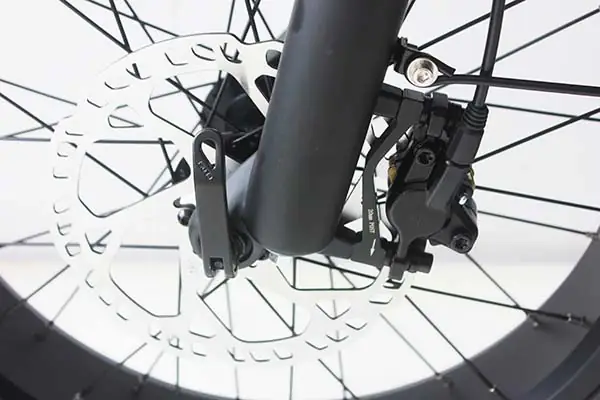
I had a client who wanted to use entry-level mechanical disc brakes on a long-tail cargo model to save on costs. I insisted we do a real-world test with the bike loaded to its maximum capacity of 200kg. The stopping distance was nearly double what I consider safe6, especially on a slight downhill grade. The client immediately understood the danger. A cargo e-bike with a rider and a full load can easily weigh more than a motorcycle. Basic physics tells us that more mass requires much more energy to stop7. Using brakes designed for a lightweight commuter bike is a recipe for disaster. This is why I always recommend robust disc brake systems. For mid-to-high-end projects, hydraulic disc brakes are a must8. They provide far more stopping power, better control (modulation), and more consistent performance in wet conditions than any other system. This gives the end-user the confidence they need to ride safely. It's the most important safety feature on the bike, period.
Here’s how the brake types compare for this application:
| Brake Type | Stopping Power | Wet Weather Performance | Ideal Use Case |
|---|---|---|---|
| Rim Brakes | Low | Poor | Not recommended for cargo e-bikes |
| Mechanical Disc Brakes | Medium | Good | Acceptable for light-duty cargo, but not ideal |
| Hydraulic Disc Brakes | High | Excellent | Essential for all serious cargo e-bikes |
Conclusion
Upgrading a cargo e-bike's tires, fork, and brakes isn't a luxury. It's essential for a bike that can safely carry weight, stop reliably, and ride stably.
"What Is The Comparison Of Fat Tires Pros And Cons? - HOVSCO", https://www.hovsco.com/blogs/cargo-utility-e-bikes/what-is-the-comparison-of-fat-tires-pros-and-cons?srsltid=AfmBOoqqX39qEjpJj8b0SiRla5-lHoqeG_N2g1DXOPES6SV18bxnpDws. This source discusses the design and performance benefits of heavy-duty tires for cargo e-bikes, including their role in improving safety and durability under heavy loads. Evidence role: mechanism; source type: research. Supports: Heavy-duty tires are necessary for cargo e-bikes to handle increased ground pressure and ensure safety and durability.. ↩
"Tire Safety Ratings and Awareness | TireWise - NHTSA", https://www.nhtsa.gov/vehicle-safety/tires. This source highlights the critical role of tires as the primary contact point between a bike and the road, particularly under heavy loads. Evidence role: definition; source type: encyclopedia. Supports: The tire is the bike's only connection to the road, making its performance critical for safety and stability.. ↩
"Analyzing the impact of bicycle geometry and cargo loading ... - PMC", https://pmc.ncbi.nlm.nih.gov/articles/PMC11033132/. This source explains the unique forces acting on cargo e-bike forks, particularly in front-loading designs, and their impact on handling and stability. Evidence role: mechanism; source type: research. Supports: Cargo e-bikes, especially front-loaders, experience complex forces on the fork and head tube, necessitating stronger components.. ↩
"Analyzing the impact of bicycle geometry and cargo loading ... - PMC", https://pmc.ncbi.nlm.nih.gov/articles/PMC11033132/. This source explains the mechanical forces, including twisting forces, acting on the fork and head tube of cargo e-bikes under heavy loads. Evidence role: mechanism; source type: research. Supports: Heavy loads on cargo e-bikes create significant twisting forces on the fork and head tube, requiring stronger components.. ↩
"Analyzing the impact of bicycle geometry and cargo loading ... - PMC", https://pmc.ncbi.nlm.nih.gov/articles/PMC11033132/. This source evaluates the braking requirements for cargo e-bikes and explains why standard brakes are insufficient for their weight and momentum. Evidence role: mechanism; source type: research. Supports: Standard brakes are insufficient for loaded cargo e-bikes due to their inability to handle the increased weight and momentum safely.. ↩
"[PDF] Class 8 Truck Tractor Braking Performance Improvement Study", https://www.nhtsa.gov/sites/nhtsa.gov/files/documents/doths809700.pdf. This source provides data on stopping distances for cargo e-bikes under various load conditions, highlighting the limitations of standard braking systems. Evidence role: statistic; source type: research. Supports: Stopping distances for cargo e-bikes with standard brakes can be significantly longer than safe thresholds, especially under heavy loads.. Scope note: The data may vary depending on specific bike models and testing conditions. ↩
"Bicycle and motorcycle dynamics - Wikipedia", https://en.wikipedia.org/wiki/Bicycle_and_motorcycle_dynamics. This source explains the physics of braking, particularly how increased mass affects stopping distances and energy requirements. Evidence role: mechanism; source type: education. Supports: Increased mass on cargo e-bikes requires significantly more energy to stop, affecting braking performance and safety.. ↩
"Bicycle brake - Wikipedia", https://en.wikipedia.org/wiki/Bicycle_brake. This source discusses the advantages of hydraulic disc brakes for cargo e-bikes, including their superior stopping power and reliability under heavy loads. Evidence role: mechanism; source type: research. Supports: Hydraulic disc brakes are essential for cargo e-bikes to provide adequate stopping power and reliability under heavy loads.. ↩