Are after-sales headaches hurting your e-bike business? A simple part swap can fail unexpectedly. The secret lies in choosing the right communication protocol: UART1 vs. CAN2.
The choice between UART and CAN communication protocols determines your e-bike's future. UART is ideal for cost-effective, high-volume models with easy maintenance. CAN is better for high-end, smart e-bikes with complex systems, offering superior data communication and integration for long-term value.
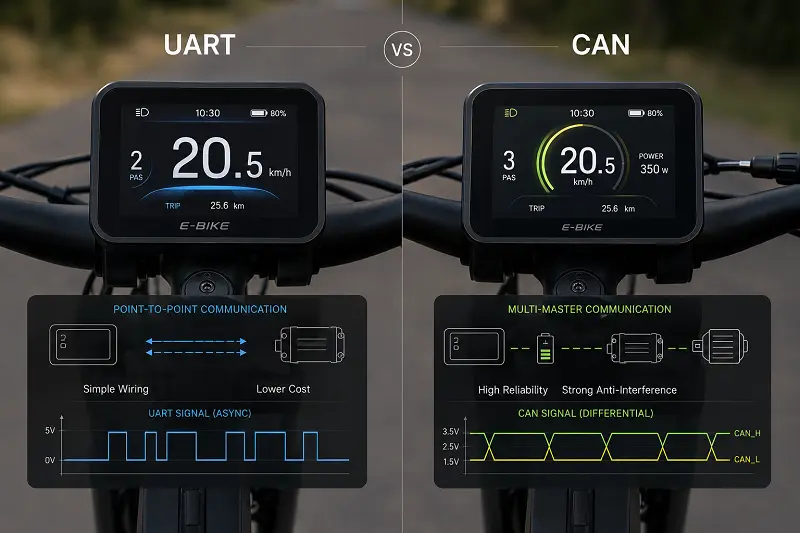
As a manufacturer, I've seen many clients focus only on the initial cost. But this decision goes much deeper. It affects everything from the user experience to your long-term maintenance costs. Let's break down what this means for your specific e-bike project, so you can make a choice that benefits you for years to come.
Is the Lower-Cost UART Protocol a Good Choice for My E-Bike Fleet?
Need to launch a reliable, high-volume e-bike line without breaking the bank? UART offers a proven, cost-effective solution.3 But is it the right long-term choice for your brand?
Yes, UART is an excellent choice for most OEM projects, especially for wholesale and entry-level models. Its mature technology, wide availability of compatible parts, and low replacement costs make it a practical and reliable option for building stable, easy-to-maintain e-bike fleets.
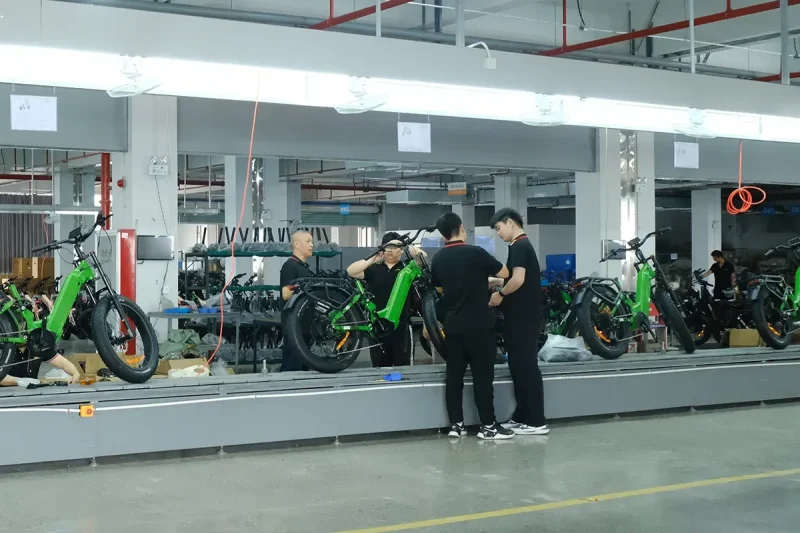
UART is a point-to-point communication protocol. Think of it as a simple, direct conversation. The controller talks to the display, and the controller talks to the battery’s management system (BMS)4. These are separate, one-on-one chats. This simplicity is actually its biggest strength for many e-bike projects. For a standard city e-bike or a foldable model, this setup is more than enough. The display shows speed and battery level, and the controller delivers power. If a display breaks, you can often replace it with another compatible UART display without much trouble. This makes sourcing parts and handling repairs much easier for distributors managing large quantities of bikes. UART is the reliable workhorse protocol that gets the job done for the majority of the market.
| Feature | Benefit for OEM Clients |
|---|---|
| Lower Cost | Reduces the bill of materials (BOM), making your e-bikes more price-competitive. |
| Mature Technology | Offers proven reliability with fewer surprises during development, ensuring a faster time-to-market. |
| Wide Parts Availability | You can easily source compatible displays, controllers, and batteries from various suppliers. |
| Simple Maintenance | Technicians can swap components without needing complex diagnostic tools, lowering service costs. |
When Should I Upgrade to the CAN Bus Protocol for My E-Bikes?
Want to build a premium, smart e-bike that stands out? Your current tech might be holding you back. The CAN bus protocol can unlock advanced features and a superior user experience.
You should upgrade to CAN when developing mid-to-high-end or feature-rich e-bikes. If your project involves smart displays, advanced battery management, or high-performance motors, CAN provides the necessary data capacity and reliability for a truly premium product.5
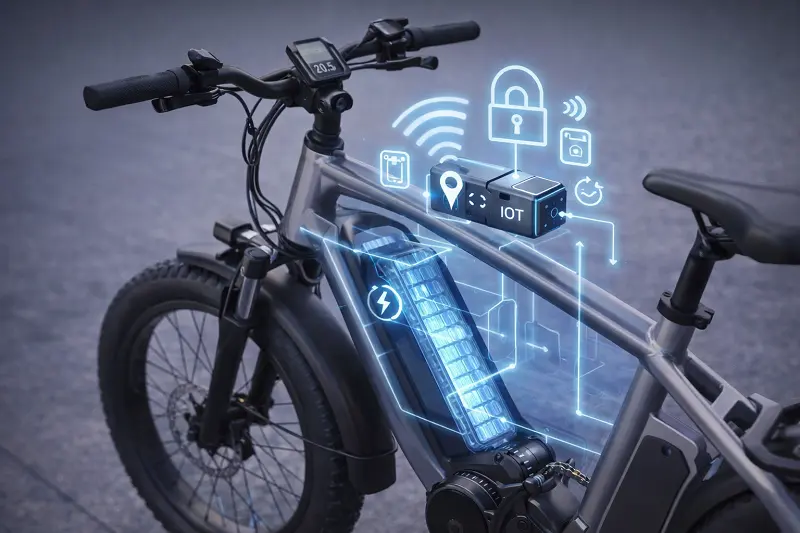
Unlike UART, CAN (Controller Area Network) bus is a true network. All the key components—controller, display, battery BMS, and motor—are connected on a single bus. They can all talk to each other in a group chat. This allows for much more sophisticated features and system synergy. For example, the battery's BMS can broadcast its exact state-of-charge and cell health to both the display and the motor. The motor can then adjust its power output in real-time for maximum efficiency. This level of integration is essential for premium features like anti-theft systems with GPS, remote diagnostics for fleet management, and over-the-air (OTA) firmware updates. However, this means all components are part of a closed ecosystem. You can't just swap a part from one brand with another. They must all speak the same "dialect" of CAN to work together.
| Feature | Benefit for OEM Clients |
|---|---|
| Robust Data Transfer | Handles more data reliably, enabling complex features like real-time diagnostics and smart integrations. |
| System-wide Integration | All components work together, improving overall performance, efficiency, and rider safety. |
| Future-Proofing | Allows for advanced features like IoT connectivity and over-the-air updates, adding long-term value. |
| Enhanced Diagnostics | Technicians can pinpoint the exact source of an issue faster, reducing service time and costs. |
What’s the Biggest Mistake OEM Clients Make When Choosing a Protocol?
You’ve chosen your components and are ready for production. But did you consider after-sales service? A common oversight in protocol choice can lead to massive logistical problems later.
The biggest mistake is ignoring how the protocol impacts long-term maintenance and parts replacement. Many clients focus only on the initial manufacturing cost, not realizing that an incompatible protocol can make a simple repair, like swapping a display, a complex system-level problem.
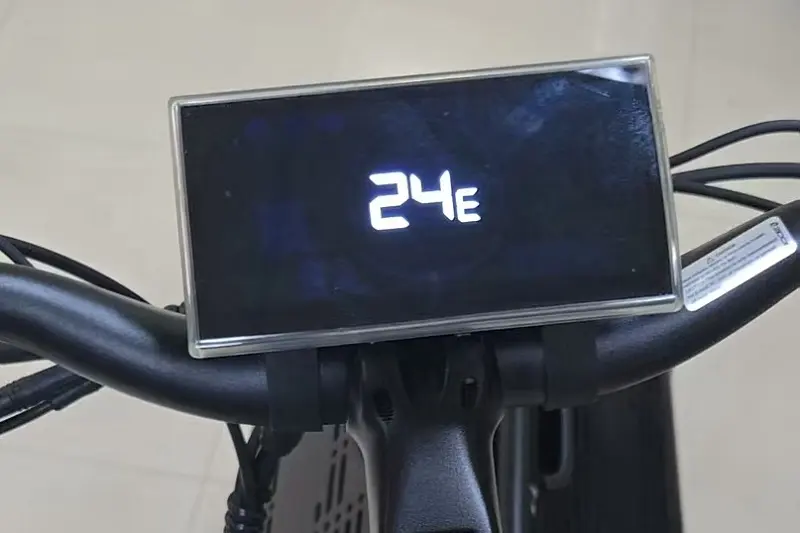
This choice has a hidden cost that appears after the sale. I once worked with a client who sourced UART displays from a different supplier to save a few dollars per unit. The bikes worked fine at first. A year later, their customers needed replacement batteries. The new batteries, with a slightly different BMS, couldn't communicate properly with the old displays. They showed incorrect battery levels and threw random error codes. The client ended up managing two different inventories of parts for the same bike model, which became a logistical nightmare. This is why a unified protocol strategy is so critical. Choosing CAN means committing to a specific ecosystem.6 Choosing UART means ensuring your chosen suppliers use a consistent data protocol, even if the physical plug looks the same. It is not just about the connection; it is about the language being spoken over that connection.
| Mistake | Consequence | How to Avoid |
|---|---|---|
| Focusing only on initial cost | High long-term costs for service, parts inventory, and brand damage from returns. | Consider the Total Cost of Ownership (TCO), including after-sales support. |
| Mixing incompatible components | Communication failures, error codes, and a poor user experience that leads to complaints. | Define a clear protocol strategy (UART or CAN) and stick to it across all components.7 |
| Assuming all UART parts are interchangeable | Mismatched data protocols cause incompatibility, even if plugs fit. | Work with a single reliable OEM partner like us to ensure system-wide compatibility. |
Conclusion
Choosing between UART and CAN is a strategic business decision, not just a technical one. Align your protocol choice with your product roadmap to ensure long-term success and customer satisfaction.
"Universal asynchronous receiver-transmitter", https://en.wikipedia.org/wiki/Universal_asynchronous_receiver-transmitter. UART (Universal Asynchronous Receiver-Transmitter) is a hardware communication protocol commonly used for serial communication in embedded systems, offering simplicity and cost-effectiveness. Evidence role: definition; source type: encyclopedia. Supports: UART is a point-to-point communication protocol that is cost-effective and widely used in embedded systems for its simplicity.. ↩
"CAN bus - Wikipedia", https://en.wikipedia.org/wiki/CAN_bus. The source explains that the CAN (Controller Area Network) protocol is a robust communication system used in e-bikes for advanced features like real-time diagnostics, system-wide integration, and IoT connectivity. Evidence role: definition; source type: encyclopedia. Supports: CAN is a communication protocol that enables advanced features and system-wide integration in e-bikes.. ↩
"Universal asynchronous receiver-transmitter - Wikipedia", https://en.wikipedia.org/wiki/Universal_asynchronous_receiver-transmitter. This source provides an overview of UART's cost-effectiveness and reliability in communication systems. Evidence role: general_support; source type: education. Supports: UART offers a proven, cost-effective solution.. Scope note: The source may not directly address e-bike applications. ↩
"Exploring the Top Battery Communication Protocols Used Today", https://www.large-battery.com/blog/battery-communication-protocols-functions-modern-bms/. The source explains the role of the battery management system (BMS) in UART communication protocols, highlighting its function in direct, point-to-point communication with other e-bike components. Evidence role: mechanism; source type: encyclopedia. Supports: UART is a point-to-point communication protocol where the battery management system (BMS) communicates directly with other components like the controller and display.. ↩
"CAN bus - Wikipedia", https://en.wikipedia.org/wiki/CAN_bus. This source explains how CAN bus supports high data capacity and reliability in advanced systems. Evidence role: general_support; source type: education. Supports: CAN provides the necessary data capacity and reliability for a truly premium product.. Scope note: The source may not specifically address premium e-bike products. ↩
"CAN bus - Wikipedia", https://en.wikipedia.org/wiki/CAN_bus. This source explains how adopting CAN bus requires ecosystem-wide compatibility. Evidence role: general_support; source type: education. Supports: Choosing CAN means committing to a specific ecosystem.. Scope note: The source may not specifically address e-bike ecosystems. ↩
"The Impact of the Unified Protocol for Emotional Disorders on ... - PMC", https://pmc.ncbi.nlm.nih.gov/articles/PMC3865711/. This source emphasizes the importance of a unified protocol strategy for system compatibility. Evidence role: general_support; source type: education. Supports: Define a clear protocol strategy (UART or CAN) and stick to it across all components.. Scope note: The source may not specifically address e-bike component strategies. ↩