Choosing the right display for your e-bike line can feel complicated. Making the wrong call can hurt your costs and sales, but we can help you decide.
LED displays are simple and cost-effective, perfect for high-volume, price-sensitive models. LCD displays offer more data and a premium feel, boosting the perceived value of mid-to-high-end bikes. The best choice depends on your sales strategy, not just the technology itself.
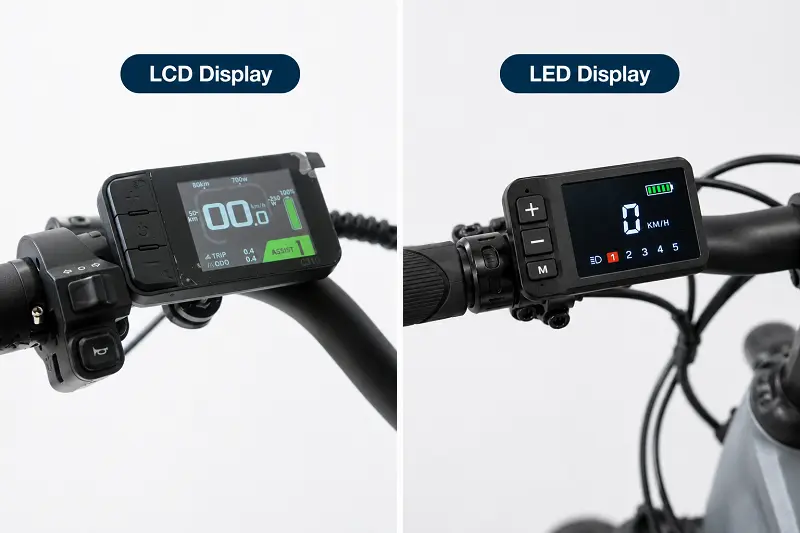
From my perspective running an e-bike factory for over 25 years, this choice is about much more than just the screen. It connects directly to your product positioning, cost control, and even your after-sales service strategy. Let's look closer at how this simple component can impact your entire business.
Is an LED Display the Smartest Choice for Cost-Sensitive Wholesale E-Bikes?
You need to keep costs low for your entry-level models. But you don't want them to feel cheap. An LED display might be the perfect, practical solution.
Yes, for high-volume, price-focused wholesale models, LED displays1 are often the smartest choice. Their low cost, simple operation, and easy maintenance reduce your initial investment and your distributors' after-sales burden. This makes them ideal for entry-level commuters and fleet bikes.
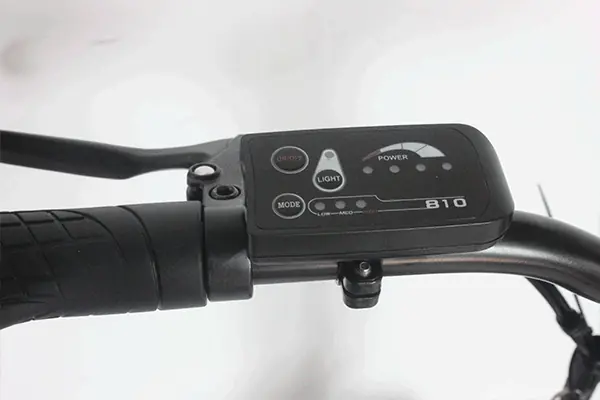
In my factory, we produce a lot of e-bikes for price-sensitive markets. For these projects, the LED display is almost always the winner. It's not just about saving a few dollars on the component itself. It's about the total cost of ownership for you and your distributors. An LED display is incredibly straightforward. It usually shows the battery level and the power assist setting, and that's it. This simplicity is a huge advantage.2 Your end customers can understand it instantly, which means fewer support calls for your dealers. For you as a wholesaler, this means a more reliable product line. Maintenance is also much easier.3 If an LED display fails, it's a quick and cheap part to swap out. This lowers the pressure on your distributors to stock expensive spare parts. It keeps the whole supply chain lean and efficient.
Here is how I see the benefits for wholesale clients:
| Feature of LED Display | Benefit for Your Business |
|---|---|
| Low Unit Cost | Reduces the final manufacturing cost of the e-bike. |
| Simple Operation | Lowers the learning curve for end-users, reducing dealer support needs. |
| Durable & Reliable | Fewer failures mean a better brand reputation and lower warranty claims. |
| Easy to Replace | Simplifies after-sales service and reduces spare part inventory costs. |
Think about entry-level city commuters or shared e-bike fleets. The goal is reliability and low operational cost. An LED display fits that mission perfectly. It delivers the essential information without adding complexity or expense.
When Does an LCD Display Justify Its Higher Cost for Your E-Bike Line?
You want your e-bikes to look premium and command a higher price. But adding features increases your cost. An LCD can boost perceived value and deliver a strong return.
An LCD display4 justifies its cost when your goal is to increase a model's perceived value and retail price. It makes the bike look more advanced and feature-rich, which appeals to customers looking for mid-range commuters, folding e-bikes, or mountain e-bikes.
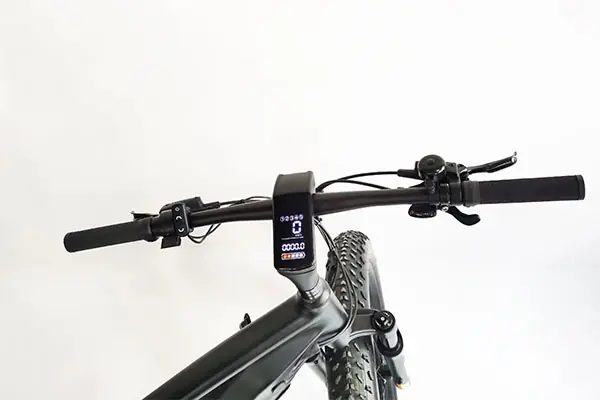
I often see clients hesitate at the higher cost of an LCD. But I always tell them to think about the customer in the showroom or scrolling online. An LCD screen immediately makes an e-bike look more "complete" and technologically advanced. It's a powerful visual cue that suggests higher quality. Instead of just basic lights, the customer sees their speed, total distance traveled (odometer), trip distance, and precise battery percentage. Some even show motor wattage output or riding time. This data isn't just a gimmick; it enhances the riding experience for many users, especially for enthusiasts who ride mountain e-bikes or tech-savvy urban commuters. This improved perception allows you to position the bike at a higher price point. The small extra cost for the LCD can lead to a much larger increase in the final retail price, improving margins for both you and your retailers.
Here’s how an LCD adds value:
| Feature of LCD Display | Impact on Retail & Sales |
|---|---|
| Detailed Ride Data | Enhances the user experience, appealing to data-driven riders. |
| Modern, Techy Look | Increases the bike's perceived value and justifies a higher price. |
| Clear Error Codes5 | Simplifies troubleshooting for service centers, making diagnostics faster. |
| More Customization | Often allows for more settings, giving the user a sense of control. |
So, if you are developing a mid-range city bike, a folding e-bike for techy commuters, or an off-road model, the LCD is a smart investment. It helps your product stand out and feel more valuable than the competition.
How Do You Choose the Right Display for Your Target Market and Sales Strategy?
You feel stuck choosing between a simple LED and a feature-rich LCD. But making the choice based on specs alone is a mistake. Let's find the right answer together.
Stop comparing the components and start analyzing your sales goal. Is your customer primarily motivated by the lowest possible price? Choose LED. Do you need your product to look more valuable in photos and showrooms to win sales? Choose LCD. The right choice aligns the component with your business strategy.
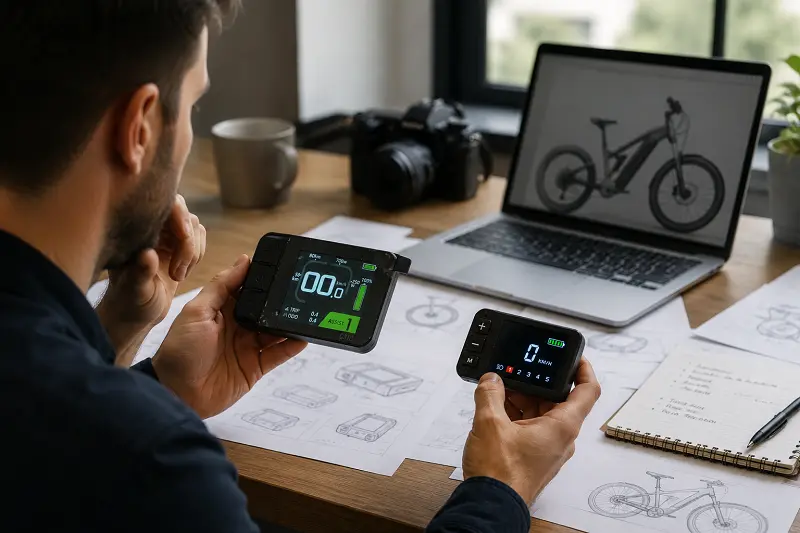
The most important question I ask my OEM partners is not "Which display do you want?" Instead, I ask, "Who is your customer, and how will you sell this bike?" The display is a strategic part of the answer. It's a small component that sends a big message about the bike's price and purpose. A professional choice isn't about which technology is "better." It's about which technology helps you sell more bikes profitably. If your business model is based on winning large tenders for basic commuter bikes where every dollar counts, the LED is your best friend. It helps you hit that aggressive price point. But if you are building a private-label brand to be sold online and in stores, your product's photos and in-person appeal are critical. In that case, an LCD screen acts as a powerful marketing tool. It instantly elevates the product's image and helps justify your asking price.
Here's a simple framework I use with my clients to make this decision:
| Your Primary Goal | Your Target Customer | The Strategic Display Choice |
|---|---|---|
| Lowest Possible Cost | Buys based on price, needs a basic and reliable bike. | LED Display |
| High Volume & Simplicity | Fleet buyers, distributors in price-sensitive regions. | LED Display |
| Higher Perceived Value | Wants more features, is willing to pay for a "better" bike. | LCD Display |
| Strong Retail/Online Presence | Shops visually, compares features online before buying. | LCD Display |
So, before you finalize your spec sheet, take a step back. Think about your customer's wallet and your sales pitch. The display is not just a feature; it's a tool to help you close the deal.
Conclusion
Ultimately, the right display isn't about LED versus LCD. It's about choosing the component that best supports your wholesale pricing, market position, and sales strategy for that model.
"LED Displays - What Are They and How Do They Work?", https://easysignage.com/blog/24/led-digital-signage/. LED displays are defined as electronic screens that use light-emitting diodes to display information, offering simplicity and cost-effectiveness for applications like e-bikes. Evidence role: definition; source type: encyclopedia. Supports: LED displays are simple and cost-effective, perfect for high-volume, price-sensitive models.. ↩
"LED display - Wikipedia", https://en.wikipedia.org/wiki/LED_display. This source supports the claim that simplicity in LED displays reduces user confusion and enhances reliability. Evidence role: general_support; source type: research. Supports: This simplicity is a huge advantage.. ↩
"What are the advantages of front maintenance of LED display", https://www.esdled.com/what-are-the-advantages-of-front-maintenance-of-led-display_n148. This source supports the claim that LED displays are easier to maintain due to their simple design and fewer components. Evidence role: mechanism; source type: research. Supports: Maintenance is also much easier.. ↩
"LCD Wireless Display & Throttle for E-Bike - E-Switchy Electric Bike Kit", https://eswitchybikes.com/products/lcd-wireless-display-throttle-electric-bike?srsltid=AfmBOor8E3rGp5PdYH2HKNYRBLNUG2YL4GoB6WAWPVyVJj1lI0MK--bg. An LCD display on an e-bike typically provides detailed ride data, such as speed, distance, and battery percentage, enhancing the user experience and perceived value of the bike. Evidence role: definition; source type: encyclopedia. Supports: An LCD display justifies its cost when your goal is to increase a model's perceived value and retail price.. ↩
"How to fix all LCD problems - read this! - Displays - Arduino Forum", https://forum.arduino.cc/t/how-to-fix-all-lcd-problems-read-this/100051. This source supports the claim that LCD displays often include error code functionality, which simplifies troubleshooting. Evidence role: definition; source type: encyclopedia. Supports: Clear Error Codes. ↩