Struggling to understand why TIG welding1 matters for your e-bike order? A weak weld isn't just a cosmetic flaw; it's a future failure point that can risk your brand's reputation.
TIG welding provides precise control to create strong, clean joints on e-bike frames2, especially at critical stress points. It's essential for ensuring the frame can handle the extra weight and force from the battery and motor, guaranteeing long-term durability, rider safety, and consistent quality in mass production.
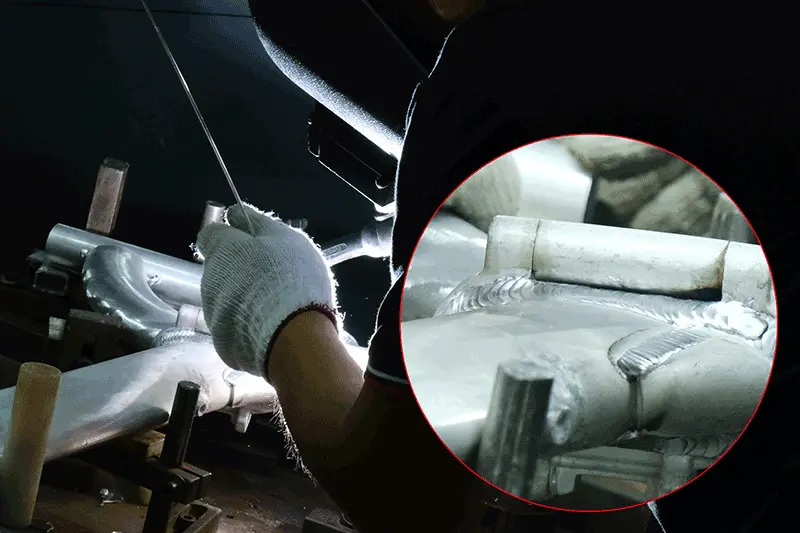
When I review a new frame sample, my eyes are immediately drawn to the welds. It’s a habit. Many of our clients do the same, looking for that clean, "stack-of-dimes" appearance that TIG welding is famous for. And while a beautiful weld is satisfying to see, I always remind them that what you see on the surface is only half the story. The true value of TIG welding goes much deeper than just aesthetics, especially when it comes to the unique demands of an electric bicycle. It’s about building a foundation of strength and reliability that protects both the rider and your business.
Why is Welding So Important for E-Bike Frames Specifically?
You might think an e-bike frame is just a bicycle frame with a motor attached. But that assumption can lead to serious product failures, as the forces involved are completely different.
E-bike frames endure significantly higher and more complex stress from battery weight, motor torque, and faster average speeds. Proper welding at key points like the head tube and bottom bracket is critical to prevent cracks, deformation, and catastrophic failure, ensuring rider safety and product longevity.
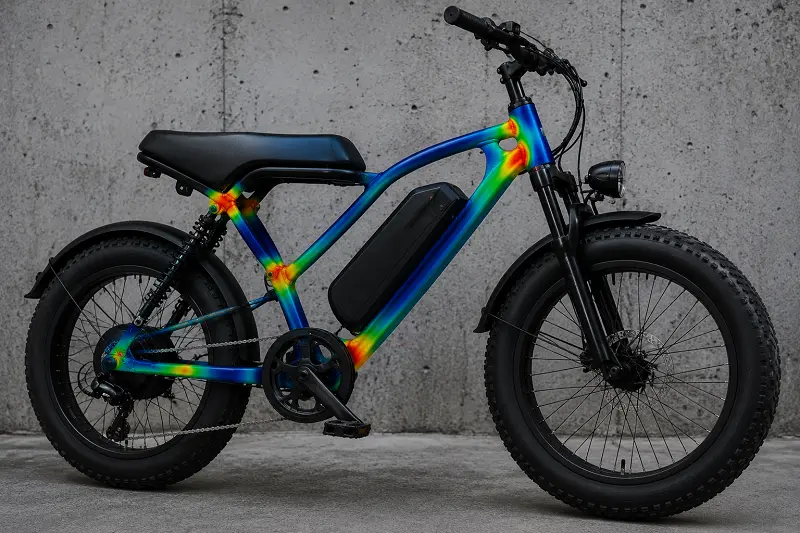
A standard bicycle frame is designed to support a rider's weight and pedaling force. An e-bike frame has to handle much more. We aren't just adding a few pounds; we are introducing dynamic forces that constantly attack the frame's integrity. For example, the battery pack adds a constant static load, primarily on the down tube. The motor generates torque that twists the bottom bracket shell and chainstays every time the rider accelerates. Higher average speeds and the bike's overall weight mean that every bump in the road sends greater shockwaves through the entire structure. These forces are concentrated at the weld joints. That’s why, in our factory, we pay special attention to these critical areas.
Key E-Bike Stress Points vs. Regular Bikes
| Stress Point | Regular Bicycle Stress | Electric Bicycle Stress (Increased) |
|---|---|---|
| Head Tube | Steering & Rider Weight | + Increased braking force, + Front hub motor torque |
| Down Tube | Frame Rigidity | + Heavy battery weight, + Vibration from motor |
| Bottom Bracket | Pedaling Force | + High motor torque, + Constant twisting forces |
| Chain/Seat Stays | Drivetrain & Rider Weight | + Rear hub motor torque, + Increased braking stress |
If the welds in these areas are not executed perfectly, a sample might feel fine. But over months of daily use, those weak points can lead to creaking noises, frame misalignment, or even a complete structural failure. This is why we treat frame welding as a safety-critical process, not a finishing touch.
Are Pretty Welds Always Strong Welds?
It’s tempting to judge a frame's quality by its smooth, perfect-looking welds. But a beautiful surface can hide a dangerous secret: a weak bond that's waiting to fail under pressure.
No, a pretty weld is not always a strong weld. While a clean appearance is a sign of good craftsmanship, the most critical factor is weld penetration—how deeply the weld fuses the metal parts together. A shallow, "cold" weld can look perfect but will crack under stress.
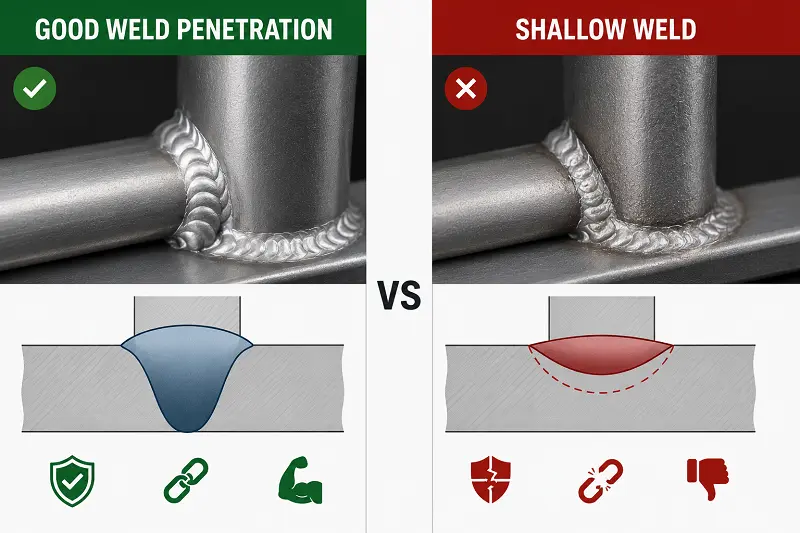
I’ve had many clients visit our factory, pick up a sample frame, and praise the beautiful, smooth welds. My response is always, "Thank you, but let me show you why it's also strong." The biggest misconception in our industry is that aesthetics equal integrity. A skilled welder can make a "cold" weld (one without enough heat and penetration) look amazing on the surface. But this type of joint has not properly fused the two pieces of metal. It's more like a surface-level glue than a true structural bond. For aluminum frames, this is even more critical because the material is sensitive to heat. TIG welding gives us the precise control needed to achieve deep penetration without overheating and weakening the surrounding metal, which is known as the Heat Affected Zone (HAZ)3.
What You See vs. What We Check
| What Clients Often Look For | What Our Quality Control Engineers Insist On | Why It Matters |
|---|---|---|
| Smooth, even weld bead | Deep, consistent weld penetration | The strength of the joint comes from how much it has fused, not its surface texture. |
| No visible bumps or craters | No porosity, cracks, or undercut | Internal gas bubbles (porosity) or small cracks create weak spots that can grow4. |
| "Stack of Dimes" look | Controlled Heat Affected Zone (HAZ) | Too much heat weakens the frame material next to the weld, creating a failure point5. |
| A perfect sample | Consistency across the entire batch | A single perfect frame is easy. Thousands of perfect frames require a robust process. |
Ultimately, a good weld is one that is both clean on the outside and completely solid on the inside. That’s why our inspection process goes far beyond just a visual check.
How Do We Ensure TIG Welding Quality for Your OEM/ODM Order?
You approved a perfect prototype. Now you're worried: will the 1,000th frame from your bulk order be as good as the first? This inconsistency can destroy your profit margins and brand image.
We guarantee consistent TIG welding quality through a strict, process-driven system. This includes using certified welders, custom-built jigs for perfect alignment, documented procedures for every joint, and rigorous post-weld inspection. This ensures every frame in your order meets the exact same high standard.
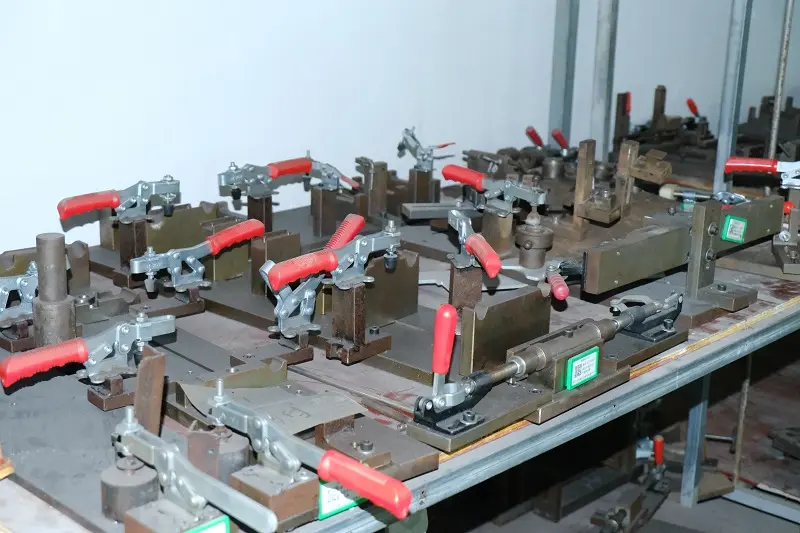
Relying on a single "master welder" is a recipe for inconsistency in mass production. People have good days and bad days. A process does not6. That's why we've built our entire welding operation around a system that removes guesswork and guarantees repeatable quality. It starts with our welders, who are not only experienced but also certified for the specific materials and thicknesses used in your frames. But the real key to consistency is our tooling. For every frame model we produce, we design and build a custom welding jig. This complex fixture holds every tube in its exact position, down to the millimeter. This prevents distortion from the heat of the welding and ensures that every single frame has the same geometry. We then create Standard Operating Procedures (SOPs) that tell the welder the exact settings—amperage, travel speed, gas flow—to use for every single weld on the frame. This systematic approach is what separates a professional manufacturing partner from a simple workshop.
Our 4-Step Welding Quality System:
- Certified People: We employ welders certified for aluminum TIG welding, with ongoing training.
- Precise Tooling: Custom jigs for each model ensure perfect alignment and prevent heat distortion7.
- Documented Process: SOPs dictate the exact parameters for every weld, removing variability.
- Rigorous Inspection: After welding, every frame is checked for alignment. We also use non-destructive testing on batches to check for internal weld defects.
This system is how we ensure the frame you approve as a sample is the exact same frame your customer receives, thousands of times over.
Conclusion
Ultimately, TIG welding is more than a feature; it's a core process that defines your e-bike's safety, durability, and quality. Focus on a partner's process, not just a pretty sample.
"What Is TIG Welding? Details on Use and Safety", https://www.lincolntech.edu/news/skilled-trades/welding-technology/what-is-tig-welding-usage-safety-details. TIG welding, or Tungsten Inert Gas welding, is a precise welding technique that uses a tungsten electrode to produce high-quality welds, particularly suitable for applications requiring strong and clean joints. Evidence role: definition; source type: encyclopedia. Supports: TIG welding provides precise control to create strong, clean joints on e-bike frames, especially at critical stress points.. ↩
"TIG Welding Overview and Applications - Tulsa Welding School", https://www.tws.edu/blog/articles/tig-welding-overview-and-applications/. This source explains how TIG welding offers precision and strength, particularly for applications requiring clean and durable joints. Evidence role: mechanism; source type: education. Supports: TIG welding provides precise control to create strong, clean joints on e-bike frames, especially at critical stress points.. ↩
"Heat-affected zone - Wikipedia", https://en.wikipedia.org/wiki/Heat-affected_zone. The Heat Affected Zone (HAZ) is a critical area in welding where the material properties can be altered due to exposure to high temperatures, potentially affecting the structural integrity of the weld. Evidence role: definition; source type: encyclopedia. Supports: TIG welding gives us the precise control needed to achieve deep penetration without overheating and weakening the surrounding metal, which is known as the Heat Affected Zone (HAZ).. ↩
"What Is Porosity in Welding? | UTI", https://www.uti.edu/blog/welding/what-is-porosity-in-welding. This source explains how porosity and cracks in welds can compromise structural integrity over time. Evidence role: mechanism; source type: education. Supports: Internal gas bubbles (porosity) or small cracks create weak spots that can grow.. ↩
"Welding in Extreme Texas Heat: Safety and Efficiency Tips", https://www.dupuyoxygen.com/welding-in-extreme-texas-heat. This source discusses the effects of excessive heat during welding, including weakening the Heat Affected Zone. Evidence role: mechanism; source type: education. Supports: Too much heat weakens the frame material next to the weld, creating a failure point.. ↩
"Welding - Wikipedia", https://en.wikipedia.org/wiki/Welding. This source discusses how systematic processes in manufacturing reduce variability compared to relying solely on individual skill. Evidence role: expert_consensus; source type: education. Supports: A process does not have variability like individual welders, ensuring consistent quality in mass production.. ↩
"Jigs and fixtures for welding and machining - Support | Formlabs", https://support.formlabs.com/s/article/Jigs-and-fixtures-for-welding-and-machining?. This source explains how custom welding jigs improve alignment and reduce heat distortion during manufacturing. Evidence role: mechanism; source type: education. Supports: Custom jigs for each model ensure perfect alignment and prevent heat distortion.. ↩