Struggling to design an e-bike frame that's strong, stylish, and hides the battery? Traditional tubes often lead to bulky, compromised designs, making your product look dated and less appealing.
The value of hydroformed tubing is not just about making a frame look smoother or more advanced. It helps balance appearance, strength, and battery space, which is crucial for modern e-bikes. It solves the integration problem that traditional tubes cannot.
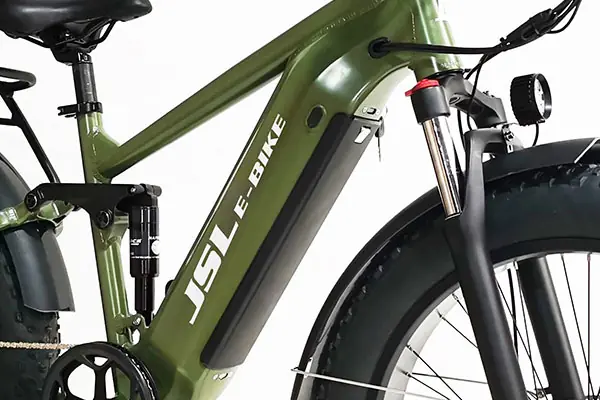
Many of my clients initially think hydroforming is just a cosmetic upgrade, a way to make a bike look more expensive. I always tell them the real story is much deeper. It's an engineering solution that directly addresses the unique challenges of building an electric bicycle. While a traditional bike frame just needs to be strong, an e-bike frame has to do much more. It needs to be a complete system that houses a battery, a controller, and complex wiring. This is where simple, old-school tubes fall short. Let's explore why this manufacturing process is so important for creating a truly modern and competitive e-bike.
Why Can't Traditional Tubes Handle Modern E-Bike Demands?
You might think using standard round or square tubes is a smart way to control costs. But when you try to fit an internal battery, the design becomes a mess.
Traditional tubes are not flexible enough to create the custom shapes needed for integrated batteries, controllers, and internal wiring.1 Trying to use them for modern e-bikes often leads to compromises in strength, looks, or both, which can hurt your brand's image.2
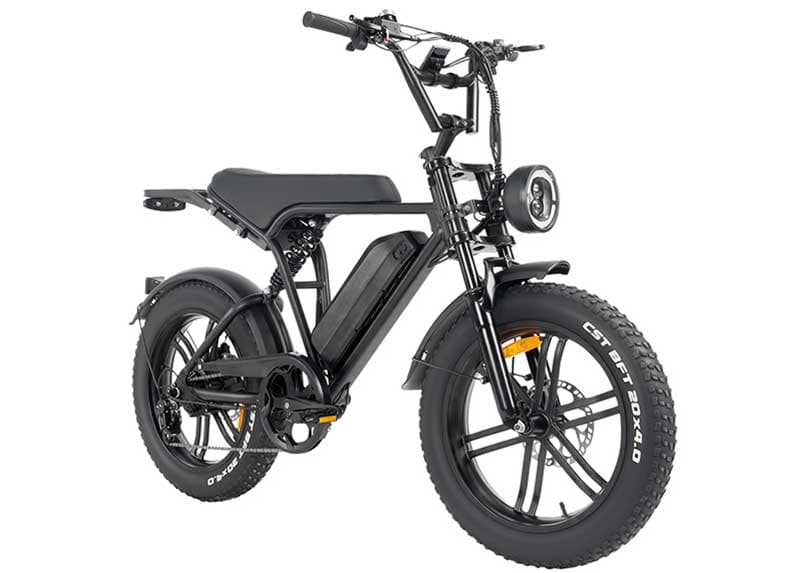
When we build a frame with traditional tubing, we are limited to simple shapes. For a regular bicycle, this is perfectly fine. But an e-bike is different. We have to think about where the battery goes, how to run the wires, where to place the controller, and how to balance the bike's center of gravity. This becomes a major problem for e-bikes with internal batteries.3 If you use a standard down tube, it's usually not wide enough or strong enough to hold a battery securely. You would have to weld extra pieces of metal, which adds weight, creates weak spots, and makes the frame look clunky. It's a patchwork solution. This approach might save a little money upfront, but it results in a product that looks and feels cheap.
Here is a simple breakdown:
| Feature | Traditional Tubing | Hydroformed Tubing |
|---|---|---|
| Battery Integration | Poor; often requires external mounting or bulky welds. | Excellent; creates a seamless internal cavity. |
| Aesthetics | Basic and functional; visible welds and simple lines. | Premium and modern; smooth, flowing lines. |
| Strength-to-Weight | Okay; strength is added by using thicker tubes or gussets. | Optimized; stronger where needed without adding weight. |
| Cable Routing | Difficult; often requires external clips or simple holes. | Clean; allows for fully internal and protected routing. |
| Brand Perception | Generic, entry-level. | High-end, design-focused. |
How Does Hydroforming Solve the E-Bike Integration Problem?
You want a sleek e-bike with a hidden battery, but welding and forcing tubes together looks messy. There has to be a better way to achieve a clean, integrated design.
Hydroforming uses high-pressure fluid to shape a tube from the inside out.4 This lets us create complex, optimized shapes that perfectly integrate batteries and electronics, while also making the frame stronger and giving it a clean, premium look.5
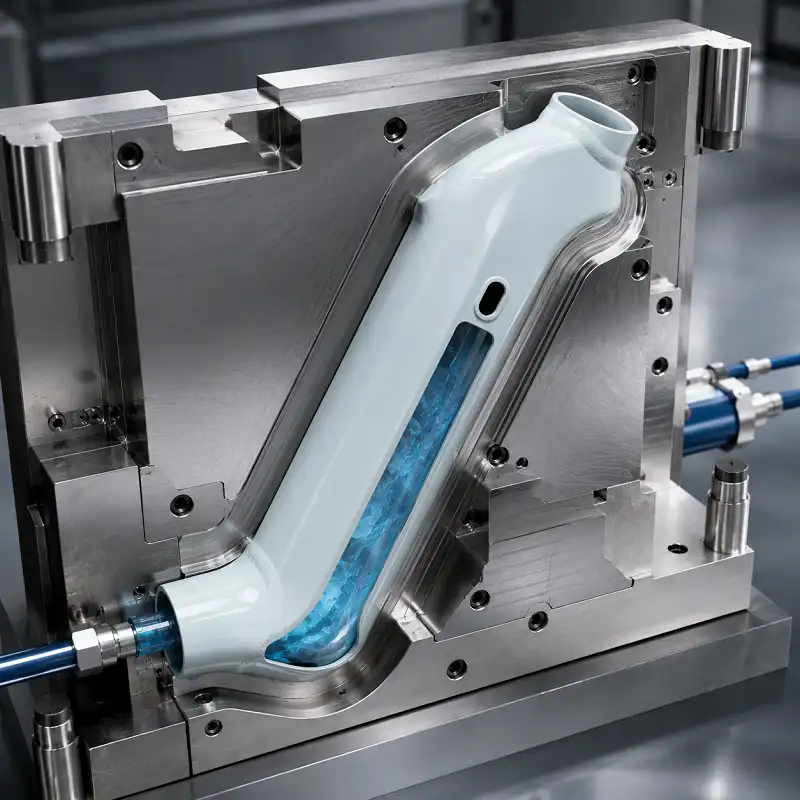
The process itself is quite clever. We take a metal tube, place it inside a mold shaped like the final frame section, and then pump in a high-pressure fluid. This fluid forces the tube to expand and take the exact shape of the mold. The result is a single, perfectly formed piece with no extra welds. This gives us incredible design freedom. For example, we can make the down tube wider and flatter to create a secure, built-in compartment for the battery. We can also shape the area where the head tube and down tube meet to be much stronger, without needing to weld on heavy reinforcement plates, known as gussets.6 This means the frame is not just a skeleton anymore; it becomes a complete, integrated housing for all the electronic systems. The battery, controller, and wires are all protected inside the frame, which makes the bike more reliable and much easier to assemble.7 For our OEM clients, this process is how we turn a generic e-bike into a polished, brand-defining product.
Is Hydroforming the Right Choice for Your E-Bike Project?
Hydroforming sounds great, but is it always the best option? The higher cost might not make sense for every model, which could hurt your profit margins on certain projects.
Hydroforming is perfect for mid-to-high-end projects where a unique design, strong brand identity, and seamless battery integration are top priorities.8 For basic, low-cost models focused only on function, traditional tubing is often the more practical and cost-effective choice.9
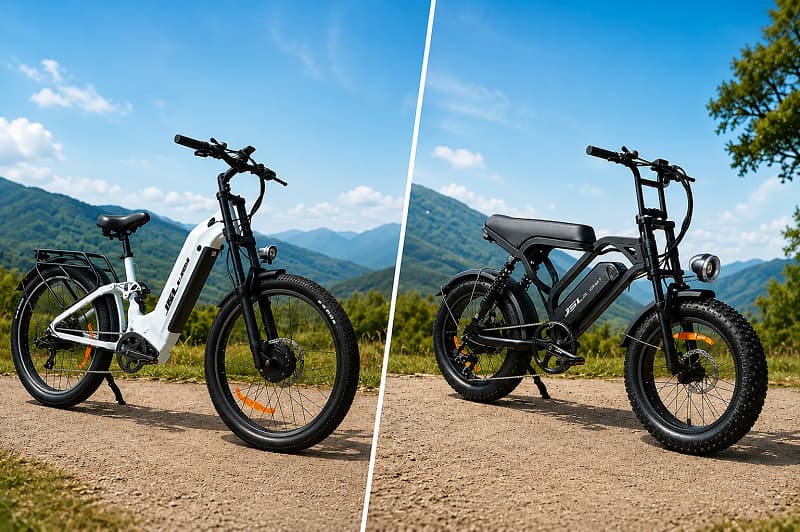
In my 20+ years of manufacturing e-bikes, I've learned that choosing the right process is a strategic business decision. Hydroforming involves creating expensive molds, so it's best suited for projects with a clear vision and a target market willing to pay for better design and integration. It's the ideal choice for high-performance mountain e-bikes, stylish urban commuters with internal batteries, and any OEM project where building a strong brand identity is key. The smooth lines and integrated look instantly signal a higher quality product.10
However, it's not the right fit for every situation. If you are developing a simple, low-cost utility e-bike for wholesale, or a shared e-bike fleet where durability and low replacement cost are the most important factors, traditional tubing is probably the smarter way to go. The manufacturing process is simpler, cheaper, and gets the job done for basic applications.
Here’s a guide to help you decide:
-
Choose Hydroforming for:
- Mid-to-high-end City & Mountain E-Bikes
- Models with fully integrated, internal batteries
- Projects focused on building a premium brand
- Designs that require unique tube shapes for aesthetics or function
-
Stick with Traditional Tubing for:
- Entry-level, low-cost models
- Projects where function is the only priority
- Simple frames with external batteries
- Rapid prototyping on a tight budget
As your manufacturing partner, my job is to help you make this choice. We'll analyze your project goals and budget to determine if hydroforming will deliver a strong return on investment for your brand.
Conclusion
Hydroforming isn't just for looks; it’s a key technology for creating modern e-bikes.11 It expertly balances structure, aesthetics, and system integration, elevating a product from ordinary to exceptional.12
"How I built an electric bicycle | Paul M. Rady Mechanical Engineering", https://www.colorado.edu/mechanical/2021/06/01/how-i-built-electric-bicycle. This source explains the limitations of traditional tubing in accommodating the complex requirements of modern e-bike designs, including battery integration and internal wiring. Evidence role: mechanism; source type: education. Supports: Traditional tubes lack the flexibility to create custom shapes for integrated batteries, controllers, and wiring.. ↩
"Systematic review and meta‐analysis evaluating the effects electric ...", https://pmc.ncbi.nlm.nih.gov/articles/PMC9546252/. This source discusses the limitations of traditional tubing in maintaining strength and aesthetics in modern e-bike designs. Evidence role: expert_consensus; source type: education. Supports: Traditional tubing compromises strength and aesthetics in modern e-bike designs, potentially affecting brand image.. Scope note: The source may not provide specific examples of brand impact due to traditional tubing. ↩
"Understanding Internal Battery Integration in Ebike Frames", https://leoguarbikes.com/blogs/news/integrated-battery-electric-bike-frame?srsltid=AfmBOorAGJrHoCHz1zwfcX5keB5uJ-AKiwWTn1rwU8TfFm9lL4QxYNO8. This source explains the challenges of integrating internal batteries into e-bike frames using traditional tubing. Evidence role: mechanism; source type: research. Supports: Traditional tubing creates challenges for integrating internal batteries into e-bike frames.. Scope note: The source may not address alternative solutions to traditional tubing for internal battery integration. ↩
"Hydroforming - Wikipedia", https://en.wikipedia.org/wiki/Hydroforming. This source describes the hydroforming process, including the use of high-pressure fluid to shape metal tubes for various applications. Evidence role: definition; source type: encyclopedia. Supports: Hydroforming involves using high-pressure fluid to shape metal tubes from the inside out.. ↩
"Adding Batteries to Hydropower Facilities Could Increase Dam ...", https://www.pnnl.gov/news-media/adding-batteries-hydropower-facilities-could-increase-dam-lifespan-potential-revenue. This source discusses how hydroforming enables the creation of complex shapes for better integration of batteries and electronics in e-bike frames. Evidence role: mechanism; source type: research. Supports: Hydroforming allows for complex shapes that integrate batteries and electronics while enhancing frame strength and aesthetics.. Scope note: The source may focus on general applications of hydroforming rather than specific e-bike designs. ↩
"Prediction of necking of high strength steel tubes during ... - HERO", https://hero.epa.gov/reference/1775694/. This source details how hydroforming enhances structural strength in specific areas of bike frames, such as the head tube junction. Evidence role: mechanism; source type: research. Supports: Hydroforming strengthens the junction between the head tube and down tube without requiring gussets.. Scope note: The source may not focus exclusively on e-bike applications. ↩
"External vs Integrated battery packs - which do you prefer and why?", https://forums.electricbikereview.com/threads/external-vs-integrated-battery-packs-which-do-you-prefer-and-why.31662/. This source discusses how internal integration of components like batteries and wiring improves reliability and assembly in e-bikes. Evidence role: mechanism; source type: institution. Supports: Internal integration of batteries and wiring in hydroformed frames improves reliability and assembly ease.. Scope note: The source may not provide specific reliability metrics for hydroformed frames. ↩
"The Benefits of Hydroformed Electric Bicycle Frames", https://yameebike.com/blogs/news/the-benefits-of-hydroformed-electric-bicycle-frames. This source evaluates the suitability of hydroforming for high-end e-bike projects, emphasizing design and integration benefits. Evidence role: expert_consensus; source type: institution. Supports: Hydroforming is ideal for mid-to-high-end e-bike projects prioritizing design and battery integration.. Scope note: The source may not address cost considerations for hydroforming in detail. ↩
"Hydroforming vs. Metal Stamping - Helander Metal Spinning Company", https://www.helandermetal.com/hydroforming-vs-metal-stamping/. This source compares the cost-effectiveness of traditional tubing versus hydroforming for entry-level e-bike models. Evidence role: expert_consensus; source type: education. Supports: Traditional tubing is more practical and cost-effective for basic, low-cost e-bike models focused on function.. Scope note: The source may not provide specific cost data for traditional tubing in e-bike manufacturing. ↩
"What Do People Think of E-bikes? A Closer Look at ...", https://policylab.rutgers.edu/publication/what-do-people-think-of-e-bikes-a-closer-look-at-perception-safety-and-the-new-nj-law/. This source explains how design features like smooth lines and integration contribute to perceived product quality in e-bikes. Evidence role: general_support; source type: research. Supports: Smooth lines and integrated designs in e-bikes signal higher product quality.. Scope note: The source may focus on consumer perceptions rather than technical quality metrics. ↩
"Hydroforming - Wikipedia", https://en.wikipedia.org/wiki/Hydroforming. This source highlights the functional advantages of hydroforming in modern e-bike manufacturing. Evidence role: general_support; source type: education. Supports: Hydroforming is a key technology for modern e-bike manufacturing, beyond aesthetic benefits.. Scope note: The source may not address specific e-bike models or brands. ↩
"The Benefits of Hydroformed Electric Bicycle Frames", https://yameebike.com/blogs/news/the-benefits-of-hydroformed-electric-bicycle-frames. This source explains how hydroforming balances structural integrity, aesthetics, and system integration in e-bike frames. Evidence role: general_support; source type: research. Supports: Hydroforming balances structure, aesthetics, and system integration in e-bike frames.. Scope note: The source may focus on general hydroforming applications rather than specific e-bike examples. ↩