Choosing the right material for a heavy-duty e-bike can be confusing. A wrong choice leads to failures and high operational costs, undermining your entire project's reliability.
For heavy-duty e-bikes, the best material isn't the lightest or most expensive one. It's the material that provides the optimal balance of strength, durability, and long-term operating cost. This usually means a strategic mix of high-strength aluminum and various types of steel.
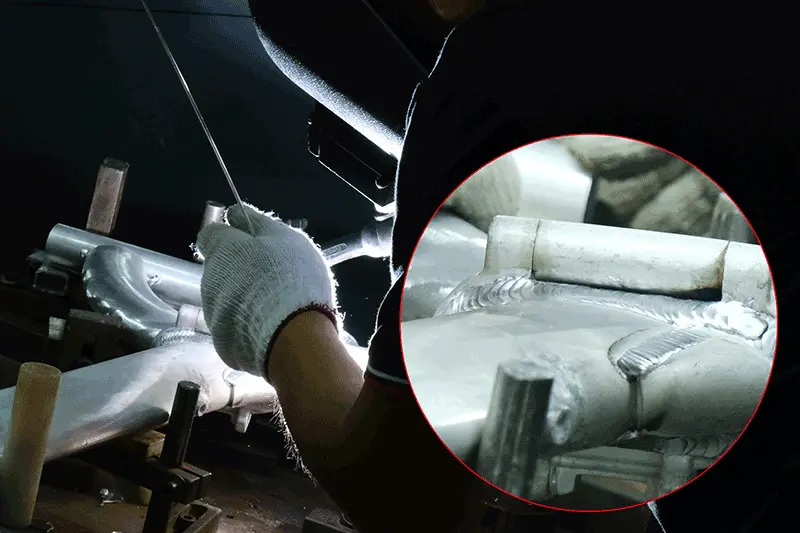
As a manufacturer, I often get asked, "What's the best material?" The truth is, there’s no single answer. A heavy-duty e-bike isn't built from one "super material." A smart design uses different materials for different parts based on the forces they handle and the product's goal. Thinking about the whole bike—frame, fork, racks, and wheels—is the key to building something that truly lasts. Let's break down how we approach this from a factory perspective.
Should your heavy-duty e-bike frame be aluminum or steel?
You need a strong frame but worry about weight and cost. Aluminum seems modern, but is steel a better choice for toughness? Let's clarify which is right for your application.
Aluminum alloy is the mainstream choice for its excellent balance of strength, weight, and manufacturability. However, steel is often superior for extreme durability and impact resistance, making it ideal for specific commercial and utility e-bikes where toughness is the top priority.
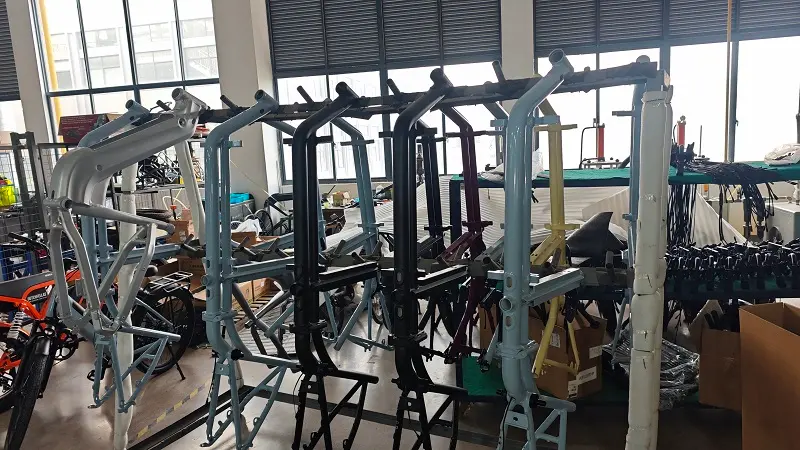
When we build heavy-duty e-bikes, the frame material is the foundation. The choice between aluminum and steel isn't about which is "better" overall, but which is better for a specific job. For many commercial cargo, delivery, and utility models, this decision has a huge impact on performance and long-term value.
Aluminum Alloys: The Balanced Mainstream Choice
Most modern heavy-duty e-bikes, especially urban cargo and utility models, use aluminum alloy frames. The reason isn't that it's the strongest material possible, but that it offers the best overall package for mass production. We primarily use 6061 and 7005 series aluminum1. 6061 is very common, cost-effective, and easy to work with. 7005 offers higher strength but requires more precise manufacturing. The real secret to a durable aluminum frame isn't just the alloy type. It's the engineering behind it: strategic tube wall thickness, advanced hydroforming2 for complex shapes, quality welding, and proper heat treatment3. This allows us to create frames that are strong, corrosion-resistant, and integrate batteries and cables for a clean, modern look.
Steel: The Unsung Hero of Durability
Many people think steel is an outdated material, but for true heavy-duty applications, it’s incredibly valuable. Steel’s biggest advantages are its high fatigue tolerance4 and excellent impact resistance. It can handle abuse, overloading, and rough conditions far better than other materials. This makes it perfect for cargo trikes, low-speed delivery platforms, and bikes used in markets with poor road conditions. While steel is heavier, in many commercial uses, an extra few kilograms is a small price to pay for a bike that is nearly indestructible and easy to repair.
| Feature | Aluminum Alloy (e.g., 6061) | High-Tensile Steel | Chromoly Steel |
|---|---|---|---|
| Primary Benefit | Best balance of weight, strength, & cost | Maximum durability & low cost | High strength with less weight than steel |
| Best For | Urban Cargo, Utility Commuters | Heavy Delivery, Cargo Trikes | High-Performance Cargo, Special-Use |
| Weight | Lighter | Heavier | Medium |
| Repairability | Difficult | Easy | Moderate |
| Corrosion Resistance | Excellent | Fair (requires good paint) | Good |
Is carbon fiber a poor choice for heavy-duty e-bikes?
You see carbon fiber on high-end bikes and assume it's the best. But using it for a cargo or delivery bike could be a very costly mistake. Let’s look at why.
Yes, for most heavy-duty applications, carbon fiber is not a good choice. Its high cost, complex damage assessment after impacts, and lower practical durability in rough commercial environments make it a poor value proposition compared to engineered aluminum or steel.
Carbon fiber is an amazing material for high-performance road or mountain bikes where every gram counts. However, the priorities for a heavy-duty e-bike are completely different. For a commercial vehicle that needs to be reliable day in and day out, carbon fiber introduces more problems than it solves. We've seen clients drawn to the "premium" image of carbon, but from a manufacturing and operational standpoint, it’s often a trap.
The main issue is its failure mode. When aluminum or steel frames are damaged, they typically bend or dent. This is often visible and sometimes repairable. When carbon fiber is compromised by an impact—like a heavy package being dropped on the frame or a low-speed collision—the damage can be internal and invisible. The frame can later fail suddenly and catastrophically. For a delivery fleet or a utility bike carrying precious cargo (or children), this risk is unacceptable. Furthermore, the cost is prohibitive. For the price of one carbon fiber frame, you could build several highly durable steel or aluminum frames. For heavy-duty applications, carbon fiber often improves the bike's image more than its operational value.
Why do materials beyond the frame matter so much for heavy-duty use?
You've picked the perfect frame material. But your new e-bike still fails under heavy loads. The problem is likely in the components you overlooked during the design phase.
A heavy-duty e-bike is a complete system, and the frame is just one part. The fork, cargo racks, and especially the wheelset bear immense stress. Using standard components on a heavy-duty frame is a recipe for failure, as these parts become the weakest links.
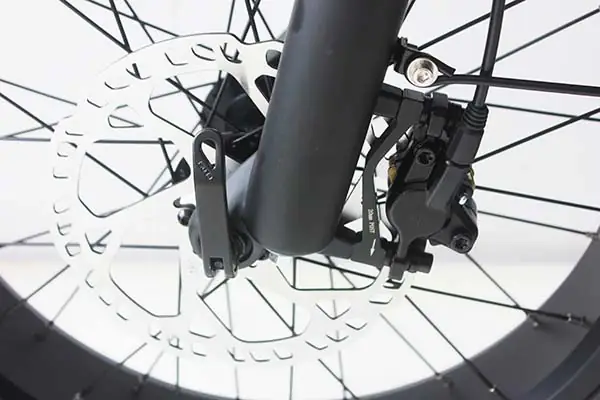
A strong frame is useless if the rest of the bike can't keep up. In our experience, component failure is a common issue when brands try to adapt standard e-bike designs for heavy-duty use without upgrading the entire system. Every part must be chosen with the total vehicle weight and intended use in mind.
Forks, Racks, and Platforms
The fork takes a huge amount of stress, especially during braking and on rough surfaces. For many cargo models, a strong steel fork is a much safer and more durable choice than a lightweight aluminum one. Likewise, cargo racks and platforms are not accessories; they are critical load-bearing structures. We often manufacture them from thick-walled steel or reinforced aluminum with robust welds to ensure they don’t fail under a heavy, dynamic load.
The Wheel System
The wheels are perhaps the most underestimated component on a heavy-duty e-bike. The combination of a heavy frame, powerful motor, rider, and cargo puts enormous strain on the rims, spokes, and hubs. Standard wheels will quickly fail. Heavy-duty applications demand wider, stronger rims; thicker gauge spokes5 (like 12G or 13G); and hubs with durable bearings and strong axles. If the wheelset isn't up to the task, it will become the bike's primary point of failure.
How does your target market change the 'best' material choice?
You want to design one "best" heavy-duty e-bike for all markets. But a bike that sells well in Europe might fail completely in a delivery fleet in an emerging market.
The "best" material directly depends on your target market's needs and expectations. European markets often prefer refined aluminum designs, while the US market may favor more robust builds. Commercial fleets, on the other hand, prioritize low-cost, repairable steel for maximum uptime.
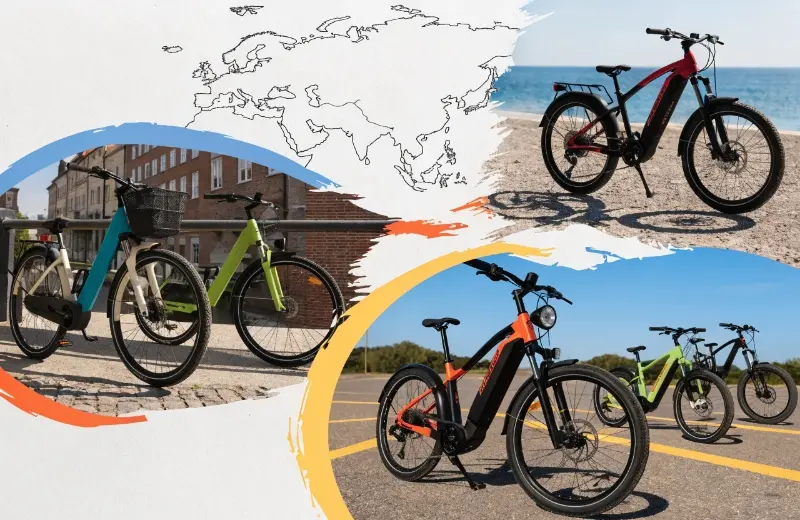
The definition of "heavy-duty" changes from one market to another. As an OEM/ODM partner, our job is to help you select a material strategy that aligns with your customers' real-world needs. A one-size-fits-all approach rarely works.
For example, our clients targeting the European market often need bikes that meet strict regulations (EN 151946), have a polished aesthetic, and feature integrated designs. Here, high-quality, hydroformed aluminum frames are ideal because they balance strength with a sophisticated look and manageable weight.
In the US market, there's a greater appetite for more powerful, larger-format e-bikes like fat-tire cargo models. Here, visual strength is a selling point, and a slightly heavier but tougher frame made of steel or oversized aluminum is often preferred.
For clients building commercial delivery fleets, especially in emerging markets, the priorities are completely different. They need bikes with the lowest possible failure rate, maximum durability, and simple, cheap repairability. In this context, a simple, strong, and repairable steel frame is often the smartest business decision, even if it seems less "advanced." Ultimately, the best material choice depends less on prestige and more on where and how the bike will be used.
Conclusion
The best materials support durability, stable performance, and manufacturing efficiency. The right choice fits your product’s market, load requirements, and commercial purpose, ensuring long-term value for you and your customers.
These aluminum series are popular for e-bike frames. Understand their unique properties and how they contribute to frame strength and manufacturability. ↩
Advanced hydroforming allows for complex frame shapes and improved strength. Learn how this technique benefits modern e-bike designs. ↩
Heat treatment enhances material properties, improving frame strength and longevity. Discover its role in manufacturing durable e-bikes. ↩
Steel's fatigue tolerance allows it to withstand repeated stress, making it perfect for demanding e-bike applications. Learn more about its benefits. ↩
Thicker spokes provide strength to withstand heavy loads. Discover their role in preventing wheel failure in heavy-duty e-bikes. ↩
EN 15194 sets standards for e-bikes in Europe. Learn how compliance affects material and design choices for the European market. ↩