Choosing the right fork for your e-bike line feels complicated. You see suspension everywhere and worry you're making the wrong call. This choice can impact your profits and brand.
For any e-bike project, the choice is simple. A suspension fork is for comfort on rough terrain, making it ideal for mountain or fat tire e-bikes. A rigid fork offers efficiency and low maintenance for city commuters. The best choice aligns with the bike's intended use and price.
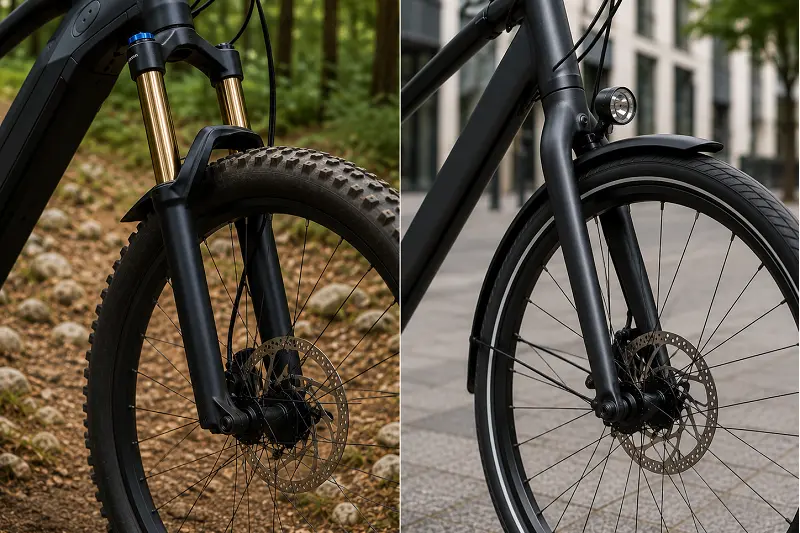
This decision seems small, but it affects your costs, your brand's reputation, and what your customers feel on their first ride. A single component choice can define the entire character of an e-bike, making or breaking its success in a specific market segment. Let's break down exactly when to use each fork type so you can build a more successful and profitable e-bike lineup for your brand.
When Does a Suspension Fork Actually Improve an E-Bike?
You feel pressure to add suspension forks to "upgrade" your bikes. But you wonder if it's just adding cost for no real benefit. A poorly chosen fork can hurt your product's appeal.
A suspension fork adds real value when the e-bike is designed for uneven terrain. It’s essential for mountain, fat tire, and light off-road models. It absorbs bumps, providing a comfortable ride that customers expect from these higher-spec, adventure-focused electric bikes.
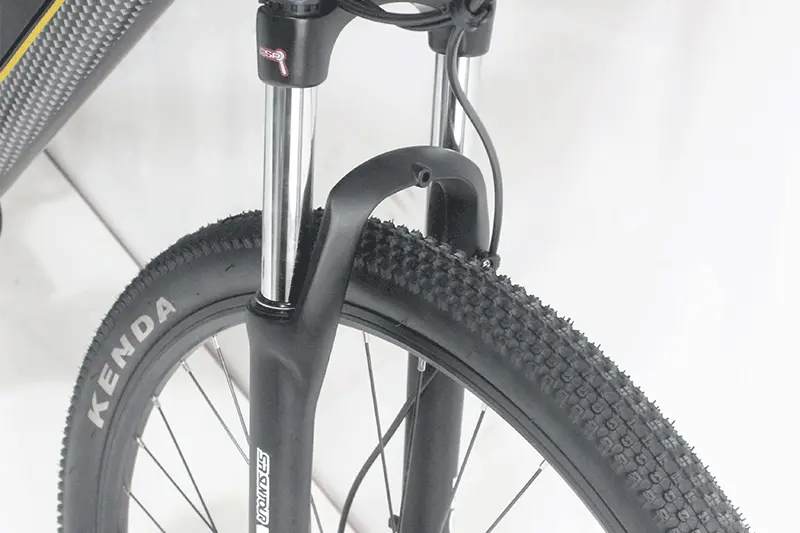
A suspension fork is about selling a specific experience: comfort and capability. For certain e-bike categories, it's not a luxury; it's a core part of the product's identity. Without it, the bike simply can't perform as promised.
Key E-Bike Models That Need Suspension:
- Electric Mountain Bikes (E-MTBs): Here, suspension is non-negotiable. On a trail, the fork isn't just for comfort—it's for control. It keeps the front wheel planted on the ground over rocks and roots, which is critical for safe steering and braking. For any serious E-MTB project, a quality suspension fork is the first component on the list.
- Fat Tire E-Bikes: These bikes are designed for adventure on soft or rugged surfaces like sand, snow, and rough trails. The suspension fork works together with the large, low-pressure tires to create a smooth, almost floating sensation. It absorbs the harsh impacts that even fat tires can't, making the ride enjoyable instead of jarring.
- High-End Trekking & Leisure E-Bikes: For customers paying a premium for a comfortable bike to explore country lanes, cobblestone streets, or gravel paths, a good suspension fork is a major selling point. It transforms the ride from bumpy and tiring to smooth and relaxing, which is exactly what this customer is paying for.
In many markets, a suspension fork is also a powerful visual cue. It signals a "higher-spec" or "more capable" bike, which can help justify a higher retail price. But there's a critical warning here: the quality of the fork must match the bike. I once consulted for a brand that launched a beautiful trekking e-bike but used a cheap, heavy coil suspension fork to save costs. Riders immediately complained that it was unresponsive and added too much weight. It's always better to use a high-quality rigid fork than a poor-quality suspension fork.
Is a Rigid Fork Just a Low-Cost, Basic Option?
You see rigid forks on entry-level bikes and think they look cheap. You worry that customers will see your rigid fork models as inferior. This can make you hesitate to specify them.
No, a rigid fork is a smart engineering choice for specific applications. It’s perfect for city, commuter, and lightweight e-bikes. It offers better power transfer, lower weight, and zero maintenance—valuable features for riders on paved roads who prioritize efficiency and simplicity.
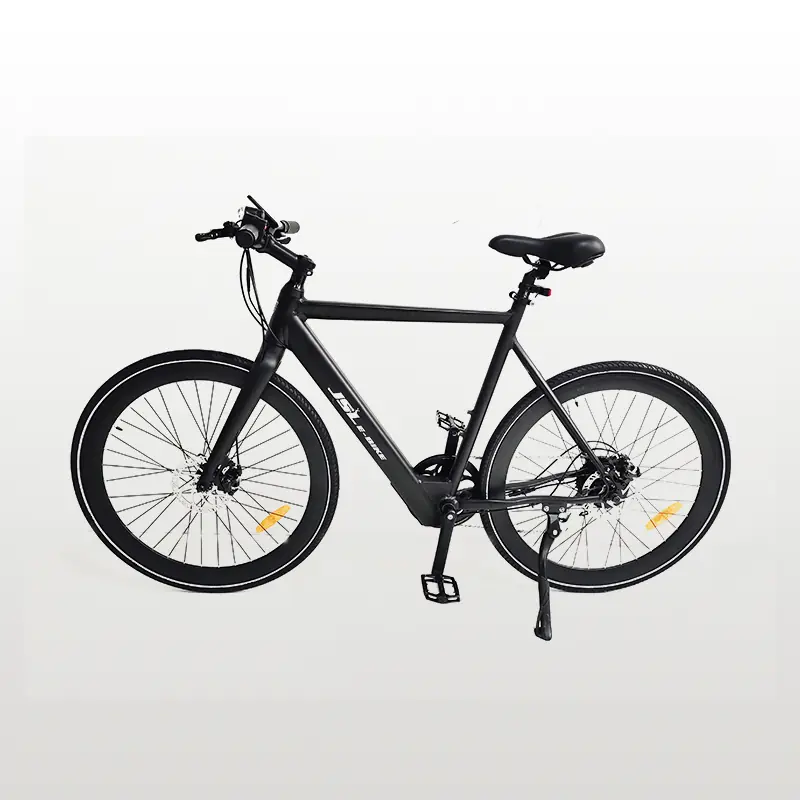
Framing a rigid fork as a "downgrade" is a common mistake. In the right context, it's a deliberate feature that makes the bike better for its intended purpose. It’s about selling a different kind of performance: speed, agility, and reliability. For many urban riders, these benefits are far more valuable than the bump absorption of a suspension fork they'll never truly need.
Why a Rigid Fork is a Superior Choice for Urban E-Bikes:
- Maximum Efficiency: A rigid fork has no moving parts to absorb energy.1 This means all the power from the rider's legs and the electric motor is transferred directly to the road. For a commuter who wants to get to their destination quickly and with minimal effort, this direct, responsive feel is a huge advantage.
- Lighter Weight: Suspension forks are complex and can easily add 1-2 kg (2-4 lbs) or more to an e-bike's total weight.2 For a city dweller who might need to carry their bike up a flight of stairs to their apartment or office, that extra weight is a daily annoyance. A lightweight, rigid-fork e-bike is simply more practical for urban life.
- Zero Maintenance: This is a massive selling point that is often overlooked. A rigid fork has no seals to replace, no oil to change, and no air pressure to check.3 It is the definition of "set it and forget it." For fleet operators or everyday users who just want a reliable tool for transportation, a maintenance-free fork means less downtime and lower ownership costs.
We build rigid forks into many of our most successful city models, including sleek 700c commuters, minimalist urban bikes, and lightweight folding e-bikes. In these cases, the rigid fork isn't a compromise; it's a feature that enhances the bike's core purpose.
How Does Fork Choice Impact Your OEM Project's Bottom Line?
You're trying to balance features and price for your new e-bike line. Adding a suspension fork seems like an easy upgrade, but your costs keep creeping up. You're not sure if it will pay off.
The fork choice directly impacts your costs, target market, and profit margins. A suspension fork increases the unit cost, weight, and potential for warranty claims. A rigid fork lowers costs and simplifies the supply chain. The key is to match the fork to customer expectations for that price point.
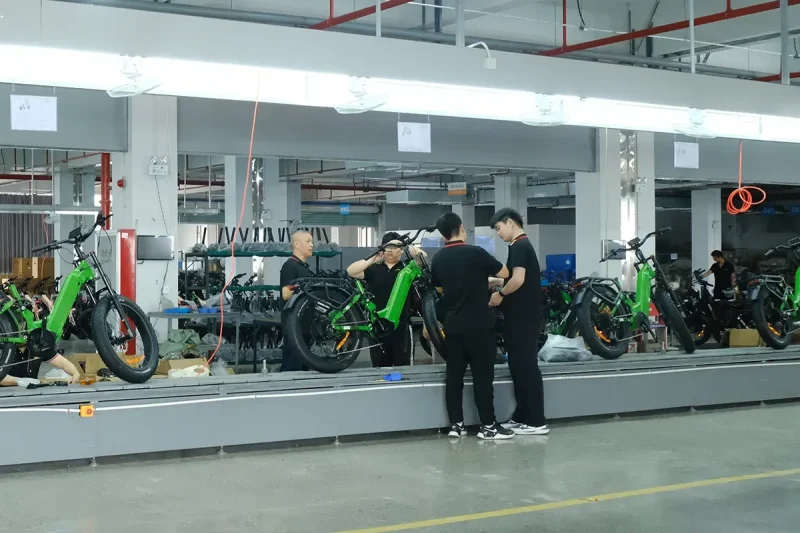
As an OEM partner, my main goal is to help you build a profitable product line. The fork is one of the most important decisions in achieving that. A mismatch between the fork, the price, and the use case can kill a product's potential.4 Let's look at this from a business perspective. A basic suspension fork can add $30-$50 to your bill of materials (BOM) over a rigid fork. A mid-range air fork can add $100 or more.5 This cost has to be justified by real customer value.
I call this the Alignment Principle. The fork must be aligned with the entire product package.6
- Scenario A (Bad Alignment): A client once insisted on putting a cheap, heavy suspension fork on an entry-level city commuter e-bike. Their goal was to make it "look more expensive." The result? The bike was heavy, the fork barely worked, and it made the bike less efficient on the flat roads it was designed for. We saw higher service requests and the model sold poorly because it didn't serve its target user well.
- Scenario B (Good Alignment): For another client, we developed a mid-tier trekking e-bike. We used a quality air-sprung suspension fork that cost more but was lighter and highly adjustable. Customers who wanted to ride on varied surfaces loved the comfort and control. They saw the fork as a key feature that justified the price. That model became a bestseller.
To make the right choice, you have to be clear about what you're selling.
| Feature | Rigid Fork | Suspension Fork |
|---|---|---|
| Best Use Case | Paved roads, city commuting | Uneven trails, gravel, light off-road |
| Target E-Bike | City, Commuter, Lightweight, Folding | Mountain, Fat Tire, Trekking, Comfort |
| Unit Cost | Low | Medium to High |
| Weight | Low | High |
| Maintenance | None | Regular service required |
| Rider Benefit | Efficiency, agility, reliability | Comfort, control, all-terrain capability |
| Marketing Angle | "Light, Fast, and Simple" | "Smooth, Capable, and Comfortable" |
My advice is always this: don't add a feature just for the spec sheet. Build a cohesive product where every component, especially the fork, serves the core purpose of the bike and the needs of the end user.
Conclusion
Choosing between a suspension and rigid fork isn't about specs. It's about matching the bike to the rider's world. Get that alignment right, and you build a successful e-bike line.
"Fat Bike Forks: Rigid or Suspension - Wyatt Bicycles", https://wyattbikes.com/rigid-or-suspension-fork-for-fat-biking-choosing-the-right-setup-for-your-riding-style/?srsltid=AfmBOoqAHMjlEMcfYKpbT3irUEHOWrfMRnbavdSGa4TuJhSPWaVmxZQU. This source describes the energy efficiency of rigid forks due to their lack of moving parts. Evidence role: mechanism; source type: education. Supports: A rigid fork has no moving parts to absorb energy.. ↩
"Suspension Fork VS Rigid Fork : r/bikepacking - Reddit", https://www.reddit.com/r/bikepacking/comments/xaqmy9/suspension_fork_vs_rigid_fork/. This source provides data on the weight differences between suspension and rigid forks in e-bikes. Evidence role: statistic; source type: research. Supports: Suspension forks are complex and can easily add 1-2 kg (2-4 lbs) or more to an e-bike's total weight.. ↩
"Do you guys prefer commuting with a rigid fork or ...", https://www.reddit.com/r/bikecommuting/comments/u783fi/do_you_guys_prefer_commuting_with_a_rigid_fork_or/. This source outlines the maintenance-free advantages of rigid forks compared to suspension forks. Evidence role: mechanism; source type: education. Supports: A rigid fork has no seals to replace, no oil to change, and no air pressure to check.. ↩
"Risk Riding Behaviors of Urban E-Bikes: A Literature Review - PMC", https://pmc.ncbi.nlm.nih.gov/articles/PMC6651001/. This source discusses how mismatched components can negatively impact an e-bike's market performance. Evidence role: expert_consensus; source type: education. Supports: A mismatch between the fork, the price, and the use case can kill a product's potential.. ↩
"Tell me about suspension fork brands and pricing | Electric Bike ...", https://forums.electricbikereview.com/threads/tell-me-about-suspension-fork-brands-and-pricing.48975/. This source discusses the cost implications of mid-range air forks in e-bike manufacturing. Evidence role: statistic; source type: research. Supports: A mid-range air fork can add $100 or more.. ↩
"E-Bike Research | TREC - Portland State University", https://trec.pdx.edu/e-bike-research. This source emphasizes the importance of component alignment in e-bike design for market success. Evidence role: expert_consensus; source type: education. Supports: The fork must be aligned with the entire product package.. ↩