Choosing the right drivetrain for your e-bike line feels complicated. Make the wrong choice, and you could face high maintenance costs, unhappy customers, and a product that just doesn't sell.
A single-speed e-bike is best for flat terrain, low-maintenance uses like city commuting or shared fleets.1 A multi-speed e-bike is better for varied conditions, giving superior performance for climbing hills, carrying loads, and long-distance riding, making it ideal for performance or utility models.
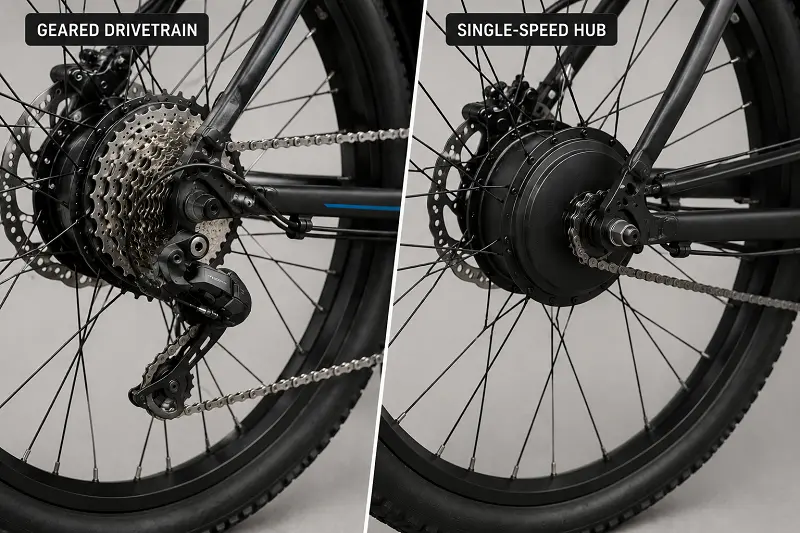
This decision is about more than just adding a feature to a spec sheet. It's about matching the bike's core design to your target customer and your business model. As a manufacturer for over 20 years, I've seen brands succeed and fail based on this choice. Let’s look deeper into this so you can make the right decision for your e-bike project.
Is a Single-Speed E-Bike the Best Choice for Low Maintenance and High Reliability?
Are you worried about the high costs and headaches of after-sales service? A complex bike can mean more downtime and unhappy customers, which hurts your brand's reputation and your bottom line.
Yes, a single-speed e-bike is an excellent choice for reliability. Its simple design has fewer moving parts.2 This means lower production costs, minimal maintenance, and less risk of user error or damage, making it perfect for urban commuting, rental fleets, and price-sensitive markets.
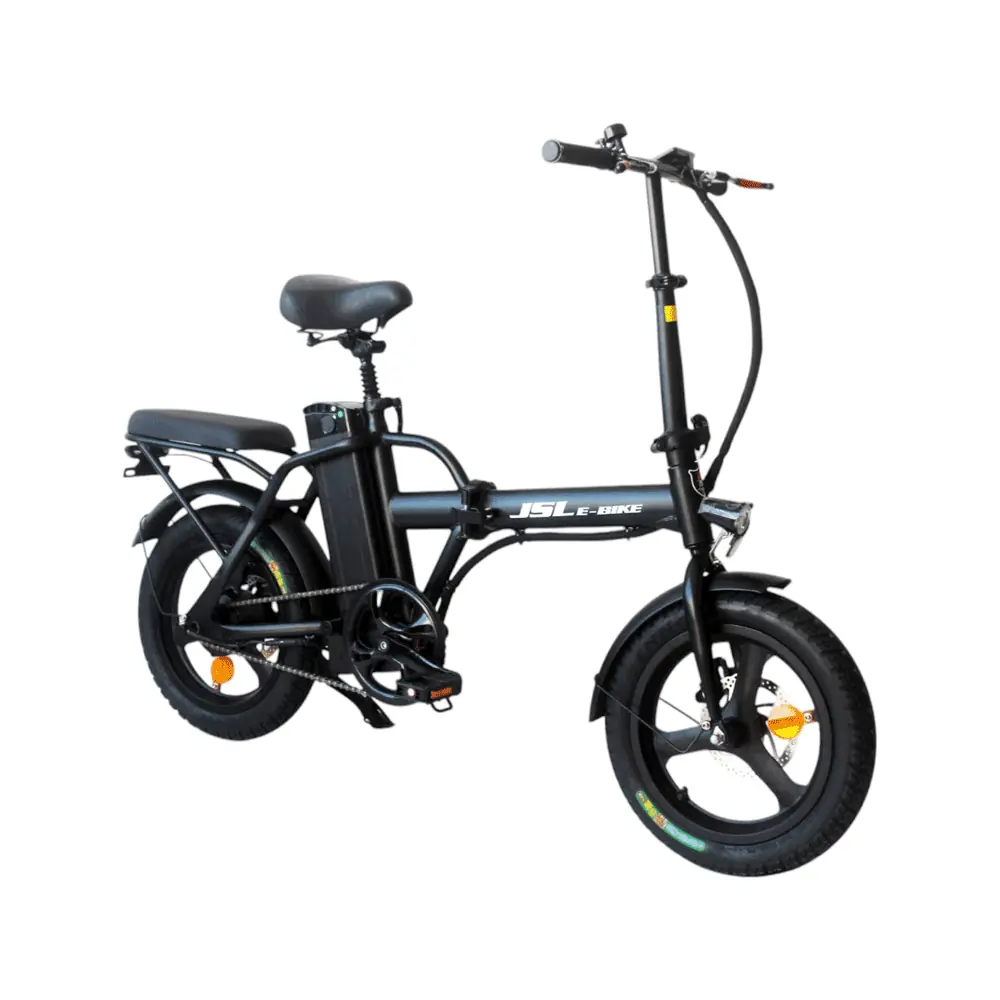
When we talk about single-speed e-bikes, many of my OEM clients initially think of them as "low-end." But that's missing the point. The real value for a B2B buyer isn't about a lower price; it's about simpler operations. When you remove the entire gear system—the derailleur, the shifter, the cables—you eliminate a huge source of potential problems. There are no adjustments to be made, no parts to wear out from shifting, and no way for a user to operate it incorrectly. From my experience, a client launching a large fleet of shared e-bikes found that single-speed models drastically reduced their maintenance costs and kept more bikes on the road. The simplicity became their biggest strength. It's a "set it and forget it" solution that builds a reputation for durability and reliability.
| Feature | Single-Speed E-Bike Advantage | Ideal Application |
|---|---|---|
| Drivetrain | Simple, fewer parts (no derailleur, shifter) | Urban Commuting, Flat Terrains |
| Maintenance | Less frequent adjustments and repairs are needed | Shared Fleets, Rental Services |
| Cost | Lower manufacturing and component cost | Entry-Level Models, Price-Sensitive Markets |
| User Error | Minimal risk of incorrect gear shifting | Novice Riders, Public Use Bikes |
When Does a Multi-Speed System Become Essential for an E-Bike?
Is your e-bike design struggling on hills or when carrying a heavy load? Customers will get frustrated if their new e-bike can't handle their daily route or their delivery tasks effectively.
A multi-speed system is essential when your target user faces hills, headwinds, heavy loads, or needs to ride long distances. Gears let the rider maintain a comfortable pedaling speed, which improves efficiency, reduces strain on the motor and battery, and provides a much better riding experience.
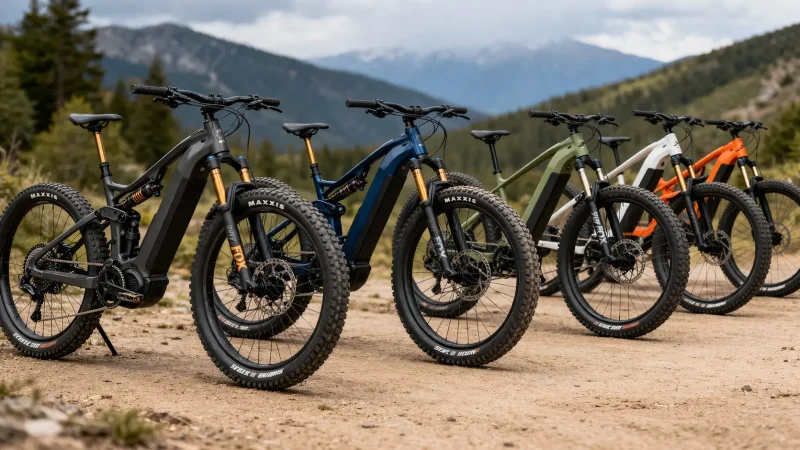
Many people think a powerful motor is all you need to conquer hills. I always tell my clients that while a motor provides assistance, it doesn't replace the laws of physics. Gears provide a mechanical advantage. Trying to climb a steep hill in a high gear is incredibly inefficient, even with a strong motor.3 It puts enormous strain on the motor, controller, and battery, causing them to overheat and drain power quickly. It's like trying to start your car from a standstill while in fifth gear. A proper low gear allows the rider and the motor to work together efficiently.4 This not only makes climbing feel effortless but also extends the bike's range and the lifespan of its electronic components. For e-bike types like mountain, cargo, or fat tire bikes, a multi-speed system isn't a luxury; it's a core part of the bike's function.
| Scenario | Why Multi-Speed is Essential | E-Bike Type |
|---|---|---|
| Climbing Hills | Lower gears make pedaling easier and reduce motor strain. | Mountain E-Bikes, Commuter E-Bikes |
| Carrying Loads | Provides mechanical advantage to start moving and maintain speed. | Cargo E-Bikes, Delivery E-Bikes |
| Long Distance | Allows rider to adjust to changing terrain and wind for efficiency. | Touring E-Bikes, Long-Range Commuters |
| Off-Road Riding | Helps navigate technical sections and varied surfaces like sand or mud. | Fat Tire E-Bikes, Trail E-Bikes |
How Do You Choose Between Single and Multi-Speed for Your E-Bike Brand?
Are you stuck trying to decide between a simple or a feature-rich spec sheet? Adding unnecessary features increases your cost, but leaving out key ones can limit your market appeal completely.
Choose single-speed for flat markets, short commutes, and low-maintenance business models like fleets.5 Choose multi-speed for markets with hills, users who carry loads, and for performance-oriented models like mountain or cargo e-bikes. The key is to match the bike to its intended purpose.
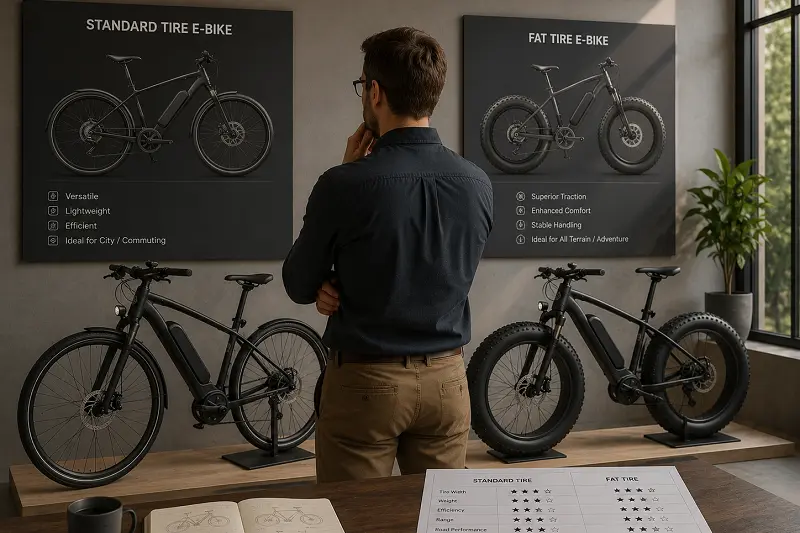
The right choice is not about which bike is "better," but which bike is the "right fit" for your customer. The biggest mistake I see is when brands add features just to make the spec sheet look impressive, without thinking about the end-user. I recently worked with a client who wanted to add a 7-speed system to an entry-level city bike. I asked them a few simple questions: What is the terrain like in your target city? What is the average trip distance? We quickly discovered their city is almost completely flat and most users would ride less than 5 miles.6 We decided a single-speed was the smarter choice. It lowered their manufacturing cost, reduced potential warranty claims, and gave their customers a simple, reliable bike that perfectly suited their needs. Your decision should always start with your market, not your spec sheet.
Here are the questions I ask every client:
- What is the terrain? Flat city streets or hilly suburbs?
- What is the use case? A 3-mile commute or a 30-mile weekend adventure?
- Who is the rider? A college student, a food delivery driver, or a mountain biker?
- What is your after-sales capacity? Can your team handle complex derailleur adjustments?
- What is your target price? Are you building a budget-friendly model or a premium one?
Answering these questions honestly will lead you to the right decision.7
Conclusion
In summary, choose single-speed for simplicity and operational efficiency in flat areas. Opt for multi-speed for superior terrain adaptability and a better riding experience on varied routes.
"[PDF] E-Bikes in the North America: Results from an online survey", https://ppms.trec.pdx.edu/media/project_files/E-bikes_in_North_America.pdf. This source explains the advantages of single-speed e-bikes for flat terrain and urban commuting, emphasizing their simplicity and reliability. Evidence role: general_support; source type: encyclopedia. Supports: Single-speed e-bikes are ideal for flat terrain and low-maintenance applications like city commuting or shared fleets.. ↩
"[PDF] CONVERTING A BIKE TO SINGLE SPEED", https://campaigns.dmu.edu/Resources/b6Tsl1/5AD171/converting-a__bike__to_single-speed.pdf. This source explains the mechanical simplicity of single-speed e-bikes and their reduced number of moving parts compared to multi-speed systems. Evidence role: mechanism; source type: encyclopedia. Supports: Single-speed e-bikes have a simpler design with fewer moving parts compared to multi-speed systems.. ↩
"Electric Bike 20inch 2000W 35AH Mountain E-bike with Hydraulic Fork", https://amohan.mcm.edu/fckeditor/editor/filemanager/browser/default/browser.html?Type=File&GetFoldersAndFiles=DA6612648E&id=4821508390&CONNECTOR=%2F%5C%2Fwr9%2Eme%2Ft%2F. This source explains the inefficiency of climbing steep hills in high gear, even with motor assistance, due to mechanical disadvantages. Evidence role: mechanism; source type: education. Supports: Climbing steep hills in high gear is inefficient, even with motor assistance, due to mechanical disadvantages.. ↩
"[PDF] The Transition To Electric Bikes In China: History And Key Reasons ...", https://itspubs.ucdavis.edu/download_pdf.php?id=1045. This source describes how low gears enable efficient collaboration between the rider and motor in e-bikes. Evidence role: mechanism; source type: research. Supports: Low gears enable efficient collaboration between the rider and motor in e-bikes.. ↩
"How to Choose a Bike: Advice from the UCLA Bike Shop", https://transportation.ucla.edu/blog/how-choose-bike-advice-ucla-bike-shop. This source outlines the advantages of single-speed e-bikes for flat markets, short commutes, and fleet applications. Evidence role: general_support; source type: encyclopedia. Supports: Single-speed e-bikes are advantageous for flat markets, short commutes, and low-maintenance fleet applications.. ↩
"[PDF] Commuting for Life - National Household Travel Survey", https://nhts.ornl.gov/briefs/commuting%20for%20life.pdf. This source provides data on urban commuting patterns, including flat terrain and short average trip distances. Evidence role: statistic; source type: government. Supports: Urban commuting patterns often involve flat terrain and short average trip distances.. Scope note: The data may not apply universally to all cities. ↩
"E-Bike Engagement and Accessibility - Deep Blue Repositories", https://deepblue.lib.umich.edu/items/987e8ae8-2b2e-4bd1-ae9b-0a05bd7c435d. This source outlines a decision-making framework for selecting e-bike specifications based on market and user needs. Evidence role: expert_consensus; source type: education. Supports: Answering key questions about market and user needs helps in selecting the right e-bike specifications.. ↩