Your e-bike brand might be treating lights as just an accessory. This approach can make your products look incomplete and less safe, ultimately hurting your sales and brand perception.
Yes, you should seriously consider it. An integrated lighting system elevates an e-bike from a simple riding tool to a complete, mature transportation product. It improves safety, enhances aesthetics, and signals high quality to customers, allowing you to command a higher price and build a stronger brand.
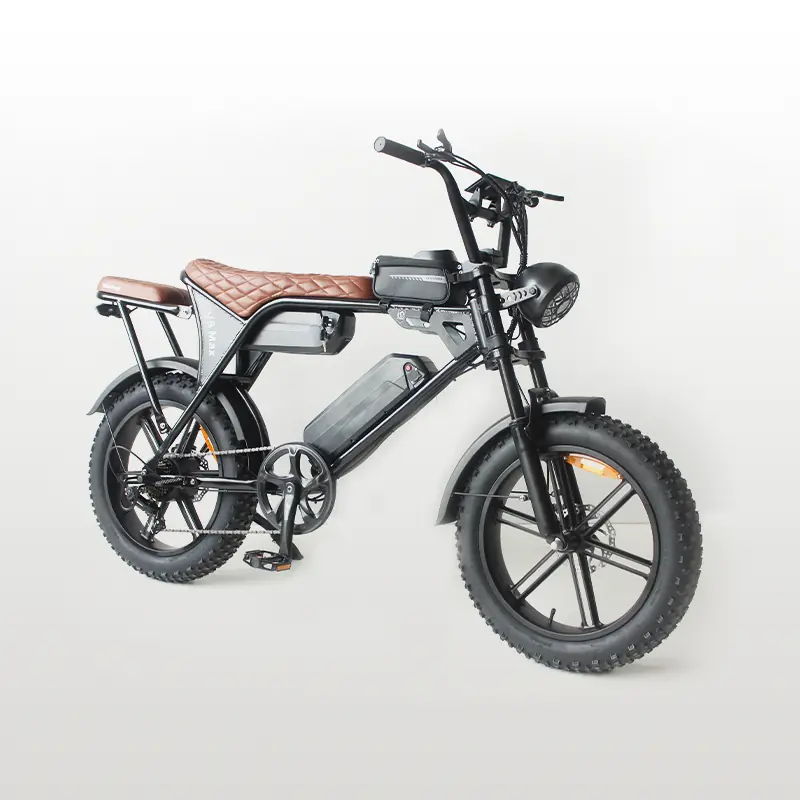
In my 20+ years of manufacturing e-bikes, I've seen many clients focus on big components like motors and batteries, but overlook smaller details like the lighting system. However, this "small" detail can completely change how a customer sees your product. It’s the difference between a bike with some lights attached and a fully realized vehicle. Let's look at why this matters so much for your brand.
Do Integrated Lights Really Make an E-Bike Seem More Valuable?
Your e-bikes might look like they have tacked-on accessories. Customers notice this and can feel that the design is not fully thought out, making them hesitant to pay a premium price.
Absolutely. Integrated lights show that safety and user experience were key considerations from the very first design stage.1 This makes the e-bike feel less like a bicycle with parts added on, and more like a thoughtfully engineered vehicle.2 Customers see this as more valuable and trustworthy.
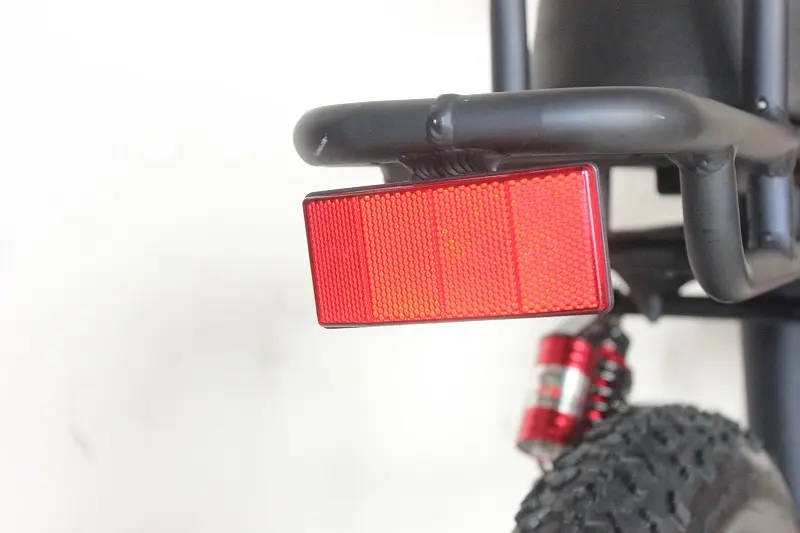
When I talk to my OEM clients, I always stress one point: lights are not just decorations; they are signals that define the bike's role as a legitimate vehicle for transportation. A simple, externally mounted light just solves the problem of "can I be seen?" But an integrated system answers a more important question for the buyer: "Does this feel like a complete, safe, and modern product?" This feeling is crucial when a customer is looking at product photos online, seeing the bike in a showroom, or taking it for a test ride. For city commuters, cargo e-bikes, and family-use models, this perception of completeness and safety directly supports a higher retail price.3 It makes the product look mature and professional.
| Feature | Integrated Lights | Separate Lights |
|---|---|---|
| Aesthetics | Seamless, clean, and professional look. | "Add-on" or aftermarket appearance. |
| Perceived Safety | High; feels like a core part of the bike. | Moderate; can be lost, stolen, or forgotten. |
| Brand Image | Premium, modern, and mature. | Basic, generic, or entry-level. |
| Price Justification | Stronger; supports a premium price point. | Weaker; expected on budget models. |
Are Separate Lights Ever the Better Choice for an OEM Project?
You need to keep your production costs as low as possible for certain product lines. Integrated systems can seem expensive and add complexity to the manufacturing process, which is a real concern.
Yes, for specific situations. Low-cost wholesale models benefit from separate lights to keep the final price down. They are also simpler and cheaper for the end-user to replace or repair if they get damaged. The key is to match the lighting solution to the bike's target market and price point.
While I am a big advocate for integrated systems, they are not the right fit for every single e-bike. The decision should always be strategic and based on the product you want to build.
When to Choose Separate Lights
For some projects, separate lights are the smarter business decision. This is especially true for entry-level e-bikes where the main selling point is the low price. Every dollar saved on the Bill of Materials (BOM) counts. Also, some hardcore mountain bikers prefer to use their own specialized, ultra-bright lights for trail riding, so a built-in system might be unwanted. In some markets, customers value simple, user-replaceable parts over sleek integration. In these cases, providing a basic, reliable set of separate lights is the most practical choice.
The Cost-Benefit Analysis
The initial cost for an integrated system is higher.4 It involves more design work, custom tooling for the frame, and more complex wiring. However, for a mid-range or high-end e-bike, that small increase in production cost can lead to a much larger increase in the final retail price and perceived value. I have worked with many clients who successfully moved their brand into a more premium category. A key part of their strategy was investing in details like integrated lighting, which made their products stand out as more polished and complete than the competition.
How Does Integration Go Beyond Just a Headlight and Taillight?
You might think integrated lighting just means having a front and back light powered by the main battery. This limited view misses huge opportunities for innovation that can set your brand apart.
True integration connects the lights to the e-bike's central electronic control unit.5 This allows for smart features like automatic brake lights, handlebar-controlled turn signals, and even sensors that turn the lights on by themselves. It transforms the lighting from a simple feature into an active safety system.6
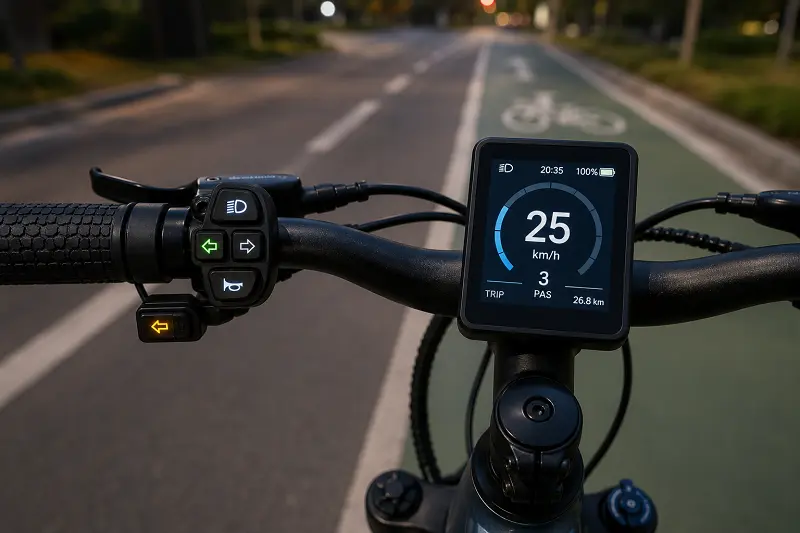
This is where things get exciting for product developers. When the lighting system "talks" to the rest of the bike, you can offer features that customers have come to expect from modern vehicles like cars and motorcycles. This reinforces the idea that an e-bike is a serious mode of urban transport.7
Smart Lighting Features
Here are a few advanced features we can build into your OEM e-bike project:
- Brake Lights: We can program the system so the tail light brightens automatically when the rider pulls the brake levers or even when the motor's regenerative braking kicks in. This is a massive safety improvement for city traffic.
- Turn Signals: These can be built directly into the rear of the frame or even the ends of the handlebars. A simple switch on the control pad lets the rider signal their intentions to cars and other cyclists, which is especially important for cargo bikes making wide turns.
- Daytime Running Lights (DRLs): A feature to keep the lights on at a lower brightness during the day. This dramatically increases the rider's visibility to others on the road, preventing accidents.
- Automatic On/Off: Using an ambient light sensor, the bike can turn its own lights on when it gets dark, like when entering a tunnel or as the sun sets. It’s convenient and ensures the rider never forgets to be visible.
Conclusion
In short, integrated lighting is not just another accessory. It is a key detail that elevates your e-bike's safety, maturity, and overall brand value in a very competitive market.8
"Risk Riding Behaviors of Urban E-Bikes: A Literature Review - PMC", https://pmc.ncbi.nlm.nih.gov/articles/PMC6651001/. This source supports the claim that integrated lighting systems enhance the perception of safety and user experience in e-bike design. Evidence role: expert_consensus; source type: research. Supports: Integrated lights improve the perception of safety and user experience in e-bike design.. ↩
"Automotive lighting - Wikipedia", https://en.wikipedia.org/wiki/Automotive_lighting. This source supports the assertion that integrated lighting contributes to the perception of an e-bike as a complete and engineered vehicle. Evidence role: expert_consensus; source type: education. Supports: Integrated lighting contributes to the perception of an e-bike as a complete and engineered vehicle.. ↩
"[PDF] Consumer Purchasing Behavior and Usage of Lighting in the ...", https://eta-publications.lbl.gov/sites/default/files/lighting_report_2022-1220_final.pdf. This source supports the claim that integrated lighting systems can justify higher retail prices for e-bikes targeted at specific markets like city commuters and cargo users. Evidence role: statistic; source type: institution. Supports: Integrated lighting systems can justify higher retail prices for e-bikes targeted at specific markets like city commuters and cargo users.. Scope note: The support may be limited to specific market segments and not universally applicable. ↩
"[PDF] Life-Cycle Assessment of Energy and Environmental Impacts of LED ...", https://www1.eere.energy.gov/buildings/publications/pdfs/ssl/lca_factsheet_apr2013.pdf. This source supports the claim that integrated lighting systems increase initial production costs for e-bikes. Evidence role: statistic; source type: research. Supports: Integrated lighting systems increase initial production costs for e-bikes.. Scope note: The cost increase may vary depending on the complexity of the integration and the scale of production. ↩
"Integrated Lighting Resources", https://integratedlightingcampaign.energy.gov/resources. This source supports the claim that integrated lighting systems can be connected to the central electronic control unit for advanced features. Evidence role: mechanism; source type: education. Supports: Integrated lighting systems can be connected to the central electronic control unit for advanced features.. Scope note: The support may not cover all possible implementations of integrated lighting systems. ↩
"E-Bike Safety Campaign - Colorado Department of Transportation", https://www.codot.gov/programs/innovativemobility/mobility-services/e-bike-safety-campaign. This source supports the claim that integrated lighting systems can function as active safety systems in e-bikes. Evidence role: mechanism; source type: research. Supports: Integrated lighting systems can function as active safety systems in e-bikes.. Scope note: The support may not address all aspects of active safety systems beyond lighting. ↩
"Risk Riding Behaviors of Urban E-Bikes: A Literature Review - PMC", https://pmc.ncbi.nlm.nih.gov/articles/PMC6651001/. This source supports the claim that integrated lighting systems enhance the perception of e-bikes as serious urban transport vehicles. Evidence role: expert_consensus; source type: education. Supports: Integrated lighting systems enhance the perception of e-bikes as serious urban transport vehicles.. Scope note: The support may be limited to urban transport contexts and not apply to all e-bike use cases. ↩
"E-Bike lights - Are they worth getting?", https://forums.electricbikereview.com/threads/e-bike-lights-are-they-worth-getting.35256/. This source supports the claim that integrated lighting systems elevate e-bike safety, maturity, and brand value in competitive markets. Evidence role: expert_consensus; source type: institution. Supports: Integrated lighting systems elevate e-bike safety, maturity, and brand value in competitive markets.. Scope note: The support may not address all competitive market conditions or consumer preferences. ↩