You see sleek e-bikes with hidden batteries and assume they are simply better. But choosing this design without understanding the hidden complexities can lead to costly manufacturing and after-sales nightmares.
An in-frame battery offers a sleek, integrated look and improved ride stability by centralizing weight. However, it demands superior frame engineering and manufacturing precision. Without this, it can lead to structural weaknesses1, rattling, and electrical issues, making it a structural upgrade, not just an aesthetic one.
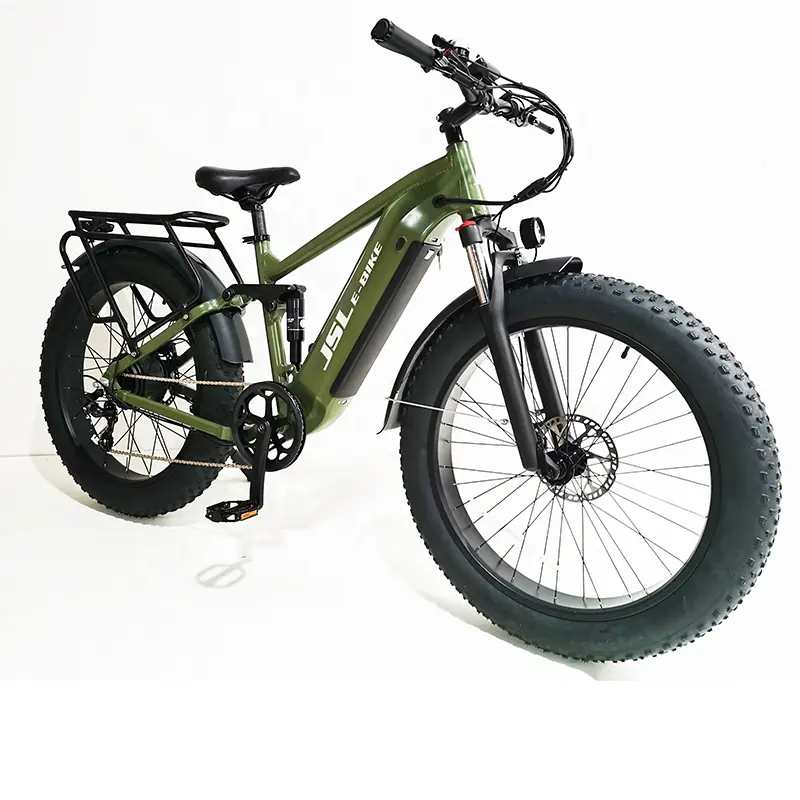
From the outside, an integrated battery looks like a simple design choice. But as a manufacturer, I've seen firsthand how this 'simple' choice can make or break a product line. It's a decision that goes far beyond just looks. Let's dive into why this design is so appealing to brands and what you need to watch out for.
Your e-bike design looks clunky with an external battery pack. This can make your product look dated and less valuable, losing out to competitors with sleeker designs. Integrating the battery is key.
An integrated battery creates a clean, uninterrupted frame line, closely mimicking the look of a traditional high-end bicycle. This seamless appearance removes the "bolted-on" feel of external packs, immediately signaling a more thoughtful design and higher product value to customers.
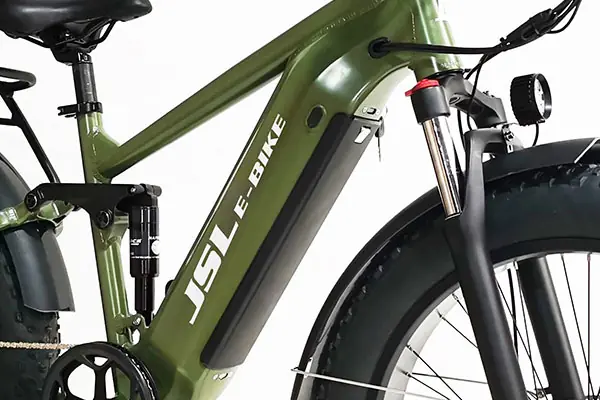
From my experience running an e-bike factory, the first impression is everything. When a client is building their brand, the visual appeal is non-negotiable. An in-frame battery is one of the most effective ways to elevate a bike's perceived value. It transforms the e-bike from a functional machine into a polished, desirable product. This is especially true for certain market segments. For example, city commuters want a bike that looks stylish, not like a delivery vehicle. Mountain bikers appreciate the clean lines that don't interfere with their movements. It allows brands to create a distinct identity that stands out.
| Feature | External Battery | In-Frame Battery |
|---|---|---|
| Aesthetics | Utilitarian, "add-on" look | Sleek, integrated, premium |
| Frame Lines | Interrupted, bulky | Clean, flowing, traditional |
| Brand Perception | Standard, entry-level | High-end, design-focused |
| Target Market | Budget-conscious, utility | Style-conscious, performance |
This visual upgrade is a powerful tool for OEM brands wanting to position themselves in the mid-to-high-end market. It's not just about hiding the battery; it's about creating a cohesive design story.
How does an in-frame battery actually improve the ride?
Some e-bikes feel wobbly or top-heavy, especially during turns. This instability can make riders feel unsafe and less confident, detracting from the overall experience. The battery placement can fix this.
By positioning the battery—one of the heaviest components—low and central within the down tube, the bike's center of gravity is optimized. This results in significantly better balance, stability, and handling, which riders feel as a more natural and confidence-inspiring experience.
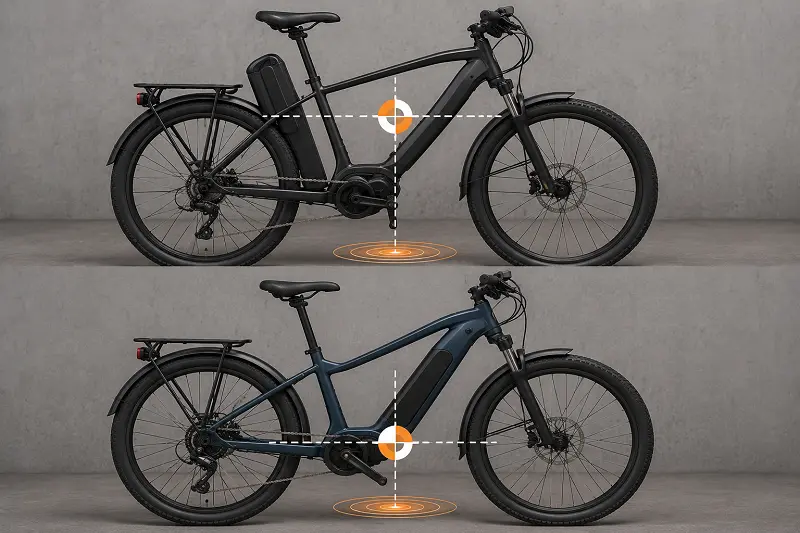
This is a point many clients overlook. They focus on looks, but the performance benefit is just as important. Think about it: the battery is a heavy block of lithium. Where you put that weight matters. A rear-rack battery places that weight high and to the back, which can make the bike feel like it wants to swing from the rear. An in-frame battery, however, places that weight inside the main triangle of the frame. This simple change has a huge impact on the ride dynamics.2
Key Ride Dynamics
- Lower Center of Gravity: The bike feels more planted on the ground and less top-heavy. This gives the rider more confidence in corners and on uneven surfaces.
- Centralized Mass: The weight is concentrated at the bike's core, improving handling responsiveness3. The bike feels more nimble and reacts more predictably to the rider's input.
End customers won't say, "I love the low center of gravity." They'll say, "This bike just feels so stable and easy to control." That feeling translates directly into customer satisfaction and positive reviews. It's a technical choice that delivers a tangible, emotional benefit.
You’ve chosen a factory to produce your beautiful in-frame e-bike design. But if they lack frame expertise, you could face a wave of warranty claims from rattling batteries, water damage, and frame cracks.
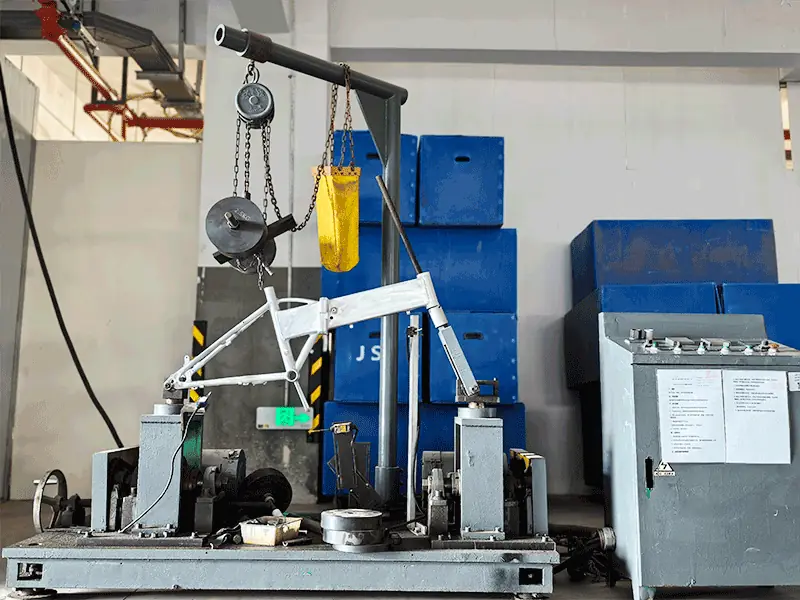
The biggest risk is compromised frame integrity.4 Cutting a large hole in the down tube requires advanced engineering to reinforce the structure. Poor manufacturing precision can also lead to rattling, poor electrical connections, water ingress, and difficult battery removal, turning a premium feature into a costly liability.
[ (https://jslebikes.com/rd-quality-control/)]
This is the part that I, as a factory operator, want my clients to understand most. An in-frame battery isn't just a component; it’s a complete structural system. It's a test of a factory's core engineering and quality control, not just their ability to source parts. A huge hole must be cut into the down tube, the most critical structural part of the frame. To compensate, we have to redesign the tube's shape, increase wall thickness, and strategically place welds. This is where a factory's experience truly shows.
Common Failure Points with Inexperienced Factories
| Problem | Cause | Consequence for the Brand |
|---|---|---|
| Battery Rattle | Poor battery compartment tolerance | Cheap feel, customer complaints, returns |
| Water Damage | Inadequate sealing on the battery door | Short circuits, battery failure, safety risk |
| Frame Flex/Crack | Insufficient frame reinforcement | Catastrophic failure, brand liability, recall |
| Fitment Issues | Low precision assembly | Battery is hard to insert/remove, poor connection |
These issues won't show up in a marketing photo.5 They surface after hundreds of units are sold, leading to a nightmare of returns and reputational damage. Choosing a partner with a proven in-house frame factory is not just a good idea; it's essential for success.
Conclusion
In-frame batteries offer superior aesthetics and handling but demand advanced manufacturing. It's a structural, not just visual, upgrade.6 Choose your manufacturing partner wisely to avoid turning this premium feature into a liability.
"How I built an electric bicycle | Paul M. Rady Mechanical Engineering", https://www.colorado.edu/mechanical/2021/06/01/how-i-built-electric-bicycle. The source explains how improper engineering of in-frame battery designs can lead to structural weaknesses in e-bike frames, emphasizing the need for advanced manufacturing techniques. Evidence role: mechanism; source type: education. Supports: In-frame battery designs can lead to structural weaknesses if not engineered properly.. ↩
"Electric Bike Battery Placement Explained: Pros, Cons & Best Options f", https://newurtopia.com/blogs/blog/electric-bike-battery-placement?srsltid=AfmBOoo76U2MODUidiaBDAJ73N5dvUwpS-ziBlL0wgOlsJVORXuaT4IJ. This source explains how battery placement within the frame affects ride dynamics and stability in e-bikes. Evidence role: mechanism; source type: education. Supports: Placing the battery within the frame significantly improves ride dynamics and stability.. ↩
"[PDF] The Future of E-Bikes on Public Lands: How to Effectively Manage a ...", https://highways.dot.gov/federal-lands/planning/studies/future-ebikes-federal-lands.pdf. Research studies on e-bike design confirm that centralizing the battery within the frame improves handling responsiveness by optimizing the center of gravity. Evidence role: mechanism; source type: research. Supports: By positioning the battery—one of the heaviest components—low and central within the down tube, the bike's center of gravity is optimized. This results in significantly better balance, stability, and handling, which riders feel as a more natural and confidence-inspiring experience.. ↩
"[PDF] Structural batteries: Advances, challenges and perspectives", https://blogs.cuit.columbia.edu/yanggroup/files/2023/04/1-103.pdf. This source outlines the structural challenges and risks associated with integrating batteries into e-bike frames. Evidence role: mechanism; source type: research. Supports: Integrating batteries into e-bike frames can compromise frame integrity if not engineered properly.. ↩
"Electric Bike Defects - PCVA Law", https://pcva.law/ongoing-investigation/electric-bike-defects/. This source highlights how manufacturing defects in e-bikes often become apparent only after extended use. Evidence role: general_support; source type: research. Supports: Manufacturing defects in e-bikes, such as rattling or water ingress, often become evident only after prolonged use.. Scope note: The source may not specifically address marketing photos but discusses hidden manufacturing defects. ↩
"How I built an electric bicycle | Paul M. Rady Mechanical Engineering", https://www.colorado.edu/mechanical/2021/06/01/how-i-built-electric-bicycle. This source explains how integrating batteries into e-bike frames involves both structural and aesthetic considerations. Evidence role: general_support; source type: education. Supports: Integrating batteries into e-bike frames is a structural as well as a visual upgrade.. ↩