Struggling to pick the right drivetrain for your e-bike line? Choosing between more gears and higher costs can feel like a gamble, potentially hurting your profits or market position.
The key difference between Shimano 7, 8, and 9-speed systems isn't just the number of gears; it's about matching the drivetrain to the e-bike's specific model positioning, price point, and intended user scenario. The right choice balances cost with perceived value for your customers.
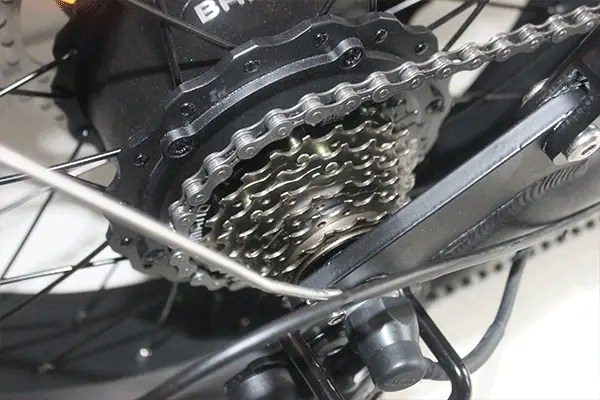
Choosing a drivetrain feels like a simple numbers game, but it's one of the most strategic decisions you'll make in an OEM project. It directly impacts your bill of materials, your product's market position, and the end user's riding experience. Getting it wrong means you either spend money on features your customers don't value, or you under-spec a bike that had premium potential. Let's break down each option so you can make the smartest choice for your brand.
Is Shimano 7-Speed Good Enough for Modern E-Bikes?
You're building a cost-effective e-bike but worry a 7-speed system seems basic. Competitors might advertise more gears, making you second-guess your specs and potential sales.
Yes, a Shimano 7-speed system is often the perfect choice. It is ideal for most city e-bikes, folding e-bikes, and entry-level fat tire models where reliability, easy maintenance, and cost control are the top priorities. It's a proven, dependable workhorse for high-volume products.
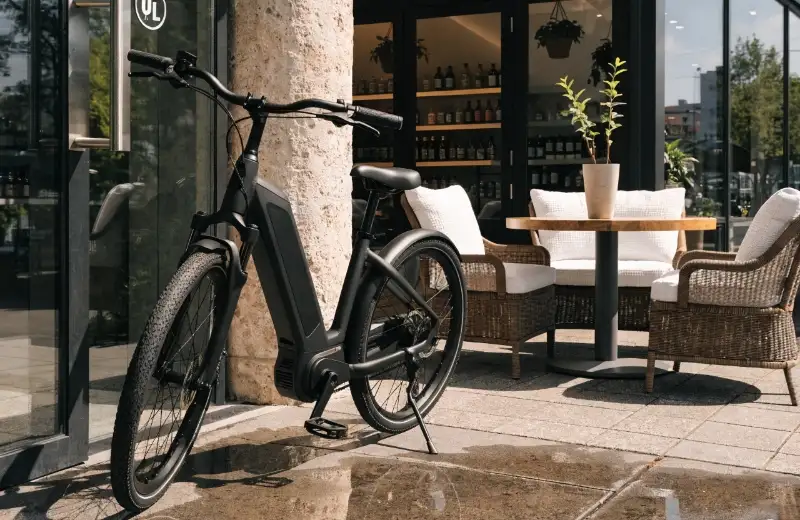
From my experience as a manufacturer, the Shimano 7-speed drivetrain is the backbone of the volume-based e-bike market1 for a reason. Its value for B2B clients like wholesalers and large distributors isn’t about having the highest specs. It's about stability and simplicity. The technology is incredibly mature, meaning production is consistent and failure rates are low. For your customers, this translates to fewer warranty claims and simpler after-sales service. Their mechanics are familiar with it, and spare parts like chains and cassettes are inexpensive and widely available.
For the end user on a city commuter or a folding bike, seven gears are more than enough to handle flat roads and moderate hills2. While the jumps between gears are more noticeable than on a 9-speed, it provides a functional range that gets the job done reliably every single day. This makes it the smartest, most profitable choice for products intended for the mass market.
| E-Bike Type | Why 7-Speed is the Smart Choice | Key Benefit for Your Business |
|---|---|---|
| City Commuter | Easily handles typical urban terrain like flats and small inclines. | High Reliability & Low Cost |
| Folding E-Bike | Keeps the design simple, lightweight, and easy to maintain. | Simplicity & User-Friendliness |
| Entry-Level Fat Tire | Provides essential gearing for casual riding on simple trails. | Achieves an Accessible Price Point |
| Wholesale / Fleet | Universal parts make servicing easy and affordable across many units. | Low Total Cost of Ownership |
When Should You Upgrade to an 8 or 9-Speed Drivetrain?
You want to build a more premium e-bike, but are unsure if the extra cost for an 8 or 9-speed system is truly justified. Will your customers feel the difference and pay more?
You should upgrade to an 8 or 9-speed system for your mid-to-high-end e-bike projects. These are best for eMTBs, long-distance commuters, or high-spec fat tire bikes where a smoother, more responsive ride is a key selling point. This upgrade supports a higher retail price.
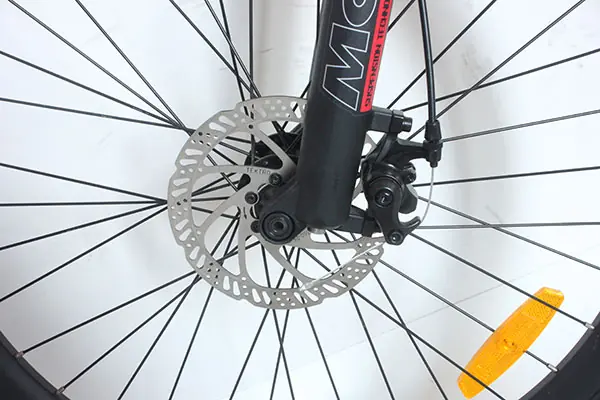
The upgrade to 8 or 9 speeds is all about improving the quality of the ride. With more gears packed into a similar range, the jumps between each shift become smaller and smoother3. This allows the rider to maintain a more consistent pedaling speed, or cadence. This is especially important when climbing hills, accelerating out of a corner, or trying to maintain an efficient pace on a long ride. For a performance-oriented bike like a mountain e-bike, this is not a luxury; it's a necessity for tackling varied terrain.
I remember working with a client on a light off-road e-bike. We initially built the prototype with a 7-speed to control costs. But during testing on rolling hills, the big jumps between gears felt clunky and unprofessional4. We switched to a 9-speed system, and it completely transformed the bike's feel. It felt more responsive and capable, allowing the client to confidently market it as a "performance" model and command a higher price. This is where 8 and 9-speed systems shine, helping you build a stronger brand identity.
| Feature | Shimano 8-Speed | Shimano 9-Speed |
|---|---|---|
| Positioning | A solid upgrade for mid-range models. | The standard for performance and premium feel. |
| Riding Feel | Noticeably smoother shifting than 7-speed. | Very fine-tuned shifts for consistent pedaling. |
| Best For | Upgraded city bikes, trekking bikes, light eMTBs. | Serious eMTBs, performance commuters, branded OEM. |
| Cost Impact | Moderate increase over 7-speed. | Higher increase, justifies a premium brand story. |
How Do You Balance Drivetrain Specs with Overall E-Bike Cost?
It's tempting to add a 9-speed drivetrain to impress customers. But this can inflate costs without adding real value, making your e-bike too expensive for its target market and hurting sales.
Balance your specs by treating the drivetrain as one part of a complete system that includes the motor, battery, and target price. The goal isn't just adding more gears; it's ensuring the entire bike feels cohesive and delivers value the customer is willing to pay for5.
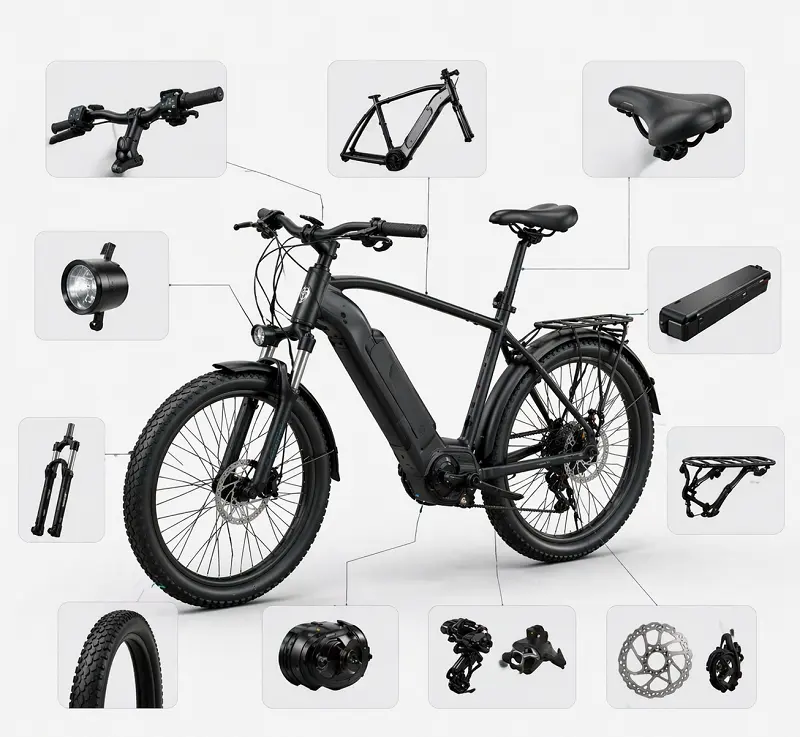
The biggest mistake I see B2B customers make is looking at components in isolation. A drivetrain doesn't exist on its own; it works with the motor and is paid for by a specific type of customer. A "good" configuration is one where all parts are in harmony6. For example, putting a basic 7-speed on a powerful mid-drive mountain bike is a bad match. The rider will feel the drivetrain can't keep up with the motor's power on steep climbs. The bike feels cheap and unbalanced.
Conversely, putting a high-end 9-speed system on a simple 250W hub motor city bike is also a bad match. The end user will likely never use the full range of gears in an urban environment, so you've added cost for no perceived benefit. The key is to start with the target user and price point. Ask yourself: Who is buying this bike, and what is their budget? What experience are they paying for? This holistic view prevents over-spending and ensures your product hits the sweet spot between cost and value.
| E-Bike Profile | Motor & Battery Example | Recommended Drivetrain | Why It Works |
|---|---|---|---|
| Budget City Commuter | 250W Hub Motor, 36V 10Ah Battery | Shimano 7-Speed | A reliable and cost-effective solution perfect for everyday urban use. |
| Mid-Range Trekking Bike | 500W Hub Motor, 48V 14Ah Battery | Shimano 8-Speed | A great balance of performance and cost for longer rides with some hills. |
| Performance eMTB | 750W Mid-Drive Motor, 48V 17Ah Battery | Shimano 9-Speed (or higher) | Provides the fine gear control needed to manage power on technical terrain. |
Conclusion
Choosing the right Shimano drivetrain isn't about counting gears. It's about strategically matching a 7, 8, or 9-speed system to your e-bike's purpose, price, and customer for a perfectly balanced product7.
"Shimano - Wikipedia", https://en.wikipedia.org/wiki/Shimano. This source supports the claim that Shimano 7-speed drivetrains are widely used in high-volume e-bike production due to their reliability and cost-effectiveness. Evidence role: general_support; source type: institution. Supports: Shimano 7-speed drivetrains are widely used in high-volume e-bike production due to their reliability and cost-effectiveness.. Scope note: The source may not cover all e-bike markets or regions. ↩
"Best gear combo for Commuting/ trekking : r/bikecommuting - Reddit", https://www.reddit.com/r/bikecommuting/comments/vivp6t/best_gear_combo_for_commuting_trekking/. This source supports the claim that seven gears provide sufficient range for urban commuting and moderate inclines. Evidence role: expert_consensus; source type: education. Supports: Seven gears provide sufficient range for urban commuting and moderate inclines.. Scope note: The support may not apply to regions with extreme terrain or specific user needs. ↩
"Torque Effectiveness & Pedal Smoothness - Training - TrainerRoad", https://www.trainerroad.com/forum/t/torque-effectiveness-pedal-smoothness/57161. This source supports the claim that increasing the number of gears reduces the size of gear jumps, improving pedaling consistency. Evidence role: mechanism; source type: education. Supports: Increasing the number of gears reduces the size of gear jumps, improving pedaling consistency.. Scope note: The support may not address all drivetrain systems or configurations. ↩
"Bicycle gearing - Wikipedia", https://en.wikipedia.org/wiki/Bicycle_gearing. This source supports the claim that larger gear jumps can negatively impact the riding experience, particularly on varied terrain. Evidence role: mechanism; source type: research. Supports: Larger gear jumps can negatively impact the riding experience, particularly on varied terrain.. Scope note: The findings may be specific to certain bike models or terrains. ↩
"Top E-Bike Design Trends: The Future of Electric Cycling", https://crazylennysebikes.com/e-bike-design-trends/?srsltid=AfmBOoqea0mv9Rpm0gY_qo9CsIH6gKlPSj4K8Im0_uiOoAi2enscerne. This source supports the claim that cohesive e-bike design enhances perceived value and customer satisfaction. Evidence role: expert_consensus; source type: institution. Supports: Cohesive e-bike design enhances perceived value and customer satisfaction.. Scope note: The support may not address all customer demographics or market segments. ↩
"The Benefits of Riding an E-Bike - UCLA Transportation", https://transportation.ucla.edu/blog/benefits-riding-e-bike. This source supports the claim that harmonious integration of e-bike components leads to better performance and user satisfaction. Evidence role: expert_consensus; source type: research. Supports: Harmonious integration of e-bike components leads to better performance and user satisfaction.. Scope note: The support may not apply to all e-bike designs or user preferences. ↩
"e-bikes gearing and battery efficiency - Facebook", https://www.facebook.com/groups/926685377947023/posts/1856360991646119/. This source supports the claim that strategic drivetrain selection contributes to a balanced e-bike design. Evidence role: expert_consensus; source type: institution. Supports: Strategic drivetrain selection contributes to a balanced e-bike design.. Scope note: The support may not address all drivetrain configurations or market segments. ↩