Struggling to decide on battery capacity for your new e-bike? A bigger battery seems like an easy win, but it often creates more problems than it solves.
The right e-bike battery capacity isn't the largest one possible. It's about finding the perfect balance between range, cost, vehicle weight, and the target user's needs. Matching the battery to the bike's commercial positioning is crucial for a successful OEM/ODM product.
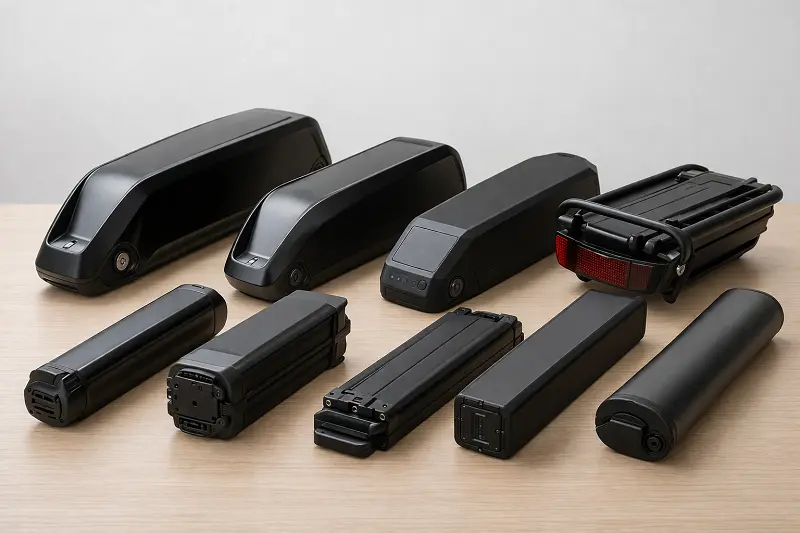
From my experience running an e-bike factory, this is a question I get all the time from my B2B clients. Many come to me asking, "Can we fit a bigger battery?" They see a high capacity as a major selling point. But I always start by asking what market the bike is for. A large battery increases cost, weight, and after-sales risks.1 If the target customer doesn't actually need extreme range, you're just cutting into your own profit margins. Let's break it down model by model to see why "bigger" isn't always "better."
What's the Sweet Spot for City E-Bike Batteries?
You want your city e-bike to have a long range to attract customers. But a huge battery makes it heavy and expensive for urban commuters, who value convenience.
For city e-bikes, a medium-capacity battery is usually best.2 It provides enough range for daily commuting while keeping the bike lightweight, affordable, and easy to charge. The goal is balance, not maximum range, which is what most urban riders value.
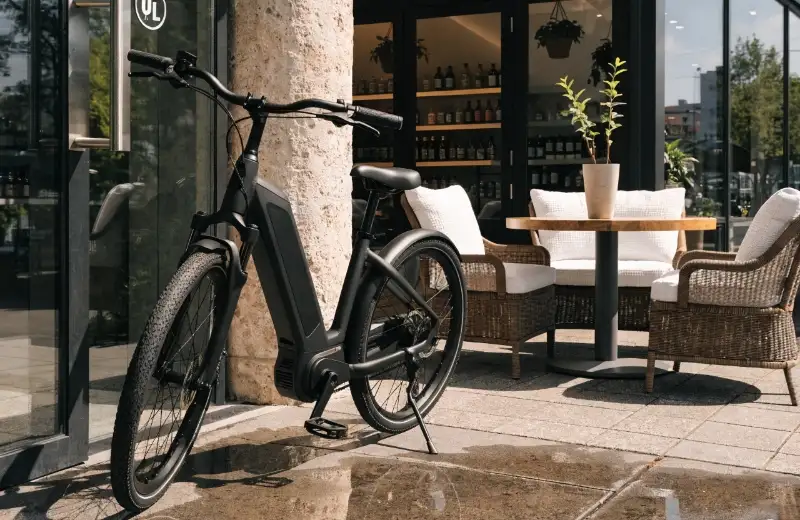
For city commuters, practicality is king. They are more concerned with a bike being lightweight, easy to handle, and affordable. Think about the user who needs to carry their bike up a flight of stairs or lift it onto a public transit rack. A heavy battery makes these daily tasks a real pain. In my projects, I've found that a medium-capacity battery strikes the perfect balance. It gives riders more than enough juice for their daily trips without adding unnecessary weight or cost. For a city bike, you aren't selling extreme performance; you are selling convenience and reliability for everyday life. Blindly adding a larger battery can price the bike out of the competitive commuter market and make it less appealing to the target audience.
| Feature | Small Battery (e.g., 36V 7.8Ah) | Medium Battery (e.g., 36V 13Ah) | Large Battery (e.g., 48V 17.5Ah) |
|---|---|---|---|
| Weight | Very Light | Balanced | Heavy |
| Cost | Low | Moderate | High |
| User Focus | Price & Portability | Daily Use & Convenience | Long Range Only |
| Best Fit? | Good for entry-level | Ideal for most city bikes | Often overkill |
Should Folding E-Bikes Use Large Capacity Batteries?
You think adding more range to a folding e-bike will make it more attractive. But a big, heavy battery makes it a pain to fold and carry, defeating its main purpose.
I generally advise against oversized batteries for folding e-bikes. Their main advantage is portability. A heavy battery compromises this, making the bike difficult to carry when folded. The focus should be on "sufficient" range for short trips, not maximum capacity.
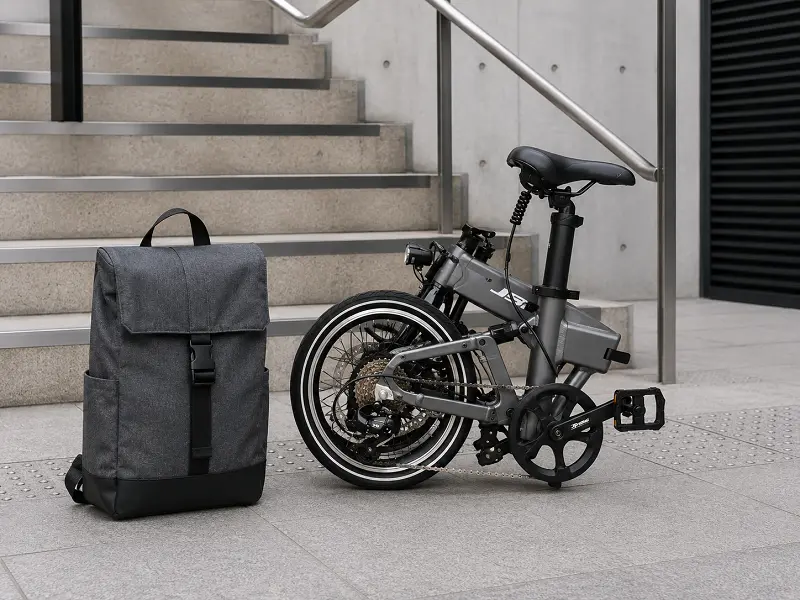
The entire reason a customer buys a folding e-bike is for its convenience and small footprint. They want to be able to store it under a desk, carry it onto a train, or put it in the trunk of a car. I once worked with a client who insisted on a large battery for their folding bike project. The final product had great range on paper, but it was so heavy that customers complained it was too difficult to lift and carry. The product didn't sell well because we had sacrificed its core feature—portability—for a spec that the target user didn't prioritize. For folding bikes, the goal is to provide enough power for the "last mile" or short urban journeys. A smaller, lighter battery keeps the bike nimble and user-friendly, which is what truly makes it a valuable product in this category.
Why Do Fat Tire E-Bikes Need More Battery Power?
Your fat tire e-bike looks powerful and ready for anything. But if the battery dies after a short ride, it leaves customers feeling frustrated and let down.
Fat tire e-bikes almost always require a higher-capacity battery. These bikes are heavier, and their wide tires create greater rolling resistance. To deliver a satisfying user experience on sand, snow, or trails, a small battery just won't provide enough range.
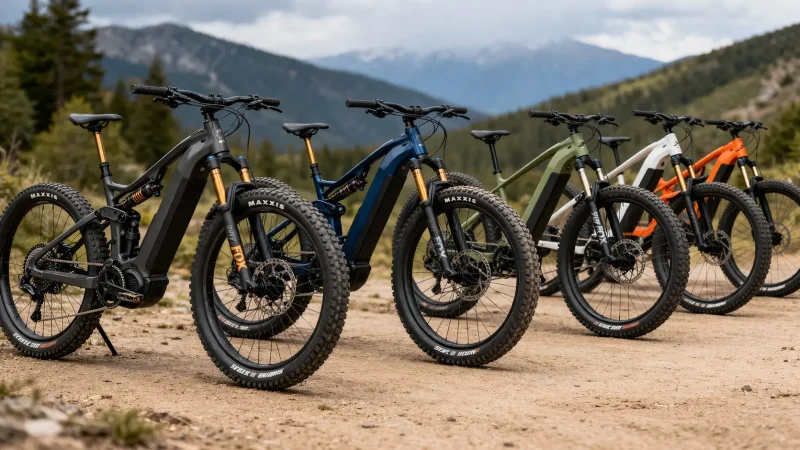
With fat tire bikes, user expectations are completely different. These riders aren't just commuting; they're looking for adventure. They want to explore off-road trails, ride on the beach, or power through snow. All of these activities consume a lot of energy. The bike itself is heavy, and the large, knobby tires create a lot of friction with the ground. If you put a small or medium-sized battery on a fat tire bike, the range will be disappointingly short. This leads to range anxiety and very unhappy customers. For these models, a larger battery (like a 48V 17.5Ah or even 20Ah) isn't a luxury—it's a necessity. It’s what allows the bike to deliver on its promise of all-terrain freedom and fun. Skimping on the battery here is one of the fastest ways to get bad reviews.
Is a Big Battery Enough for a Cargo E-Bike?
You've equipped your new cargo e-bike with a huge battery for delivery businesses. But the bike still struggles under heavy loads and feels unreliable on hills.
For cargo e-bikes, battery capacity is critical, but it's not the only factor. These bikes need a robust system where the battery, motor, controller, and BMS work together. A large battery alone cannot guarantee reliability when carrying heavy loads.
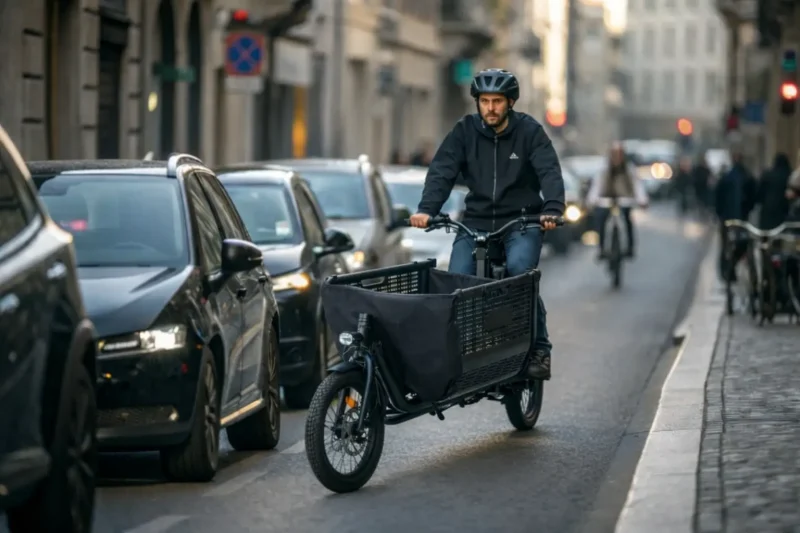
A cargo e-bike is a workhorse. It has to perform consistently under stressful conditions, like starting from a standstill with 100kg of goods or climbing a steep hill fully loaded. These actions draw a massive amount of current from the battery. Just slapping a big battery onto the frame isn't enough. The entire electrical system must be designed to handle that stress. The Battery Management System (BMS) must be robust enough to manage high power draws safely without shutting down. The motor needs to have enough torque, and the controller has to regulate that power effectively. I remember a project where we had to upgrade not just the battery but also the controller and wiring to prevent overheating and system failures under load. For cargo bikes, you aren't just selling battery capacity; you're selling reliability.
| Component | Why It's Critical for Cargo E-Bikes |
|---|---|
| Large Battery | Provides the necessary energy for long hours and heavy loads. |
| Powerful Motor | Delivers the high torque needed for acceleration and climbing. |
| Robust Controller | Manages high current flow from the battery to the motor without failing. |
| High-Quality BMS3 | Protects the battery from over-discharge during peak power draws. |
| Strong Brakes | Ensures safety when stopping a heavy, moving vehicle. |
Conclusion
Ultimately, choosing a battery is about defining your product's market position. The goal isn't the biggest capacity, but the right capacity that makes your e-bike sell better and fail less.
"CPSC Warns Consumers to Immediately Stop Using Batteries for E ...", https://www.cpsc.gov/Warnings/2026/CPSC-Warns-Consumers-to-Immediately-Stop-Using-Batteries-for-E-Bikes-from-Rad-Power-Bikes-Due-to-Fire-Hazard-Risk-of-Serious-Injury-or-Death. This source discusses how larger batteries can lead to increased costs, added weight, and potential after-sales complications. Evidence role: mechanism; source type: research. Supports: A large battery increases cost, weight, and after-sales risks.. ↩
"What size battery is best for electric bike ? | Upway", https://upway.co/blogs/news/what-size-battery-is-best-for-electric-bike?srsltid=AfmBOooIPLgldVtkqClLpMzLkKcMd8HwROP0SuE9KL-WLTHqKgu6-m7m. This source provides data on the optimal battery capacities for city e-bikes based on user needs and market trends. Evidence role: statistic; source type: research. Supports: For city e-bikes, a medium-capacity battery is usually best.. Scope note: The recommendation may vary depending on specific urban commuting patterns. ↩
"Understanding the Role of a Battery Management System (BMS) in ...", https://www.monolithicpower.com/en/learning/resources/understanding-the-role-of-a-battery-management-systems-in-electric-vehicles?srsltid=AfmBOoqLWGA5p0oDoi7mFAc5mDpyR2ww3M3LscxzAS9kJh6jTc1mVB8L. A Battery Management System (BMS) is a critical component in electric vehicles, including e-bikes, as it monitors and manages the performance of the battery to ensure safety and efficiency. Evidence role: definition; source type: encyclopedia. Supports: The Battery Management System (BMS) must be robust enough to manage high power draws safely without shutting down.. ↩