Are you an e-bike buyer thinking motors make gears obsolete? This thinking can lead to products that fail your customers. The right choice is key to a successful product line.
Yes, many e-bikes still need gears. An electric motor provides power assistance, but a gearbox provides efficiency and comfort for different riding conditions.1 They are not mutually exclusive; they work together to create a better riding experience, especially on varied terrain or with heavy loads.
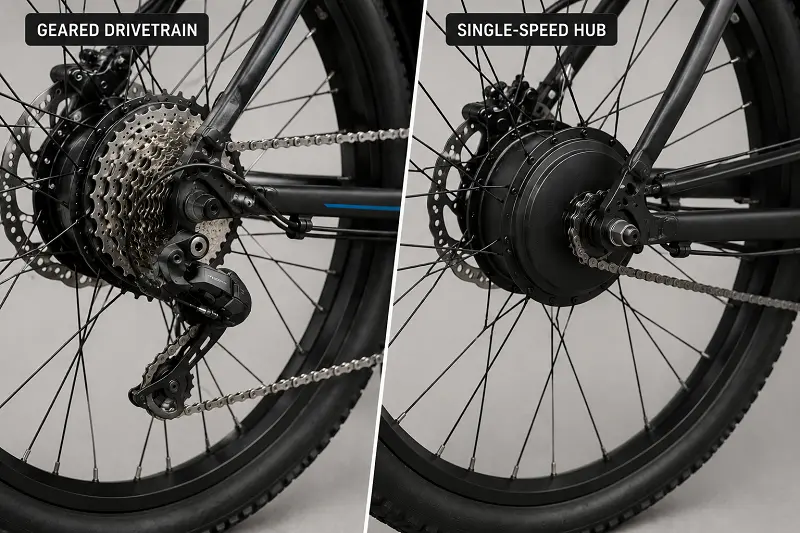
As a manufacturer, I get this question a lot from B2B clients: "If it has a motor, why spend money on gears?" My answer is always the same: it depends entirely on the bike's purpose and who you're selling it to. The decision isn't about tradition versus technology. It's a strategic choice that impacts performance, user satisfaction, and your bottom line. Let's break down when to go simple and when to gear up.
When Is a Single-Speed E-Bike the Right Choice?
Worried that a single-speed e-bike might feel cheap or underperform? In some cases, it's actually the smarter and more profitable choice for your market.
A single-speed setup is perfect for city commuter e-bikes, shared bike fleets, and budget-friendly wholesale models.2 Its main advantages are lower cost, simpler mechanics, and ease of use, making it ideal for flat terrain, short trips, and riders who want zero complexity.
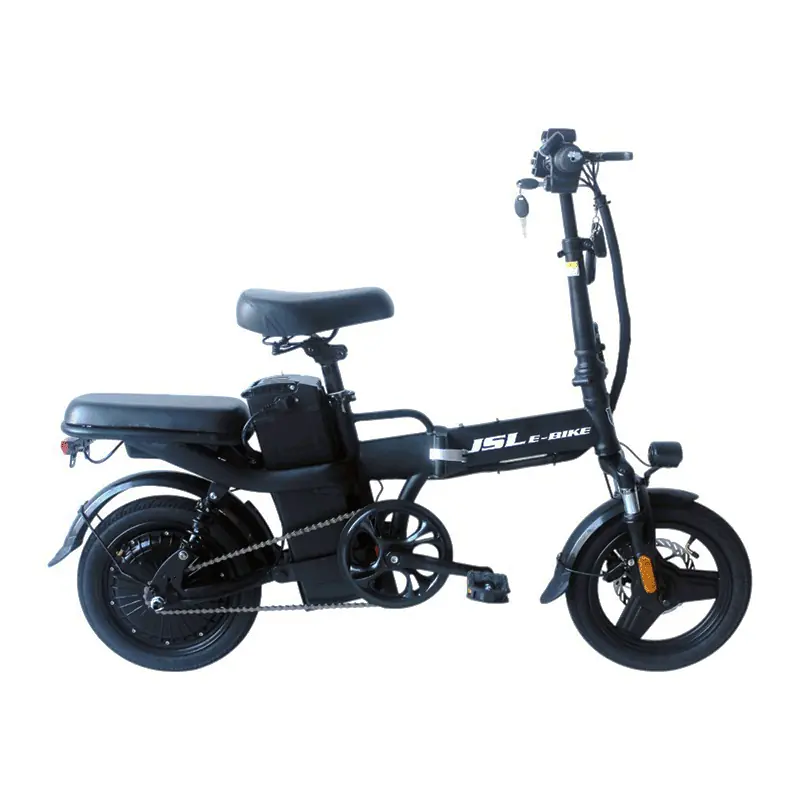
For certain applications, simplicity is a massive advantage. If you are building an e-bike line for urban environments, a single-speed configuration is often the best path. Think about it from your perspective as a business. The bike is cheaper to manufacture, which means you can offer a more competitive price or enjoy a healthier profit margin. For your distributors and dealers, it means fewer maintenance headaches and warranty claims because there are fewer moving parts to break. The end-user, who might be a daily commuter or a tourist on a shared bike, gets a machine that is incredibly easy to use. They just turn it on and pedal. There's no learning curve. This simplicity is a powerful selling point for models where reliability and low operational costs are the top priorities.
| Use Case | Why Single-Speed Works | Benefit for B2B Buyer |
|---|---|---|
| City Commuting | Flat terrain, short distances | Lower cost, less maintenance |
| Shared E-Bike Fleets | High use, rider variety | Durability, ease of use for all |
| Budget Models | Price-sensitive customers | Most competitive price point |
Why Are Gears Crucial for Some E-Bike Models?
Are your customers complaining about poor climbing ability or batteries that die too quickly? This can damage your brand's reputation. Adding a multi-speed system is often the solution.3
Gears are essential for mountain e-bikes, fat tire e-bikes, cargo e-bikes, and long-range commuters.4 They allow the rider to maintain an efficient pedaling speed, making it easier to climb hills, start with heavy loads, and ultimately conserve precious battery life.
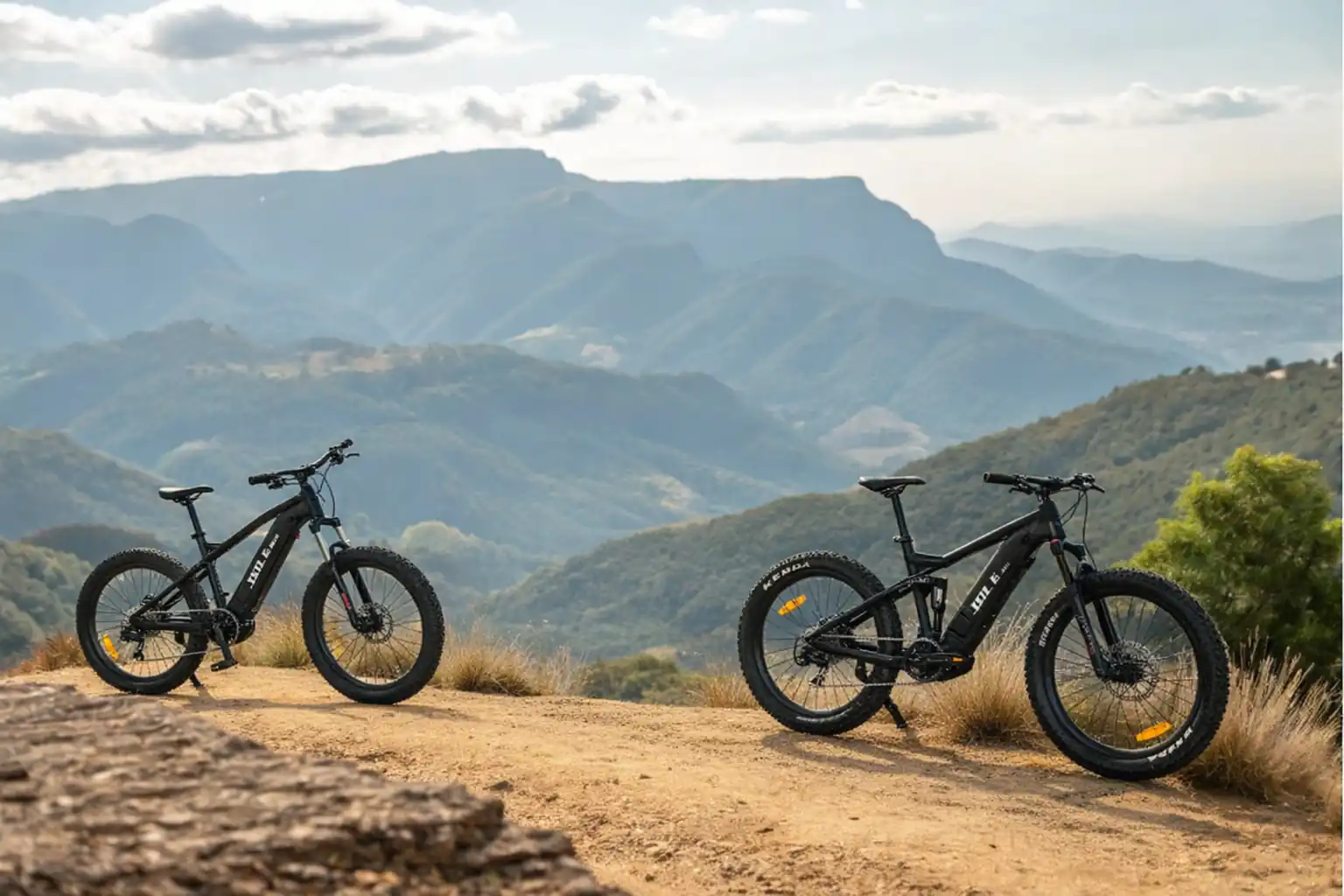
Many B2B buyers mistakenly think gears just make a bike seem more "premium." The real value is much more practical: gears help the motor and the rider work together efficiently. I once had a client developing a cargo e-bike for a delivery service in a hilly city. They initially wanted a single-speed to save money. We built prototypes of both. The single-speed version struggled on hills, putting huge strain on the motor and draining the battery 30% faster.5 The geared version, however, allowed the rider to shift to a low gear for starting and climbing. This took the load off the motor, extended the range, and made the bike feel more powerful. The motor wasn't working as hard, and the riders were happier.6 This is true for any e-bike meant for tough conditions, whether it's a fat bike on sand or a touring bike on a long journey.
| Situation | Single-Speed E-Bike | Geared E-Bike |
|---|---|---|
| Climbing a Steep Hill | Motor strains, battery drains fast | Rider shifts to low gear, assists motor |
| Starting with Heavy Cargo | High motor torque needed, jerky start | Smooth start in low gear, less strain |
| Riding into Headwind | Rider struggles, relies on max assist | Rider shifts down, maintains cadence |
How Do You Make the Final Decision as a Buyer?
You have all this information, but how do you apply it to your specific product line? Making the wrong choice can lead to a bike that just doesn't sell.
The decision comes down to your target market and the bike's main purpose. Choose single-speed for low-maintenance, short-distance, and cost-first models.7 Choose a multi-speed system for models designed for varied terrain, heavy loads, long distances, and higher performance expectations.
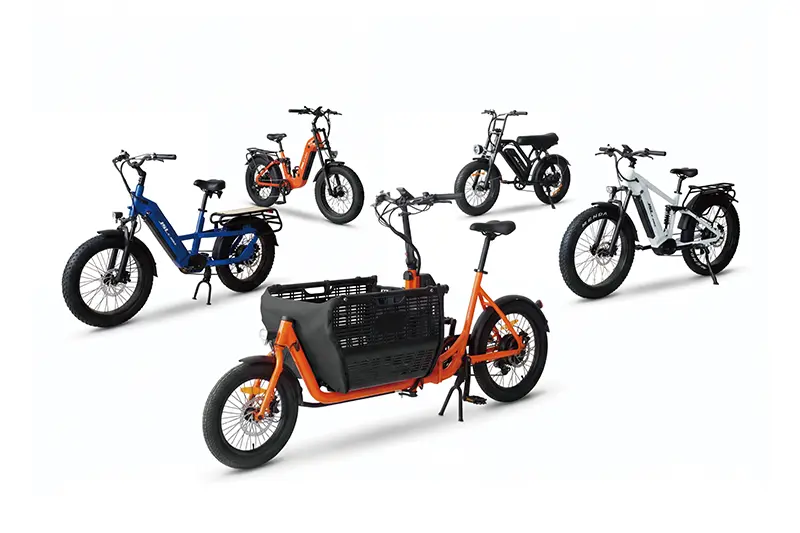
So, how do you make the call for your next e-bike project? Ask yourself one simple question: "Does this bike need to handle complex situations?" If the answer is no—if the bike will live on flat city streets and be used for short trips—then a single-speed is a strong, cost-effective choice. It simplifies the product for you and the end-user. However, if the answer is yes—if the bike will face hills, carry weight, travel long distances, or cross rough terrain—then gears are not a luxury. They are a necessary component for performance, efficiency, and customer satisfaction. Ignoring this can lead to negative reviews about the bike feeling "underpowered" or having poor range, when the real problem is an inefficient drivetrain. Use this logic to build a product that is perfectly suited to its intended market.8
| Key Factor | Go with Single-Speed if... | Go with Multi-Speed if... |
|---|---|---|
| Terrain | The market is mostly flat. | The market has hills and varied terrain. |
| Load | The bike is for a single rider with no cargo. | The bike is a cargo, family, or touring model. |
| Range | Trips are short and charging is easy. | Long range is a key selling point. |
| Customer | The customer prioritizes low price and simplicity. | The customer expects performance and versatility. |
Conclusion
Deciding on gears for an e-bike isn't about the motor.9 It’s about matching the bike's capabilities to your customer's needs, ensuring better performance, efficiency, and satisfaction.
"How Do E-Bike Motors Work? - Magnum Bikes", https://magnumbikes.com/blogs/learning-hub/how-do-e-bike-motors-work?srsltid=AfmBOoolN1DSo-dFAvc0rjYaDl3wbm85jPmquWYGR8mAsRY9XZ2DToh6. This source explains the complementary roles of electric motors and gear systems in optimizing e-bike performance across varied terrains. Evidence role: mechanism; source type: education. Supports: Electric motors and gearboxes work together to enhance e-bike efficiency and comfort in diverse riding conditions.. ↩
"Active Transportation and Micromobility - Alternative Fuels Data Center", https://afdc.energy.gov/conserve/active-transportation. This source provides examples and analysis of single-speed e-bike applications in urban and fleet contexts. Evidence role: case_reference; source type: research. Supports: Single-speed e-bikes are well-suited for urban commuting, shared fleets, and cost-sensitive markets.. ↩
"Single Speed vs. Multi-Speed Ebikes: Which is Right for You?", https://www.heybike.com/blogs/heybike-blog/single-speed-vs-multi-speed-ebike?srsltid=AfmBOoou5hPKPSsouk10IeaR-swLMfTNYGPFSZiFrkMCPhRR2GMK3fDI. This source explains how multi-speed systems improve e-bike performance in scenarios like climbing and heavy loads. Evidence role: mechanism; source type: research. Supports: Multi-speed systems enhance e-bike performance by optimizing motor and rider efficiency in challenging conditions.. ↩
"How Many Gears Should an Electric Bike Have?", https://mihogo.com/blogs/show-all-post/how-many-gears-should-an-electric-bike-have?srsltid=AfmBOophSbx5y9xpLBHQOduJblqN_H6sKx4YJAi4lSNJx32b0n_SlWVU. This source discusses the necessity of gears for e-bikes designed for challenging terrains and heavy loads. Evidence role: expert_consensus; source type: education. Supports: Gears are crucial for e-bikes used in demanding conditions like hills, heavy cargo, or long distances.. ↩
"e-bikes gearing and battery efficiency - Facebook", https://www.facebook.com/groups/926685377947023/posts/1856360991646119/. This source provides data on battery efficiency and motor strain in single-speed versus geared e-bike prototypes. Evidence role: statistic; source type: research. Supports: Single-speed e-bikes experience higher motor strain and faster battery drain on hills compared to geared models.. Scope note: The data may be specific to the tested prototypes and not universally applicable. ↩
"[PDF] Literature Review of Bicycle and E-bike Research, Policies ...", https://assets.bouldercounty.gov/wp-content/uploads/2024/07/e-bike-literature-review.pdf. This source discusses user satisfaction and motor efficiency improvements in geared e-bikes. Evidence role: general_support; source type: research. Supports: Geared e-bikes reduce motor strain and improve rider satisfaction compared to single-speed models.. Scope note: User satisfaction may vary based on individual preferences and riding conditions. ↩
"Is there a benefit to a single speed mid-drive ebike over a ... - Reddit", https://www.reddit.com/r/eBikeBuilding/comments/1lqrz8p/is_there_a_benefit_to_a_single_speed_middrive/. This source outlines the advantages of single-speed e-bikes for specific market segments like urban commuting and budget models. Evidence role: case_reference; source type: education. Supports: Single-speed e-bikes are ideal for low-maintenance, short-distance, and cost-sensitive applications.. ↩
"Electric Bike Market Size, Share, Trends | Growth Analysis [2034]", https://www.fortunebusinessinsights.com/electric-e-bike-market-102022. This source provides guidelines for aligning e-bike design with target market needs. Evidence role: general_support; source type: education. Supports: Strategic drivetrain choices help manufacturers align e-bike designs with market demands.. Scope note: Market needs may vary significantly across regions and demographics. ↩
"Do I Need Gears on My Electric Bike? - Ride1Up", https://ride1up.com/blogs/do-i-need-gears-on-my-electric-bike/?srsltid=AfmBOoohgGo21XQatSNKv2YyCeui95B1mHaTRDbYrV2S4a-WG6jyarJi. This source explains the role of gears in e-bike design, emphasizing their importance beyond motor functionality. Evidence role: definition; source type: education. Supports: The decision to include gears in e-bike design is based on broader performance factors, not just motor functionality.. ↩