Struggling to make your e-bike line stand out? You might be overlooking the family market, a huge opportunity that standard commuter models completely miss.
Yes, many e-bikes can have a child seat installed, but true compatibility is much more than that1. For B2B buyers, this feature is critical because it determines if a bike is just for commuting or if it can serve the entire family mobility market, significantly boosting its value.
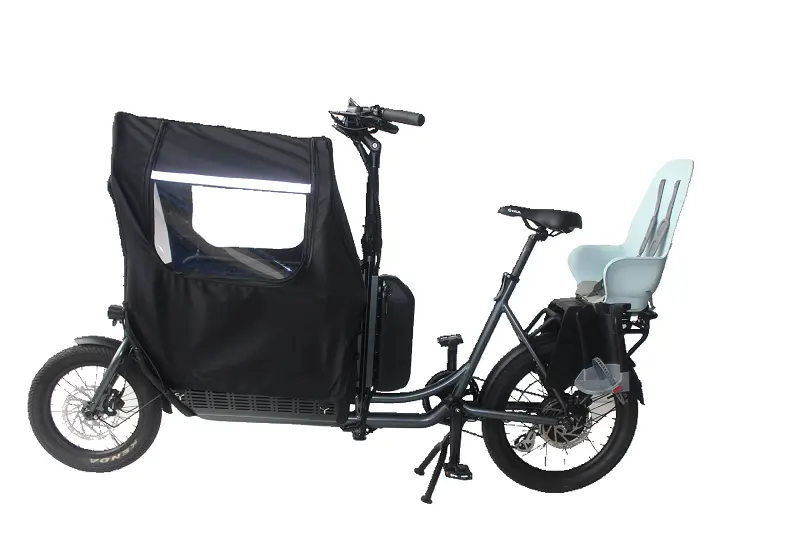
It seems simple enough, right? Just find an e-bike with a rear rack and bolt on a child seat. But in my years of manufacturing e-bikes, I've seen how this assumption can lead to major problems. The difference between an e-bike that can hold a child seat and one that is designed to carry a child safely is massive. Let's break down what "compatibility" really means and why it's a game-changer for your e-bike business.
Doesn't 'Can Install a Seat' Mean It's Safe for a Child?
You see an e-bike with a rear rack and assume it's ready for family use. But a weak rack or poor design could lead to safety issues and unhappy customers.
No, simply being able to install a seat does not guarantee it's safe. True compatibility demands a purpose-built design. Key factors include the rear rack's load capacity, frame integrity, and how the added weight affects the bike's balance and braking. A simple add-on is not enough.
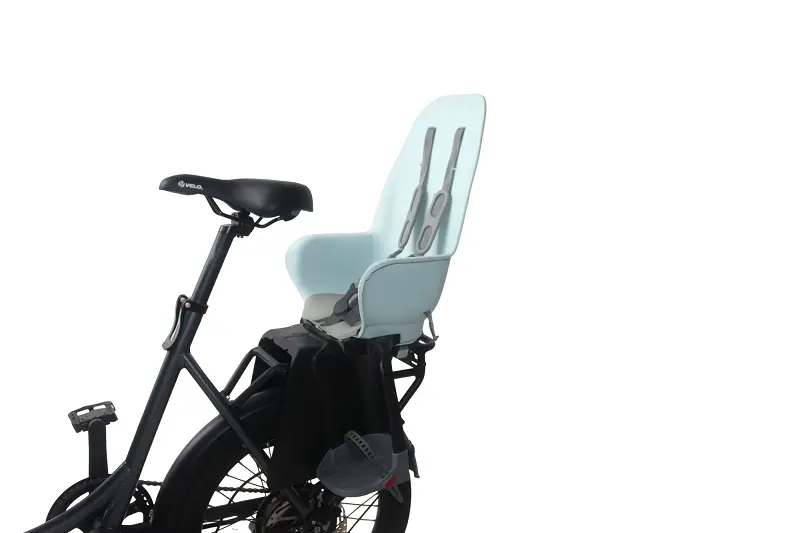
In my experience, this is the most common and dangerous misunderstanding I encounter with B2B buyers. They ask, "Can we add a child seat?" and see the rear rack as a simple yes. But this thinking is flawed. A child is not a static bag of groceries; they are a dynamic, moving load that places unique stresses on a bicycle. When we design a family-focused e-bike, we don't just add a rack; we engineer the entire system for safety.
The Anatomy of a Truly Safe Family E-Bike
The foundation of a safe family e-bike goes far beyond a simple accessory. It involves rethinking the core structure of the vehicle.
-
Rear Rack and Frame Integration: A standard cargo rack is often rated for a static weight limit. It’s designed to hold a box or a bag that doesn't move. A child, however, will shift their weight, lean into turns, and bounce over bumps. This creates dynamic forces that a standard, bolt-on rack isn't built to handle2. For our family-oriented models, we use reinforced racks that are welded and integrated directly into the frame. These connection points are specifically engineered to withstand the constant, shifting load of a child passenger, preventing wobbling, metal fatigue, or catastrophic failure.
-
Center of Gravity is Everything: Adding 15-20 kg of weight high up on the back of an e-bike3 can dramatically alter its handling, making it feel wobbly and top-heavy. This is especially dangerous during slow-speed maneuvers or sudden stops. A properly designed family e-bike accounts for this. We often use low-step frames or position the heavy battery lower down to counteract the high center of gravity from the child seat. Before a design goes into production, we run extensive stability simulations and real-world tests to ensure the bike remains balanced and predictable, even with a child on board.
-
Braking Power for Two: An e-bike is already heavier and faster than a traditional bicycle. When you add the weight of a child and a sturdy seat, the total mass increases significantly. This means you need much more stopping power. Standard mechanical brakes, which might be fine for a solo rider4, can feel weak and lead to dangerously long stopping distances in this scenario. That's why I always insist on using upgraded hydraulic disc brakes for any client's project targeting the family market. They deliver consistent, reliable stopping power in any weather, which is absolutely non-negotiable when a child's safety is on the line.
Often-Overlooked Safety Features
Beyond the big three—frame, balance, and brakes—several smaller features are vital for protecting a young passenger. These are the details that separate a truly professional product from a risky imitation.
| Safety Feature | Why It's Crucial for Child Passengers |
|---|---|
| Full Wheel Guards5 | This is critical. It prevents a child's dangling feet, loose clothing, or curious fingers from getting caught in the spokes of the rear wheel, which could be catastrophic. |
| Protective Footrests | A child needs a secure place for their feet. This stops them from accidentally kicking the rider or, worse, getting their feet tangled in the bike's mechanics. |
| Dual-Leg Kickstand6 | A standard side kickstand is unstable. The bike can easily tip over while you're trying to load or unload a squirming child. A wide, stable, dual-leg kickstand keeps the bike securely upright. |
| Full Chain Guard | This simple piece of plastic or metal is essential. It protects small hands and pant legs from the greasy, moving chain, preventing injury and messes. |
These features are not just "nice-to-haves." They are essential components of a responsible design. For my B2B partners, getting these details right is about more than just making a sale; it's about building customer trust and protecting their brand from the serious liability of an unsafe product.
How Does Child Seat Compatibility Transform an E-Bike's Market Value?
Is your e-bike line stuck competing only in the crowded commuter market? You're missing out on the growing family segment that needs versatile, multi-purpose vehicles.
It fundamentally shifts the e-bike from a "personal transport tool" to a "family utility vehicle." This opens up entirely new sales channels and daily use cases, like school runs, grocery trips, and weekend outings, dramatically increasing its market appeal7 and justifying a higher price for OEM/ODM clients.
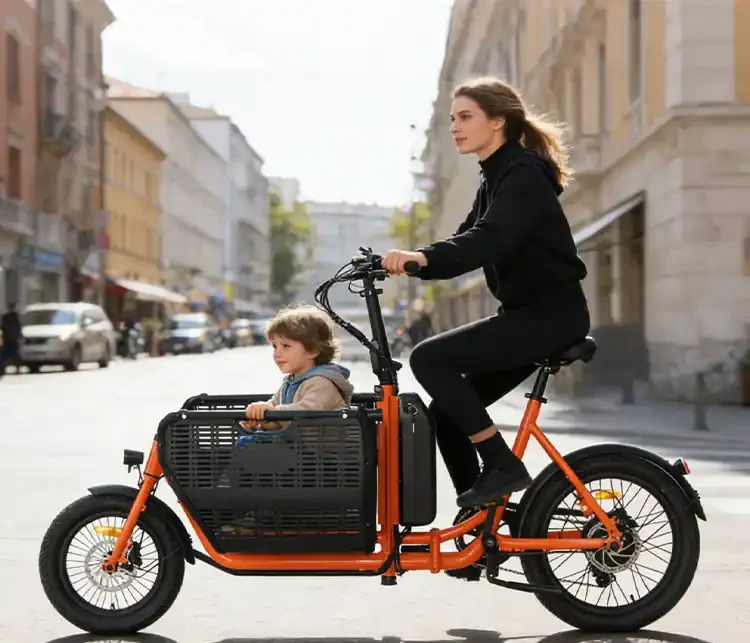
To understand the value, you have to stop seeing the e-bike as just a product. Think of it as a solution to a customer's problem. For millions of urban families, that problem is transportation. Their car is expensive, a hassle to park, and bad for the environment. Public transit can be inconvenient with kids. A standard e-bike solves the parent's commute, but it doesn't solve the family's transportation needs. A family-safe e-bike, however, does.
Expanding from a Niche to a Lifestyle
An e-bike built for a single commuter serves one main purpose: getting from point A to point B. But an e-bike that can safely and comfortably carry a child becomes woven into the fabric of a family's daily life. It's no longer just the "commuter bike." It becomes the "school run bike," the "quick-trip-to-the-store bike," and the "weekend-adventure-to-the-park vehicle." This shift in function is a massive opportunity for marketing and branding.
You are no longer just selling technical specifications like motor wattage or battery range. You are selling a lifestyle. You're selling freedom from traffic jams, the convenience of easy parking, and the joy of quality time spent with your child. I have worked with several e-commerce sellers who built their entire brand identity around this "family mobility" concept. Their marketing materials don't show a lone rider in cycling gear; they show happy parents and kids riding to get ice cream. This emotional connection is far more persuasive8 than any spec sheet could ever be. It resonates with what customers truly want: a better life for their family.
The Business Case for OEM/ODM Buyers
From a purely business perspective, investing in proper family-safe design makes perfect sense. The return on investment is clear and multifaceted.
- Increased Target Audience: Suddenly, your potential customer base is much larger. You're not just marketing to solo riders. You are now appealing directly to parents, grandparents, and anyone involved in childcare. This dramatically expands your addressable market.
- Higher Perceived Value and Price Point: Because the bike solves more significant problems and is engineered to a higher safety standard, it commands a higher price9. Customers are consistently willing to pay a premium for features that ensure their child's safety and add real utility to their daily lives. For my wholesale and retail partners, this directly translates to healthier profit margins.
- Powerful Competitive Differentiation10: In today's crowded e-bike market, many products look and feel the same. Offering a thoughtfully designed, genuinely family-safe model is a powerful way to stand out. It sends a clear message that your brand is thoughtful, responsible, and understands the real-world needs of its customers. When I consult with new clients looking to build their e-bike line, I always ask about their target demographic. If "families" are even a secondary audience, I strongly push them to develop a dedicated family model rather than just offering a child seat as an afterthought. That strategic decision sets them apart and builds a loyal customer base that trusts their brand.
Conclusion
Child seat compatibility is not an accessory choice11; it's a strategic decision. It enhances safety, expands your market12, and transforms an e-bike's value, making it a crucial focus for B2B buyers.
"Child Seats - Seacoast eBikes | Portsmouth, NH", https://www.seacoastebikes.com/product-list/e-bike-accessories-1109/child-seats-1112/?srsltid=AfmBOopUvF9GC9f-ttf3mCi3MiXzY2jDK8MFQ142YUBPqZ-FtvfRE_nj. This source explains the engineering challenges and safety considerations involved in designing e-bikes for child seat compatibility. Evidence role: mechanism; source type: education. Supports: True compatibility for child seats involves more than just installation; it requires specific engineering for safety and functionality.. ↩
"Child Bike Seat, RACK MOUNT with CLAMP, Child ... - Amazon.com", https://www.amazon.com/Bellelli-Child-Carrier-Bikes-Bicycle/dp/B07NJCVXJ9. This source discusses the mechanical stresses and dynamic forces exerted on bicycle racks when carrying child passengers. Evidence role: mechanism; source type: research. Supports: Standard bolt-on racks are not designed to handle the dynamic forces created by child passengers on e-bikes.. ↩
"Analyzing the impact of bicycle geometry and cargo loading ... - PMC", https://pmc.ncbi.nlm.nih.gov/articles/PMC11033132/. This source provides data on how added weight impacts the center of gravity and handling of bicycles. Evidence role: statistic; source type: research. Supports: Adding 15-20 kg of weight high up on the back of an e-bike can significantly alter its handling and stability.. Scope note: The data may focus on general bicycles rather than e-bikes specifically. ↩
"Bicycle Requirements Business Guidance | CPSC.gov", https://www.cpsc.gov/content/bicycle-requirements-business-guidance. This source explains the limitations of mechanical brakes and the advantages of hydraulic disc brakes for heavier loads. Evidence role: mechanism; source type: education. Supports: Standard mechanical brakes are insufficient for the increased weight and stopping power required for e-bikes carrying child passengers.. Scope note: The discussion may not specifically address e-bikes carrying child passengers. ↩
"Bicycle Safety - Helmets - Avoid Crashes - Drivers - NHTSA", https://www.nhtsa.gov/road-safety/bicycle-safety. This source outlines the safety benefits of full wheel guards in preventing injuries to child passengers on bicycles. Evidence role: mechanism; source type: government. Supports: Full wheel guards are critical for preventing injuries to child passengers on bicycles.. Scope note: The source may focus on general bicycles rather than e-bikes. ↩
"Bicycle Safety - Helmets - Avoid Crashes - Drivers - NHTSA", https://www.nhtsa.gov/road-safety/bicycle-safety. This source explains the stability advantages of dual-leg kickstands for bicycles, especially when loading or unloading passengers. Evidence role: mechanism; source type: encyclopedia. Supports: Dual-leg kickstands provide greater stability than side kickstands, especially for loading or unloading child passengers.. Scope note: The source may not specifically address e-bikes designed for families. ↩
"Increasing Recreational Opportunities Through the Use of Electric ...", https://www.federalregister.gov/documents/2020/11/02/2020-22239/increasing-recreational-opportunities-through-the-use-of-electric-bikes. This source provides insights into how multi-purpose designs enhance the market appeal of e-bikes. Evidence role: expert_consensus; source type: research. Supports: Multi-purpose designs, such as family-safe e-bikes, dramatically increase their market appeal.. Scope note: The source may not specifically address the family mobility market. ↩
"The influence of brand marketing on consumers' emotion in mobile ...", https://pmc.ncbi.nlm.nih.gov/articles/PMC9360773/. This source discusses the role of emotional marketing in influencing consumer decisions for lifestyle products. Evidence role: expert_consensus; source type: education. Supports: Emotional marketing is more persuasive than technical specifications for lifestyle products like family-oriented e-bikes.. Scope note: The source may focus on general lifestyle products rather than e-bikes. ↩
"Best Electric Bike Buying Guide - Consumer Reports", https://www.consumerreports.org/health/electric-bikes/buying-guide/. This source discusses how added safety and utility features justify higher price points for e-bikes. Evidence role: statistic; source type: education. Supports: Added safety and utility features justify higher price points for e-bikes targeting families.. Scope note: The source may not specifically address family-oriented e-bikes. ↩
"The Best Electric Cargo Bikes for Hauling Your Life Around", https://www.wired.com/story/best-electric-cargo-bikes/. This source explains how unique features like family-safe designs can differentiate e-bike brands in a competitive market. Evidence role: expert_consensus; source type: institution. Supports: Family-safe designs provide a powerful competitive differentiation for e-bike brands in a crowded market.. Scope note: The source may focus on general branding strategies rather than specific e-bike features. ↩
"What Is the Best Electric Bike with Kid Seat? Can You Add a Child ...", https://www.hovsco.com/blogs/blogs/best-electric-bike-with-kid-seat-can-you-add-a-child-seat-or-trailer-to-the-cargo-e-bike?srsltid=AfmBOooxaH_wemoSkGFy6OY0V9PMUztWXy0PG4EV1zbplg-aGRX5rdZa. This source discusses how child seat compatibility impacts the design and marketability of e-bikes. Evidence role: expert_consensus; source type: institution. Supports: Child seat compatibility is a strategic design decision that enhances safety and marketability for e-bikes.. Scope note: The source may focus on market trends rather than technical design aspects. ↩
"Best Electric Bikes For Kids | Be Safe AND Have Fun!", https://electricbikereport.com/best-electric-bikes-for-kids/. This source provides market analysis on how family-friendly features increase the target audience for e-bikes. Evidence role: statistic; source type: research. Supports: Family-friendly features expand the target audience for e-bikes beyond solo commuters to include parents and caregivers.. Scope note: The analysis may focus on general market trends rather than specific e-bike models. ↩