Choosing the wrong frame can ruin your e-bike brand. It leads to high costs, poor performance, and unhappy customers. This guide shows how to pick the right frame.
To choose the right e-bike frame, focus on four key areas: material (aluminum vs. steel), forming process (hydroforming1 for premium), welding quality, and frame type (step-through, cargo, etc.). Matching these to your market's needs for cost and performance is crucial for success.
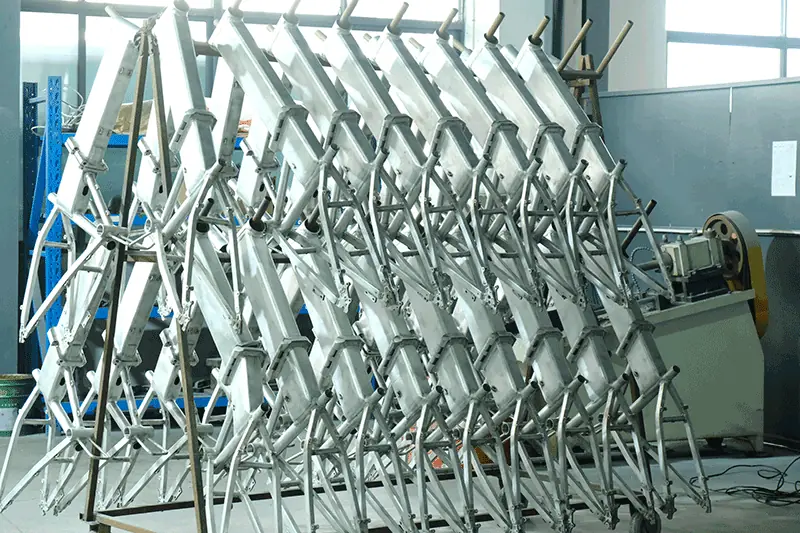
You now have a basic checklist. But the real advantage is in the details. As a manufacturer with our own in-house frame factory, we've seen how these choices make or break a product line. For professional buyers, the frame is everything. It is the foundation of the bike and a true test of a factory's capabilities. Let's dive deeper into each element to give your business a real competitive edge.
How Do Frame Materials Impact Your E-Bike's Cost and Performance?
Picking the wrong frame material can sink your budget and disappoint riders. This choice dictates weight, durability, and price. Let us help you balance these critical factors.
Aluminum alloys (6061/7005)2 offer the best balance of lightweight strength and design flexibility for most markets. Steel is a cheaper, heavier option for cost-focused models, while carbon fiber3 is for high-end performance bikes. The choice depends on your target customer and price point.
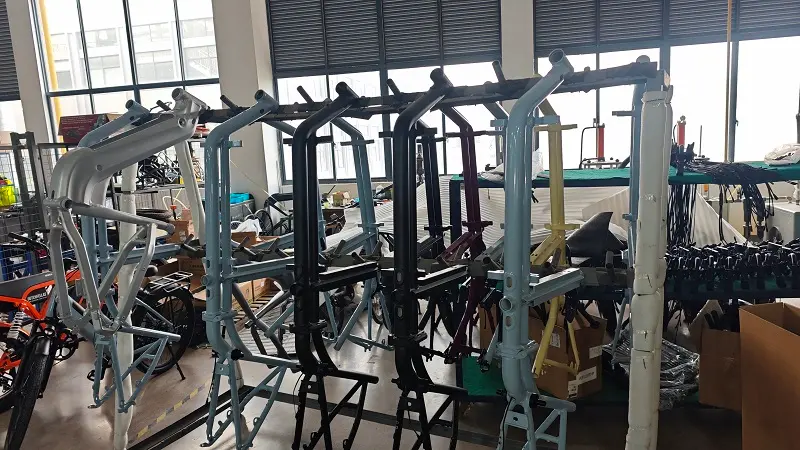
The frame material determines about 80% of your e-bike's basic performance. It is a constant balance between strength, weight, and cost. We have worked with all major materials, and we guide our partners based on their specific market goals. For example, European markets often prioritize low weight, while some buyers in the US are more price-sensitive. At our factory, we primarily use aluminum alloys. This material is lightweight, resists corrosion, and is incredibly versatile for shaping. This makes it perfect for OEM partners who want to create unique, branded e-bikes that stand out. We also produce steel frames for certain applications. Steel is heavier and can rust if not treated properly, but it is less expensive and offers excellent load-bearing capacity. This makes it a good fit for budget-friendly e-commerce models or heavy-duty cargo bikes.
| Material | Key Benefits | Best For |
|---|---|---|
| Aluminum Alloy | Lightweight, corrosion-resistant, versatile shaping | Most OEM/branded e-bikes (City, MTB) |
| Steel | Low cost, high strength, durable | Price-sensitive e-commerce, heavy-duty cargo |
| Carbon Fiber | Extremely lightweight, high performance, premium feel | High-end sport and performance e-bikes |
What Manufacturing Processes Define a Premium E-Bike Frame?
A frame is more than tubes welded together. Poor manufacturing leads to weak, heavy, and ugly frames. We will show you what processes create a truly premium product.
Premium frames are defined by advanced forming and welding. Hydroforming creates complex, lightweight, and strong shapes, unlike basic tube extrusion. Fine TIG welding4 with smooth, polished welds indicates high craftsmanship and reliability, a major differentiator from low-quality welds.
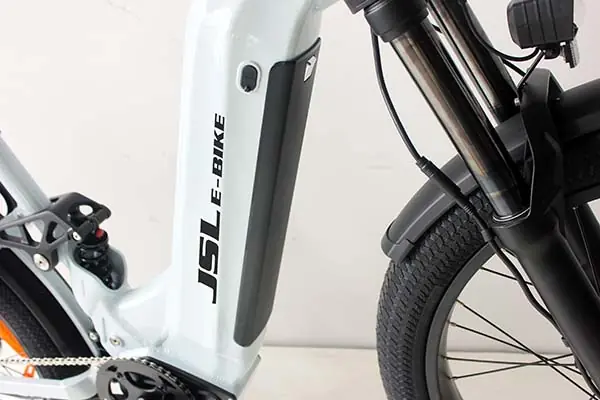
The forming process determines the frame's structural capability and aesthetic. While standard frames use simple extruded or bent tubes, a premium frame often uses hydroforming. This process uses high-pressure fluid to shape aluminum tubes into complex, strong, and lightweight forms. This is the dividing line between a standard product and a premium one. It allows for more sophisticated designs that integrate batteries cleanly and improve stiffness without adding weight.
Welding is another area that reveals a factory's true skill. Many factories produce messy, weak welds that we call "chicken poop" welds. Our facility, in contrast, specializes in clean TIG welding. Our welders create beautiful and uniform "fish scale" welds on our aluminum frames. For our highest-end OEM partners, we go a step further by grinding and polishing the welds until they are perfectly smooth. After our high-quality baking paint process, the frame looks like a single, seamless piece of metal. This level of craftsmanship is impossible for simple assembly factories to achieve and adds significant value to your brand.
Which E-Bike Frame Type is Right for Your Target Market?
Selling mountain bikes to city commuters is a recipe for failure. The frame's shape must match the rider's lifestyle. Let us make sure you choose the right one.
Choose a frame type based on its intended use. Step-through frames are best for urban commuters and rentals. Step-over frames offer rigidity for e-MTBs. Cargo frames are built for logistics, and folding frames are for commuters with limited storage space.
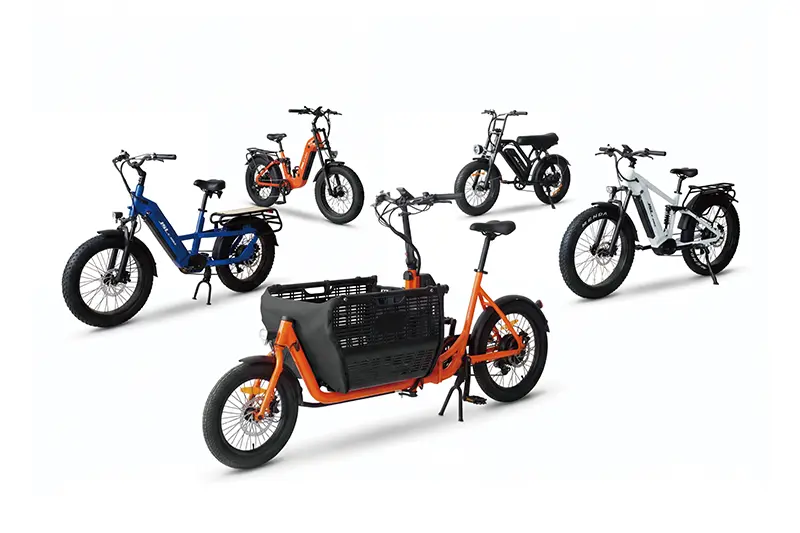
The frame's geometry is not just about looks; it is about function, safety, and market appeal. We have deep experience engineering each type for optimal performance.
Step-Through (Low-Step)
This open, low-frame design is easy to get on and off. It is very popular in Europe for city bikes and rental fleets. The design requires careful engineering and stronger welding to ensure rigidity, as it lacks the top tube of a traditional frame. We use reinforced structures and precise welding to make our step-through frames both accessible and durable.
Step-Over (High-Step)
The classic diamond or triangle frame is naturally strong and stiff. This makes it the ideal choice for performance-oriented bikes like e-MTBs and sport models. The manufacturing process is more standard, but quality control is still key to ensuring perfect alignment for a great ride.
Cargo Frame
Designed for business, cargo frames must handle heavy loads. They feature a long wheelbase, reinforced structures, and the highest-quality welding to ensure safety and reliability. We build these frames to be workhorses for logistics and delivery companies.
Folding Frame
Perfect for urban commuters in crowded cities in Europe or Japan. The most critical component is the hinge mechanism. It must be strong, secure, and able to withstand thousands of folding cycles without failing. We use robust, fatigue-tested hinge designs to ensure long-term reliability.
How Does Frame Quality Reduce Your After-Sales Costs?
Customer complaints and returns can destroy your profit margins. Many issues trace back to a poorly made frame. Let us talk about how to minimize these expensive problems.
High-quality frames with precise tolerances, clean welds, and rational design prevent common issues like creaking noises, component misfit, and failure. This directly lowers your warranty claims, repair costs, and protects your brand's reputation, saving you money in the long run.
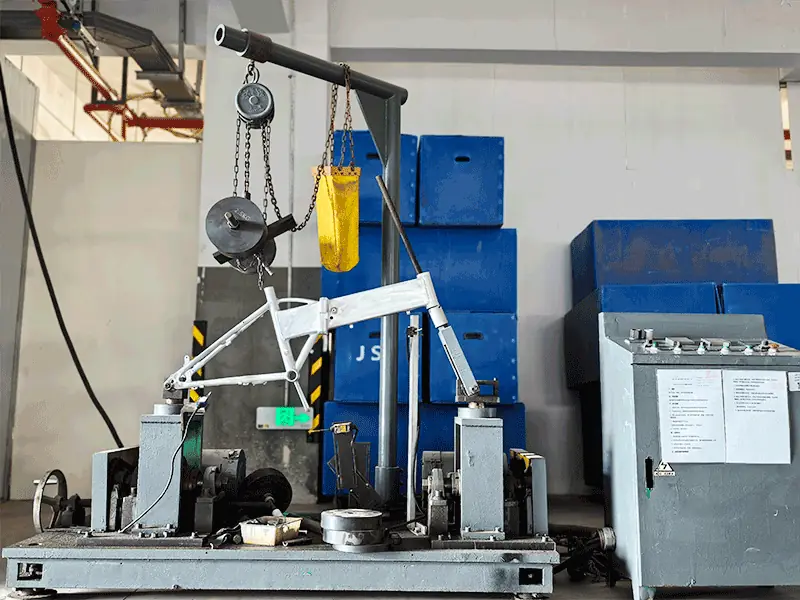
A cheap frame is an expensive mistake. Poor quality leads directly to higher after-sales costs, which can erase your profits. Good craftsmanship is an investment in long-term profitability. One of the most critical factors is manufacturing tolerance5. We ensure our frames have perfect alignment and precise dimensions for the head tube, bottom bracket, and battery compartment. This precision prevents annoying creaks, ensures components fit perfectly during assembly, and guarantees a smooth, quiet ride for the end user. This is where the skill of our workers and our strict, multi-stage QC process really shines.
Furthermore, a well-designed and properly welded frame is safe and reliable. Bad welds can fail, creating a huge liability for your brand. Good design also considers details like internal cable routing6 and waterproofing, which protect components and make maintenance much easier for service centers. In short, investing in a high-quality frame from a capable manufacturer like us dramatically reduces your rate of returns and warranty claims. It builds customer trust and protects your brand's reputation for quality.
Conclusion
Frame choice is a core strategic decision. By focusing on the right material, manufacturing process, frame type, and quality control, you build a successful, profitable, and reliable e-bike line.
Learn how hydroforming enhances frame design, allowing for complex shapes and improved performance. ↩
Discover why these aluminum alloys are favored for their strength, weight, and versatility in e-bike manufacturing. ↩
Explore the benefits of carbon fiber for high-end e-bikes to cater to premium market segments. ↩
Understand why TIG welding is preferred for its precision and aesthetic appeal in e-bike manufacturing. ↩
Understand the role of precise manufacturing tolerances in ensuring frame alignment and component fit. ↩
Explore how internal cable routing enhances e-bike aesthetics and protects components from damage. ↩