Choosing the wrong brakes for your e-bike fleet can lead to high maintenance costs and safety risks. This can damage your brand's reputation and your bottom line.
For your e-bike fleet, Tektro is an excellent choice. Mechanical brakes are cost-effective and easy to maintain for standard use. Hydraulic brakes offer superior power and lower maintenance for heavy-duty or high-speed applications, ensuring better safety and user experience.
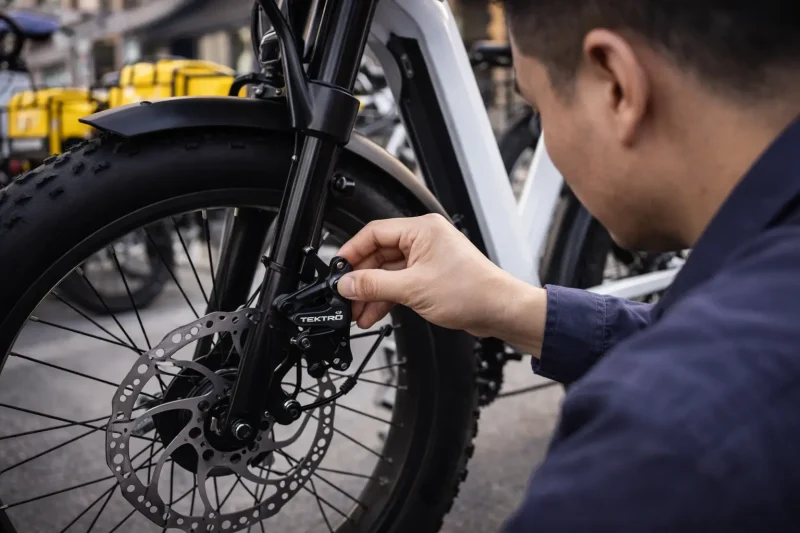
As a professional electric bike manufacturer, we've spent countless hours in our workshop testing components. Brakes are one of the most critical parts we evaluate because the safety of your riders and the reputation of your brand depend on them. We didn't just pick a supplier; we chose a partner in safety. After testing many different brake systems, we chose Tektro for its consistent reliability and performance. Now, let's break down the two main options you'll face: mechanical and hydraulic disc brakes. This choice will have a big impact on your fleet's operational success1 and long-term costs.
Why Do We Trust Tektro Mechanical Disc Brakes for Standard Fleet Bikes?
Need reliable brakes for your fleet without a huge budget? High upfront costs can sink your project before it starts, eating into your profits and making it hard to scale.
Tektro mechanical disc brakes are ideal for standard fleet operations because of their simplicity, durability, and low maintenance costs. They are easy for any mechanic to service, and their initial purchase price is very attractive, making them a great choice for budget-conscious fleet managers.
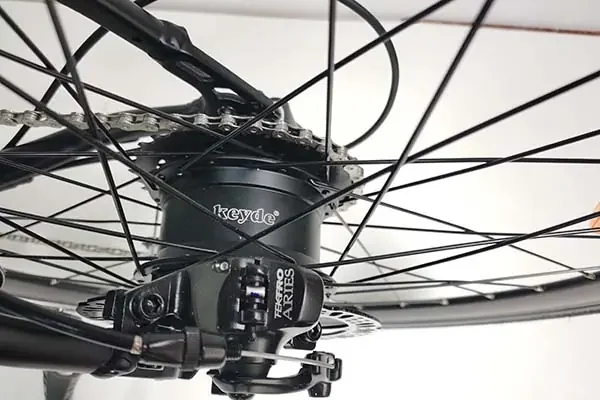
When we talk to clients building a new e-bike fleet, the conversation often starts with the budget. This is where Tektro's mechanical systems really shine. Their biggest advantage is a simple, effective design that has been proven over millions of miles.
The Power of Simplicity
Tektro mechanical brakes work using a steel cable, just like traditional bicycle brakes. When a rider pulls the lever, the cable pulls a lever arm on the caliper, which then squeezes the brake pads against the rotor. It’s a straightforward system that any mechanic can understand and service with basic tools. You don't need special equipment for bleeding hydraulic fluid or a deep understanding of fluid dynamics. I remember one of our fleet clients who operated in a remote tourist area. Their local mechanics had no experience with hydraulic systems. The simplicity of Tektro's mechanical brakes meant they could service their entire fleet easily, keeping bikes on the road and customers happy.
Cost-Effectiveness and Durability
The low initial purchase price of mechanical brakes helps our clients launch their fleets with a smaller investment. But the savings don't stop there. Replacement parts like cables and pads are inexpensive and widely available. The calipers themselves are incredibly robust and built to handle the daily abuse of fleet use. They are true workhorses. For many city bike or moderate-use fleets, the benefits of low cost and simple repairs far outweigh the downsides.
The Maintenance Trade-Off
The main trade-off is the need for regular adjustments. The brake cable will stretch slightly over time, which can make the brake lever feel spongy and reduce stopping power. To fix this, a mechanic needs to adjust the cable tension. For a large fleet, this can add up in labor time. However, it's a quick and simple task. We find that for fleets operating in flat urban areas or for businesses that have a regular maintenance schedule, this is a very manageable factor.
Are Tektro Hydraulic Disc Brakes Worth the Higher Cost for Your Business?
Worried about stopping power for your heavy cargo e-bikes or in hilly areas? Inconsistent braking can lead to rider anxiety, accidents, and serious damage to your brand's reputation.
Yes, for high-performance fleets, Tektro hydraulic brakes are worth the investment. They provide superior, consistent stopping power, a better rider feel, and self-adjusting pads2 that reduce maintenance. This enhances safety, user satisfaction, and lowers long-term labor costs.
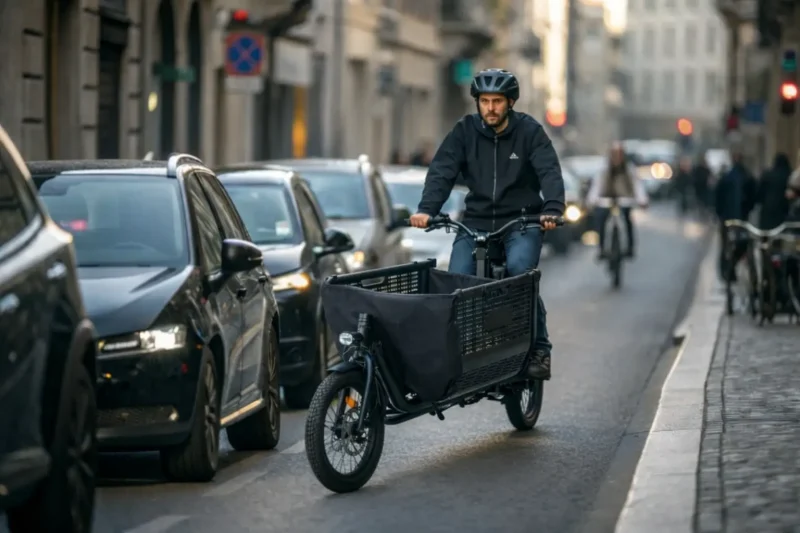
While mechanical brakes are a solid choice for many, some business models demand a higher level of performance and safety. This is where Tektro's hydraulic systems become a necessary investment. For cargo e-bikes, food delivery services, or shared fleets in cities with lots of hills, hydraulic brakes are the professional standard.
Unmatched Stopping Power and Consistency
Instead of a cable, hydraulic brakes use a sealed system filled with fluid. When the rider pulls the lever, it pushes fluid through a hose to the caliper, forcing pistons to squeeze the pads against the rotor. This system generates much more force with less effort from the rider. More importantly, the power is incredibly consistent. There's no cable to stretch, so the brakes feel the same every single time. This is critical for a rider carrying a heavy load down a steep, wet hill. It provides the confidence they need to operate safely. The improved heat dissipation also reduces brake fade on long descents, a crucial safety feature.
The Superior Rider Experience
The difference in how the brake lever feels is immediately noticeable. Hydraulic brakes offer a light, responsive feel and excellent "modulation," which is the ability to finely control the amount of braking power. A rider can apply just a little bit of braking to scrub off speed or pull harder for an emergency stop, all with great control. We worked with a food delivery company in a city full of steep hills. After we upgraded their fleet to Tektro hydraulic systems, they saw a significant drop in minor accidents and received much better feedback from their riders about feeling safe and in control.
Lower Long-Term Maintenance
While the initial cost is higher, hydraulic brakes can save you money on labor in the long run. The brake pads automatically adjust as they wear down, so you don't need to perform frequent manual adjustments like you do with mechanical systems. For a fleet of hundreds of bikes, this saves a massive amount of workshop time. The main service required is a "bleed" to replace the fluid, but this is typically only needed every year or two, depending on use. Tektro also has a fantastic supply chain, so replacement parts are easy to find, which is essential for keeping a large fleet operational.
How Do You Choose the Right Tektro System for Your Specific Fleet Needs?
Feeling stuck between mechanical and hydraulic systems for your fleet? Making the wrong choice can lead to operational headaches, unexpected costs, and a system that doesn't fit your business model.
Choose Tektro mechanical brakes for standard urban fleets where budget is key and usage is moderate. Opt for Tektro hydraulic brakes for heavy-duty cargo, food delivery, or shared e-bikes in hilly areas, where performance, safety, and low-touch maintenance are top priorities.
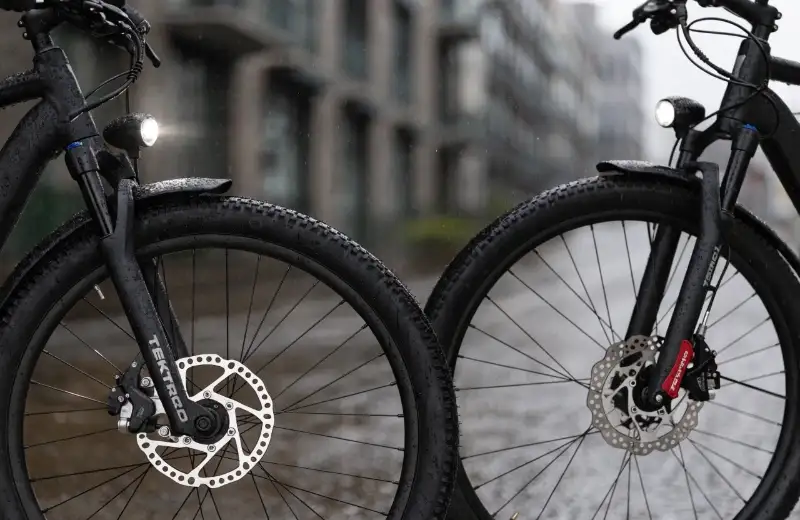
As your manufacturing partner, our goal is to help you build the most successful e-bike fleet possible. The right brake system is a huge part of that. The decision between mechanical and hydraulic comes down to a clear analysis of your specific business needs, operating environment, and long-term goals.
Analyzing Your Fleet's Use Case
The first step is always to define how your e-bikes will be used.
- Environment: Will they operate in a flat city or a region with steep hills? Will they be used in all weather conditions, including rain and snow?
- Load: Are these standard commuter bikes, or are they heavy-duty cargo bikes designed to carry hundreds of pounds?
- Intensity: How many miles per day will each bike travel? High-mileage delivery bikes have different needs than bikes used for casual rentals.
A Side-by-Side Comparison
To make the choice clearer, we often show our clients a direct comparison table. This helps them visualize the trade-offs and align the features with their business priorities.
| Feature | Tektro Mechanical Disc Brakes | Tektro Hydraulic Disc Brakes |
|---|---|---|
| Best For | Standard City Fleets, Budget-focused | Heavy Cargo, High-Speed, Hilly Terrain |
| Braking Power | Good & Reliable | Excellent & Consistent |
| Weather Performance | Good | Excellent (Less affected by elements) |
| Maintenance | Regular Cable Adjustment | Self-Adjusting, Infrequent Fluid Bleeds |
| Upfront Cost | Lower | Higher |
| Long-Term Cost | Low part costs, higher labor | Higher part costs, lower labor |
| Regulatory Compliance | Good for standard e-bikes | Often necessary for high-speed e-bikes |
Our Recommendation as a Manufacturer
After building thousands of e-bikes for clients all over the world, we've learned that there is no single "best" answer. It's about finding the best fit. We help our partners perform a Total Cost of Ownership3p (TCO) analysis](https://nrsbrakes.com/blogs/supporting-articles/calculating-total-cost-of-ownership-for-fleet-vehicle-brakes)%%%FOOTNOTE_REF_4%%%. This looks beyond the initial purchase price to include projected maintenance labor, parts, and potential bike downtime. For clients targeting markets like the EU, we also consider regulatory standards like EN 151945, which often favor the superior, predictable performance of hydraulic systems for faster e-bikes. Our job is to give you all the information so you can make a smart, profitable decision for your business.
Conclusion
Choosing the right Tektro brake system is key to your fleet's success. Whether mechanical or hydraulic, we can help you integrate the perfect solution for safety, performance, and profitability.
Operational success is crucial for profitability, and understanding brake impacts can optimize fleet performance. ↩
Self-adjusting pads reduce maintenance needs, saving time and labor costs for fleet managers. ↩
Understanding TCO helps fleet managers evaluate long-term costs and benefits, optimizing fleet profitability. ↩
TCO analysis provides a comprehensive view of costs, helping fleet managers make informed decisions. ↩
Understanding EN 15194 helps ensure compliance with European standards, important for international fleet operations. ↩