Are your current e-bike brakes feeling weak or unreliable? This lack of confidence in your stopping power, especially in bad weather, can turn a pleasant ride into a stressful one.
Hydraulic disc brakes1 are the best choice for an e-bike because they offer superior stopping power2, a lighter lever feel, and consistent performance in all weather3. They use fluid to transfer force, creating a powerful and reliable system that keeps you safe on any terrain.
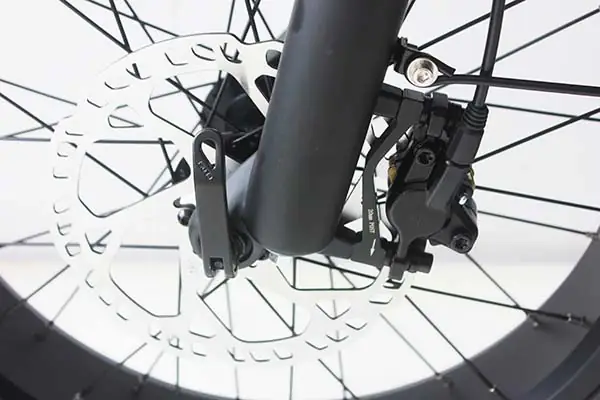
Understanding your e-bike's components is key to a better and safer riding experience. Brakes are perhaps the most important safety feature on your bike, but not all brake systems are created equal. As a manufacturer, we've tested and installed countless brake systems over the last two decades. We've seen what works and what doesn't. That’s why I want to break down the technology we trust most for our OEM/ODM partners and their customers. Let’s explore why hydraulic brakes have become the gold standard in the e-bike industry.
How Do Hydraulic Brakes Actually Work on an eBike?
The inner workings of bike brakes can seem complicated. This can make it hard to understand why one type is better than another, leaving you unsure about what you are buying.
It’s actually a simple and powerful system based on fluid pressure4. When you squeeze the brake lever, you push a piston that forces hydraulic fluid5 through a sealed hose. This fluid pushes pistons inside the caliper, which then clamp the brake pads onto a disc rotor, stopping your wheel.
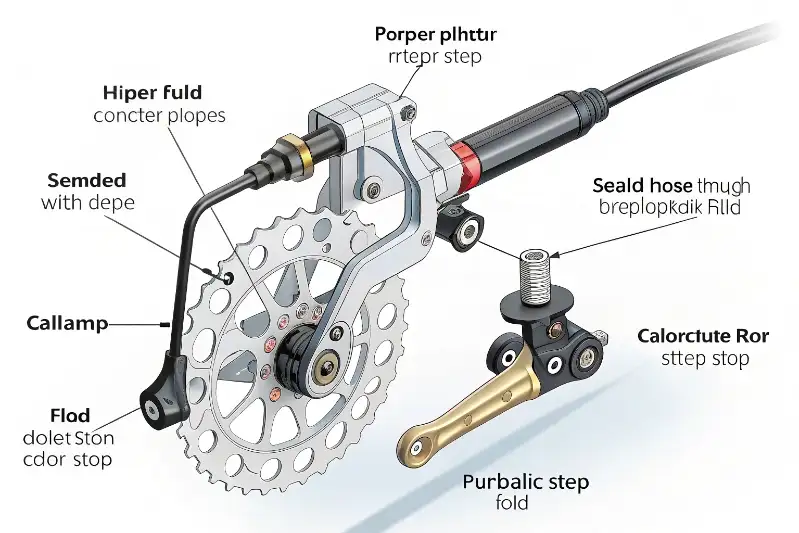
To really understand the magic of hydraulic brakes, it helps to look at the individual parts. The system is completely sealed, which is a major advantage over older styles. At our factory, we work with these components every day, so I can tell you exactly how they come together. It all starts with the brake lever on your handlebar. When you pull it, you're not pulling a cable; you're pushing a piston inside a master cylinder. This creates pressure in the hydraulic fluid. The fluid travels down a durable, sealed hose to the caliper, which is mounted near your wheel's hub. Inside the caliper, the pressure from the fluid activates one or more pistons. These pistons push the brake pads against the spinning rotor, creating immense friction. This friction is what slows you down smoothly and effectively.
| Component | Mechanical Disc Brake | Hydraulic Disc Brake |
|---|---|---|
| Transmission | Steel Cable | Hydraulic Fluid |
| Activation | Lever pulls a cable to move one pad | Fluid pressure moves pistons on both sides |
| Feel | Firmer, can feel "spongy" over time | Lighter, smoother, more responsive |
| System | Open to elements (dirt, water) | Fully sealed system |
This system provides a huge mechanical advantage6, meaning a light squeeze on the lever results in a massive amount of clamping force7 at the wheel. It's why they feel so effortless yet so powerful.
Why Are Hydraulic Brakes Better for Wet and Muddy Conditions?
Riding in the rain can be a great experience, but having brakes that feel weak and unresponsive in the wet is dangerous. It can make you hesitant and ruin your confidence.
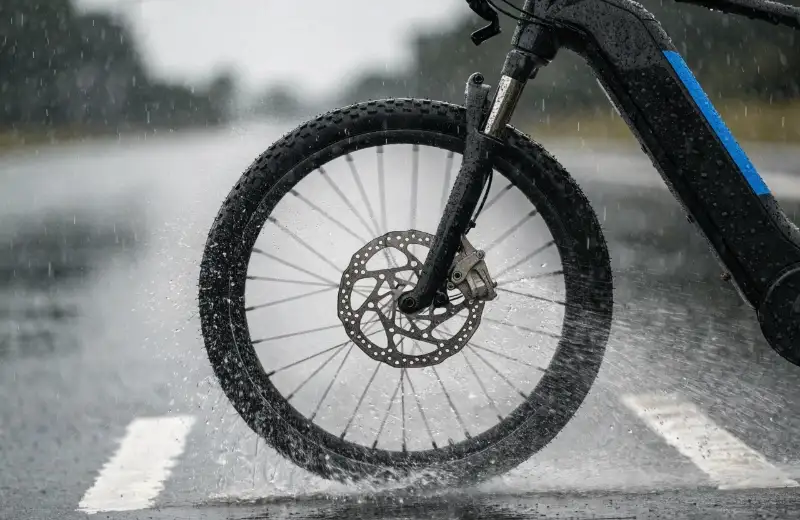
Hydraulic brakes excel in wet and muddy conditions8 because they are a closed system9. Water and dirt cannot get inside the hose to affect performance. Their superior power also helps the brake pads quickly clear water off the rotor for consistent stopping.
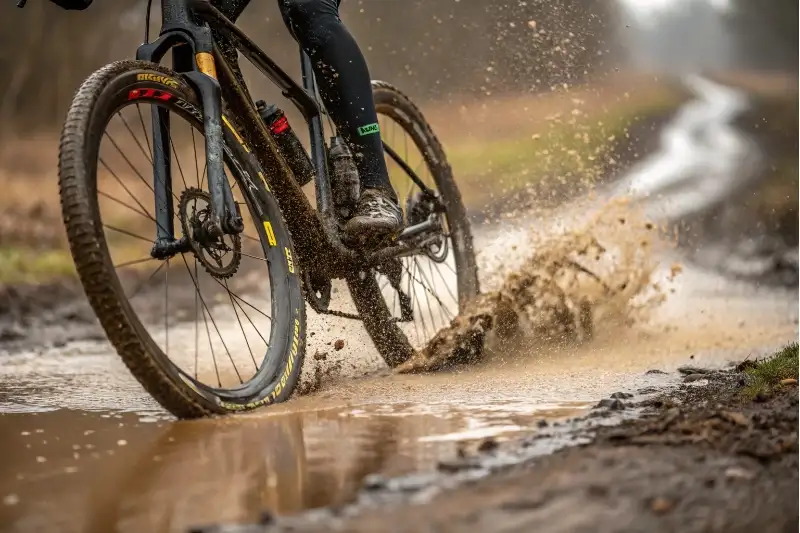
When we design an e-bike, especially an all-terrain mountain e-bike or a fat tire e-bike, we have to plan for the worst conditions. Mechanical cable-operated brakes are vulnerable here. Water and grit can work their way into the cable housing, causing rust and friction. This makes the brake lever harder to pull and feel less responsive. Over time, the cable itself can stretch, requiring constant adjustments to maintain proper braking power.
Hydraulic systems solve all of these problems. Because the entire system is sealed from the lever to the caliper, contaminants like water, mud, and dust simply can't get in. The performance you have on a dry, sunny day is the same performance you'll have in a downpour. Furthermore, the sheer power of hydraulics plays a big role. The immense clamping force they generate is strong enough to push water off the surface of the brake rotor almost instantly, allowing the pads to make solid contact and slow you down without delay. This is something we test rigorously when developing new models for our clients. We ensure the brakes can handle anything the rider throws at them.
Are Hydraulic Brakes Worth the Extra Cost and Maintenance?
You're looking at an e-bike's specifications and notice that models with hydraulic brakes have a higher price tag. You might wonder if it's a necessary expense or just an overpriced feature.
Yes, for the vast majority of riders, hydraulic brakes are absolutely worth the investment. The huge increase in safety, control, and reliability is a benefit you'll appreciate on every single ride.
I understand the hesitation about cost. As a manufacturer, we are always balancing performance and price for our OEM partners. While hydraulic brakes do have a higher initial cost10, the benefits are undeniable, especially on an electric bike that is heavier and faster than a standard bicycle. The term "maintenance11" can also sound intimidating. People hear that hydraulic brakes need to be "bled" and imagine a complex, messy job. In reality, a hydraulic system needs a fluid change only every one to two years, depending on use. In contrast, mechanical brakes often require frequent adjustments to the cable tension as it stretches.
Here's a simple breakdown to help you see the value:
| Feature | Mechanical Disc Brakes | Hydraulic Disc Brakes |
|---|---|---|
| Stopping Power | Good | Excellent |
| Control (Modulation) | Okay | Excellent |
| Weather Performance | Fair (can degrade) | Excellent (consistent) |
| Maintenance Needs | Frequent cable adjustments | Infrequent fluid bleeds |
| Initial Cost | Lower | Higher |
From our perspective, the choice is clear. The superior stopping power is not a luxury; it's a critical safety feature. This is especially true for heavier applications like our cargo e-bikes, where stopping a heavy load safely is the top priority. The confidence and control they provide make riding more enjoyable and, most importantly, much safer.
Conclusion
Hydraulic brakes offer unmatched stopping power, control, and all-weather reliability. They are a crucial safety feature that makes them the best choice for nearly every modern electric bike.
Hydraulic disc brakes offer superior stopping power and reliability, making them essential for safe e-bike riding. ↩
Understanding the mechanics behind superior stopping power can enhance your confidence in using hydraulic brakes. ↩
Consistent performance in all weather ensures safety and reliability, crucial for e-bike riders. ↩
Learning about fluid pressure helps you understand the efficiency and power of hydraulic brake systems. ↩
Hydraulic fluid is crucial for transferring force, making it essential for understanding brake efficiency. ↩
Mechanical advantage explains why hydraulic brakes require less effort for more stopping power. ↩
Clamping force is key to the effectiveness of hydraulic brakes, ensuring quick and reliable stopping. ↩
Hydraulic brakes excel in adverse conditions, providing safety and reliability when you need it most. ↩
A closed system prevents dirt and water ingress, maintaining brake performance and longevity. ↩
Understanding the cost helps justify the investment in safety and performance for your e-bike. ↩
Knowing the maintenance needs helps you keep your hydraulic brakes in top condition for safety. ↩