You worry that a beautiful e-bike sample hides welding defects that could cause problems later. These hidden flaws can lead to frame failure, hurting your brand's reputation. Understanding the real causes helps you choose the right partner.
Welding defects on e-bike frames often come from more than just poor skill.1 The main causes are usually a mix of inaccurate material cutting, unstable holding fixtures, incorrect welding settings, and a lack of proper quality checks throughout the manufacturing process.
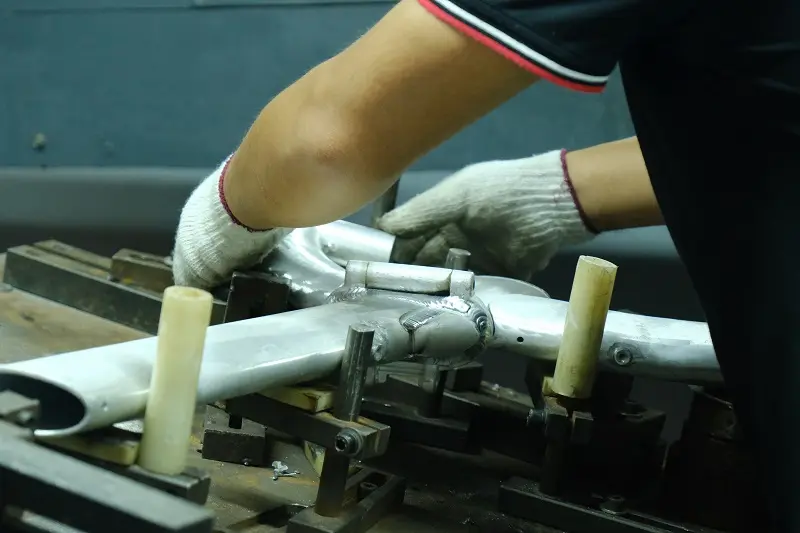
When people see a bad weld, they often blame the welder. But after over 20 years in this business, I've learned the problem usually starts long before the welding torch is even turned on. A perfect weld can't fix a poorly cut tube or a frame that moves around while being worked on. It's easy to focus on the final look, but the hidden steps in the process are what truly determine if a frame is safe and strong. Let's look at what really matters.
Are Pretty Welds Enough to Guarantee Frame Quality?
You see a perfectly smooth weld on a sample frame and feel confident about the quality. But this cosmetic perfection might hide structural weaknesses that won't show up until your customers are riding the bikes. Learning what to look for beyond the surface ensures long-term product reliability.
A pretty weld is not a guarantee of quality.2 Many serious defects, like weak bonds or internal air bubbles, are not visible on the surface. True quality comes from a controlled and repeatable process, not just a skilled hand that can make a weld look good.
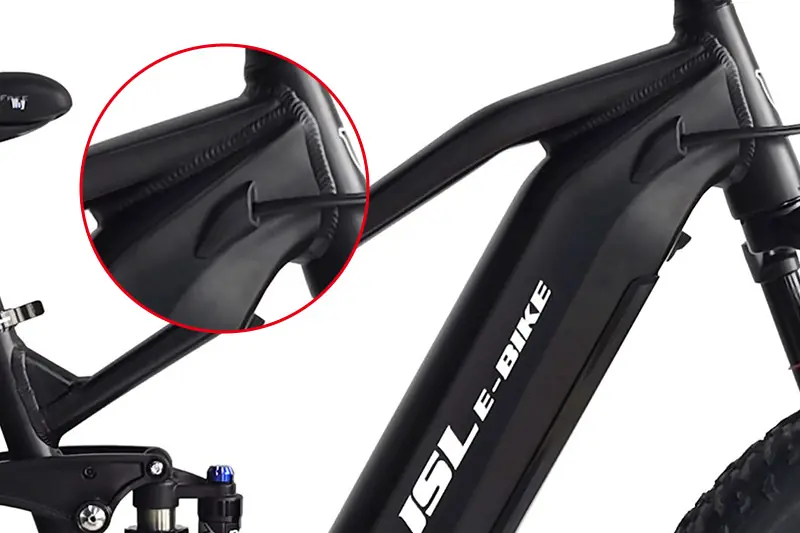
I've seen many clients get impressed by a weld that has been ground down and polished to be perfectly smooth. It looks great, but this is often a red flag for me. Sometimes, excessive grinding is done to hide mistakes like an uneven weld bead or spatter. The real problem is that this grinding removes material and can make the joint weaker than it was supposed to be. A truly good weld is one that is strong and consistent right from the welder's torch, with minimal need for cosmetic cover-ups. It’s about the substance of the weld, not just its style.
Here’s a simple table to show what I look for:
| Aspect | Looks Good (But Risky) | Truly Reliable (The Right Way) |
|---|---|---|
| Joint Fit | Wide gaps are filled with lots of weld material. | Tubes fit together tightly before any welding starts. |
| Weld Bead | Heavily ground down and polished to look smooth. | A consistent, even bead with visible, good penetration. |
| Alignment | The frame is forced into alignment after welding. | The frame is held steady in a fixture to prevent warping. |
| Process | Relies only on the individual welder's skill. | Uses standardized settings and process controls for every frame. |
Why Do Welding Defects Appear Long After Production?
Your sample e-bike passed all the initial tests and everything looked great. But months later, you start getting reports from customers about frames cracking or making strange noises. This leads to customer complaints and expensive warranty claims. Understanding delayed failure helps you evaluate a manufacturer's long-term quality control.
Defects appear later because e-bikes face constant stress day after day.3 The extra weight of the battery and motor, plus vibrations from riding, can slowly turn tiny, invisible weld flaws into major structural failures like cracks or deformation over time.
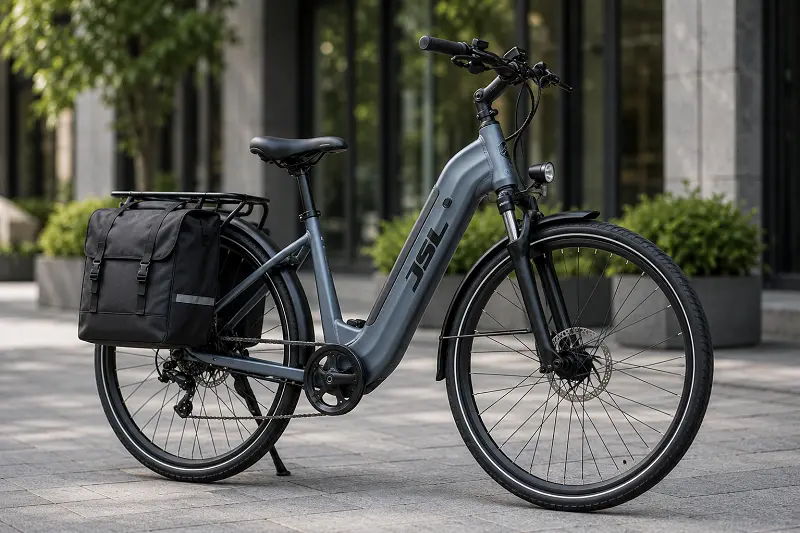
An electric bike frame has a much harder life than a regular bicycle frame.4 Think about all the extra forces it has to handle. There's the constant weight of the battery pack, often mounted on the down tube. There's the twisting force from the motor every time the rider accelerates. There are also the strong impacts from braking, which put a lot of stress on the head tube and fork. If you add in cargo racks and a heavy load, the stress points multiply. If the welds at critical points like the head tube, bottom bracket, or rear dropouts are not perfect, they become weak spots.5 Over thousands of cycles of vibration and stress, a small internal pore or a tiny bit of incomplete fusion can grow into a crack. That's when you hear from an unhappy customer.
How Can You Identify a Manufacturer with Reliable Welding Processes?
Every factory will promise you they have high-quality welding, which makes it hard to tell them apart. But choosing the wrong partner means you could get a whole production batch full of hidden defects. This puts your investment and your brand's reputation at risk. The solution is to focus on their process and systems, not just their final samples.
You can identify a reliable manufacturer by looking past the sample. Ask about their process control.6 Do they use stable fixtures?7 Are their welding parameters documented? Do they have a post-weld alignment and inspection process?8 Their answers show their true capabilities.
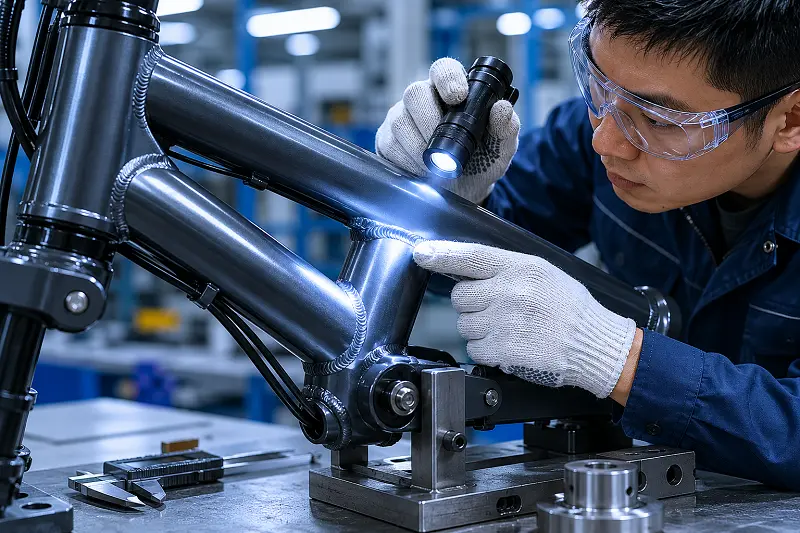
When I visit a potential factory partner, I have a mental checklist. I don't just look at their showroom. I want to see the factory floor. First, I check their pre-welding steps. Are the tubes cut precisely? Do the joints fit together snugly without any gaps? This preparation is half the battle. Next, I look at the welding stations. Are the frames held in robust, purpose-built fixtures that prevent the frame from warping from the heat? I also ask to see their welding process documentation. A professional factory will have standardized parameters for current, speed, and wire type for every single joint on the frame. This ensures frame number 1,000 is identical to frame number 1. Finally, I ask about what happens after welding. Do they check every frame for alignment and correct it?9 Do they have a specific inspection for critical welds?10 A reliable partner can prove they have a system for consistency.11
Conclusion
In the end, good welding quality is not about a pretty appearance.12 It is about a controlled, consistent, and repeatable manufacturing process from the very first step to the final inspection.
"Six Types of Welding Defects | UTI - Universal Technical Institute", https://www.uti.edu/blog/welding/six-types-of-welding-defects. This source explains the multifaceted causes of welding defects, including material preparation and fixture stability. Evidence role: mechanism; source type: education. Supports: Welding defects on e-bike frames often result from factors beyond the welder's skill, such as material cutting and fixture stability.. ↩
"Does weld smoothness affect structural integrity? - Facebook", https://www.facebook.com/groups/485362748969702/posts/1144278886411415/. This source discusses how cosmetic welds can hide structural flaws, emphasizing the importance of process control. Evidence role: expert_consensus; source type: research. Supports: Cosmetic welds can hide structural flaws, and true quality depends on controlled processes rather than appearance.. ↩
"[PDF] Residual Stresses in Butt and Socket Welded Joints", https://repository.lib.ncsu.edu/bitstreams/034c9c28-0775-4171-ae54-3309d7f9fea8/download. This source explains how repeated stress and vibrations can exacerbate small weld flaws over time. Evidence role: mechanism; source type: research. Supports: Repeated stress and vibrations in e-bikes can turn minor weld flaws into major structural failures over time.. ↩
"Resulting forces acting in the bicycle frame according to the weight of...", https://www.researchgate.net/figure/Resulting-forces-acting-in-the-bicycle-frame-according-to-the-weight-of-the-rider-2_tbl2_358210122. This source compares the mechanical stresses on e-bike frames versus regular bike frames, highlighting the additional forces from batteries and motors. Evidence role: statistic; source type: research. Supports: E-bike frames endure greater mechanical stresses than regular bike frames due to added weight and motor forces.. ↩
"Assessment of fatigue damage in welded aluminum joints subjected ...", https://pmc.ncbi.nlm.nih.gov/articles/PMC10161593/. This source identifies critical weld points on bike frames and explains their susceptibility to stress-related failures. Evidence role: mechanism; source type: education. Supports: Critical weld points like the head tube and bottom bracket are prone to stress-related failures if not properly welded.. ↩
"[PDF] Sanitary Welding Documentation Guidelines", https://frederick.cancer.gov/sites/default/files/2022-03/Sanitary_Welding_Documentation_Guidelines.pdf. This source outlines key process control measures in welding, such as fixture stability and parameter documentation. Evidence role: definition; source type: education. Supports: Process control measures like fixture stability and parameter documentation are essential for reliable welding quality.. ↩
"Weld Fixtures: Types, Uses & Expert Design Services", https://qtoolservice.com/weld-fixtures/. This source explains how stable fixtures prevent warping and ensure consistent weld quality. Evidence role: mechanism; source type: education. Supports: Stable fixtures are crucial for preventing warping and ensuring consistent weld quality during manufacturing.. ↩
"What is a Welding Quality Assurance/Quality Control Inspector?", https://www.tws.edu/blog/welding/what-is-a-welding-quality-assurancequality-control-inspector/. This source describes the importance of post-weld alignment and inspection in ensuring frame integrity. Evidence role: mechanism; source type: education. Supports: Post-weld alignment and inspection are critical for ensuring the structural integrity of welded frames.. ↩
"Importance of alignment check in welding and piping fabrication", https://www.facebook.com/groups/395601497175779/posts/26687509290891641/. This source explains how alignment checks and corrections improve the reliability of welded structures. Evidence role: mechanism; source type: education. Supports: Alignment checks and corrections improve the reliability of welded structures by addressing potential warping or misalignment.. ↩
"Welding inspection - Wikipedia", https://en.wikipedia.org/wiki/Welding_inspection. This source discusses inspection techniques for critical welds and their role in preventing structural failures. Evidence role: mechanism; source type: education. Supports: Inspection techniques for critical welds are essential for preventing structural failures in welded frames.. ↩
"How Robotic Welding Ensures Consistency in Complex Fabrications", https://www.kellertechnology.com/blog/how-robotic-welding-ensures-consistency/. This source outlines how manufacturing systems ensure consistency in welding quality across production batches. Evidence role: definition; source type: education. Supports: Manufacturing systems ensure consistency in welding quality across production batches, making them a key indicator of reliability.. ↩
"Does weld smoothness affect structural integrity? - Facebook", https://www.facebook.com/groups/485362748969702/posts/1144278886411415/. This source emphasizes that welding quality depends on structural integrity and process control rather than cosmetic appearance. Evidence role: expert_consensus; source type: education. Supports: Welding quality depends on structural integrity and process control rather than cosmetic appearance.. ↩