Your new e-bike line looks fantastic, but customers report odd issues. These problems are hard to diagnose, raising costs and hurting your brand. The cause is often an overlooked display-controller mismatch.
E-bike display and controller compatibility is the foundation for a stable electrical system1, not just about whether the screen turns on. It ensures the entire system works reliably by guaranteeing accurate data exchange for speed, battery levels, and error codes, which prevents performance issues.
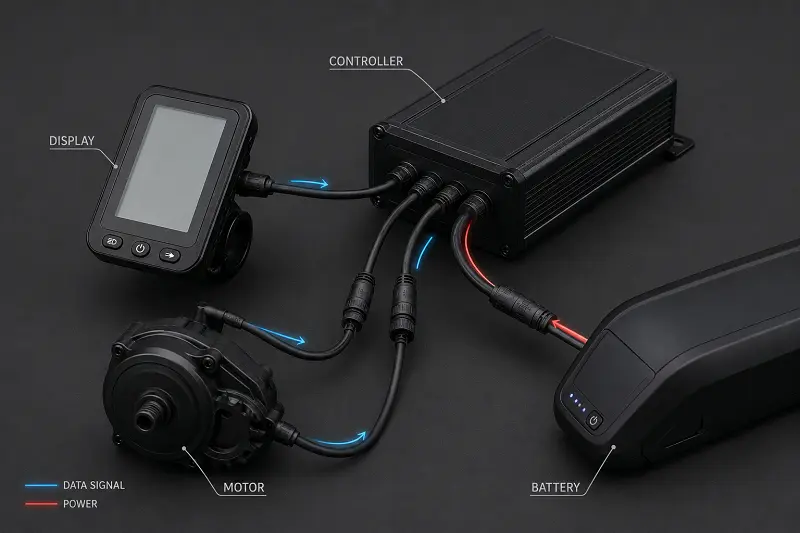
Many brands focus on how a display looks, but that's only half the story. The real value lies in its seamless communication with the controller. When this connection is weak, it creates a host of problems that are frustrating for the rider and a nightmare for your after-sales team. To truly understand why this is so critical, we need to look at what happens when things go wrong and why this vital detail is so often missed. Let's dive deeper into the specific problems and how to avoid them.
What Problems Are Caused by Poor Display and Controller Compatibility?
Your e-bikes are in the market, but complaints roll in about inaccurate speed and sudden power drops. These "ghost" issues frustrate customers and are a nightmare for your support team to troubleshoot.
Poor compatibility causes incorrect speed and battery readings, mismatched power assist levels, false error codes, and even random power cuts. These subtle problems ruin the user experience and create huge headaches for after-sales support because they are difficult to diagnose and fix.
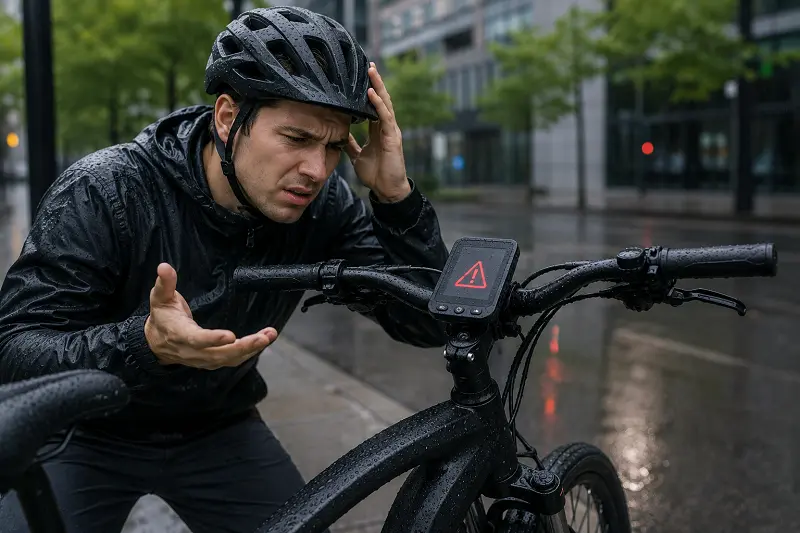
When a display and controller don't speak the same "language," the e-bike might still run, but it won't run well. These aren't simple, clear-cut failures like a dead battery. Instead, they are intermittent, confusing issues that make the entire product feel unreliable. This is where your brand reputation takes a serious hit. Here’s a breakdown of the common issues I’ve seen in my 20+ years of manufacturing.
Inaccurate Data and Unreliable Performance
The display is the rider's window into the e-bike's performance.2 If that window shows a distorted view, trust is immediately lost. For example, the speed sensor might report 20 km/h, but the display shows 15 km/h because of a data interpretation error. Even worse is a fluctuating battery meter, which gives the rider constant range anxiety. The performance itself also suffers. A rider might select assist level 2, but the controller delivers the power of level 4 because the signals are mismatched. This creates a jerky, unpredictable ride.
The Nightmare of Troubleshooting
The biggest business problem with incompatibility is the high cost of after-sales service. When a customer reports a "faulty motor" because of a false error code, your dealer might spend hours trying to diagnose a perfectly fine motor. These ghost problems are not easily solved by swapping a single part.
| Problem Category | Specific Issue | Impact on Business |
|---|---|---|
| Data Inaccuracy | Speedometer is off | Erodes user trust; potential safety issues. |
| Battery level jumps | Creates "range anxiety" and customer complaints. | |
| Performance Issues | Assist levels don't match | Unpredictable, jerky ride experience. |
| Random power cuts | Dangerous for the rider and makes the brand look unreliable. | |
| Functional Failures | Buttons don't work | User can't access lights or walk-assist. |
| False error codes | Wasted time and money on unnecessary repairs. |
Why Do B2B Buyers Overlook This Critical Compatibility?
You're sourcing parts and find a display that looks amazing at a great price. It seems perfect. But treating the display as a simple accessory can create huge integration problems and costs later.
Buyers often overlook compatibility because they focus on visible features like screen size, color, and price.3 They treat the display as a standalone part, not as the front-end interface for the entire electrical system. This is a critical and costly mistake in product development.
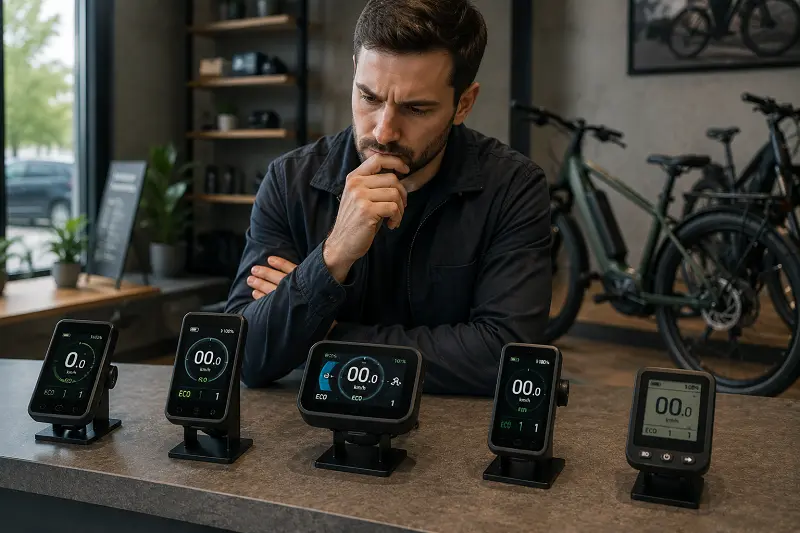
In my experience, clients are naturally drawn to what they can see and touch. A display is a tangible component with clear aesthetic qualities. A sleek, full-color screen feels more "premium" than a basic one. The controller, on the other hand, is a black box hidden in the frame.4 It's not something you can judge by looking at it. This leads to a dangerous assumption: that any display can work with any controller as long as the plugs match. This simply isn't true.
The Brain and the Face
Think of the controller as the e-bike's "brain." It takes information from the battery, motor, and sensors and decides how the bike should behave. The display is the "face." It shows the user what the brain is thinking and doing. If the brain and the face can't communicate perfectly, the expression on the face will be wrong.
The Communication "Language"
This communication happens through a protocol, like UART or CAN bus.5 But even if two components use the same protocol, they might not speak the same "language." The data needs to be defined in the same way. For example, one controller might send error code "E06" for a throttle fault, while another display is programmed to interpret "E06" as a motor hall sensor fault. This mismatch leads directly to incorrect troubleshooting and frustrated customers. As an OEM/ODM partner, my job is to ensure this language is fluent before we ever start mass production.
How Can You Ensure Perfect Display and Controller Compatibility in Your OEM Project?
You want to build a reliable e-bike line but worry about hidden electrical issues ruining your launch. A single incompatible part can derail your project, causing delays and budget overruns during testing.
Ensure compatibility by treating the display and controller as a matched pair from the start.6 Never swap one without conducting rigorous, full-vehicle testing that validates communication protocols, assist levels, data display, and all safety features. This is non-negotiable for a stable product.
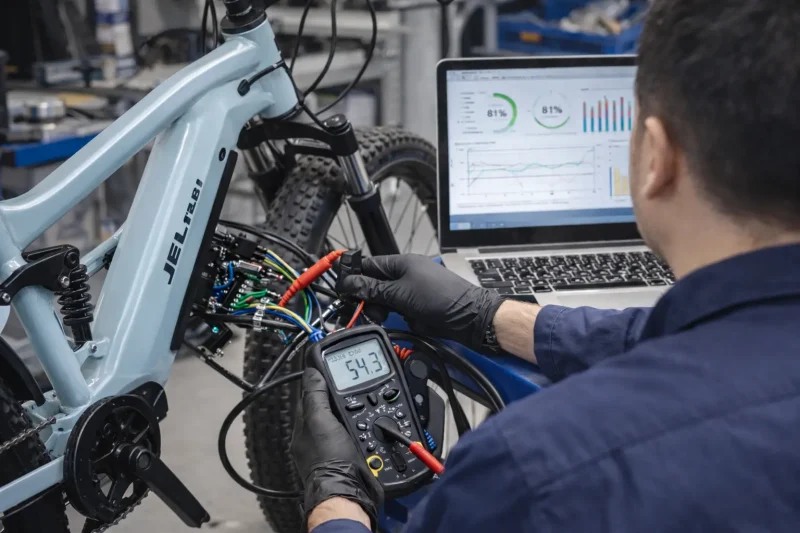
The only way to guarantee a stable and reliable e-bike is to adopt a systematic approach to validation. It’s not enough for the components to work on a test bench; they must be proven on a complete bike under real-world conditions. I’ve seen projects get delayed by weeks because a client insisted on a last-minute change to a "prettier" display that couldn't communicate properly with the controller. We had to dedicate our firmware engineers to rewriting the code, which could have been avoided by planning ahead.
The Full-Vehicle Testing Checklist
When we validate a display and controller pair for an OEM project, we run through a strict testing protocol. This goes far beyond just turning it on.
Here are the key functions we check:
- Power Assist Logic: Do the assist levels on the display (1-5) perfectly match the power output from the motor? Is the transition smooth?
- Data Accuracy: We use external tools to verify that the speed, distance, and battery percentage (from the BMS) are displayed correctly.
- Error Code System: We simulate common faults (e.g., disconnecting a motor sensor) to ensure the controller sends the correct error code and the display shows the right message.
- Button Functions: Do the buttons for lights, walk assist, and menu navigation respond instantly and correctly?
- Safety Features: Does the brake sensor immediately signal the controller to cut motor power?7 This is a critical safety function.
By treating the display and controller as a single, unified system from the very beginning of the project, you eliminate the risk of these hidden problems. It protects your investment, your timeline, and your brand's reputation for quality.
Conclusion
Display and controller compatibility is fundamental to your e-bike's reliability and user experience. Prioritizing this system integration will save you from costly after-sales problems and build lasting brand trust.
"Ebike Controller Compatibility: Picking the Right Amp and Volt Ratings", https://letrigo.com/blogs/knowledge/ebike-controller-compatibility-picking-right-amp-volt?srsltid=AfmBOorcZtXFSOEg98gH09_ET4Js257DaWBA03NN1cE3_E7CqjlQytCF. This source explains how compatibility between e-bike displays and controllers ensures accurate data exchange and system reliability. Evidence role: mechanism; source type: education. Supports: E-bike display and controller compatibility ensures the entire system works reliably by guaranteeing accurate data exchange for speed, battery levels, and error codes, which prevents performance issues.. ↩
"Is an E-Bike Display Worth It? What It Really Adds to Your Ride", https://www.velotricbike.com/blogs/story-landing/is-ebike-display-worth-it?srsltid=AfmBOopNYC8wtwyJZ5G56nscnzNdKaIcnN5QvYx6OcrQsHrAK5xpcp0M. This source explains how e-bike displays function as performance indicators, showing speed, battery levels, and assist settings. Evidence role: definition; source type: education. Supports: The display serves as the rider's window into the e-bike's performance, showing speed, battery levels, and assist settings.. ↩
"[PDF] Impacts of E-bike Ownership on Travel Behavior - ROSA P", https://rosap.ntl.bts.gov/view/dot/66159/dot_66159_DS1.pdf. This source discusses buyer tendencies to prioritize visible features over technical compatibility in e-bike component selection. Evidence role: expert_consensus; source type: education. Supports: Buyers often overlook compatibility because they focus on visible features like screen size, color, and price.. Scope note: The source may focus on specific buyer demographics or regions. ↩
"How to improve the attractiveness of e-bikes for consumers: Insights ...", https://www.sciencedirect.com/science/article/pii/S0959652624004049. This source explains why e-bike controllers are often perceived as less important due to their hidden placement. Evidence role: expert_consensus; source type: education. Supports: The controller is often perceived as less important than the display because it is hidden in the frame.. Scope note: The source may focus on specific consumer demographics or regions. ↩
"CAN vs UART: what are the differences ? - Velco", https://velco.tech/en/can-vs-uart/. This source explains the role of UART and CAN bus protocols in facilitating communication between e-bike displays and controllers. Evidence role: definition; source type: education. Supports: Communication between e-bike displays and controllers happens through protocols like UART or CAN bus.. Scope note: The source may focus on general applications of these protocols, not exclusively e-bikes. ↩
"CPSC Warns Consumers to Immediately Stop Using Batteries for E ...", https://www.cpsc.gov/Warnings/2026/CPSC-Warns-Consumers-to-Immediately-Stop-Using-Batteries-for-E-Bikes-from-Rad-Power-Bikes-Due-to-Fire-Hazard-Risk-of-Serious-Injury-or-Death. This source highlights the importance of treating e-bike displays and controllers as matched pairs to prevent electrical issues and testing delays. Evidence role: general_support; source type: research. Supports: Ensuring compatibility by treating the display and controller as a matched pair from the start prevents hidden electrical issues and delays during testing.. ↩
"E-bike brake sensors - YouTube", https://www.youtube.com/watch?v=8nh1zX5l0SE. This source explains the role of brake sensors in signaling controllers to cut motor power as a safety feature in e-bikes. Evidence role: mechanism; source type: education. Supports: Brake sensors in e-bikes immediately signal the controller to cut motor power as a critical safety function.. Scope note: The source may focus on general sensor-controller interactions, not exclusively e-bikes. ↩