Are you worried about customer complaints and returns after launching your new e-bike line? These issues can ruin your brand’s reputation and eat into profits, but the solution is prevention.
To reduce after-sales issues, a factory must focus on pre-production validation. This means confirming component configurations match the use case1, testing the entire electronic system for stability2, standardizing all processes from sample to bulk order, and conducting a small pilot run before full-scale manufacturing begins3.
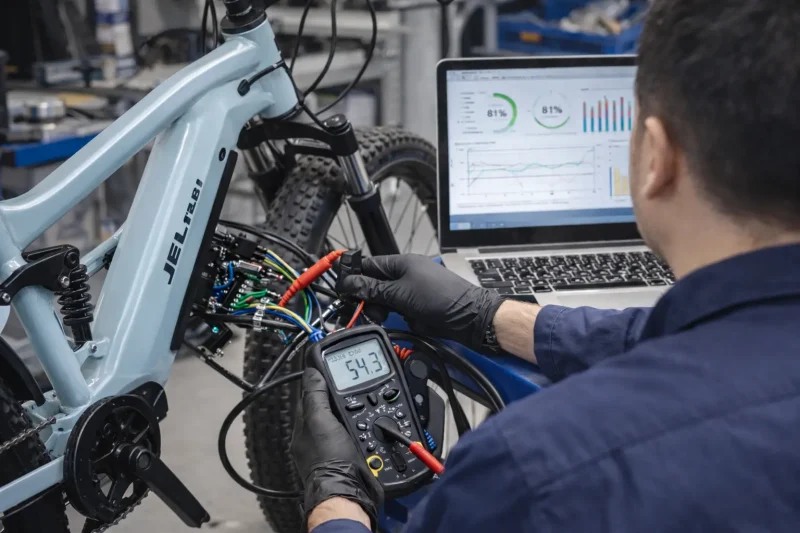
Many of our partners first think of after-sales service as how we handle problems once they happen. But with over 20 years of experience in OEM/ODM e-bike manufacturing, I've learned that true after-sales support starts long before the first bike is even sold. It begins in the development phase. An e-bike is a complex system of a frame, battery, motor, controller, and many other parts. If one part doesn't work well with another, it will become a customer complaint later. The key is to catch these problems before they ever leave the factory. Let's look at how we stop these issues at the source.
Does your e-bike's configuration truly match its intended use?
You approved a great-looking fat tire e-bike sample. But will it fail on the first steep hill? Mis-matched specs can lead to immediate customer disappointment and negative reviews.
We ensure a bike's configuration is perfect for its purpose by analyzing every detail. This includes motor torque for fat bikes and frame strength for cargo bikes4. It’s about real-world performance, not just looking good on a spec sheet.
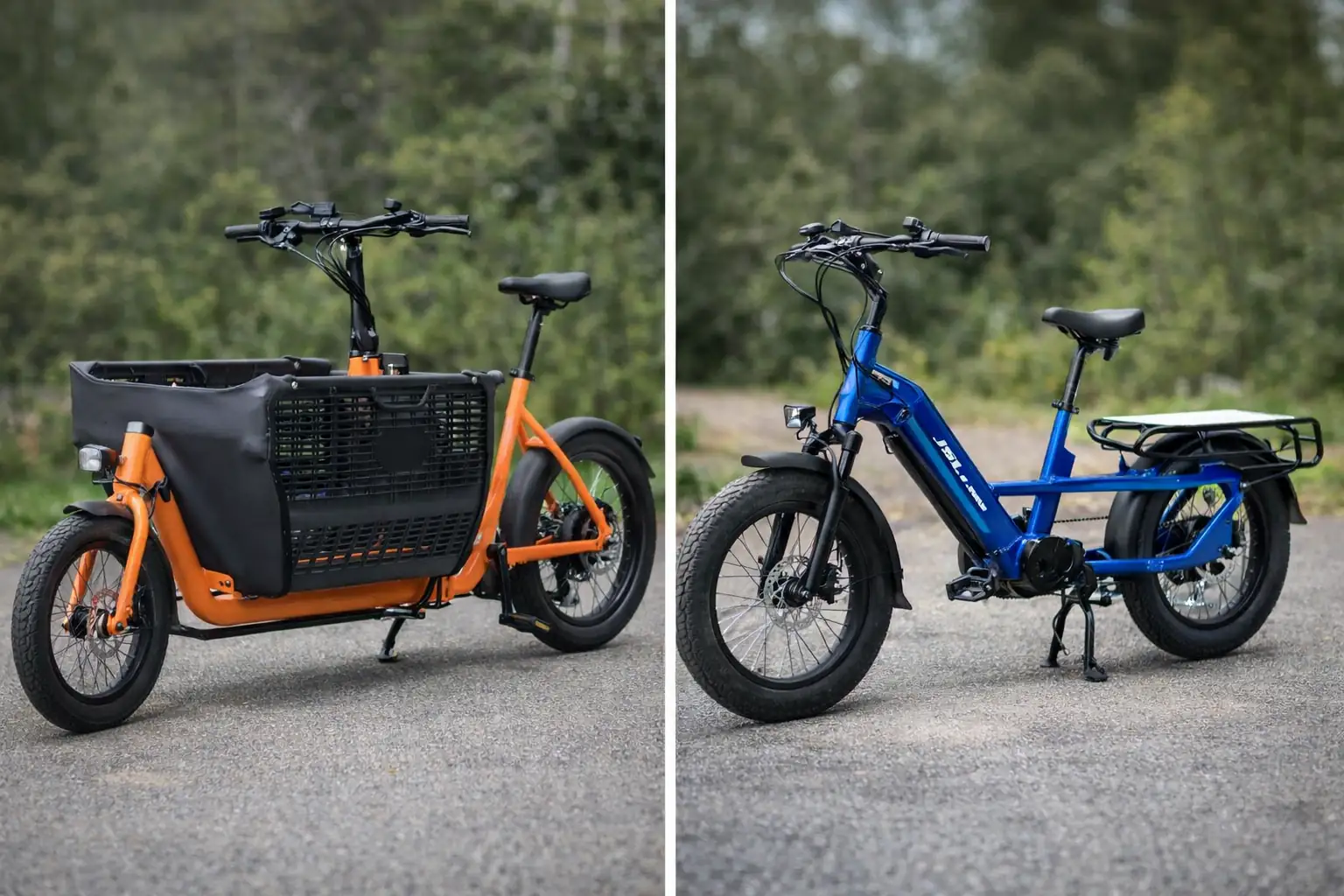
When we develop a new e-bike with a client, we go deep into how the end customer will actually use it. A spec sheet can be misleading if it's not viewed through the lens of real-world application. For example, a customer buying a fat tire e-bike expects to ride it on sand, snow, or trails. It's not enough for it to just have wide tires. It needs a motor with high torque (I'd recommend over 80Nm) to power through tough terrain and a large battery (at least 720Wh) to provide decent range. Similarly, for a cargo e-bike, the "max load" number is just the beginning. We have to analyze the frame geometry to ensure a low center of gravity for stability when loaded. We also check that the tires, brakes, and wheelsets are strong enough to handle the extra weight safely. Every type of e-bike has these hidden requirements.
| E-Bike Type | Common Mistake (Spec Sheet Focus) | Critical Requirement (Real-World Use) |
|---|---|---|
| Fat Tire E-Bike | Looks cool, has wide tires | High-torque motor (>80Nm), large battery (>720Wh), reliable hydraulic brakes |
| Cargo E-Bike | "Max Load: 150kg" | Low center of gravity, reinforced frame, puncture-resistant tires, strong brakes |
| City E-Bike | "Top Speed: 25km/h" | Lightweight design (<25kg), comfortable geometry, efficient battery management |
Is your e-bike's electronic system genuinely stable?
Your e-bike keeps cutting out, or the display shows errors. Customers are frustrated, and you can't figure out why. The individual parts seem fine, but the bike just doesn't work right.
We solve this by testing the entire electronic system as one single unit. The controller, display, motor, battery, and sensors must communicate perfectly. Stability comes from system integration, not just from using high-quality individual components. This prevents frustrating electrical issues.
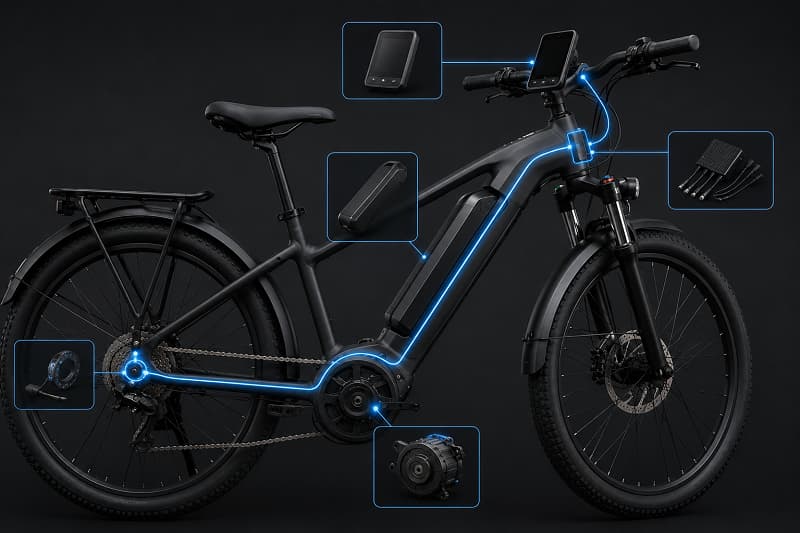
Many after-sales problems are electrical "ghosts." The motor is fine, the battery is fine, but the bike is unreliable. This often happens because the electronic components don't "talk" to each other correctly. A controller from one supplier and a display from another might use different communication protocols, leading to errors. This is why we insist on testing the entire system together5. We build a test bench where we connect the display, controller, motor, battery, sensors, and brake levers exactly as they would be on the finished bike. Then, we run simulations. We simulate long rides, steep climbs that draw a lot of power, and sudden stops6. We check for communication dropouts, voltage sags, and signs of overheating in the controller. We also pay close attention to the physical parts, like ensuring wire harnesses are secure and won't loosen from vibration and that all connections are properly waterproofed. It’s this complete system check that ensures the bike’s electronic "nervous system" is robust and reliable for the end user.
How do you ensure mass-produced bikes match the perfect sample?
The sample you approved was flawless. But the first container of bikes arrives with different paint shades, loose parts, and inconsistent performance. Your launch has turned into a quality control nightmare.
Consistency is achieved through strict process control. We create a detailed Bill of Materials (BOM), lock in supplier batches, and document every standard for welding, painting, and assembly7. This "manufacturing bible" ensures every bike is identical to the approved sample.
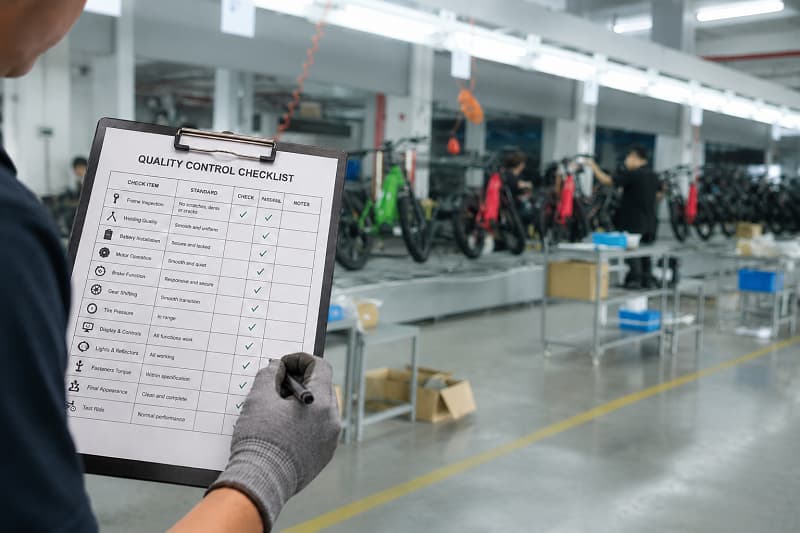
A great sample means nothing if you can't replicate it thousands of times. This is where process standardization becomes the most important thing we do. Before mass production, we create what I call a "manufacturing bible" for the project. This document contains everything. First, a detailed Bill of Materials (BOM) that doesn't just say "500W motor," but specifies the exact brand, model number, and even the supplier's production batch. This prevents a supplier from changing a component without us knowing. Second, we document all manufacturing standards. Our welders follow diagrams showing the exact requirements for each weld. Our paint shop uses colorimeters to ensure the color of the 1000th frame perfectly matches the first. Our assembly line technicians use torque wrenches pre-set to the specific Newton-meter rating for every single bolt. We even define the exact path every wire should take to prevent it from getting pinched or rubbing against the frame. This removes all guesswork and ensures that every single e-bike that comes off our line is a perfect copy of the one you approved.
Why is a small pilot run more important than rushing to mass production?
You're rushing to meet a market deadline, so you skip the pilot run to save a few weeks. Now, you're getting reports of major delays and unexpected problems during mass assembly.
A small pilot run of 50-100 units is a dress rehearsal for mass production. It uncovers hidden issues that a single sample can't reveal, like assembly difficulties, minor part misalignments, or packaging weaknesses. This step saves a huge amount of time and money.
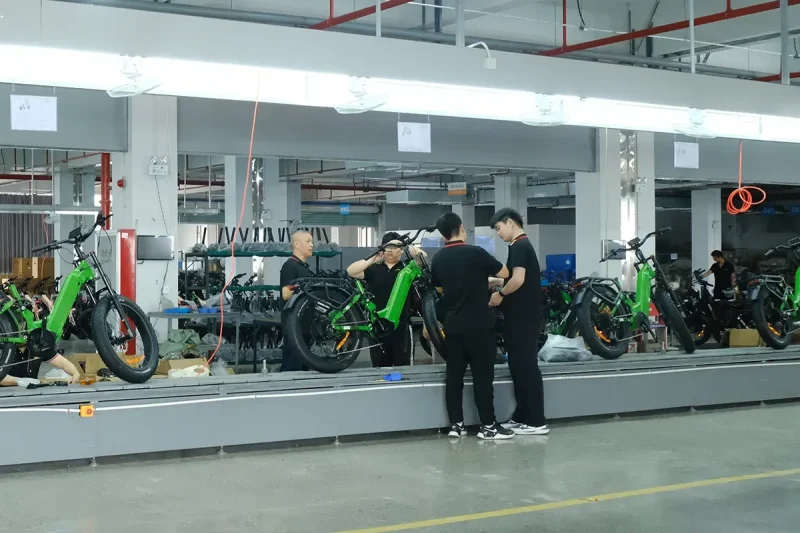
I always tell my clients that a pilot run is the best investment they can make. One perfect sample doesn't tell you how easy or hard it is to build 1,000 bikes. A pilot run of about 50 units immediately shows us the reality of the assembly line. For instance, we might find that a specific screw is hard for workers to reach, slowing down the entire line. Or we might discover a tiny misalignment in a frame bracket that only becomes obvious when you see it on 20 bikes in a row. This is called "tolerance stack-up," and you can't see it on a single sample. We also test the packaging during this phase. We will fully pack a dozen bikes from the pilot run and put them through drop tests and vibration simulations to mimic cross-ocean shipping8. This helps us find weak spots in the carton or foam inserts before you have a container full of damaged goods. Fixing a tooling issue or redesigning a piece of packaging at this stage is fast and cheap. Finding it during mass production is a disaster.
Conclusion
The best after-sales service is preventing problems before they start. By focusing on pre-production validation, we help you build a reliable product and a reputable brand from the ground up.
"Ebike Parts Explained - Getting Started - Resources - EBikes.ca", https://ebikes.ca/resources/getting-started/ebikes-parts-explained.html. This source explains the importance of matching e-bike components to their intended use cases, such as ensuring motor torque and battery capacity align with specific riding conditions. Evidence role: mechanism; source type: education. Supports: Pre-production validation involves confirming that component configurations match the intended use case to prevent after-sales issues.. ↩
"[PDF] Summary of Electric and Non- Powered Bicycle Standards", https://www.cpsc.gov/s3fs-public/Electric-and-Non-Powered-Bicycle-Standards-Summary-Report.pdf?VersionId=rZGs9tSONCKqT8AEaJJMZd_S1nDJpKEW. This source discusses the necessity of testing e-bike electronic systems as integrated units to ensure stability and prevent communication errors between components. Evidence role: mechanism; source type: research. Supports: Testing the entire electronic system for stability is crucial to prevent communication errors and ensure reliable performance.. ↩
"Pilot Program Sheds Light on E-Bike Use Patterns, Energy ...", https://www.nlr.gov/news/detail/program/2021/pilot-program-sheds-light-on-e-bike-use-patterns-energy-efficiency-benefits. This source explains how pilot runs help identify production issues and improve manufacturing processes before scaling up. Evidence role: mechanism; source type: research. Supports: Conducting a small pilot run before full-scale manufacturing begins helps identify hidden issues and ensures smoother mass production.. ↩
"Fat tire ebike - is 80 nm torque enough for hills? - Reddit", https://www.reddit.com/r/ebikes/comments/1d40v1a/fat_tire_ebike_is_80_nm_torque_enough_for_hills/. This source provides guidelines on selecting motor torque and frame strength for different types of e-bikes based on their intended use. Evidence role: mechanism; source type: education. Supports: Motor torque and frame strength are critical factors in designing e-bikes for specific use cases like fat bikes and cargo bikes.. ↩
"Smart Integration | Hyena E-Bike Systems", https://www.hyena-ebike.com/smart_integration/. This source highlights the benefits of testing e-bike components as a unified system to identify and resolve integration issues. Evidence role: mechanism; source type: research. Supports: Testing the entire system together ensures that all e-bike components work seamlessly, preventing integration issues.. ↩
"Motor Simulator - Web Tools - Resources - EBikes.ca", https://ebikes.ca/resources/web-tools/simulator.html. This source describes how simulating real-world conditions during testing helps identify potential issues in e-bike performance. Evidence role: mechanism; source type: research. Supports: Simulating long rides, steep climbs, and sudden stops during testing helps identify potential performance issues in e-bikes.. ↩
"Documentation and Records: Harmonized GMP Requirements - PMC", https://pmc.ncbi.nlm.nih.gov/articles/PMC3122044/. This source explains how documenting manufacturing standards for welding, painting, and assembly ensures consistency in e-bike production. Evidence role: mechanism; source type: education. Supports: Documenting every standard for welding, painting, and assembly ensures consistency in e-bike production.. ↩
"Bicycle Requirements Business Guidance | CPSC.gov", https://www.cpsc.gov/content/bicycle-requirements-business-guidance. This source explains how drop tests and vibration simulations help ensure e-bike packaging can withstand shipping conditions. Evidence role: mechanism; source type: research. Supports: Drop tests and vibration simulations help ensure e-bike packaging can withstand the rigors of cross-ocean shipping.. ↩