Receiving a batch of e-bikes with hidden flaws is a nightmare. This leads to customer complaints and costly returns. The solution is knowing the essential pre-shipment tests to perform.
Pre-shipment quality tests should cover the electrical system, mechanical assembly, riding performance, battery safety, and final packaging. The goal is not just to see if the bike works, but to proactively find and fix potential issues that could cause problems for customers later on.
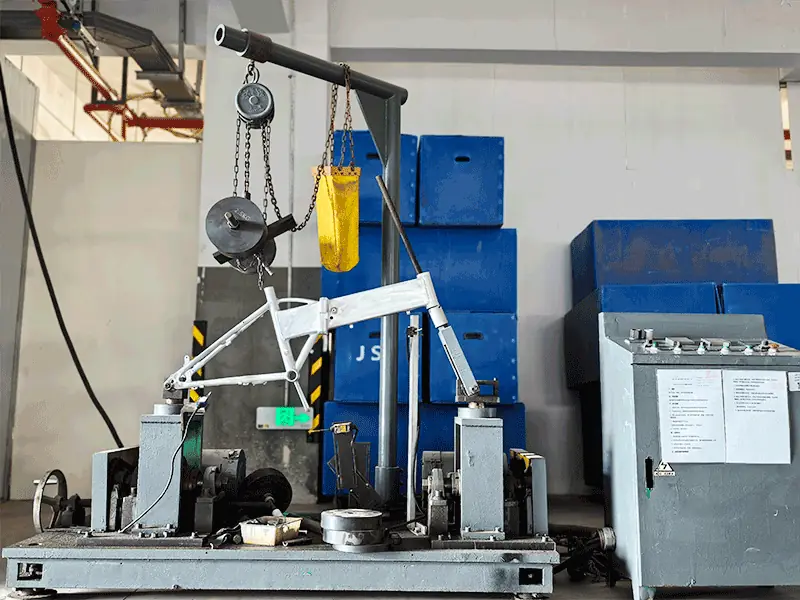
As a manufacturer, I've seen it all. Many of our B2B clients focus on the big specs—motor power, battery capacity, and general appearance. But the true test of a successful bulk order isn't just in the specs; it's in the consistency and reliability of every single unit. An e-bike has both mechanical and electrical systems, so a simple check for scratches or a quick power-on test just isn't enough. The real value of pre-shipment testing is to catch the small problems that become big headaches after delivery. This process is about ensuring stability for the entire batch, not just approving one perfect sample.
Why is a full vehicle electrical test so critical?
An e-bike looks perfect but it won't turn on. Tracing a tiny wiring issue costs you valuable time and money. A systematic electrical check is the only way to catch these problems early.
A full electrical test checks the display, motor, controller, battery, lights, and brake cut-off sensors.1 The purpose is to find any loose connections, faulty wiring, or software mismatches before they become a customer's problem and a support ticket for you.
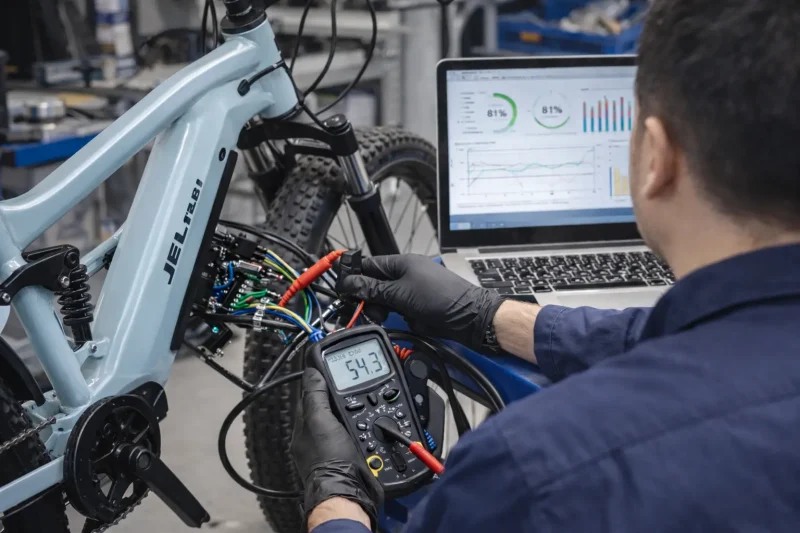
I remember a case with a large order for a European client. A small percentage of the bikes were reported as "dead on arrival." After a lot of back and forth, we discovered the issue wasn't a faulty motor or battery, but a batch of display connectors that were just a fraction of a millimeter too loose. They worked fine in our factory but would sometimes disconnect during the bumpy journey overseas. Now, our process includes a "wiggle test" for every single connector. Most electrical problems are not about major components failing. They are about the small, overlooked details in the connections that hold the system together. That’s why a comprehensive check is non-negotiable.
Key Electrical System Checks
| Component | What to Check | Why It's Important |
|---|---|---|
| Display & Controller | Clear screen, responsive buttons, accurate data. | The user's main interface; any failure here makes the bike seem broken. |
| Motor | Smooth and quiet operation in all assist levels. | Ensures the core function of the e-bike is reliable and performs as expected. |
| Wiring Harness | All connections are secure, no loose wires. | Prevents intermittent power failures that are difficult to diagnose later. |
| Brake Sensors | Motor cuts off instantly when brakes are applied. | This is a critical safety feature that cannot be overlooked. |
| Lights | Front and rear lights turn on and are bright. | Essential for rider safety and often a legal requirement in many markets. |
Does the bike's riding and braking performance meet standards?
An e-bike powers on, but it rides terribly. Your customers start to complain about jerky starts or weak, noisy brakes. A real-world riding test ensures the bike's performance matches its specifications.2
The riding and braking test verifies smooth acceleration, proper pedal assistance, responsive and quiet braking, and seamless gear shifting. It ensures the bike is not just functional but also enjoyable and safe to ride, especially for heavy-duty models like cargo and fat-tire e-bikes.
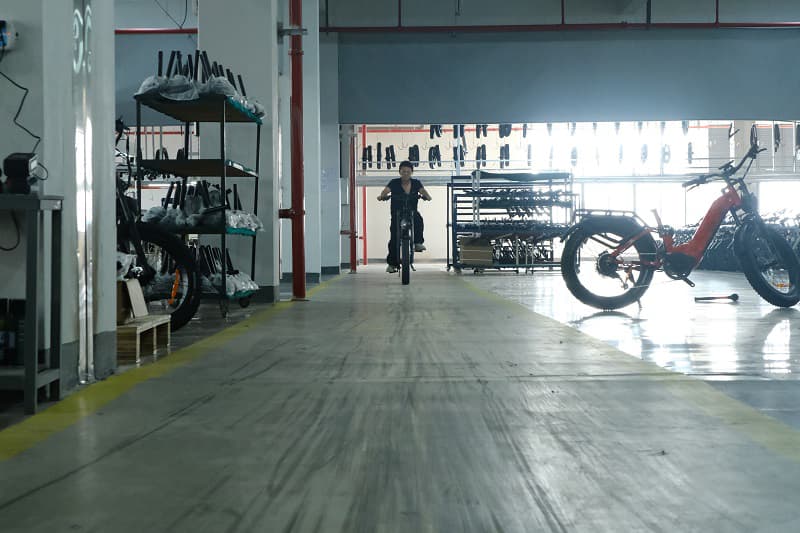
A bike that passes a static test in the factory might fail a dynamic test on the road. We learned this the hard way when we developed a new high-power cargo e-bike. On the stand, everything was perfect. But our first test rider reported a strange vibration during hard braking. The issue wasn't the brakes themselves, but a slight fork flex under heavy load. This is something you would never find without actually riding the bike under realistic conditions. For models designed to carry weight, like cargo e-bikes, or those built for rough terrain, like fat-tire bikes, the stability and braking performance aren't just about comfort—they are fundamental safety requirements. We can't just check a box; we have to feel how the bike behaves.
Evaluating Dynamic Performance
| Performance Aspect | Standard Check (Pass/Fail) | Quality Check (Good/Bad) |
|---|---|---|
| Acceleration | Motor engages. | Is the start smooth or jerky? |
| Braking | Bike stops. | Are the brakes silent and responsive, or loud and spongy? |
| Shifting | Gears change. | Is the shift crisp and instant, or slow and clunky? |
| Noise Level | No major failures. | Is there any minor rattling, creaking, or motor whine? |
How do you ensure battery and charging systems are safe?
A customer's e-bike battery dies unexpectedly or refuses to charge. Battery-related returns are extremely expensive and can quickly damage your brand's reputation. Thorough battery testing prevents these high-cost failures.
Battery and charging tests confirm that the battery charges and discharges correctly, the capacity display is accurate, the charging port is secure, and the battery lock is firm. Since battery issues are a major post-sale cost, this step is crucial for B2B clients.
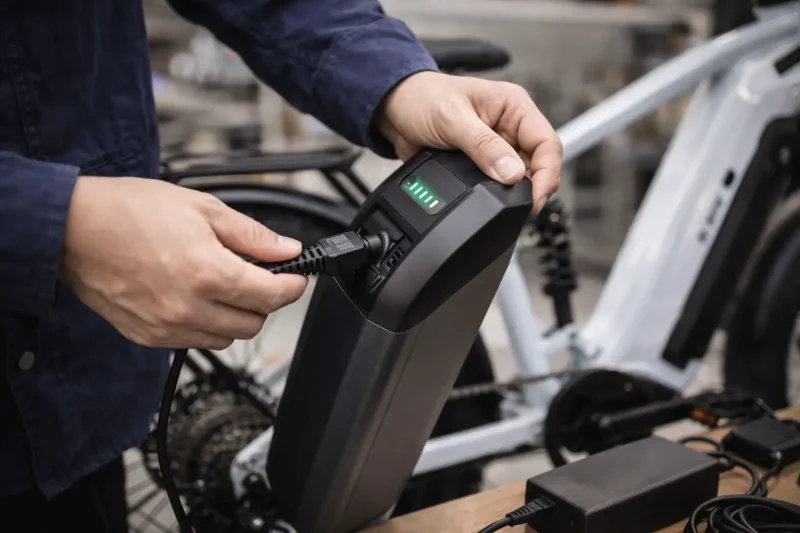
Battery problems are the single most expensive issue in the e-bike business.3 Shipping lithium batteries is heavily regulated and costly, and replacing a faulty battery pack can sometimes cost as much as a third of the bike's value. That’s why we are so strict here. A few years ago, we supplied batteries for a shared e-bike fleet. One of the key requirements was the battery lock mechanism. If the lock was weak, batteries could be stolen easily, causing huge operational losses for our client. We now perform a physical stress test on every battery lock and housing. We also run a full charge-and-discharge cycle test on a percentage of batteries from every batch to verify capacity and check that the Battery Management System (BMS) is functioning correctly.
Critical Battery & Charging Checklist
- Full Charge Cycle: Does the battery charge to 100% without overheating?
- Discharge Test: Does the battery deliver consistent power and match the expected range?
- Indicator Accuracy: Does the display's battery level match the actual charge?
- Port Integrity: Is the charging port stable and free of defects?
- Lock Security: Does the battery lock securely into the frame with no wobble?
Are assembly details being checked correctly?
You receive a shipment where every bike has the same slightly loose bolt. This small inconsistency leads to widespread customer issues, complaints, and a maintenance nightmare for your brand.
This check focuses on the small things that make a big difference: proper screw torque, secure handlebars and wheels, correct brake disc alignment, and neatly managed wiring. Many batch-wide problems are caused by inconsistent assembly, not faulty components.4
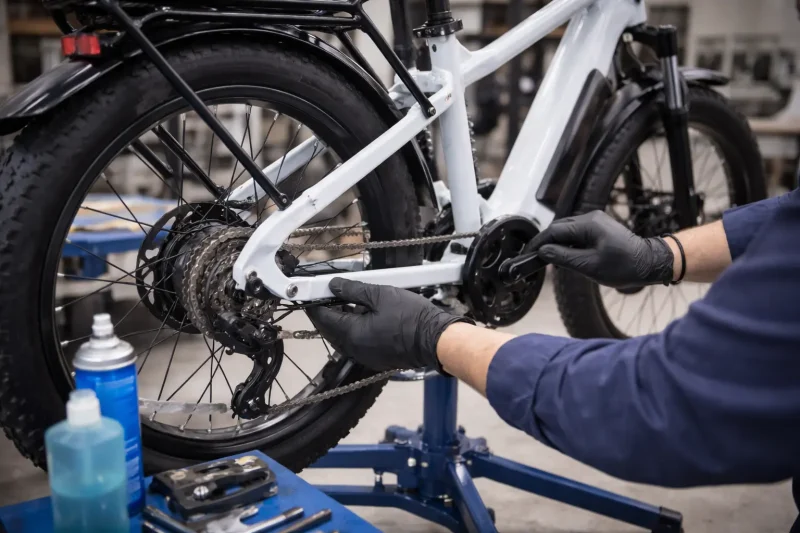
There's a huge difference between a single prototype built by a senior engineer and a thousand units built on an assembly line. The goal of our assembly check is to ensure that the 1,000th bike is built to the exact same standard as the first. I once had to deal with a batch of bikes that all had a persistent brake-rubbing noise. The client was convinced we had used defective brake calipers. After investigating, we found the real culprit: the wheel nuts on the assembly line were being tightened by hand, not with a torque wrench. This resulted in inconsistent wheel alignment, causing the disc to rub. Now, we have a chart of torque specifications for every critical bolt on the bike, and our QC team uses calibrated torque wrenches to verify a sample from every batch. It’s the process that guarantees quality, not just the parts.
Key Assembly Checkpoints
| Component | Check | Why it's Critical |
|---|---|---|
| Handlebar/Stem | Bolts tightened to specified torque. | Prevents handlebars from slipping or moving during a ride, a major safety risk. |
| Wheels | Axle nuts/quick-releases tightened correctly. | Ensures wheels are secure and properly aligned, preventing brake rub and wobbling. |
| Crank Arms | Bolts torqued to spec. | Prevents cranks from coming loose, which can damage the part and cause an accident. |
| Brake Calipers | Correctly aligned with the disc rotor. | Eliminates annoying brake noise and ensures optimal stopping power. |
| Wiring | Neatly routed and secured with zip ties. | Prevents wires from getting snagged, pinched, or damaged during use. |
Is the appearance and packaging ready for shipment?
A perfectly functional e-bike arrives at the customer's door with scratches and dings.5 The customer's first impression is negative, leading to requests for returns or discounts before they even ride it.
This final inspection looks for paint scratches, color mismatches, or chips.6 It also ensures the packaging is robust enough to protect the e-bike during shipping and handling, with all components securely fastened inside the box.
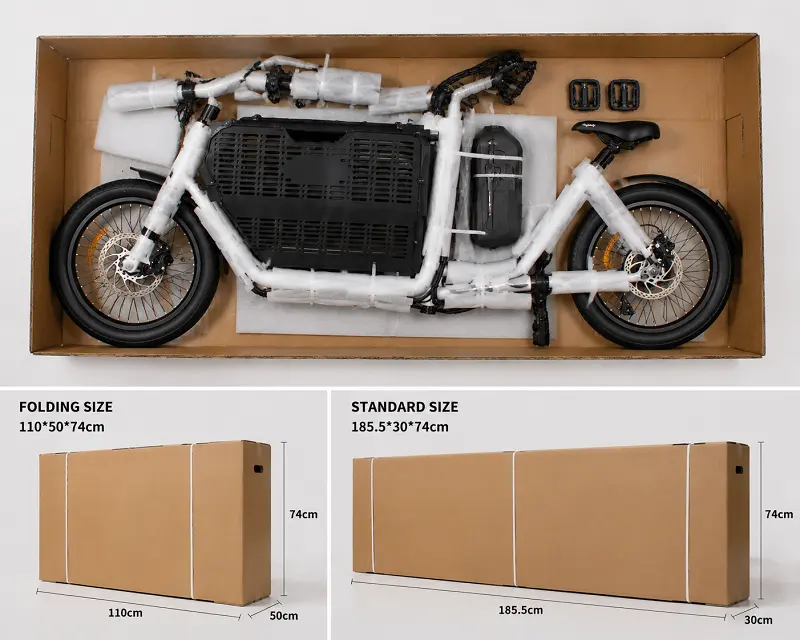
An e-bike's journey doesn't end when it leaves our factory floor. It gets loaded into containers, shipped across oceans, moved around warehouses, and finally delivered to a business or home. The packaging is its only protection during this entire process.7 For our clients who sell online, the "unboxing experience" is a huge part of their brand. A damaged box or a scratched frame is an immediate failure in the customer's eyes. We've designed our packaging to not only protect the bike but also to keep all the small parts—like the pedals, charger, and tools—from rattling around and scratching the frame. We check that every bike is wrapped correctly, that protective foam is in all the right places, and that the box itself is sealed and strong. This final step ensures that the quality we build in the factory is the same quality the customer receives.
Packaging and Appearance Checklist
- Paint Finish: Inspect for any scratches, chips, or color inconsistencies.
- Frame Protection: Is the frame fully wrapped in protective material?
- Component Securing: Are the battery, charger, and pedals secured so they cannot move?
- Box Integrity: Are the box corners reinforced and the seals strong?
- Unboxing Experience: Is it easy and intuitive for the end-user to unbox and assemble?
Conclusion
In summary, pre-shipment tests must cover electrical systems, mechanical assembly, riding feel, battery safety, and packaging. For our OEM/ODM partners, this is not a cost, but your best insurance.
"How To Test An EBike Controller At Home - Heybike", https://www.heybike.com/blogs/heybike-blog/how-to-test-ebike-controller?srsltid=AfmBOopk-xTxZof1EOdPUUQ3wAt_q1t6S89QxHx2BNYEDoe_PQeTkRKA. This source confirms the components typically included in a comprehensive electrical test for e-bikes, ensuring functionality and safety. Evidence role: general_support; source type: education. Supports: A full electrical test checks the display, motor, controller, battery, lights, and brake cut-off sensors.. ↩
"E-bike Range Testing and Factors Influencing Range - Facebook", https://www.facebook.com/groups/926685377947023/posts/1664216274193926/. This source highlights the importance of real-world riding tests in verifying e-bike performance against specifications. Evidence role: general_support; source type: education. Supports: A real-world riding test ensures the bike's performance matches its specifications.. ↩
"Ebike Battery Replacement & Repair Service | Electric Bike Forums", https://forums.electricbikereview.com/threads/ebike-battery-replacement-repair-service.26997/. This source discusses the high costs associated with battery issues in the e-bike industry, including replacements and regulatory challenges. Evidence role: statistic; source type: research. Supports: Battery problems are the single most expensive issue in the e-bike business.. Scope note: The source may provide general industry insights rather than specific cost data. ↩
"Systematic review and meta‐analysis evaluating the effects electric ...", https://pmc.ncbi.nlm.nih.gov/articles/PMC9546252/. This source explains how inconsistent assembly processes can lead to widespread quality issues in e-bike manufacturing. Evidence role: mechanism; source type: education. Supports: Many batch-wide problems are caused by inconsistent assembly, not faulty components.. Scope note: The source may focus on general manufacturing practices rather than e-bike-specific cases. ↩
"Lectric eBikes damaged bike return and customer service ...", https://www.facebook.com/groups/lectricebikesowners/posts/3782905625315332/. This source highlights the impact of cosmetic damage on customer satisfaction and return rates in the e-bike industry. Evidence role: general_support; source type: research. Supports: A perfectly functional e-bike arrives at the customer's door with scratches and dings.. Scope note: The source may focus on general consumer electronics rather than e-bikes specifically. ↩
"Electric Bike Inspection and Quality Control in Asia & China | V-Trust", https://www.v-trust.com/en/industries/electrical-electronic-product/electric-bike-quality-control. This source outlines the importance of final inspections for cosmetic quality in e-bike manufacturing. Evidence role: general_support; source type: education. Supports: This final inspection looks for paint scratches, color mismatches, or chips.. Scope note: The source may not provide specific examples of inspection processes for e-bikes. ↩
"Electric Bicycles - Regulations.gov", https://www.regulations.gov/document/CPSC-2024-0008-0001. This source discusses the role of packaging in protecting e-bikes during shipping and handling. Evidence role: mechanism; source type: education. Supports: The packaging is its only protection during this entire process.. Scope note: The source may not address e-bike packaging specifically but focuses on general shipping practices. ↩