You get a perfect e-bike sample, but mass production is full of problems. This inconsistency can destroy your brand and lead to expensive returns, all because of one overlooked detail.
For OEM e-bike orders, welding consistency is key1. It ensures every bike in a mass-produced batch performs as reliably as the initial sample. This prevents assembly issues, future failures, and protects your brand’s reputation and bottom line from costly after-sales problems.
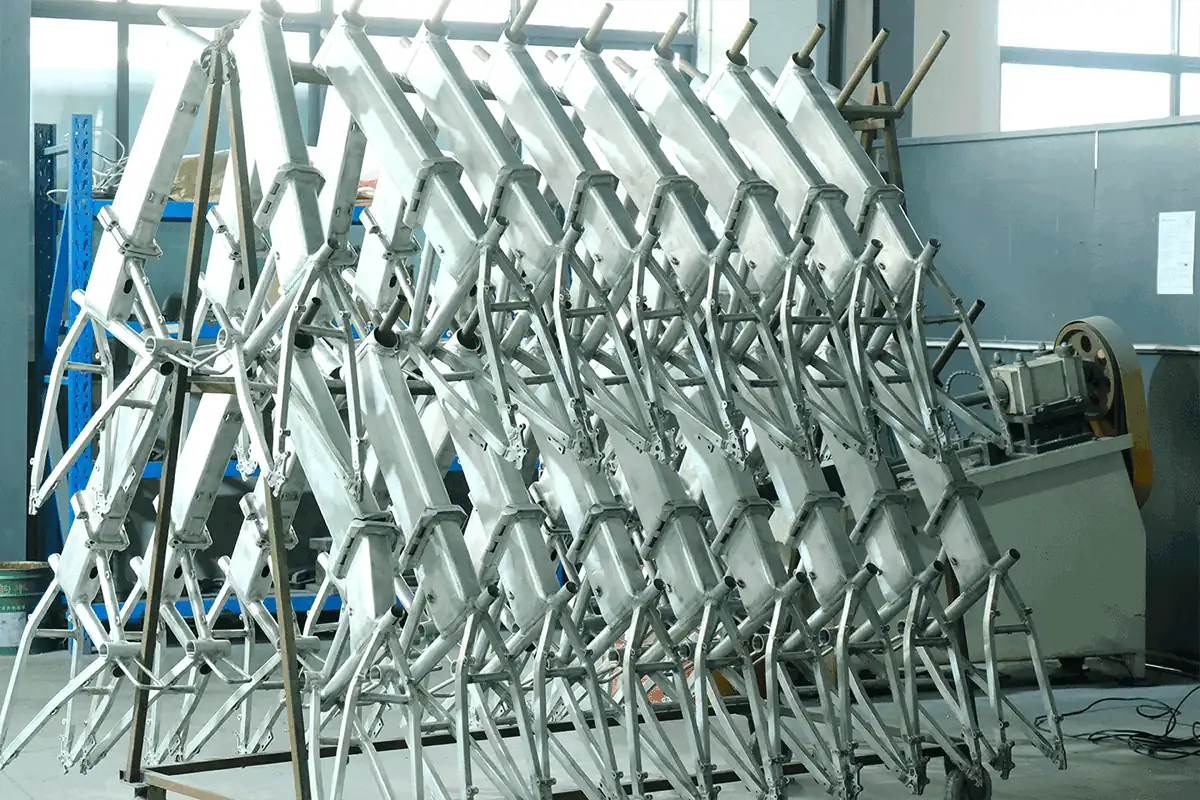
Getting a beautiful sample is the easy part. Any factory can put their best people on a single unit to impress you. But as an OEM partner, you aren't just buying one bike; you're investing in thousands. The real test is whether that same quality holds up across the entire production run. The success of your entire product line often comes down to the consistency of processes you can't easily see, like welding. Let's explore why this is so critical for your business.
What Hidden Risks Does Inconsistent Welding Create for Your E-Bikes?
Your e-bikes look perfect when they leave the factory. But months later, customer complaints about weird noises, misalignments, or even frame issues start appearing, creating a support nightmare.
Inconsistent welding creates delayed risks that aren't visible at first. Small variations in weld depth, angle, or position2 can lead to frame deformation, rattling noises, and even fatigue cracks under the daily stress of road vibrations, motor torque, and rider weight.
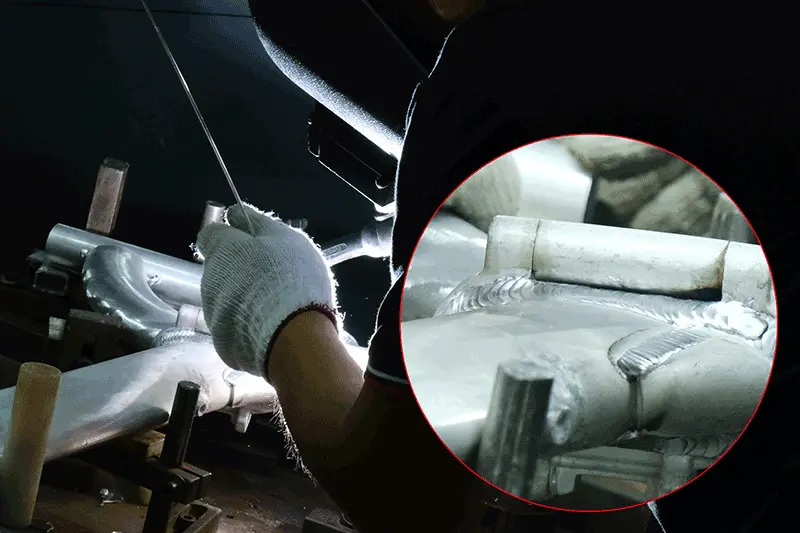
An electric bike frame is not just a simple metal structure3. It has to handle forces that regular bikes don't. I always tell my partners to think about the constant stress it’s under. The frame supports the battery's weight, endures the motor's torque every time you accelerate, absorbs braking impacts, and withstands continuous road vibrations. If the welding isn't consistent, weak points are created. A weld might look fine on the surface, but if the fusion isn't deep enough, it's a ticking time bomb. These issues rarely show up during the factory's final inspection. They surface after a customer has been riding the bike for six months. This is what makes it so dangerous for a brand. A small saving in production can lead to huge costs in warranty claims and, worse, a damaged reputation.
The Long-Term Effects of Inconsistent Welds
| Welding Inconsistency | Potential Long-Term Problem |
|---|---|
| Inconsistent Weld Depth | Fatigue cracks at the joint, especially near the motor or head tube4. |
| Incorrect Weld Angle | Frame deformation or warping over time, leading to poor handling. |
| Varying Weld Width | Uneven stress distribution, causing strange noises or creaks under load. |
| Poor Weld Placement | Weakened structural integrity, increasing the risk of failure. |
How Does Welding Inconsistency Wreck Your Assembly Line?
Your assembly process is slow and workers are frustrated because parts don't fit right. You might blame the assembly team, but the real problem often starts much earlier.
Inconsistent welding is a direct cause of assembly line chaos. If a frame is warped or its dimensions are off, it creates a domino effect of problems. Batteries won't slot in, wheels are off-center, brakes misalign, and folding mechanisms become unstable.
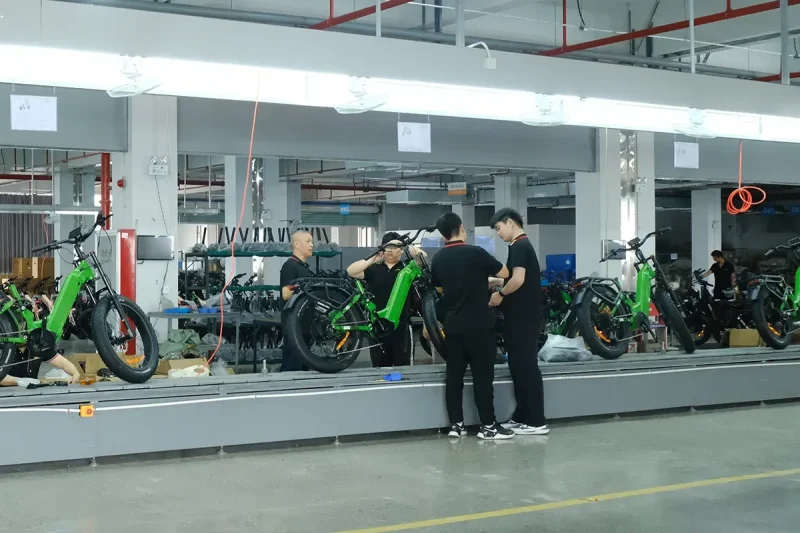
From my experience, many issues that appear to be assembly mistakes are actually frame problems in disguise. A frame that isn't welded and aligned with perfect consistency is a nightmare for assemblers. I remember one case where a client's team spent weeks trying to solve a persistent brake rubbing issue on their production line. They adjusted calipers and checked the wheels endlessly. The real cause? The frame's rear brake mounts were off by just a millimeter due to variance in the welding process from one frame to the next. Once we traced it back, we saw that slight changes in heat during welding were causing tiny distortions. These problems add up, causing delays, increasing labor costs, and resulting in a final product that feels cheap or poorly made.
From Welding Flaw to Assembly Headache
| Welding Issue | Resulting Assembly Problem |
|---|---|
| Frame warping after welding5 | Battery case won't fit smoothly; folding mechanism is stiff or loose. |
| Misaligned dropouts6 | Rear wheel is not centered; can cause drivetrain and braking issues. |
| Inaccurate mount hole positions | Fenders, racks, or bottle cages don't line up correctly. |
| Twisted head tube | Handlebars and fork are not perfectly aligned with the frame. |
Why Do Great Samples Often Fail in Mass Production?
You approved a flawless e-bike sample and confidently placed a large order. But when the bulk shipment arrives, you find a frustrating mix of quality levels and inconsistencies.
A perfect sample is often a one-off masterpiece7 made by a factory's top technicians. Mass production, however, tests a factory's systems. True reliability comes from standardized processes, jigs, and strict quality control that makes every bike like the first one.
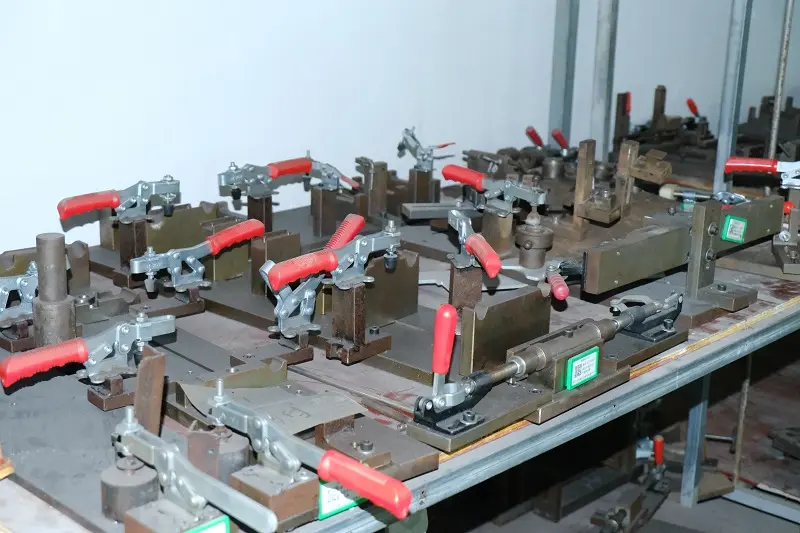
This is the most important lesson for any OEM buyer: you are not buying a single bike, you are buying a factory's ability to produce thousands of identical bikes. A skilled welder can create a perfect frame by hand. But can the factory ensure that the 5,000th frame is just as good as the first? This is where reliable manufacturing systems come in. A dependable factory doesn't rely on just one or two "masters." Instead, we build a system to guarantee consistency. This involves using custom-built jigs8, which are rigid frames that hold all the tube pieces in the exact same position for every single weld. We also enforce strict Standard Operating Procedures (SOPs)9, so every welder uses the same machine settings and techniques. Finally, every frame is checked and straightened in a post-weld alignment process10 to correct any minor heat distortion. This is what separates a workshop from a professional manufacturer. It’s how we move from a "good sample" to "stable mass production."
Conclusion
Welding consistency isn't just a technical detail. It is the foundation for a stable OEM product line, protecting your brand, reducing your costs, and ensuring your customers are happy11.
"Quality Prediction and Control of Assembly and Welding Process for ...", https://pmc.ncbi.nlm.nih.gov/articles/PMC7591953/. This source explains the importance of welding consistency in manufacturing processes, particularly for ensuring product reliability and reducing defects. Evidence role: expert_consensus; source type: education. Supports: Welding consistency is critical for ensuring every bike in a mass-produced batch performs as reliably as the initial sample.. ↩
"Evaluation of the Quality of Welded Joints After Repair of Automotive ...", https://pmc.ncbi.nlm.nih.gov/articles/PMC12387736/. This source discusses how variations in welding parameters can lead to structural weaknesses and long-term product failures. Evidence role: mechanism; source type: research. Supports: Small variations in weld depth, angle, or position can lead to frame deformation, rattling noises, and even fatigue cracks under stress.. ↩
"Frames | Science Behind the Sport - West Virginia University", https://sciencebehindthesport.wvu.edu/cycling/frames. This source outlines the unique stresses and forces that electric bike frames must endure compared to regular bicycles. Evidence role: definition; source type: encyclopedia. Supports: An electric bike frame must handle forces like battery weight, motor torque, braking impacts, and road vibrations, which are not typical for regular bikes.. ↩
"Assessment of fatigue damage in welded aluminum joints subjected ...", https://pmc.ncbi.nlm.nih.gov/articles/PMC10161593/. This source provides examples of how welding inconsistencies can lead to fatigue cracks in high-stress areas of metal structures. Evidence role: case_reference; source type: research. Supports: Inconsistent weld depth can lead to fatigue cracks at the joint, especially near the motor or head tube.. Scope note: The examples may not be specific to electric bike frames but are relevant to similar welded structures. ↩
"Six Types of Welding Defects | UTI - Universal Technical Institute", https://www.uti.edu/blog/welding/six-types-of-welding-defects. This source explains how heat distortion during welding can cause frame warping, leading to assembly issues. Evidence role: mechanism; source type: education. Supports: Frame warping after welding can cause assembly problems like stiff or loose folding mechanisms and misaligned components.. Scope note: The explanation may apply broadly to welded structures, not exclusively to e-bike frames. ↩
"How To Make DIY Dropout Alignment Gauge Tools - YouTube", https://www.youtube.com/watch?v=PsU8IkkFaok. This source discusses how misaligned dropouts in bike frames can lead to drivetrain and braking issues. Evidence role: mechanism; source type: research. Supports: Misaligned dropouts can cause rear wheels to be off-center, leading to drivetrain and braking issues.. Scope note: The source may not focus exclusively on welding as the cause of misalignment. ↩
"Prototype vs. Sample vs. Mass Production - LinkedIn", https://www.linkedin.com/pulse/prototype-vs-sample-mass-production-coralie-gigounoux. This source explains how initial product samples are often handcrafted to perfection, unlike mass-produced items. Evidence role: historical_context; source type: education. Supports: A perfect sample is often a one-off masterpiece made by a factory's top technicians, unlike mass-produced items.. Scope note: The source may not specifically address e-bike manufacturing but discusses general manufacturing practices. ↩
"Understanding the Importance of Jig Fixtures in Manufacturing", https://www.linkedin.com/pulse/understanding-importance-jig-fixtures-manufacturing-praveen-kumaran-ugvxc. This source describes the role of custom-built jigs in ensuring consistency during welding processes. Evidence role: mechanism; source type: education. Supports: Custom-built jigs ensure that all tube pieces are held in the exact same position for consistent welding.. Scope note: The source may discuss jigs in general manufacturing, not exclusively for e-bike frames. ↩
"Standard Operating Procedure for Handling and Use of Welding ...", https://www1.psfc.mit.edu/esh/welding.htm. This source highlights the importance of Standard Operating Procedures in maintaining quality and consistency in manufacturing. Evidence role: expert_consensus; source type: education. Supports: Strict Standard Operating Procedures (SOPs) ensure welders use consistent machine settings and techniques.. Scope note: The source may not focus specifically on welding but discusses SOPs in general manufacturing contexts. ↩
"Choosing the Right PWHT: Heat Treatment After Welding", https://www.teaminc.com/resource/which-pwht-treatment-is-right-for-your-project/. This source explains how post-weld alignment processes correct minor distortions caused by welding heat. Evidence role: mechanism; source type: education. Supports: Post-weld alignment processes correct minor distortions caused by welding heat, ensuring structural accuracy.. Scope note: The source may not specifically address e-bike frames but discusses general welding practices. ↩
"[PDF] Relationship between product quality and customer satisfaction", https://scholarworks.waldenu.edu/cgi/viewcontent.cgi?article=2402&context=dissertations. This source explains how product reliability and quality directly impact customer satisfaction and brand reputation. Evidence role: general_support; source type: education. Supports: Welding consistency ensures product reliability, which is crucial for customer satisfaction and brand reputation.. Scope note: The source may not focus exclusively on welding but discusses the broader relationship between quality and customer satisfaction. ↩