Worried that a powerful fat tire e-bike won't stop when you need it to? The mismatch between power and braking is a real safety concern for many riders.
Fat tire e-bikes are heavier, more powerful, and ride on tough terrain. Hydraulic disc brakes provide the superior, consistent stopping power needed to handle this extra demand, ensuring a safer and more controlled ride compared to traditional mechanical brakes.
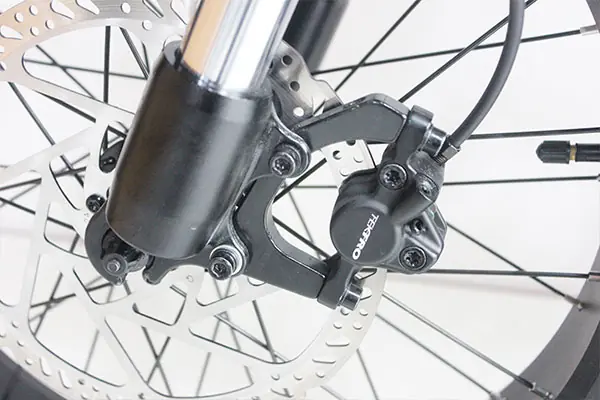
This shift isn't just about making the spec sheet look good. As a manufacturer with over 20 years of experience, I see it as a necessary evolution for the entire category. This component is becoming a must-have for quality fat tire e-bikes, and it's important to understand the reasons. Let's break down why this trend is happening and what it means for you.
Don't Heavier Bikes and Wider Tires Demand Better Brakes?
You see a heavy-duty fat tire e-bike and imagine its power. But then you wonder if its brakes are strong enough. This doubt can ruin a rider's confidence.
Absolutely. The increased weight, higher speeds from powerful motors, and greater traction from wide tires all place a much higher demand on the braking system. Standard brakes can quickly become overwhelmed, making an upgrade to stronger brakes essential for safety.
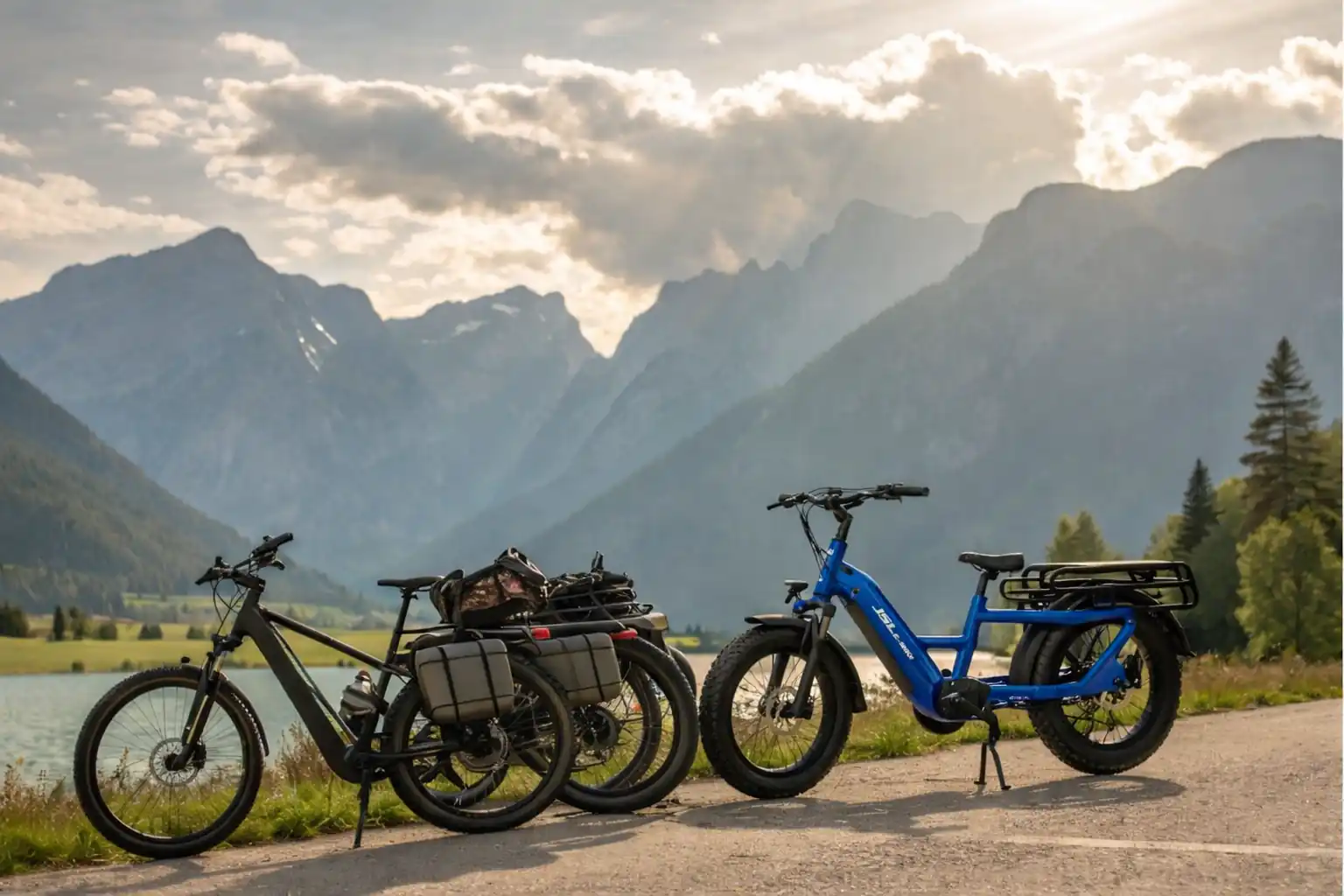
The core of the issue comes down to simple physics. A heavier bike moving at a faster speed has much more momentum1. Stopping that momentum requires a lot more braking force. Many fat tire e-bikes are not just a little heavier; they are significantly so, often equipped with 750W or 1000W motors and large 20Ah batteries. This isn't just about having "more grip2" from the wide tires; it's about having a greater responsibility to control the machine. The wider tires give a feeling of stability and power, but if the brakes can't match that, it creates a dangerous imbalance and a lack of confidence for the rider. I've always told my clients that the brakes should be as impressive as the motor.
The Modern Fat Tire E-Bike's Challenge
| Feature | Standard Commuter E-Bike | Modern Fat Tire E-Bike | Braking Implication |
|---|---|---|---|
| Total Weight | ~25 kg | ~35-45 kg | Higher mass requires more force to stop. |
| Tire Width | 1.95" | 4.0" | More grip, but also used on loose surfaces. |
| Motor Power | 250W | 750W - 1000W | Higher potential speeds and acceleration. |
| Use Case | Paved roads | All-terrain, slopes, sand | Unpredictable conditions demand reliable braking. |
How Do Hydraulic Brakes Actually Improve the Riding Experience?
You squeeze the brake lever, but the response feels weak and spongy. This lack of a direct connection between your hand and the wheel can be unsettling, especially downhill.
Hydraulic disc brakes use fluid instead of a cable, giving you a much smoother, more responsive lever feel. They provide significantly more stopping power with less hand effort and perform consistently, even on long descents where other brakes might fade.
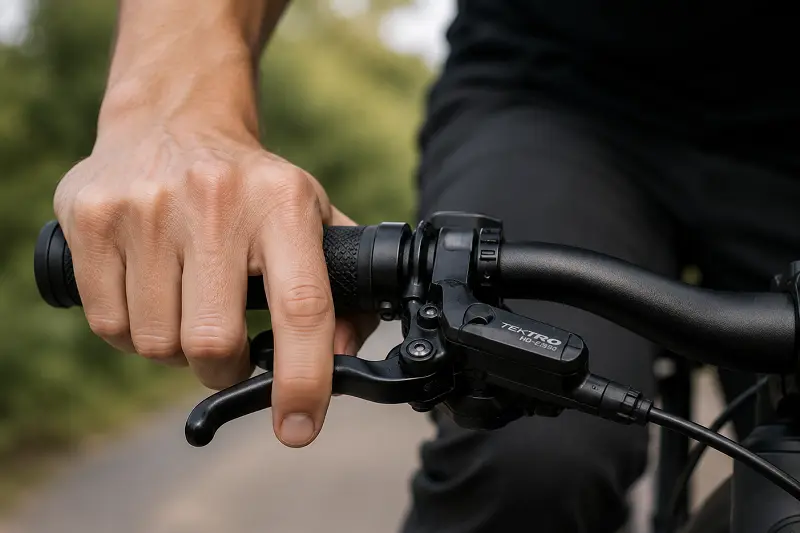
The difference between mechanical and hydraulic brakes is something you can truly feel. Mechanical brakes rely on a steel cable to pull the brake caliper. This cable can stretch, get clogged with dirt, and needs frequent adjustment to feel right. Hydraulic systems, on the other hand, use a sealed system filled with incompressible fluid3. When you pull the lever, you're pushing fluid that directly activates the brake pads. This results in a crisp, powerful, and incredibly consistent feel every single time. It's especially noticeable on long, steep hills. A mechanical brake can suffer from "brake fade" as it heats up, losing its stopping power. Hydraulic brakes are designed to manage heat better4, giving the rider peace of mind that they'll have full braking power from the top of the hill to the bottom.
Mechanical vs. Hydraulic: A Difference You Can Feel
| Feature | Mechanical Disc Brakes | Hydraulic Disc Brakes | Rider Benefit |
|---|---|---|---|
| Braking Power | Good | Excellent | More stopping power with less finger effort. |
| Lever Feel | Can be spongy | Smooth & Consistent | Better modulation and control. |
| Performance | Prone to fade, needs adjustment | Resists fade, self-adjusting pads | More reliable and safer on long rides. |
| Maintenance | Frequent cable adjustments | Less frequent, but requires bleeding | Less day-to-day fuss for the user. |
Is Upgrading to Hydraulic Brakes Always the Right Choice for My Brand?
You want to build a great fat tire e-bike but are worried about costs spiraling out of control. Choosing high-end components feels like a big financial risk for your business.
Not always. For entry-level, price-sensitive markets, reliable mechanical disc brakes are a perfectly fine cost-control solution. However, if you're positioning your e-bike as a mid-range or premium product, hydraulic brakes are almost a mandatory feature.
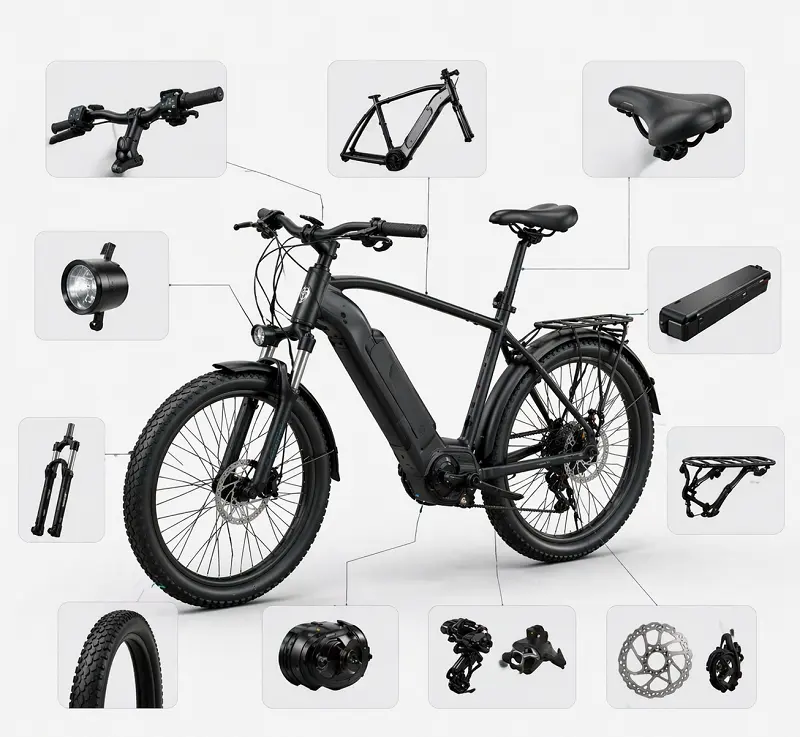
This is a conversation I have with my B2B clients all the time. The choice of brakes is a strategic business decision, not just a technical one. It directly impacts your product's positioning, perceived value, and target customer. If your goal is to produce the cheapest possible fat tire e-bike for wholesale, then a good set of mechanical disc brakes will do the job and keep your costs down. But the moment you want to build a brand, increase your retail price, or target enthusiasts, hydraulic brakes become essential. They are a clear signal of quality and performance5. A customer spending over $1,500 on an e-bike expects components that match the price6. Putting mechanical brakes on a powerful, heavy, and otherwise well-equipped fat tire e-bike can make the whole product feel unbalanced and cheapen the brand's image.
Matching Components to Market Position
| Market Segment | Recommended Brake Type | Rationale |
|---|---|---|
| Budget / Wholesale | Mechanical Disc Brakes | Prioritizes lowest cost. Meets basic safety standards for casual use on flat terrain. |
| Mid-Range / DTC | Entry-Level Hydraulic Brakes | Offers a significant upgrade in feel and performance, justifying a higher price point. Key differentiator. |
| Premium / Brand | High-Performance Hydraulic Brakes | Essential for brand image. Delivers the safety, control, and quality feel that premium customers expect. |
Conclusion
Ultimately, adding hydraulic brakes to fat tire e-bikes is about matching safety and quality to their growing power, creating a more balanced and valuable product for your customers.
"Momentum - Wikipedia", https://en.wikipedia.org/wiki/Momentum. This source explains the relationship between mass, speed, and momentum, providing a physics-based foundation for the claim. Evidence role: definition; source type: education. Supports: Heavier bikes moving at faster speeds have greater momentum, requiring more braking force to stop.. Scope note: The source may not directly apply this principle to e-bikes. ↩
"Are 4 inch width tires safer due to staying out of ruts, better ...", https://www.facebook.com/groups/926685377947023/posts/1502019097080312/. The source explains how wider tires on fat tire e-bikes provide increased traction, which is crucial for navigating loose or uneven surfaces. Evidence role: mechanism; source type: encyclopedia. Supports: Fat tire e-bikes have wider tires that provide more grip, especially on loose surfaces.. ↩
"Chapter 13 Brakes", https://media.defense.gov/2014/Jun/20/2002655911/-1/-1/1/140620-N-ZZ182-6553.pdf. This source explains the sealed, fluid-based mechanism of hydraulic braking systems and its advantages over cable systems. Evidence role: mechanism; source type: education. Supports: Hydraulic braking systems use a sealed, fluid-based mechanism for improved performance.. Scope note: The source may not specifically address fat tire e-bikes. ↩
"Study on Transient Thermal Analysis of a Disc Brake ...", https://scholarworks.bridgeport.edu/bitstreams/efd20c07-819a-4d1d-9876-5868a49a0ac0/download. This source discusses how hydraulic braking systems are engineered to handle heat more effectively than mechanical systems. Evidence role: mechanism; source type: research. Supports: Hydraulic brakes are better at managing heat compared to mechanical systems.. Scope note: The source may not focus on e-bikes specifically. ↩
"E-bikes with hydraulic brakes recommended? - Facebook", https://www.facebook.com/groups/926685377947023/posts/1832018300747055/. This source explains how hydraulic brakes are perceived as a marker of quality and performance in the e-bike market. Evidence role: expert_consensus; source type: research. Supports: Hydraulic brakes are perceived as a marker of quality and performance in the e-bike market.. Scope note: The source may not focus exclusively on fat tire e-bikes. ↩
"Electric Bike Market Size, Share, Trends | Growth Analysis [2034]", https://www.fortunebusinessinsights.com/electric-e-bike-market-102022. This source discusses consumer expectations for components in higher-priced e-bikes, emphasizing the importance of quality features. Evidence role: expert_consensus; source type: research. Supports: Consumers expect high-quality components in e-bikes priced over $1,500.. Scope note: The source may not provide specific price thresholds. ↩