Worried about e-bike reliability? An unstable ride often points to one hidden part. This small component can make or break your entire product line's reputation and performance.
The e-bike controller is the "brain" of the vehicle.1 It processes signals from the throttle, sensors, and brakes to manage motor power output. A good controller ensures a smooth, stable, and reliable ride, while a poor one leads to frequent performance issues and failures.
[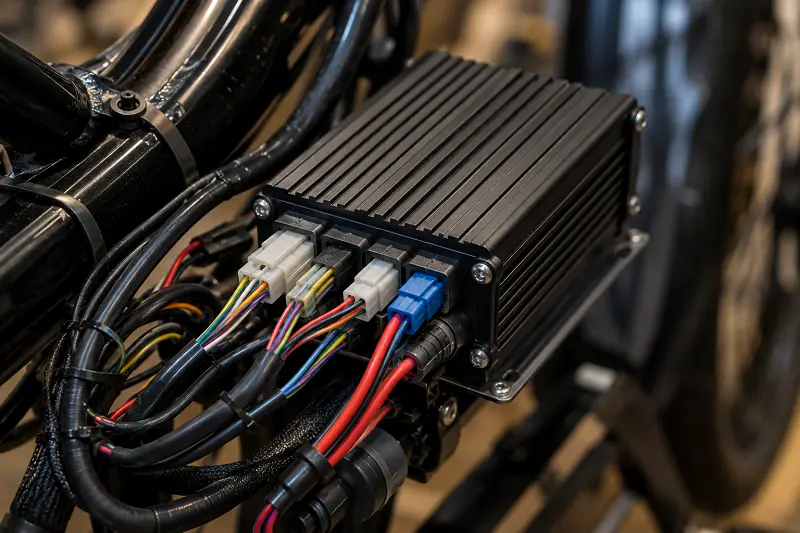
I've seen many clients focus on big-ticket items like motors and batteries. They're important, of course. But time and time again, I see after-sales issues tracing back to a component they barely considered: the controller. It's the unsung hero of a great e-bike, and ignoring it is a risk you don't want to take. Let's dive into why this little box is so critical for the stability and feel of your e-bikes.
What Signals Does the Controller Process to Manage the E-Bike?
Your e-bike feels jerky or unresponsive? The problem might be how its "brain" is thinking. The controller's job is to interpret signals and create a smooth riding experience.
The controller acts as a central command unit. It receives inputs from the display, throttle, pedal sensors (cadence or torque), and brake levers. Based on these signals, it precisely directs the motor's power output, ensuring the bike responds exactly as the rider intends.
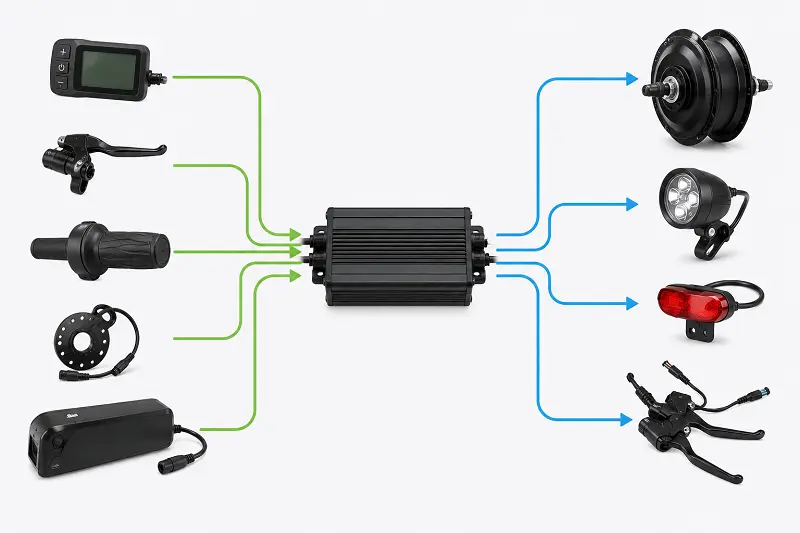
The controller is essentially a small computer dedicated to managing your e-bike's power system. It's constantly in a loop of receiving, interpreting, and sending commands. Think of it as an orchestra conductor for your bike's electronic components.
Inputs (The Signals It Receives)
The controller listens to various parts of the bike. When a rider pedals, the cadence or torque sensor sends a signal. When they twist the throttle, it sends another. Squeezing the brake levers sends a critical "stop" signal. Even the battery communicates its current charge level.
Processing (The Decision-Making)
The controller's internal software, or firmware, takes all this data and makes a decision in milliseconds. It asks: "How fast is the rider pedaling? How much power are they asking for? Are the brakes on? What's the battery status?"
Outputs (The Actions It Takes)
Based on these calculations, it sends a precise amount of electrical current to the motor. This determines how much assistance the rider gets, whether the bike starts smoothly, accelerates predictably, and cuts power instantly when braking. This entire process is what separates a "good" ride from a clunky, unreliable one.
| Signal Source | Rider's Action | Controller's Response |
|---|---|---|
| Pedal Assist Sensor | Starts pedaling | Sends power to motor |
| Throttle | Twists the grip | Increases motor output |
| Brake Levers | Squeezes the lever | Immediately cuts motor power |
| Display Unit | Changes assist level | Adjusts the level of power assist |
| Battery (BMS) | Low voltage detected | Reduces power or shuts down safely |
This seamless communication is the core of a stable and intuitive e-bike.
Why Do Many B2B Clients Overlook the Controller's Importance?
Focusing only on motor power and battery size? This common mistake in e-bike sourcing can lead to major headaches later. A key component is often completely ignored during selection.
Many B2B buyers prioritize visible specs like motor wattage, battery amp-hours, and display design because these are easy to market. The controller, an internal component, is less visible and seems less important, so it's often overlooked in favor of saving on initial costs.
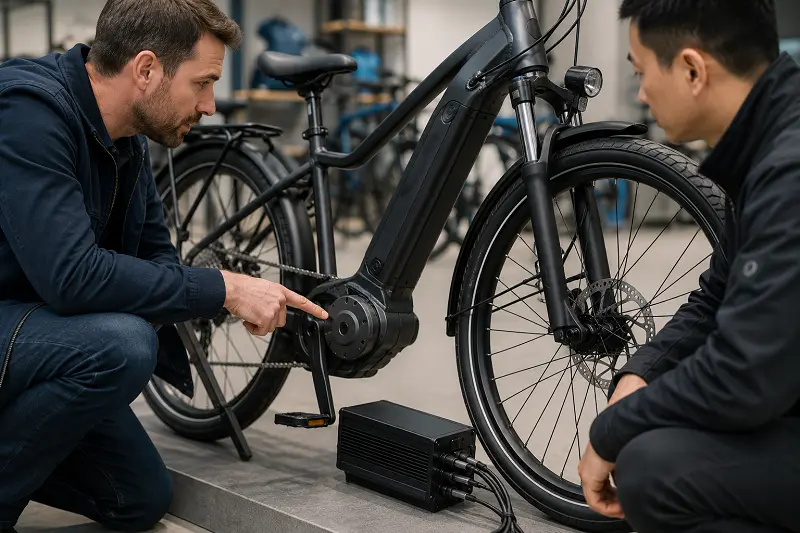
In my 20+ years in this industry, I've noticed a consistent pattern with new OEM partners. They come to me with a spec sheet that details the motor power, battery capacity, and even the brand of tires. But the controller is often listed as just "controller," with no specific requirements. The focus is always on the parts the end customer can easily see or understand from a brochure.
The "Big Specs" Fallacy2
Buyers believe that a powerful motor, a large battery, and a flashy display are all that's needed to sell a bike. These are tangible, marketable features. A "500W motor" sounds impressive. A "48V 20Ah battery" promises long range. The controller's specs, like "22A sine wave," are abstract and harder to sell to the end user.
The Lure of Short-Term Cost Savings
A high-quality, well-programmed controller can cost more than a generic one. When trying to hit a specific price point, the controller is one of the first places where corners are cut. It seems like an easy way to save a few dollars per unit, but this often leads to much higher costs down the line. I've seen clients spend more on warranty claims and customer support for controller-related issues than they ever saved on the initial purchase. The hidden costs of a cheap controller are very real.
| Common Focus Area | Why It's Prioritized | The Hidden Risk |
|---|---|---|
| Motor Power (Watts)3 | Easy to market; implies performance | Useless without a controller that can deliver power smoothly |
| Battery Capacity (Ah)4 | Easy to market; implies long range | Can be damaged by a poorly matched controller |
| Display Appearance | High-visibility component | A good-looking display doesn't fix a bad ride feel |
Ultimately, overlooking the controller is a classic case of prioritizing sizzle over steak. A great e-bike is a balanced system, not just a collection of impressive parts.
How Does a Mismatched Controller Impact High-Performance E-Bikes?
Your powerful fat tire or cargo e-bike feels weak or jerky? A high-wattage motor is useless if the controller isn't up to the task. It's a common and frustrating problem.
On demanding e-bikes like fat tire, cargo, or high-power models, a mismatched controller causes poor performance. You'll experience jerky starts, unnatural power delivery, and even system shutdowns under load. The bike simply won't feel stable or powerful, despite its impressive motor specs.
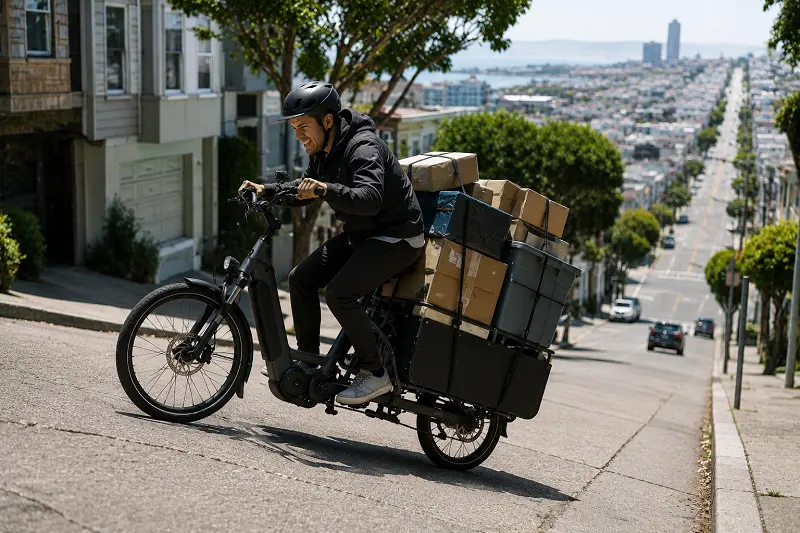
The demands on a controller increase dramatically with the bike's intended use. A simple city commuter has very different needs than a heavy-duty cargo e-bike or an all-terrain fat bike. A "one-size-fits-all" approach to controllers is a recipe for failure, especially in these more demanding categories.
Impact on Fat Tire E-Bikes
These bikes need a lot of torque to get their large, heavy tires moving, especially on sand or snow. A weak or poorly programmed controller will cause a "stuttering" or delayed start. It might also struggle to deliver consistent power on uneven terrain, making the ride feel unpredictable and unsafe.
Impact on Cargo E-Bikes
When you add 100kg of cargo, the system is under immense strain. The controller must manage high current draw without overheating. A cheap controller might overheat and shut down, or it might deliver power in surges, making it difficult to control a heavy, loaded bike. The power delivery must be smooth and strong from a complete stop.
Impact on High-Power Mountain E-Bikes
On a steep climb, the rider needs instant and proportional power. A controller with poor logic might provide too much power at once, causing the wheel to spin out, or not enough, causing the rider to stall. The harmony between the rider's effort (via a torque sensor) and the motor's output is purely the controller's responsibility. It's the difference between a confident climb and a frustrating hike.
| E-Bike Type | Key Challenge | Impact of Mismatched Controller |
|---|---|---|
| Fat Tire E-Bike | High starting torque, varied terrain | Jerky starts, inconsistent power, poor off-road feel |
| Cargo E-Bike | Heavy loads, high continuous current | Overheating, sudden shutdowns, unstable acceleration |
| Mountain E-Bike | Steep climbs, dynamic power needs | Wheel spin, lack of power, unnatural assist feel |
In all these cases, even the most powerful motor is rendered ineffective by a controller that can't manage it properly. It's like having a race car engine run by a lawnmower's computer.
What Should OEM Buyers Look for in a Controller Beyond Just Price?
Choosing a controller based on price alone is a huge risk. To build a reliable e-bike line, you need to ask better questions and look for deeper signs of quality.
OEM buyers should prioritize system stability over cost. Verify that the controller has been tested with the specific motor and battery. Check for smooth startup, clear assist levels, responsive braking, and reliable waterproofing and heat dissipation. A stable supply chain for parts is also crucial.
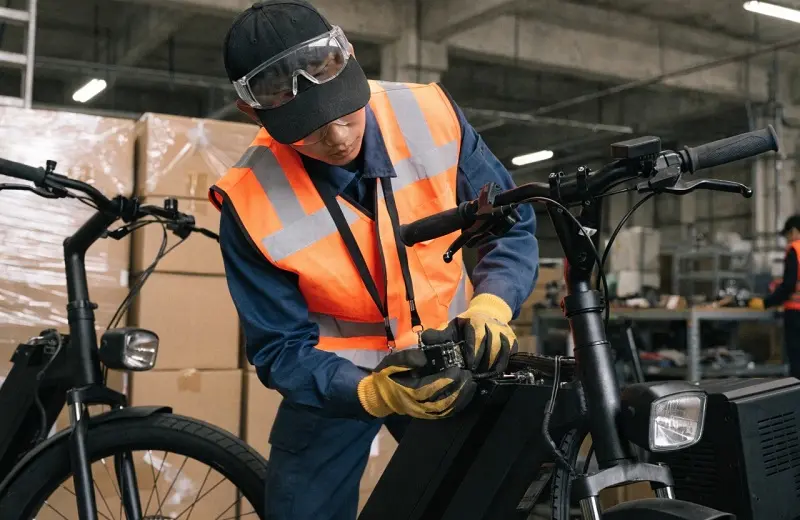
When we develop an OEM project, I always steer the conversation about controllers away from "how much does it cost?" and toward "how well does it perform as part of the system?" The right controller is an investment in your brand's reputation. Here are the key factors I advise my clients to focus on.
System Integration & Validation
Has the controller been specifically programmed and tested with the exact motor and battery you are using? We spend countless hours in our lab and out in the field fine-tuning this match. We test for smooth starts from a dead stop, linear power delivery across all assist levels, and instant motor cut-off when the brakes are applied. This validation is non-negotiable.
Physical Durability & Design
Look at the controller's construction. Is the casing robust? Are the connectors properly sealed for waterproofing (look for an IP rating)? How does it handle heat? A controller needs good heat dissipation, often through an aluminum casing that acts as a heat sink, to perform reliably under continuous load, especially on hot days or long climbs.
Firmware & Customization
A good manufacturing partner can customize the controller's firmware. This means we can adjust parameters like the top speed, the "kick" of the acceleration, and the power output for each assist level to perfectly match your desired ride feel and comply with local regulations (like the 25 km/h limit in the EU).
| Feature to Check | Why It Matters | Red Flag to Avoid |
|---|---|---|
| System Validation | Ensures smooth and reliable ride feel | Supplier has never used this motor/controller combo before |
| Waterproofing (IP Rating) | Prevents failure from rain or washing | Unsealed connectors, no official IP rating mentioned |
| Heat Dissipation | Prevents overheating and shutdowns under load | Small, plastic casing with no heat sink fins |
| Long-Term Supply | Guarantees consistency and availability for service | Supplier frequently changes models or can't commit to future supply |
Choosing the right controller isn't about picking a part from a catalog; it's about engineering a reliable and enjoyable experience for your customers.
Conclusion
The controller is the unseen heart of an e-bike's performance. Choosing the right one is not a cost-saving measure, but a critical investment in stability, reliability, and brand reputation.
"Electric bicycle - Wikipedia", https://en.wikipedia.org/wiki/Electric_bicycle. This source explains the role of the e-bike controller in processing signals and managing motor power output. Evidence role: definition; source type: encyclopedia. Supports: The e-bike controller acts as the central processing unit for an e-bike, managing signals from various components to ensure smooth operation.. ↩
"How eBike Controllers Work - Tower Electric Bikes", https://www.towerelectricbikes.com/blogs/pages/ebike-controller?srsltid=AfmBOoqmXUHPWShV-_eeKf4G-cB0JW7HmyY9gfkYucQvAhaMYPt3SJor. The source explains how prioritizing easily marketable specifications like motor wattage and battery capacity often leads to neglecting the controller, which is crucial for e-bike performance. Evidence role: mechanism; source type: education. Supports: Many B2B buyers prioritize visible specs like motor wattage, battery amp-hours, and display design because these are easy to market. The controller, an internal component, is less visible and seems less important, so it's often overlooked in favor of saving on initial costs.. ↩
"Watt - Wikipedia", https://en.wikipedia.org/wiki/Watt. Motor power, measured in watts, is a key specification that indicates the performance capability of an electric motor, including those used in e-bikes. Evidence role: definition; source type: encyclopedia. Supports: Motor power, measured in watts, is a key specification that indicates the performance capability of an electric motor, including those used in e-bikes.. ↩
"Electric vehicle battery - Wikipedia", https://en.wikipedia.org/wiki/Electric_vehicle_battery. Battery capacity, measured in ampere-hours (Ah), is a key specification indicating the amount of charge a battery can store and deliver over time, directly affecting the range and performance of electric vehicles. Evidence role: definition; source type: encyclopedia. Supports: Battery capacity, measured in ampere-hours (Ah), is a key specification indicating the amount of charge a battery can store and deliver over time, directly affecting the range and performance of electric vehicles.. ↩