Struggling to choose the right motor for your e-bike line? Focusing only on wattage can lead to underperforming bikes and unhappy customers, hurting your brand's reputation.
For certain e-bikes, like cargo, fat tire, or mountain models, torque is more important than wattage. Torque provides the necessary pulling power for starts, hills, and heavy loads, which directly impacts the real-world riding experience and user satisfaction.
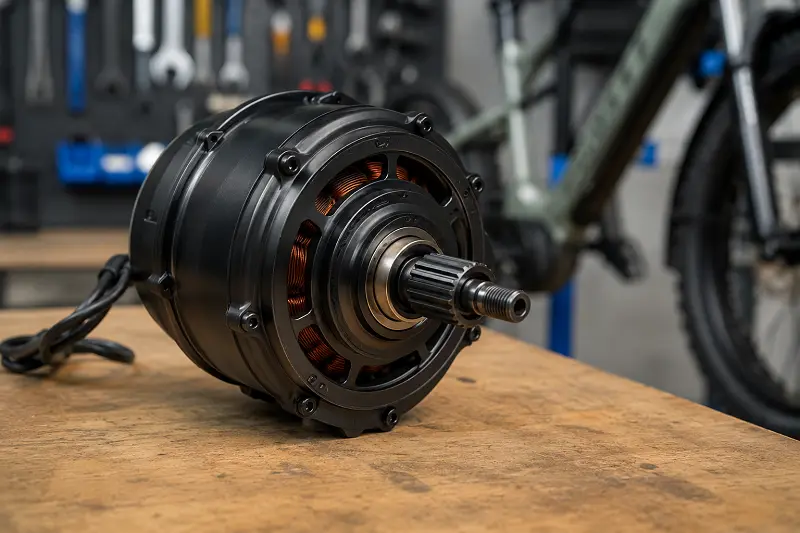
I've been running this e-bike factory since 1999, and I've seen this happen countless times. A client comes to us focused on a single number: the motor's wattage. They want to see "500W" or "750W" on the spec sheet, believing it's the ultimate measure of performance. But a spec sheet doesn't tell you how a bike feels on a steep hill with a full load. This focus on one number can lead to major problems down the line. It's time we look past the surface-level specs and understand what truly makes an e-bike perform well in the real world.
Why Do So Many Clients Focus Only on Motor Wattage?
Is your spec sheet impressive, but your bike feels weak under load? High wattage numbers look great on paper but don't guarantee the real-world power your customers actually need.
Clients often focus on wattage because it's a simple, widely advertised metric. Numbers like 250W, 500W, or 750W are easy to compare and use in marketing1, but they don't tell the whole story about a bike's performance.
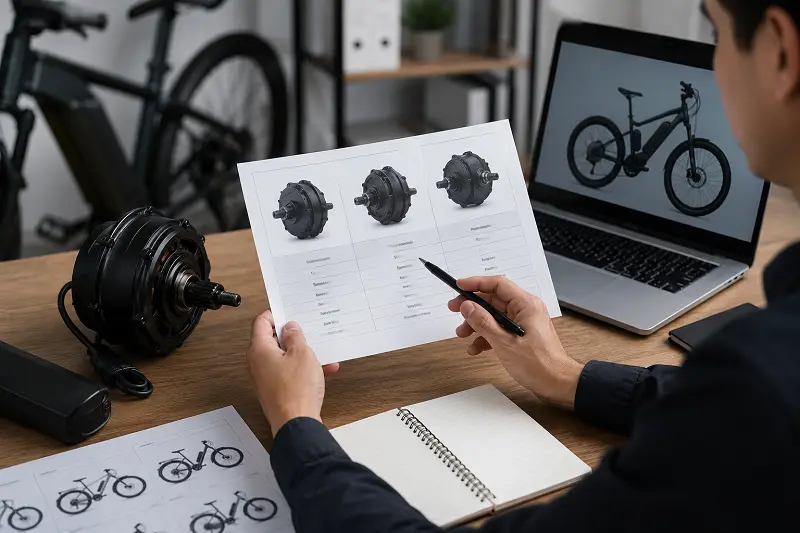
From my perspective as a manufacturer, wattage has become the most visible, yet often misleading, number in the e-bike world. It’s the horsepower figure of the e-bike industry—easy to market, easy for customers to latch onto. When you're building a product line, it's tempting to think a bigger wattage number automatically means a better, more powerful bike. Many B2B clients I work with fall into this trap. They believe a 750W motor will always outperform a 500W motor.
The reality is more complex. Wattage (Power) is a calculation of Voltage x Amperage, and it generally indicates the motor's potential for maintaining speed. Torque, measured in Newton-meters (Nm), is the rotational force that gets you moving and keeps you going up hills. It's the "grunt" work. A motor can have high wattage but low torque, making it feel sluggish from a dead stop.
Wattage vs. Torque: What They Really Tell You
| Metric | What It Represents | Best For |
|---|---|---|
| Wattage (W) | The motor's power consumption and ability to sustain speed. | High-speed performance on flat terrain. |
| Torque (Nm)2 | The motor's rotational or "pulling" force. | Acceleration, hill climbing, and carrying heavy loads. |
I once had a client who was adamant about using a 750W motor for a lightweight city commuter bike. Their market was Europe, where regulations often cap power at 250W. Not only was the motor illegal for their target market, but it was also inefficient for the bike's purpose. We ended up speccing a 250W motor with high torque3, which gave riders a powerful feeling at legal speeds and improved battery life. The client was happier, and more importantly, their customers were too.
When Does Torque Matter More Than Power for an E-Bike?
Worried your new cargo e-bike won't be able to handle heavy loads? A high-wattage motor might still struggle and feel weak if the torque is too low.
Torque is crucial for e-bikes designed for heavy loads, steep climbs, or rough terrain. This includes cargo e-bikes, fat tire e-bikes, and mountain e-bikes, where strong initial acceleration and sustained pulling power are essential for performance.
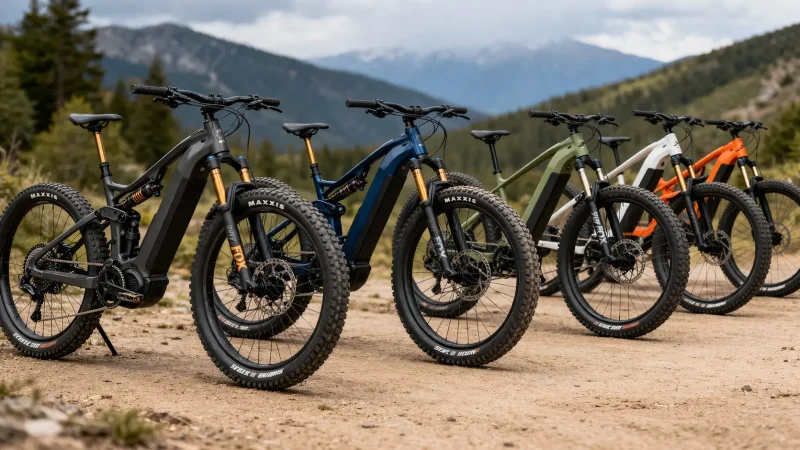
The key question I always ask my clients is: "What problem is this bike solving for the end-user?" The answer determines whether we should prioritize torque over wattage. If the bike is a simple city commuter for flat roads, a standard motor is fine. But for more demanding applications, torque is everything. It's the difference between a product that works and one that generates complaints.
Let's look at a few examples where torque is the hero specification.
Key E-Bike Categories Where Torque Is King
-
Cargo & Delivery E-Bikes: Imagine a delivery rider trying to start from a traffic light with 50 kg of packages on the back. Without high torque, the bike will feel incredibly sluggish and difficult to get moving. High torque provides that instant pulling power needed to accelerate smoothly under load.
-
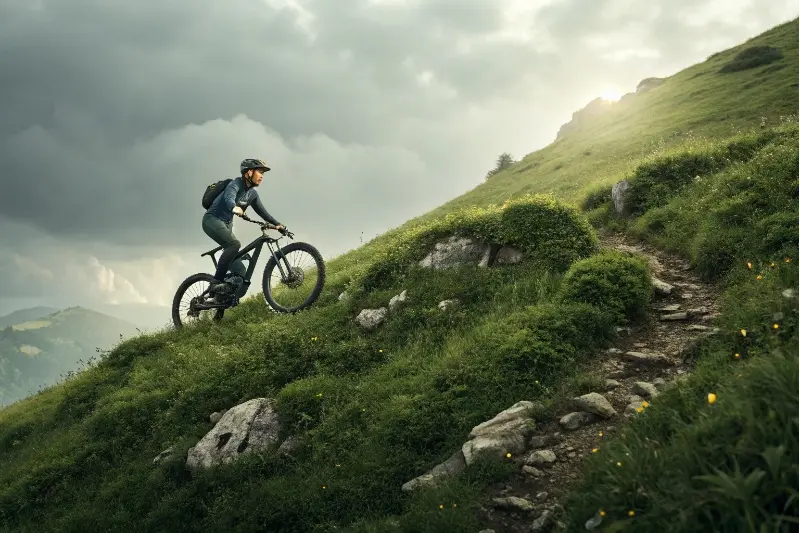
Mountain & Off-Road E-Bikes: When a rider is on a steep, technical trail, they aren't going fast. They need immediate force to get over rocks and roots. High torque delivers that burst of power at low speeds, making challenging climbs feel possible.
-
Fat Tire E-Bikes: These bikes are built for sand, snow, and mud. High wattage won't help you if the wheels just spin and dig in. High torque provides the steady, powerful rotation needed to push through soft surfaces without losing momentum.
Matching E-Bike Type to the Right Motor Spec
| E-Bike Type | Primary Challenge | Focus on Torque or Wattage? | Why? |
|---|---|---|---|
| Cargo E-Bike | Starting with a heavy load | Torque | Needs immense pulling force from a standstill. |
| Mountain E-Bike | Climbing steep, technical hills | Torque | Requires instant power at low speeds to clear obstacles. |
| Fat Tire E-Bike | Riding on soft surfaces (sand/snow) | Torque | Needs consistent force to push through resistance. |
| City E-Bike | Efficient daily commuting | Wattage & Efficiency | Focus is on maintaining speed and maximizing range. |
For these demanding categories, a bike with lower wattage but higher torque will feel much more capable and powerful than a bike with high wattage but low torque.
How Does Torque Directly Impact the End-User Experience?
Are you getting customer complaints about new bikes feeling "weak" or "sluggish" despite having great specs on paper? Your customers are feeling a lack of torque, not a lack of watts.
Torque is what the rider physically feels as "pulling power." A bike with high torque feels strong, responsive, and capable from a standstill and on hills. A bike with low torque, even if it has high wattage, can feel disappointing and weak.
Think about it this way: your B2B customers see the spec sheet, but the end-users feel the ride. That feeling is almost entirely dictated by torque. I remember working on a project for a long-tail cargo bike4. The initial prototype used a motor with high wattage but only 45 Nm of torque. On paper, it looked powerful. But when we tested it with weight on the back, it was a disaster. It struggled to get going, and on a slight incline, it felt like pedaling through wet cement.
We switched to a motor with slightly lower peak wattage but 85 Nm of torque. The difference was night and day. The bike launched forward with confidence, and climbing hills felt effortless, even when fully loaded. The client's test riders were amazed. That's the power of torque. It translates a number on a page into a feeling of confidence and capability for the rider.
The Feeling of Torque vs. The Promise of Wattage
-
High Torque Feels Like:
- Instant acceleration from a stop.
- Being pushed up a hill with ease.
- Effortlessly pulling a heavy load.
-
High Wattage (with low torque) Can Feel Like:
- A slow, sluggish start.
- Struggling and slowing down on inclines.
- Needing to pedal hard just to get moving.
Ultimately, a positive user experience is what leads to good reviews, repeat business, and a strong brand reputation. By focusing on torque for the right applications, you are investing directly in customer satisfaction. Fewer complaints and fewer returns mean a healthier bottom line for your business.
How Should You Choose the Right Motor for Your E-Bike Project?
Confused about which motor to spec for your next e-bike line? Choosing the wrong motor based on the wrong metric can doom your project before it even starts manufacturing.
To choose the right motor, first define the bike's primary use case. For city commuting, focus on efficiency and compliance. For cargo, mountain, or fat tire bikes, prioritize high torque (measured in Nm) to ensure real-world performance.
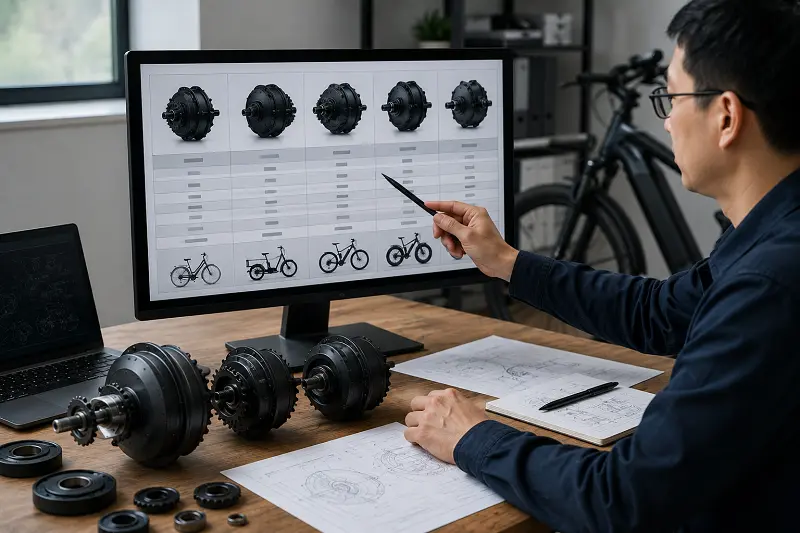
The most productive conversations I have with clients don't start with "how many watts do I need?" They start with "who is this bike for, and what will they do with it?" This approach shifts the focus from a single number to the overall goal of the project. As your manufacturing partner, our job is to help you build a bike that succeeds in the market, not just one that looks good in a catalog.
Here is the simple process we use to guide our clients toward the perfect motor selection.
A 3-Step Guide to Motor Selection
- Define the Primary Use Case: First, be crystal clear about the bike's purpose. Is it for last-mile delivery? Weekend trail riding? All-weather commuting? This is the most important step.
- Identify the Key Performance Challenge: Based on the use case, what is the biggest challenge the rider will face? Is it carrying heavy loads, climbing steep hills, navigating soft sand, or maximizing battery range on long commutes?
- Match the Motor Spec to the Challenge: Now, you can look at the specs. If the challenge is carrying loads or climbing, torque (Nm) is your primary metric. If the challenge is maintaining speed on flat ground, wattage and motor efficiency are more relevant.
Quick Decision-Making Guide
| Use Case | Key Challenge | Primary Spec to Check | Secondary Spec |
|---|---|---|---|
| City Commuting | Range & Legal Compliance | Efficiency, Wattage | Torque (for smooth starts) |
| Cargo / Delivery | Carrying Heavy Loads | Torque (Nm) | Battery Capacity, Durability |
| Mountain / Trail | Climbing Steep Hills | Torque (Nm) | Motor Responsiveness, Weight |
| Fat Tire / All-Terrain | Traversing Soft Surfaces | Torque (Nm) | Weather Sealing, Wattage |
Next time you start an e-bike project, don't just ask for a 500W motor. Instead, tell your manufacturer: "I'm building a cargo bike to carry 80kg up city hills." A good partner will immediately know to recommend a high-torque solution that ensures your product will be a success.
Conclusion
For e-bike projects in demanding categories, prioritize torque over wattage. This ensures a better riding experience, leads to higher customer satisfaction, and builds a stronger, more reliable brand.
"E-Bike Market Size, Share, Scope, Trends, Growth Report 2035", https://www.marketresearchfuture.com/reports/e-bike-market-1876. This source discusses the prevalence of wattage as a marketing metric in the e-bike industry and its limitations in reflecting real-world performance. Evidence role: general_support; source type: research. Supports: Clients often focus on wattage because it's a simple, widely advertised metric.. ↩
"Newton-metre - Wikipedia", https://en.wikipedia.org/wiki/Newton-metre. Torque, measured in Newton-meters (Nm), is a unit of rotational force that plays a critical role in applications requiring pulling power, such as hill climbing and carrying heavy loads. Evidence role: definition; source type: encyclopedia. Supports: Torque (Nm) is a measure of rotational force that is crucial for applications requiring pulling power, such as hill climbing and carrying heavy loads.. ↩
"How Much Torque Do I Need on My Electric Bike? - Windone", https://windone.com/blogs/news/how-much-torque-do-i-need-on-my-electric-bike. High torque is essential for applications requiring strong pulling power, such as starting from a standstill, climbing hills, or carrying heavy loads, as it directly impacts the bike's performance in these scenarios. Evidence role: mechanism; source type: encyclopedia. Supports: Torque is crucial for e-bikes designed for heavy loads, steep climbs, or rough terrain.. ↩
"Torque and Wattage for Cargo Bikes : r/ebikes - Reddit", https://www.reddit.com/r/ebikes/comments/1jze6yb/torque_and_wattage_for_cargo_bikes/. This source provides a detailed explanation of the importance of torque in e-bikes, particularly for long-tail cargo bikes, emphasizing how torque impacts performance under heavy loads. Evidence role: mechanism; source type: encyclopedia. Supports: Long-tail cargo bikes benefit significantly from motors with high torque, as it ensures better performance under heavy loads and on inclines.. ↩