Many brands think comparing e-bikes to motorcycles is all about speed. This narrow view can cause you to miss a massive market. The real difference is about accessibility and opportunity.
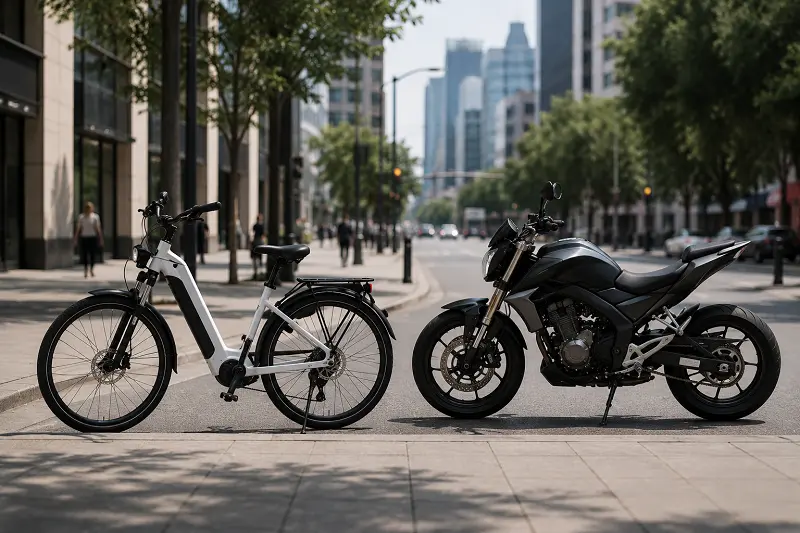
No, the key difference isn't speed. Electric bikes have a much lower market entry barrier. They often don't require a license, insurance, or special registration, making them a more accessible and flexible choice for a broader range of urban commuters and casual riders than motorcycles.
For years, I've had conversations with importers and brand owners about this. They come to me asking for more power, trying to make an e-bike compete with a motorcycle on its terms. But that's missing the point entirely. To really understand the business opportunity, you have to look beyond the spec sheet and see who the end customer is and what problem you're solving for them. Let's break down why this perspective is so important for your business.
Why Do E-Bikes Have a Lower Market Entry Barrier?1
You see a potential customer hesitate at the thought of licenses and regulations. This hesitation is a barrier that keeps them from buying. E-bikes remove that barrier for you.
E-bikes have lower barriers because they are often classified closer to bicycles than motor vehicles. This means no special driver's license, less complex insurance, and easier parking. This simplicity makes them far more appealing to people who just want a simple, efficient way to get around town.
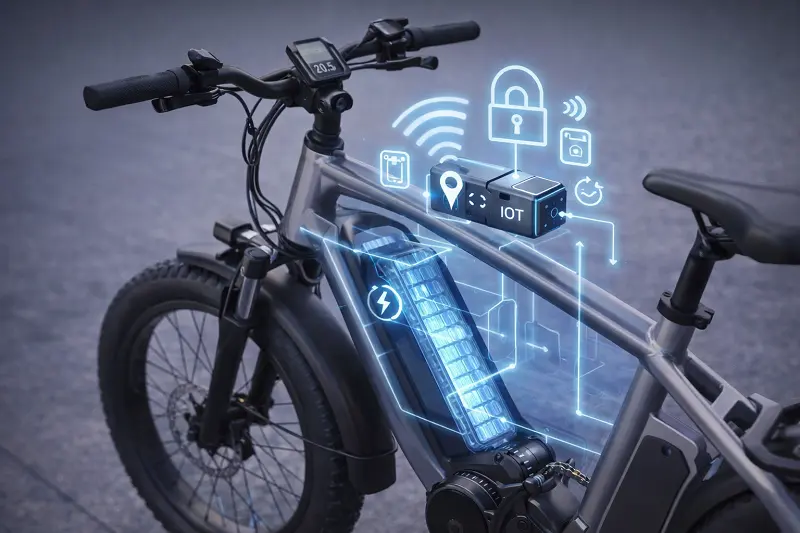
As a manufacturer, we see this difference in our daily work. When we develop a motorcycle project, the checklist is long and complex. It's all about meeting stringent vehicle regulations2. But for e-bikes, the conversation is different. We focus on user experience and accessibility. The lower barrier isn't just a feature; it's a core business strategy. For your customers, this means less paperwork, lower upfront costs, and fewer legal hoops to jump through. It opens up your product to a huge market of people who would never consider a motorcycle. Think about students, urban professionals, and families who just need a simple, reliable ride. That's the market e-bikes unlock for your business.
| Feature | Electric Bike | Motorcycle |
|---|---|---|
| Licensing | Usually not required | Almost always required |
| Insurance | Often optional or basic | Mandatory and complex |
| Regulations | Fewer, similar to bicycles | Strict, similar to cars |
| Maintenance | Simple, lower cost | Complex, higher cost |
| Parking | Easy, like a bicycle | Requires dedicated space |
Is an E-Bike Just a Weaker Motorcycle?
Are you worried customers will see e-bikes as just a "diet" motorcycle? This misconception costs sales. The truth is, they solve completely different problems for different people.
An e-bike is not a weaker motorcycle.3 It's a completely different category of transport. A motorcycle's purpose is power and speed for longer distances. An e-bike's purpose is to solve the "last mile" problem, offering an easy, low-effort solution for urban commuting and leisure.
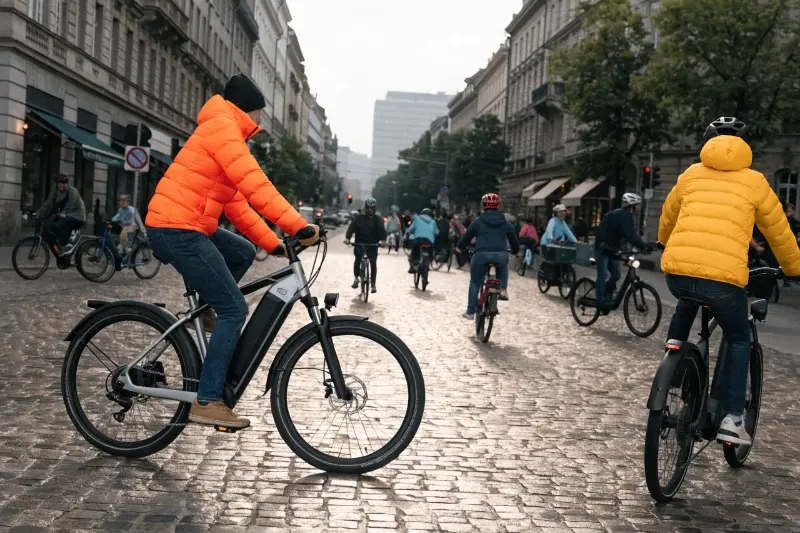
Thinking of an e-bike as a "low-spec motorcycle" is the biggest mistake I see brands make. It's like comparing a shuttle bus to a race car—they are both vehicles, but they serve entirely different needs. A traditional bicycle requires a lot of physical effort. A motorcycle requires licenses, insurance, and deals with heavy traffic and parking issues. The e-bike fills the huge gap in between.4 It gives you the freedom of a bicycle without the sweat, and the motorized assistance of a vehicle without the legal and financial burdens. It is the perfect solution for someone who wants to get to work, run errands, or enjoy a weekend ride without the hassle. It's not about being weaker; it's about being smarter for a specific, and very large, market.
How Can E-Bikes Create a Broader Product Line Than Motorcycles?
You have a single motorcycle model, but your market is diverse. You're missing opportunities. E-bikes offer the flexibility to create a full product family from a single platform.
E-bikes offer incredible flexibility for building a diverse product line. Unlike the more rigid category of motorcycles, e-bikes can be easily adapted into city commuters, folding models for storage, fat-tire versions for all-terrain, and cargo bikes for deliveries, targeting multiple niche markets effectively.
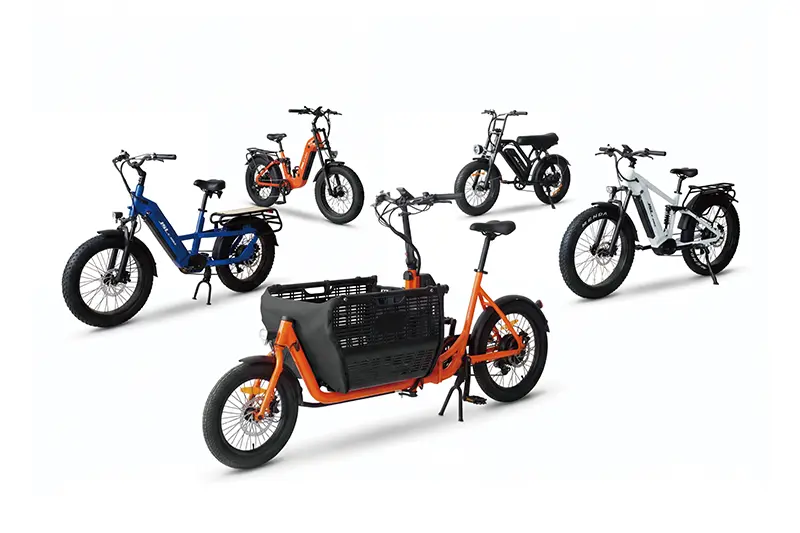
This is where things get really exciting for my B2B clients. With motorcycles, you are often locked into a few categories: sport, cruiser, touring. But with e-bikes, the possibilities are almost endless. We start with a core frame and motor technology, and from there, we can create a whole family of products. A brand can have a sleek City E-bike for commuters, a rugged Fat Tire E-bike for adventurers, a compact Folding E-bike for people with small apartments, and a robust Cargo E-bike for small businesses or families. This means you aren't just selling one product; you're offering a complete mobility solution. You can cater to different price points, use cases, and customer demographics, all while building a cohesive brand identity. This product matrix strategy is much harder to execute with motorcycles but is a natural fit for the e-bike market.
Which is the Right Choice for Your Business, an E-bike or a Motorcycle?
Choosing between e-bikes and motorcycles feels like a huge gamble. You don't want to invest in the wrong product line. The right choice depends entirely on your target market.
Choose motorcycles if your target market needs high speed, long-range travel, and operates in an environment with established motor vehicle infrastructure. Choose e-bikes if you are targeting urban commuters, leisure riders, or delivery services in cities where convenience, low cost, and accessibility are key.
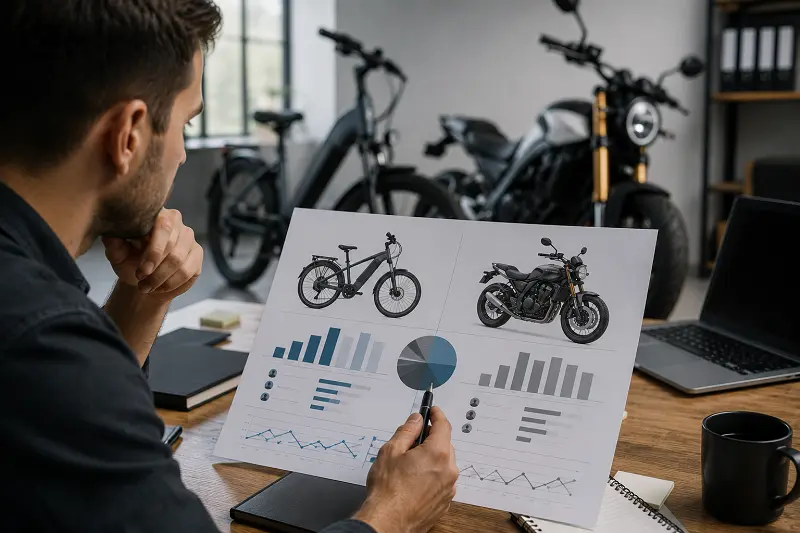
So, how do you decide? Don't ask which is "better." Instead, ask these questions about your business: Who is my customer? What problem do they need to solve? What are the local laws? From my experience building products for brands worldwide, the answer becomes clear when you focus on the market. If your customers are riding on highways, carrying heavy loads over long distances, and see themselves as "riders," then a motorcycle is the right product. But if your customers are navigating city streets, avoiding traffic, looking for a green alternative, or just want a fun way to get around, the e-bike is a much bigger opportunity. Before you even think about motor power or battery size, figure out your target market's regulations and daily needs. That is the most important specification.
| Your Business Focus | Choose E-Bike | Choose Motorcycle |
|---|---|---|
| Target User | Urban Commuters, Families, Delivery | Enthusiasts, Long-Distance Riders |
| Primary Use Case | Short trips, leisure, last-mile | Highway travel, touring, performance |
| Market Trend | Green mobility, urbanisation | Established vehicle market |
| Business Model | Flexible product matrix, OEM/ODM | Specialized, high-regulation product |
Conclusion
Ultimately, the choice isn't about speed, but strategy. E-bikes aren't just a product; they are a gateway to the massive and growing market for accessible, urban mobility.
"What Are Ebike 'Classes' and What Do They Mean? - WIRED", https://www.wired.com/story/guide-to-ebike-classes/. This source explains that e-bikes are often classified similarly to bicycles, which exempts them from stringent licensing, insurance, and registration requirements, thereby lowering the market entry barrier. Evidence role: mechanism; source type: encyclopedia. Supports: E-bikes have a lower market entry barrier because they are often classified closer to bicycles than motor vehicles, exempting them from stringent licensing, insurance, and registration requirements.. ↩
"The Current State of Electric Bicycles and the Law | UNC School of ...", https://www.sog.unc.edu/blogs/nc-criminal-law/current-state-electric-bicycles-and-law. This source explains the regulatory differences between electric bikes and motorcycles, highlighting how e-bikes are often classified closer to bicycles, which exempts them from stringent vehicle regulations. Evidence role: mechanism; source type: encyclopedia. Supports: Electric bikes have a much lower market entry barrier because they are often classified closer to bicycles than motor vehicles, which exempts them from stringent vehicle regulations.. ↩
"E (mathematical constant) - Wikipedia", https://en.wikipedia.org/wiki/E_(mathematical_constant). This source discusses the functional differences between e-bikes and motorcycles, focusing on their distinct use cases. Evidence role: definition; source type: encyclopedia. Supports: An e-bike serves a different purpose than a motorcycle, focusing on urban commuting and leisure rather than power and speed.. Scope note: The comparison may not cover all types of e-bikes and motorcycles. ↩
"Health benefits of electrically-assisted cycling: a systematic review", https://pmc.ncbi.nlm.nih.gov/articles/PMC6249962/. This source explains how e-bikes address the gap between traditional bicycles and motorcycles in terms of effort and accessibility. Evidence role: mechanism; source type: research. Supports: E-bikes address the gap between bicycles and motorcycles by offering motorized assistance without the legal and financial burdens of motorcycles.. Scope note: The explanation may not account for all types of e-bikes or user needs. ↩