Struggling to find a stable European e-bike market? Belgium's policy-driven growth and clear trends offer a promising path. Let's explore what makes this market so attractive for brands.
The Belgian e-bike market is booming thanks to generous government subsidies, an excellent network of cycle paths, and a strong push from corporate leasing programs. These factors create a stable, growing environment for city, cargo, and high-speed e-bikes, making it a key European market.
I've been watching the Belgian market for a while as an e-bike manufacturer, and the numbers are impressive. The market is expected to grow from $990 million in 2025 to over $1.25 billion by 2031.1 It's not just about selling bikes; it's about understanding the specific forces that shape consumer and business choices. The growth is steady and predictable, which is great news for anyone in manufacturing and supply chain planning. To really grasp the opportunity, we need to look closer at the specific policies and trends. Let's break down what's really happening on the ground.
How Do Government Incentives Make E-Bikes So Affordable in Belgium?
High upfront costs are a major barrier for e-bike buyers. In Belgium, a smart mix of government subsidies makes even premium models surprisingly accessible, creating huge demand for manufacturers.
Belgium offers a federal mileage allowance (€0.35/km), zero-emission grants, and trade-in vouchers. These incentives can be combined, significantly lowering the customer's out-of-pocket cost and making purchasing an e-bike a very attractive financial decision for commuters and businesses alike.
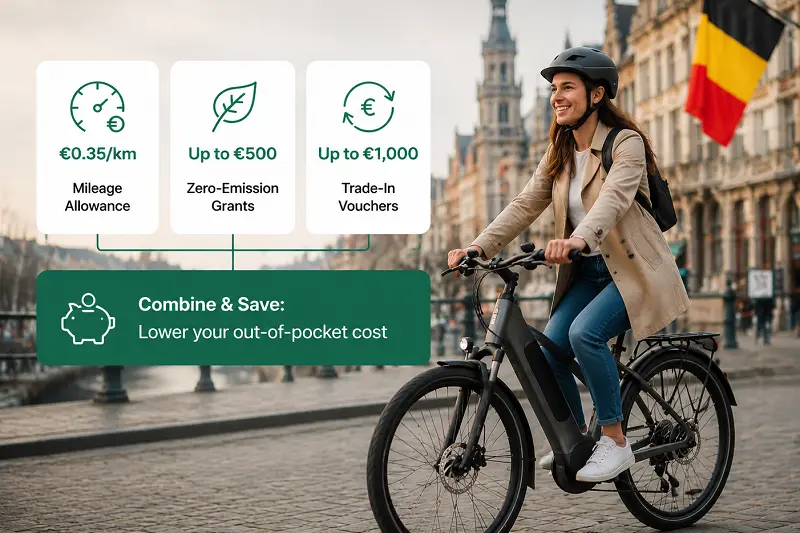
As an OEM partner, I see these policies as a major market driver. They don't just make e-bikes cheaper; they create a predictable and sustainable demand cycle. The federal government’s mileage subsidy, for example, directly rewards people for commuting by bike. When you add regional zero-emission grants and "cash for clunkers" style trade-in vouchers, the initial investment for a customer drops dramatically. What’s unique is that many of these incentives are stackable, meaning a buyer can combine them to maximize their savings. This is a powerful sales tool. Furthermore, leasing programs for civil servants and education sector employees are boosting the adoption of high-speed e-bikes (speed pedelecs). These programs often include service and maintenance, which establishes a predictable replacement cycle every few years. For us in the supply chain, this predictability is golden. It allows us to plan production and invest in new technologies with confidence.
Key Belgian E-Bike Incentives
| Incentive Type | Description | Impact on Market |
|---|---|---|
| Federal Mileage Subsidy | €0.35 per kilometer for cycling to work. | Encourages daily commuting by e-bike. |
| Zero-Emission Grants | Direct financial aid for purchasing low-emission vehicles. | Lowers the initial purchase price. |
| Trade-In Vouchers | Vouchers for trading in an old car for an e-bike. | Attracts new users from other transport modes. |
| Corporate Leasing | Companies offer e-bikes as part of employee benefits. | Drives demand for premium and high-speed models. |
What Kind of E-Bikes and Technology Are Winning in the Belgian Market?
Choosing the right product spec is crucial for success. Belgium's market has clear preferences, and getting them wrong means missed opportunities. Let's see what features are in demand.
Belgian consumers prefer city/urban models and pedal-assist systems2. Key tech trends include high-capacity lithium-ion batteries, efficient mid-drive motors for better climbing, and low-maintenance belt drives. These features cater to both daily commuters and growing commercial delivery fleets.
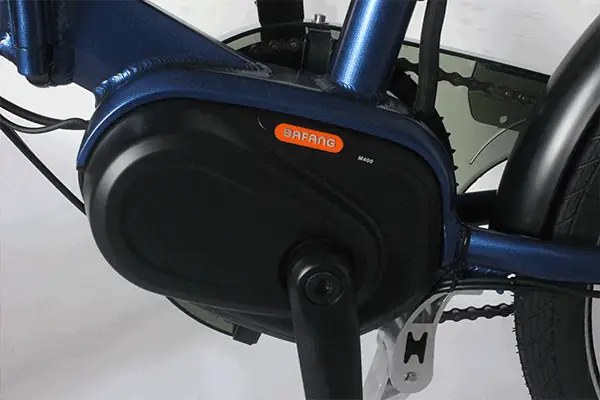
From my perspective as a manufacturer, the data from Belgium is very clear. City and urban models make up the bulk of the market, accounting for over 64% of sales. However, the real growth story is in cargo and utility e-bikes, which are expanding at the fastest rate. This signals a shift towards more practical, versatile applications. On the technology side, pedal-assist systems are the standard, but there is a steady demand for speed pedelecs from serious commuters. The most important trends we are building into our OEM models for this market are in the components. Lithium-ion batteries are non-negotiable, now representing over 87% of the market, with clients requesting capacities up to 1400Wh to support long ranges and rental models. Mid-drive motors are also seeing strong growth because they offer better balance and climbing performance, which appeals to premium buyers. Finally, the rise of belt drive systems is a game-changer, especially for fleet operators who value their durability and low maintenance.
Key Technology Trends
| Component | Dominant Spec | Growth Trend | Why It Matters |
|---|---|---|---|
| Battery | Lithium-Ion (87.35%) | High-capacity (up to 1400Wh) | Longer range for commuting and delivery. |
| Motor | Mid-Drive System | 4.13% CAGR | Better balance, torque, and efficiency. |
| Power | 351-500 Watts | 4.16% CAGR | Balances performance for hills and cargo. |
| Drivetrain | Belt Drive System | 3.99% CAGR | Low maintenance, clean, and durable for fleets. |
How is the Rise of B2B and Delivery Services Shaping the Market?
The consumer market is strong, but are you overlooking the fastest-growing segment? B2B and commercial delivery are transforming the Belgian e-bike landscape, creating demand for specialized, high-performance models.
Commercial delivery is the fastest-growing application (4.03% CAGR) in Belgium.3 Businesses are adopting e-cargo bikes for last-mile logistics because they are cheaper to operate than vans. This B2B shift is driving demand for durable, high-capacity cargo models.
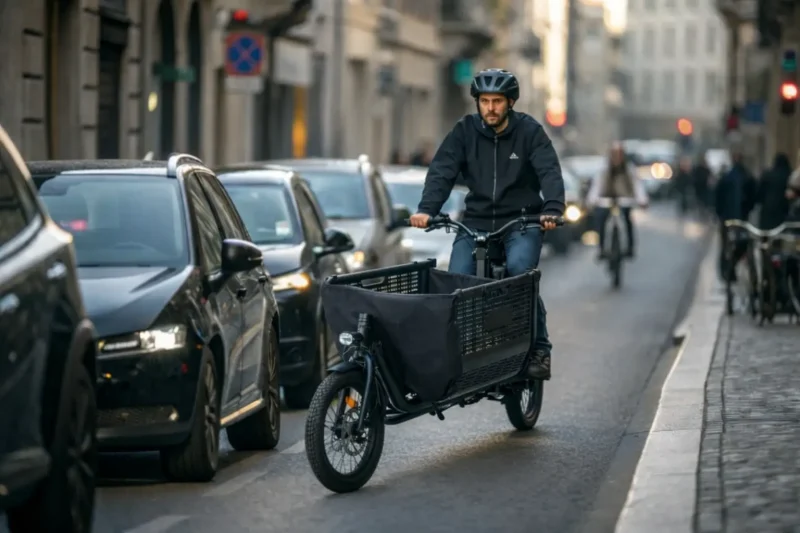
We are seeing a major transformation in our order books for the Belgian market. While individual sales are steady, the explosive growth is coming from the B2B sector. Last-mile delivery companies and local businesses are rapidly replacing traditional vans with e-cargo bikes. The reason is simple economics: e-bikes have lower operational costs, are not affected by rising fuel prices, and can navigate congested city centers more efficiently. This shift has a direct impact on the types of products we are asked to design and manufacture. Demand is high for robust cargo e-bikes with customizable front and rear carriers, powerful motors (in the 351-500W range), and extremely durable components like belt drives and hydraulic disc brakes. This B2B focus is pushing the entire market towards more premium, specialized products and, as a result, increasing the average selling price. For an OEM like us, this is a fantastic opportunity to build high-value, long-term partnerships with fleet operators and logistics companies.
How Can New Brands Compete and Succeed in Belgium?
Entering a competitive market feels daunting. Established local and international brands seem to have it all locked down. But there are clear pathways to success if you know where to look.
Success in Belgium hinges on targeting the right price point and channel. The mid-range ($1,500-$2,499) is the largest segment, but premium is growing fastest. While offline retail dominates, a strong online presence and direct-to-consumer models are gaining ground quickly.
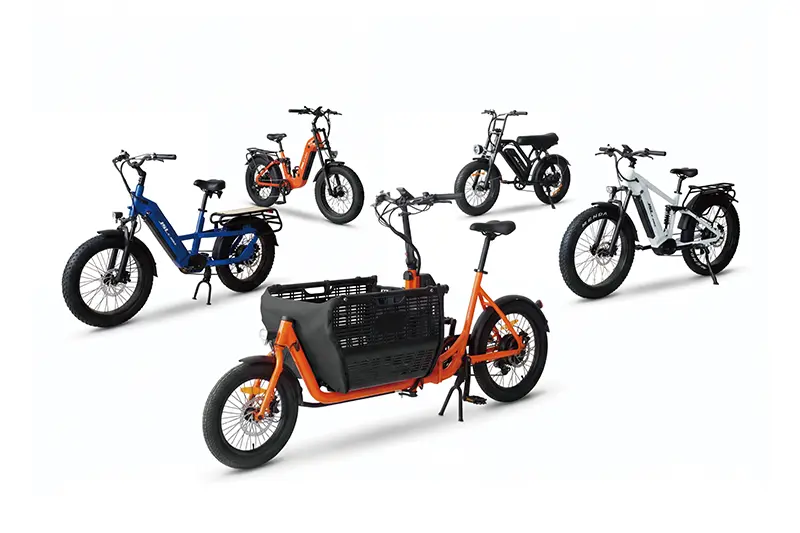
Navigating the competitive landscape is key. The Belgian market is a mix of innovative local brands like Cowboy4 and established international giants like Riese & Müller5. So, where is the opening for a new brand? First, focus on the right price segment. The middle market ($1,500-$2,499) is where the volume is, but the premium segment ($2,500-$3,499) is growing fastest, driven by corporate leasing and B2B sales. This is where we focus our custom engineering. Second, get your sales channel strategy right. Brick-and-mortar stores still account for over 72% of sales, so partnering with local dealers is essential. However, online sales are growing at over 4% annually, so a strong digital presence or a direct-to-consumer (DTC)6 model can be a powerful entry strategy. To truly stand out, differentiation is critical. We help our partners compete by integrating high-value features: large-capacity batteries, powerful mid-drive motors, smart IoT systems for anti-theft and fleet management, and by ensuring a reliable supply chain for parts and service.
Conclusion
Belgium's e-bike market offers stable growth, driven by strong policies and a shift to premium B2B use. Success requires focusing on quality tech, cargo models, and smart channel strategies.
"Belgium E-bike Market Size & Share Outlook to 2031", https://www.mordorintelligence.com/industry-reports/belgium-e-bike-market. This source provides projections for the Belgian e-bike market's growth from 2025 to 2031. Evidence role: statistic; source type: research. Supports: The Belgian e-bike market is projected to grow significantly between 2025 and 2031.. Scope note: The projection may depend on specific market conditions that could change. ↩
"What exactly does pedal assist do? : r/ebikes - Reddit", https://www.reddit.com/r/ebikes/comments/1czogkz/what_exactly_does_pedal_assist_do/. Pedal-assist systems are a common feature in e-bikes, providing motorized assistance to riders while they pedal, which enhances efficiency and reduces physical effort. Evidence role: definition; source type: encyclopedia. Supports: Belgian consumers prefer city/urban models and pedal-assist systems.. ↩
"Cargo e-bike Market Size, Share | Industry Report [2026-2034]", https://www.fortunebusinessinsights.com/electric-cargo-bike-market-105925. This source provides growth rate data for the commercial delivery segment of the Belgian e-bike market. Evidence role: statistic; source type: research. Supports: Commercial delivery is the fastest-growing segment in the Belgian e-bike market.. Scope note: The growth rate may depend on specific economic and regulatory conditions. ↩
"Cowboy - The Ultimate Connected E-Bikes", https://cowboy.com/?srsltid=AfmBOor5idZH1LeFwa9fI8BBHRK7wewCwEa8jq-Y1EwIC1UEhXj6MTP7. Cowboy is a Belgian e-bike company known for its innovative urban e-bike designs, which have gained popularity in the European market. Evidence role: general_support; source type: encyclopedia. Supports: The Belgian market is a mix of innovative local brands like Cowboy and established international giants like Riese & Müller.. ↩
"Riese und Müller - Wikipedia", https://en.wikipedia.org/wiki/Riese_und_M%C3%BCller. Riese & Müller is a well-known international brand specializing in premium e-bikes, recognized for its innovative designs and high-quality components. Evidence role: general_support; source type: encyclopedia. Supports: Riese & Müller is an established international brand in the Belgian e-bike market.. ↩
"Belgium E-bike Market Size & Share Outlook to 2031", https://www.mordorintelligence.com/industry-reports/belgium-e-bike-market. Direct-to-consumer (DTC) models are increasingly significant in the Belgian e-bike market, as evidenced by their annual growth rate of over 4%, highlighting the shift towards online sales channels. Evidence role: statistic; source type: research. Supports: Success in Belgium hinges on targeting the right price point and channel. The mid-range ($1,500-$2,499) is the largest segment, but premium is growing fastest. While offline retail dominates, a strong online presence and direct-to-consumer models are gaining ground quickly.. Scope note: The growth rate is specific to the Belgian e-bike market and may not generalize to other regions or industries. ↩