Thinking about expanding your e-bike business into Europe? The Polish market looks promising but can feel complex. Entering without a clear plan is risky and could mean missing out.
Yes, Poland is a rapidly growing e-bike market. It is driven by government subsidies, urban mobility needs, and a strong local manufacturing base. The market is projected to grow significantly, making it a prime target for OEM/ODM partners looking for new opportunities in Europe.
As an e-bike manufacturer with over 20 years of experience, I've seen markets evolve. The Polish market shows all the signs of a major growth phase. To really understand the opportunity, we need to look closer at what's driving this change. Let's break down the key factors so you can see if this market is the right fit for your brand.
How Fast is the Polish E-bike Market Really Growing?
You see growth figures everywhere, but what's really behind Poland's e-bike boom? Relying on surface-level numbers can lead to poor investment decisions. You need to know the 'why'.
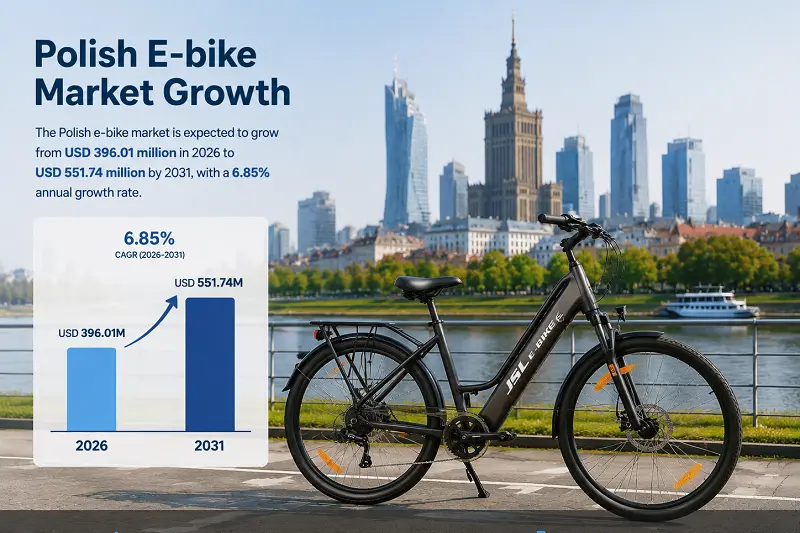
The Polish e-bike market is expected to grow from USD 396.01 million in 2026 to USD 551.74 million by 20311, with a 6.85% annual growth rate. This growth is pushed by government subsidies, policies to reduce city traffic, and increasing local battery production capabilities.
This growth isn't happening by accident. The government is actively pushing e-bike adoption. For example, the "Mój rower elektryczny" (My electric bicycle) program offers subsidies covering up to 50% of an e-bike's purchase price. For businesses using cargo e-bikes, the subsidy can be as high as 9,000 PLN. There are also tax benefits for companies that offer bike leasing to their employees, which is a big driver for B2B demand. These policies clearly show a focus on supporting commercial delivery, electric cargo solutions, and urban commuting. For us as manufacturers, this means there's a clear, government-backed demand for specific types of e-bikes. This is a stable foundation for any brand looking to enter the market.
| Market Metric | 2026 (Estimate) | 2031 (Estimate) | CAGR (2026-2031) |
|---|---|---|---|
| Market Size | $396.01 Million | $551.74 Million | 6.85% |
What Kind of E-Bikes are Polish Consumers Actually Buying?
You have a great e-bike product line, but will it sell in Poland? Guessing consumer preferences is a recipe for failure. Your mountain e-bikes might sit on the shelf while city models fly off.
City and urban models are the most popular, making up nearly half the market. However, cargo and utility e-bikes are the fastest-growing segment. Consumers and businesses are increasingly focused on durability, cargo capacity, and the total cost of ownership, especially for delivery fleets.
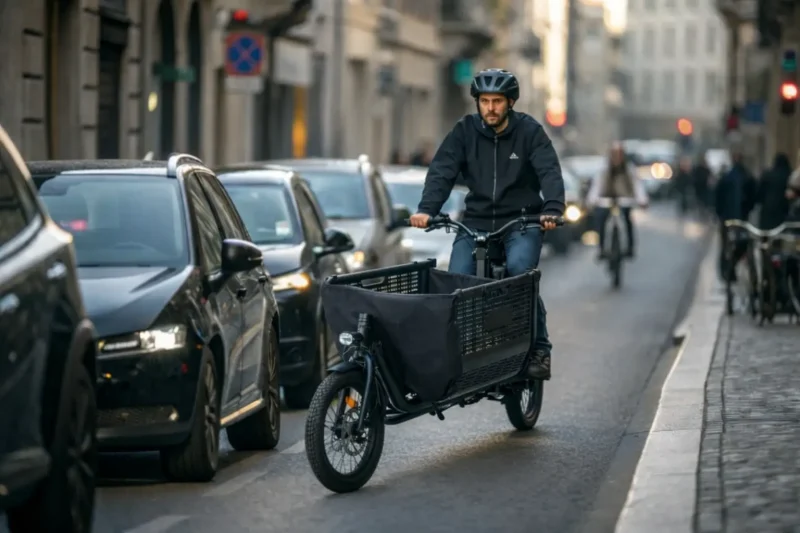
When we dig into the numbers, we see that city/urban models will account for 48.73% of the market in 20252. This makes sense for a country focused on reducing traffic in its cities. But the real story for future growth is in cargo bikes, which are projected to grow at a massive 16.92% annually3. This is driven by the "last-mile" delivery boom. Pedal-assist e-bikes are still the standard, holding over 62% of the market4. However, faster speed pedelecs are gaining traction with a 14.35% growth rate5, appealing to commuters who need to travel longer distances. More importantly, the conversation is shifting. Customers aren't just looking at the price tag. They are asking about durability, maintenance costs, and how much a bike can carry. This is especially true for our B2B clients, who need reliable workhorse vehicles for their fleets.
| E-Bike Category | Market Share (2025) | Key Trend |
|---|---|---|
| City/Urban | 48.73% | Dominant segment for commuting. |
| Cargo/Utility | Fastest Growing | 16.92% CAGR, driven by logistics. |
| Pedal-Assist | 62.74% | The standard choice for most users. |
| Speed Pedelec | Fastest Growing | 14.35% CAGR, for longer commutes. |
What Technical Specifications are Winning in the Polish Market?
Choosing the right components for a new market is a huge challenge. A wrong choice in motor or battery can make your e-bike uncompetitive. You need to align with local demand and conditions.
Lithium-ion batteries are dominant, holding over 81% of the market. Mid-drive motors are the fastest-growing type due to better performance on varied terrain. Belt drives are also gaining popularity for their low maintenance, which is a big plus for Polish winters.
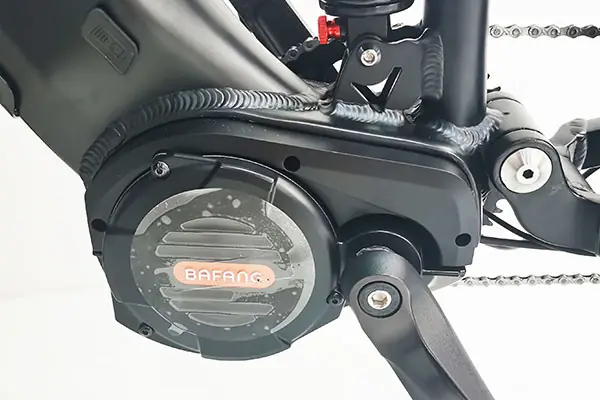
From a manufacturing standpoint, getting the tech right is everything. In Poland, lithium-ion batteries are the clear winner, with an 81.65% market share and a projected 12.88% annual growth rate. The development of local battery factories, like the one from ElevenEs, makes the supply chain more stable and competitive. When it comes to motors, mid-drive systems are seeing the fastest growth at 13.54%. Customers prefer them for their balanced feel and superior climbing ability, which is important for cities that aren't completely flat. We are also seeing a surprising trend in drivetrains. Belt drives are growing at over 15% annually. They require less maintenance than chains and hold up better in wet and snowy conditions, which is a practical benefit in Poland. Finally, the 351-500W motor category is growing fastest6, as it provides the power needed for commercial delivery and navigating tougher urban landscapes.
| Component | Market Trend | Reason for Growth |
|---|---|---|
| Battery Type | Lithium-Ion (12.88% CAGR) | High energy density; local production. |
| Motor Type | Mid-Drive (13.54% CAGR) | Better balance and climbing performance. |
| Drivetrain | Belt Drive (15.66% CAGR) | Low maintenance, good for winter. |
| Motor Power | 351-500W (15.08% CAGR) | Ideal for cargo and varied terrain. |
What are the Biggest Hurdles to Overcome in Poland's E-bike Market?
The Polish market looks great, but what are the hidden risks? Ignoring challenges like infrastructure issues or high taxes can derail your entry strategy and cost you money.
Major challenges include different charging plug standards, which complicates infrastructure. High VAT and tighter credit can limit sales to the mass market. Also, a shortage of skilled e-bike technicians in rural areas can impact after-sales service and broader market acceptance.

No market is without its challenges. In Poland, one of the first things we noticed is the lack of a single standard for charging plugs. This makes building public charging infrastructure more expensive and confusing for consumers. Another hurdle is the country's high VAT rate and tightening access to retail credit, which can make it harder for average consumers to afford an e-bike. This is why the mid-range market ($1500-$2499) is dominant, but it also slows down overall adoption. We also have to think about service. There's a shortage of trained e-bike mechanics, especially outside of the major cities. This can make customers hesitant to buy if they worry about repairs. On the competition side, you have strong local brands like Kross and Romet competing with international giants like Trek and Giant. To succeed, a brand must offer high-quality products and excellent, localized service to build trust.
Conclusion
Poland's e-bike market is growing steadily and moving upscale. Success depends on understanding policy drivers, urban and commercial demand, and the focus on durability, performance, and total ownership cost.
"Poland Travel and Tourism bicycle and equipment market growth", https://www.trade.gov/market-intelligence/poland-travel-and-tourism-bicycle-and-equipment-market-growth. This source provides the projected growth figures for the Polish e-bike market, including the estimated market size and compound annual growth rate (CAGR) for the period 2026-2031. Evidence role: statistic; source type: research. Supports: The Polish e-bike market is expected to grow significantly between 2026 and 2031.. Scope note: The projection is based on market trends and assumptions, which may change over time. ↩
"E-Bike Poland Market Trends 2025 - Accio", https://www.accio.com/business/ebike-poland. This source provides market share projections for city/urban e-bike models in Poland for the year 2025. Evidence role: statistic; source type: research. Supports: City/urban e-bike models are projected to dominate the Polish market with a 48.73% share in 2025.. Scope note: The projection is based on current trends and may not account for unforeseen market changes. ↩
"Poland Travel and Tourism bicycle and equipment market growth", https://www.trade.gov/market-intelligence/poland-travel-and-tourism-bicycle-and-equipment-market-growth. This source confirms the projected annual growth rate of 16.92% for cargo e-bikes in Poland, highlighting their role in the logistics sector. Evidence role: statistic; source type: research. Supports: Cargo e-bikes are the fastest-growing segment in Poland, with a projected annual growth rate of 16.92%.. Scope note: The growth rate is a projection and may vary based on external factors like economic conditions. ↩
"Poland Travel and Tourism bicycle and equipment market growth", https://www.trade.gov/market-intelligence/poland-travel-and-tourism-bicycle-and-equipment-market-growth. This source provides data on the market share of pedal-assist e-bikes in Poland, confirming their dominance in the market. Evidence role: statistic; source type: research. Supports: Pedal-assist e-bikes dominate the Polish market with over 62% market share.. Scope note: The data reflects current market conditions and may not account for future shifts in consumer preferences. ↩
"Poland E-Bike Market Size & Share Outlook to 2031", https://www.mordorintelligence.com/industry-reports/poland-e-bike-market. This source confirms the 14.35% annual growth rate for speed pedelecs in Poland, indicating their increasing popularity among commuters. Evidence role: statistic; source type: research. Supports: Speed pedelecs are growing in popularity in Poland, with a 14.35% annual growth rate.. Scope note: The growth rate is a projection and may not fully capture future market dynamics. ↩
"Poland E-Bike Market Size & Share Outlook to 2031", https://www.mordorintelligence.com/industry-reports/poland-e-bike-market. This source confirms the rapid growth of the 351-500W motor category in the Polish e-bike market, highlighting its suitability for cargo and urban use. Evidence role: statistic; source type: research. Supports: The 351-500W motor category is the fastest-growing in the Polish e-bike market.. Scope note: The growth rate is a projection and may not fully account for future market dynamics. ↩