Are you worried about project delays and inconsistent quality for your e-bike brand? An outsourced frame, the bike's very foundation, can introduce risks you simply can't control.
The real value of an in-house frame factory1 is not just adding another production step. It means we control the entire process of frame development, process management, quality stability, and delivery schedules2. This gives our partners a significant advantage in the market.
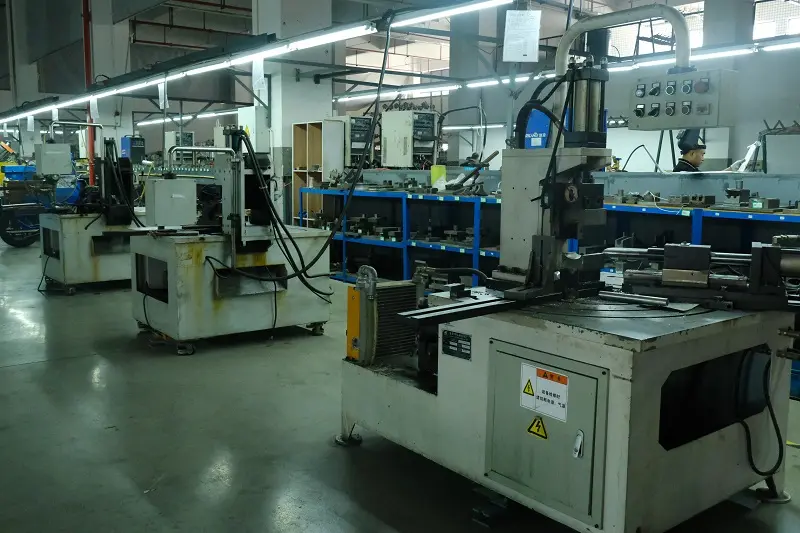
Many people think that a manufacturer with its own frame factory is just a way to cut costs. While there can be cost benefits, the real advantages are much deeper and more strategic. It's about having direct control over the single most important component of an electric bike. This control transforms the entire product development and supply chain experience for our clients. Let's explore what this really means for your business and why it's a critical factor when choosing an OEM/ODM partner.
How does an in-house frame factory speed up your project development?
Feeling frustrated by the slow pace of your e-bike development projects? Communication delays with third-party frame suppliers can bring your entire timeline to a halt, costing you market opportunities.
With an in-house frame factory, we accelerate the entire process. Since the frame is the core platform of the e-bike, our design, prototyping, tooling, and trial assembly3 teams work together seamlessly. This internal collaboration eliminates delays and speeds up your project significantly.
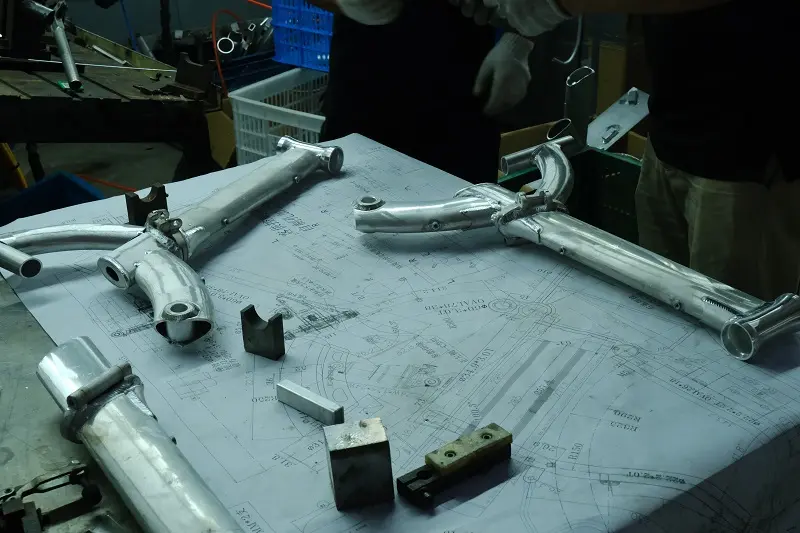
The frame isn't just another component; it's the chassis that everything else is built upon. When you rely on an external supplier for this, every small change becomes a long process. A design adjustment requires back-and-forth communication. Getting a new prototype can take weeks. If there's an issue during trial assembly, you start the communication loop all over again. We've seen this happen countless times in the industry.
By having our own frame factory, we turn this disconnected process into a fluid, internal workflow.
The Internal Feedback Loop
| Stage | Without In-House Factory | With In-House Factory |
|---|---|---|
| Structural Adjustment | Formal requests, potential misunderstandings, slow response. | Immediate discussion between engineering and production teams. |
| Prototyping & Tooling | Wait for external supplier's schedule and capacity. | Prioritized internally, enabling rapid iteration and testing. |
| Trial Assembly | Discover fitment issues, send feedback, wait for a fix. | Our assembly and frame teams solve problems on the spot. |
This integration means we can move from concept to a production-ready sample much faster. It allows for more experimentation and refinement, ensuring the final product isn't just fast to market, but also better engineered.
Can owning the frame factory really improve e-bike quality control?
Are you tired of discovering critical flaws only during final assembly? Many quality issues are rooted in the frame, but they often go unnoticed until it's too late and expensive.
Yes, it absolutely improves quality by moving control to the very beginning of the process. Instead of discovering issues after the bike is built, we solve them at the source—during welding, alignment, and finishing. This proactive approach prevents costly rework and ensures consistency.
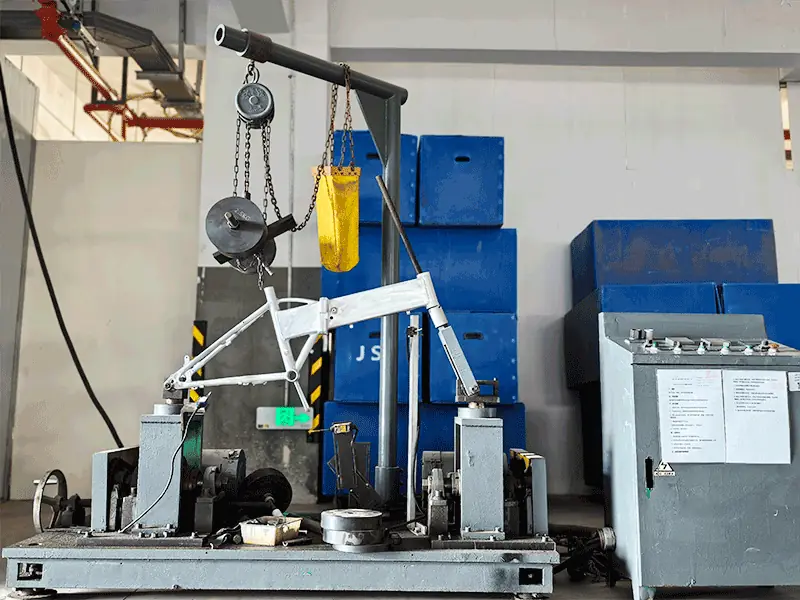
I remember a client who came to us after working with another supplier. Their biggest complaint was inconsistent battery fitment. On some bikes, the battery pack rattled; on others, it was too tight to remove. The problem wasn't the battery. It was the frame's battery compartment, where tolerances varied by millimeters from one frame to the next. The supplier had to rework hundreds of assembled bikes.
This is a classic example of a problem that an in-house frame factory solves.
Catching Problems at the Source
We embed quality control directly into the frame production line.
- Welding Consistency: We ensure every weld is strong and uniform, which affects the frame's overall durability and safety. Our welders are our employees, trained to our standards.
- Frame Alignment: After welding, every frame goes through a precise alignment check. This guarantees that the wheels are straight, the drivetrain is aligned, and the bike handles correctly. A misaligned frame can't be fixed in final assembly.
- Tolerance Control: We use precision jigs and fixtures to control all critical dimensions, especially for battery mounts, motor brackets, and head tubes. This ensures that all other components fit perfectly every single time.
By controlling the frame, we control the foundation of the e-bike's quality. It's the difference between building quality in and trying to inspect problems out.
What level of customization is possible with in-house frame manufacturing?
Do you feel your "custom" e-bike is just a generic model with a different logo? Many suppliers offer customization that is only skin-deep, limiting your ability to truly stand out.
With our own frame factory, we offer deep, structural customization. We can go beyond just changing colors and components. We have the capability to develop unique frame geometries, integrated cargo solutions, and innovative battery placements, giving you a truly differentiated product.
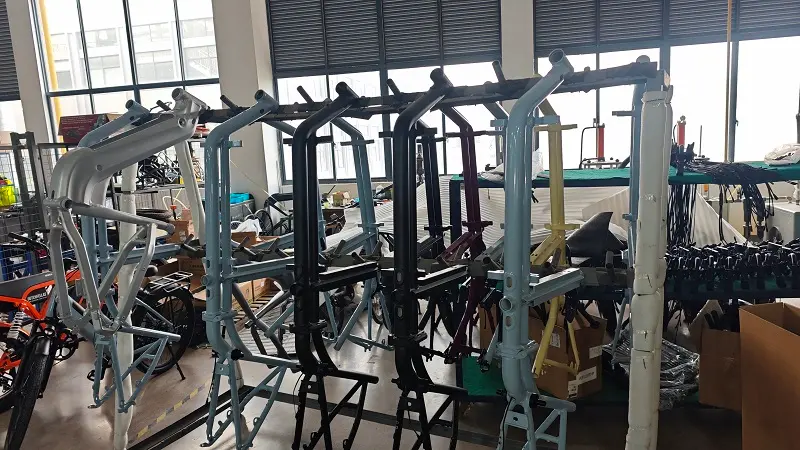
True market differentiation comes from solving a specific user need better than anyone else. This often requires changes to the bike's very structure. A supplier without its own frame factory simply cannot offer this level of partnership. Their "customization" is limited to swapping out parts from a catalog.
Our in-house capabilities unlock a new level of product development.
Levels of E-Bike Customization
| Level | Description | In-House Factory Required? |
|---|---|---|
| Level 1: Cosmetic | Changing colors, applying new logos and graphics. | No |
| Level 2: Component | Swapping brakes, motors, displays, or tires. | No |
| Level 3: Structural | Modifying frame geometry for a better fit or ride feel. | Yes |
| Level 4: Functional | Designing custom mounts for cargo racks or creating a unique battery integration. | Yes |
| Level 5: Platform | Developing a completely new frame platform for a specific use case, like last-mile delivery. | Yes |
For example, a client wanted to build a delivery e-bike with a massive front cargo capacity. This required a completely new frame with a reinforced head tube and a lower center of gravity. We designed, prototyped, and tested this new frame entirely in-house. This is the kind of partnership that builds category-leading products.
Does an in-house frame factory guarantee better delivery times?
Worried about your supplier missing delivery dates because their frame partner is backed up? Outsourcing long-lead-time parts like frames creates supply chain risks that can derail your entire business schedule.
It gives us direct control over the most critical part of the production schedule. While no factory is immune to all delays, managing frame production internally means we control the timeline. This drastically reduces the risk of project delays caused by external supplier issues.
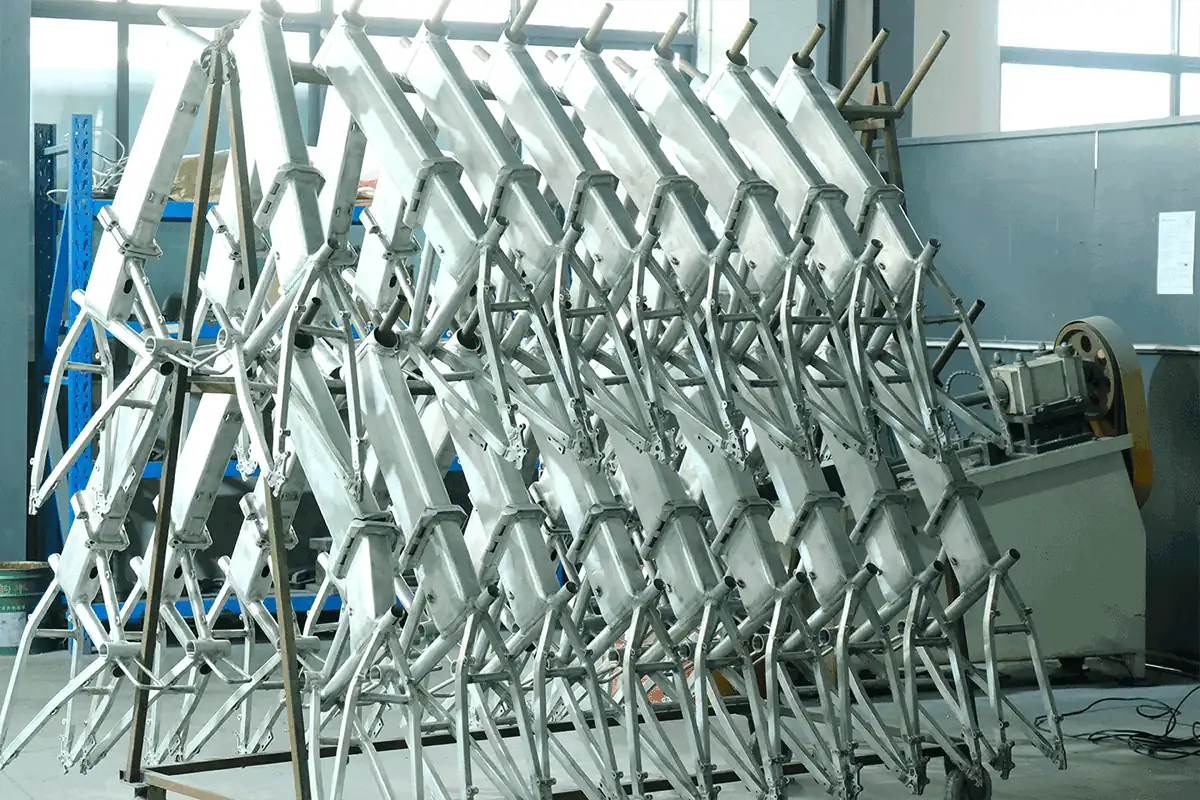
The e-bike frame is one of the longest lead-time items in the entire bill of materials. It requires tooling, raw material sourcing, welding, heat treatment, and painting. If you rely on a third-party factory for this, your project is subject to their production schedule, their capacity, and their other customers. A delay at the frame factory creates a domino effect across your entire production.
By owning this process, we take that uncertainty out of the equation for our partners.
Managing the Core Timeline
Here’s how we mitigate risk by controlling frame production:
- Priority Scheduling: Our clients' projects are our priority. We don't have to compete for production slots with a frame supplier's other customers. We can align our frame production directly with our final assembly schedule.
- Proactive Capacity Planning: We have full visibility into our production pipeline. We can anticipate bottlenecks and adjust our frame production capacity well in advance to meet demand for upcoming projects.
- Transparent Communication: If a challenge arises, like a raw material delay, we know about it instantly. We can communicate this transparently and work on a solution immediately, rather than hearing about a problem from a third party weeks later.
Controlling the frame schedule means we control the project's heartbeat. This provides a level of supply chain certainty that is simply not possible when the most critical component is outsourced.
Is having an in-house frame factory about lower costs or something more?
Do you assume that a vertically integrated manufacturer is always the cheapest option? While we are competitive, the true financial value is not just a lower price tag but greater long-term stability.
It's about providing predictable costs and long-term value. The real advantage isn't being the cheapest on a single order, but offering cost transparency, flexibility for design changes, and the ability to build a stable, evolving product platform for your brand.
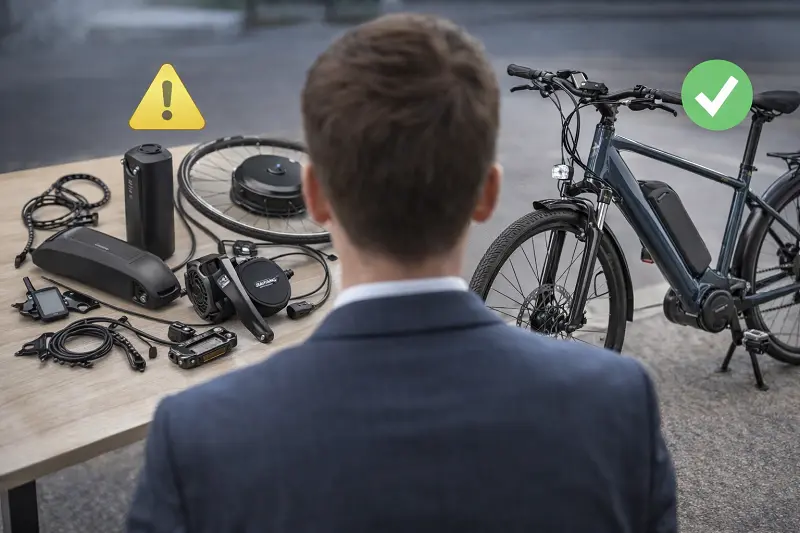
Focusing only on the initial unit price is a short-term view. The true cost of a product includes the cost of delays, the cost of quality problems, and the cost of missed opportunities. An in-house frame factory provides value that goes far beyond the price on an invoice.
Think of it as building a foundation for your brand.
The Strategic Value Beyond Price
- Cost Transparency: When we control production, we know the exact cost of materials and labor. If you want to make a change, we can tell you the precise cost impact. There are no hidden margins from a middleman.
- Flexible Optimization: For long-term projects, we can work with you to optimize the frame for cost and performance. This could involve exploring new materials or refining a welding process over time to improve efficiency. This partnership is impossible with an outsourced frame.
- Building a Product Platform: The most valuable asset for an e-bike brand is a successful product platform that can be updated and expanded over several years. Our in-house frame capability means we can help you build and evolve that platform, ensuring consistency and a clear upgrade path. We're not just completing an order; we're investing in your product's future.
This is the difference between a simple supplier and a true manufacturing partner. We are set up to help our clients build lasting brand value.
Conclusion
For our B2B partners, an in-house frame factory represents more than just production capacity. It stands for stronger development power, superior quality control, and much greater supply chain certainty.
Exploring the advantages of an in-house frame factory can reveal how it enhances control over production and quality. ↩
Timely delivery is essential for business success; discover how in-house production can streamline schedules. ↩
Trial assembly helps identify issues early, ensuring high-quality final products and reducing rework costs. ↩