Are you concerned about e-bike safety and high maintenance costs? Unreliable brakes can lead to accidents and constant repairs, hurting your brand and profits. Hydraulic brakes offer a powerful solution.
Hydraulic e-bike brakes are the ultimate choice because they provide superior stopping power, greater reliability, and lower long-term maintenance costs. They are essential for ensuring rider safety and satisfaction, especially for commercial fleets, heavy-duty cargo e-bikes, and high-performance models in demanding conditions.
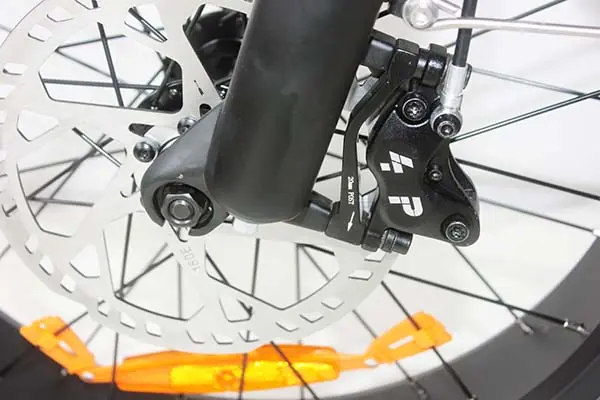
As an e-bike manufacturer for over two decades, I've seen how every component choice impacts the final product. Brakes are not just a part; they are the most critical safety feature. We've learned that investing in the right braking system is non-negotiable, especially for our B2B clients who manage large fleets or sell to discerning customers. The debate between mechanical and hydraulic brakes always comes up, but the data and feedback from the field point to a clear winner. We're going to break down exactly why hydraulic systems are the superior choice for most professional e-bike applications, looking at safety, cost, technology, and real-world use cases. This will help you make the best decision for your own e-bike line.
How Do Hydraulic Brakes Boost Safety and Lower Your Costs?
Worried about your e-bike fleet's safety and growing maintenance budget? Mechanical brake failures can cause accidents and require constant service, eating into your profits. Hydraulic systems offer a solution.
Hydraulic brakes boost safety with stronger, more consistent stopping power, especially under heavy loads or on steep hills. This stability reduces accident risks and lowers costs by decreasing the need for frequent brake pad replacements and adjustments, minimizing vehicle downtime and service expenses.

Based on what we've seen with our OEM partners, the decision to use hydraulic brakes often comes down to two key business metrics: safety and operational cost. These aren't just technical details; they directly affect your bottom line and brand reputation. For any business operating a fleet of e-bikes—whether for delivery, rentals, or employee transport—these factors are paramount. Let's explore exactly how hydraulic systems deliver on both fronts.
Prioritizing Safety for Customer Satisfaction
Safety is the number one priority. A single brake failure can lead to a serious accident, damaging customer trust and creating liability. Hydraulic brakes provide a level of stopping power and control that mechanical brakes simply can't match. This is especially true in challenging situations. For an e-cargo bike carrying a heavy load downhill or a city e-bike needing to make a sudden stop in traffic, the smooth and powerful response of hydraulic brakes is critical. This consistent performance ensures a safer ride, which translates directly into higher customer satisfaction and a stronger brand image. For B2B clients, this means fewer incidents and more reliable service.
Reducing Long-Term Maintenance Costs
While hydraulic brakes may have a slightly higher initial cost, they save you significant money over the long term. Their sealed design protects the internal fluid from dirt, water, and debris. Mechanical brake cables, on the other hand, are exposed and prone to stretching, fraying, and contamination, requiring frequent adjustments and replacement. This difference has a huge impact on fleet operations. Less maintenance means less downtime for each bike, lower labor costs, and a more efficient operation overall. For a large fleet, these savings add up quickly, making hydraulic brakes the more financially sound choice over the life of the e-bike.
| Feature | Hydraulic Brakes | Mechanical Brakes |
|---|---|---|
| Maintenance Frequency | Low (Annual bleed) | High (Monthly adjustment) |
| Downtime | Minimal | Frequent |
| Long-Term Cost | Lower | Higher |
What Makes Hydraulic Brake Technology So Reliable?
Are you confused by the technical details of e-bike brake systems? Not understanding the mechanics makes it hard to choose the right components and can impact your product's quality.
Hydraulic brakes are so reliable because they use a sealed system with incompressible fluid to transfer force. This method delivers instant, powerful, and consistent braking every time. The closed design also protects internal parts from contamination, ensuring long-lasting performance with minimal upkeep.
To truly appreciate why hydraulic brakes are superior, it helps to understand the simple yet brilliant engineering behind them. Unlike mechanical systems that rely on a steel cable being pulled, hydraulic systems use fluid to do the work. This core difference is what gives them their power and reliability. At our factory, we emphasize educating our partners on this technology because it clarifies why it's the right choice for high-quality e-bikes. Let's look at the components and how they work together to deliver such dependable performance.
Key Components of the System
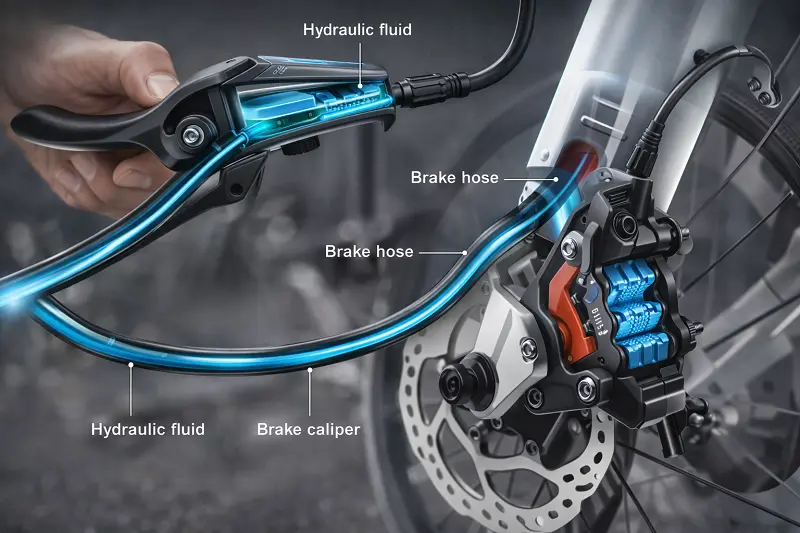
A hydraulic brake system is made up of a few key parts that work in perfect sync. First, you have the brake lever assembly, which contains a master cylinder with a piston. This is connected by a sealed brake line (or hose)1 to the caliper, which is mounted on the bike frame. Inside the caliper2 are one or more pistons that push the brake pads3. Finally, there is the disc rotor4, a metal disc that spins with the wheel. The entire system is filled with a special brake fluid5, which is the medium that transmits the force. Each part is engineered for durability and to work within a closed, protected system.
The Working Principle Explained
The process is based on Pascal's principle of fluid dynamics6. When a rider squeezes the brake lever, it pushes a piston inside the master cylinder. Because the brake fluid is incompressible, this pressure is transferred instantly and evenly through the fluid in the brake line to the caliper. The pressure from the fluid then forces the pistons inside the caliper to move, pushing the brake pads against the spinning disc rotor. The friction created between the pads and the rotor slows the wheel down. Because the force is transmitted by fluid, the braking is incredibly smooth and requires very little hand effort from the rider, even for very hard stops. This efficiency and direct transfer of force are what make the system so powerful and responsive.
Are Hydraulic Brakes Really Better Than Mechanical Brakes?
Are you trying to decide between hydraulic and mechanical brakes for your e-bike line? Making the wrong choice can lead to poor performance, unhappy customers, and a damaged brand reputation.
Yes, for nearly all commercial and high-performance e-bikes, hydraulic brakes are significantly better. They offer unmatched stopping power, superior control, and far greater reliability with less maintenance. Mechanical brakes are only suitable for entry-level bikes where minimizing initial cost is the absolute top priority.
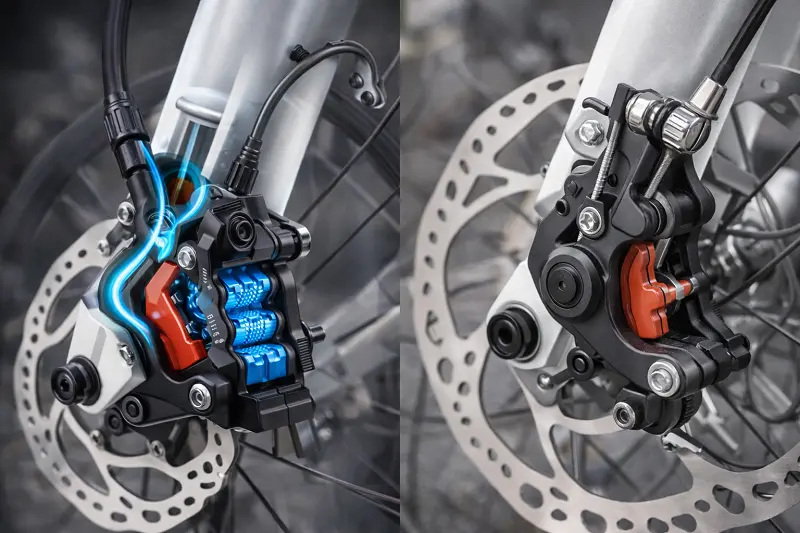
This is one of the most common questions we get from new partners. From a manufacturing perspective, the choice seems like a simple cost calculation. But from a performance and long-term value standpoint, it's much more. We have built thousands of e-bikes with both systems, and the feedback from real-world use is undeniable. Let's put them head-to-head to see where each system shines and why one is almost always the better investment for a serious e-bike brand.
Performance Showdown
When it comes to pure performance, there is no contest. Hydraulic brakes are in a different league. The fluid-based system provides more braking force with less effort at the lever. More importantly, it allows for better "modulation7," which means the rider can precisely control the amount of braking power applied. This prevents wheel lock-up and gives the rider more confidence. Mechanical brakes, which rely on a steel cable, suffer from cable stretch and friction within the housing. This leads to a spongy feel, delayed response, and less overall power. For heavy e-bikes, especially those traveling at higher speeds, this performance gap is a major safety concern.
| Feature | Hydraulic Brakes | Mechanical Brakes |
|---|---|---|
| Braking Power | Strong & Consistent | Weaker & Inconsistent |
| Brake Feel | Smooth & Precise | Spongy & Delayed |
| Best Use Case | High-load, all-terrain, high-speed | Light-duty, flat urban terrain |
| Hand Effort | Low | High |
Longevity and Maintenance
Here again, hydraulic systems prove their worth over time. The sealed design is the key advantage. It keeps water, dirt, and grit out of the system, preventing corrosion and wear on the internal components. This is why hydraulic brakes can go for a year or more without needing service beyond a pad change. Mechanical brakes are an open system. The cable is exposed to the elements, and moisture and dirt inevitably work their way into the cable housing. This causes friction, rust, and degradation of performance. As a result, mechanical brakes require constant adjustment to account for cable stretch and pad wear, and the cables themselves need to be replaced periodically. For a fleet manager or a customer who just wants to ride, the "set it and forget it" nature of hydraulic brakes is a massive benefit.
Which E-Bike Markets Demand Hydraulic Brakes?
Do you wonder if your specific e-bike model really needs the added cost of hydraulic brakes? Equipping the wrong model can mean overspending or, worse, under-delivering on performance.
High-performance and commercial e-bike markets absolutely demand hydraulic brakes. This includes e-mountain bikes used on steep terrain, e-cargo bikes carrying heavy loads, and premium urban e-bikes where safety and a smooth, quiet ride are key selling points for discerning customers.
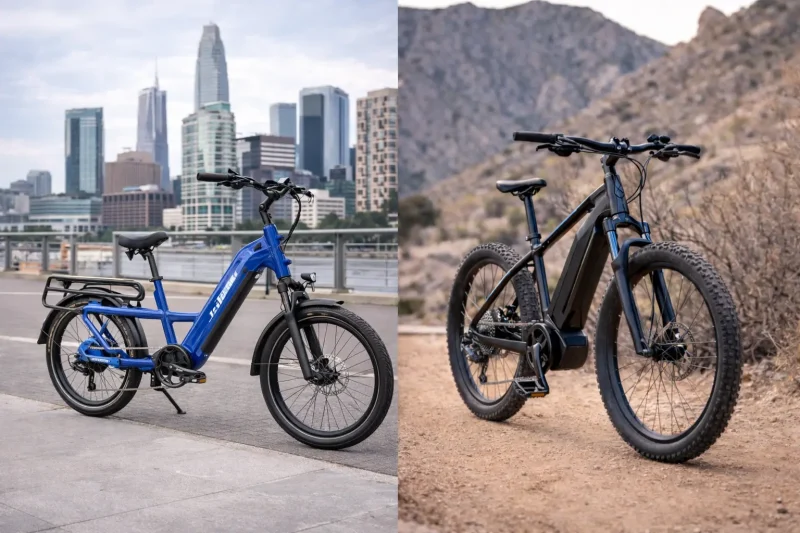
As an OEM/ODM manufacturer, our job is to help clients build the best possible e-bike for their target market. The choice of brakes is not universal; it's strategic. While a basic, low-cost e-bike might get by with mechanical brakes, a number of fast-growing and profitable segments see hydraulic brakes as a non-negotiable feature. Ignoring this can make your product uncompetitive. We guide our partners to match the brake system to the specific demands of the end-user, ensuring the bike not only performs well but also meets customer expectations.
High-Demand Commercial Applications
In the commercial sector, performance is directly tied to profit. For e-cargo and delivery bikes, hydraulic brakes are essential. These bikes operate with heavy loads and make frequent stops, placing huge demands on the braking system. The consistent power of hydraulic brakes ensures the rider can stop safely, even when fully loaded on a downhill slope. For shared and rental e-bike fleets, durability and low maintenance are king. Hydraulic systems reduce the frequency of service calls and cut down on bike downtime, which directly improves operational efficiency and profitability. In these applications, the reliability of hydraulic brakes is not a luxury; it's a core business requirement.
Performance and Premium Markets
For riders who push the limits, brakes are everything. The e-mountain bike (e-MTB) market is a perfect example. When descending steep, technical trails, riders rely on their brakes continuously. Hydraulic disc brakes offer superior heat dissipation and prevent "brake fade"—a dangerous loss of power caused by overheating. This gives riders the control they need to navigate challenging terrain safely. In the premium urban and commuter e-bike market, the customer expects a refined experience. Hydraulic brakes deliver a quiet, smooth, and effortless braking feel that matches the high-end character of the bike. For these buyers, the responsive and reliable performance of hydraulic brakes is a key indicator of quality and a major factor in their purchase decision.
Conclusion
Hydraulic brakes deliver superior safety, reduce long-term operational costs, and provide a premium user experience. They are the clear choice for any serious commercial or high-performance e-bike application.
Discover the importance of the brake line in transmitting force within hydraulic brake systems. ↩
Explore the role of the caliper in hydraulic brakes, essential for applying pressure to the brake pads. ↩
Learn how brake pads interact with the rotor in hydraulic systems to provide effective braking. ↩
Understand the disc rotor's role in hydraulic brakes, crucial for creating friction and stopping the wheel. ↩
Discover the importance of brake fluid in transmitting force and ensuring smooth braking in hydraulic systems. ↩
Understand the science behind hydraulic brakes using Pascal's principle for efficient force transmission. ↩
Learn about modulation in hydraulic brakes, allowing precise control over braking power. ↩