Running a delivery business in the city? Unstable bikes risk your goods and rider safety. The secret to success is a front cargo e-bike designed for heavy loads.
A front cargo box design is critical for safety and efficiency. It ensures proper weight distribution to prevent tipping, uses robust materials for high load capacity, and integrates powerful brakes. This makes deliveries in crowded city streets both safe and reliable.
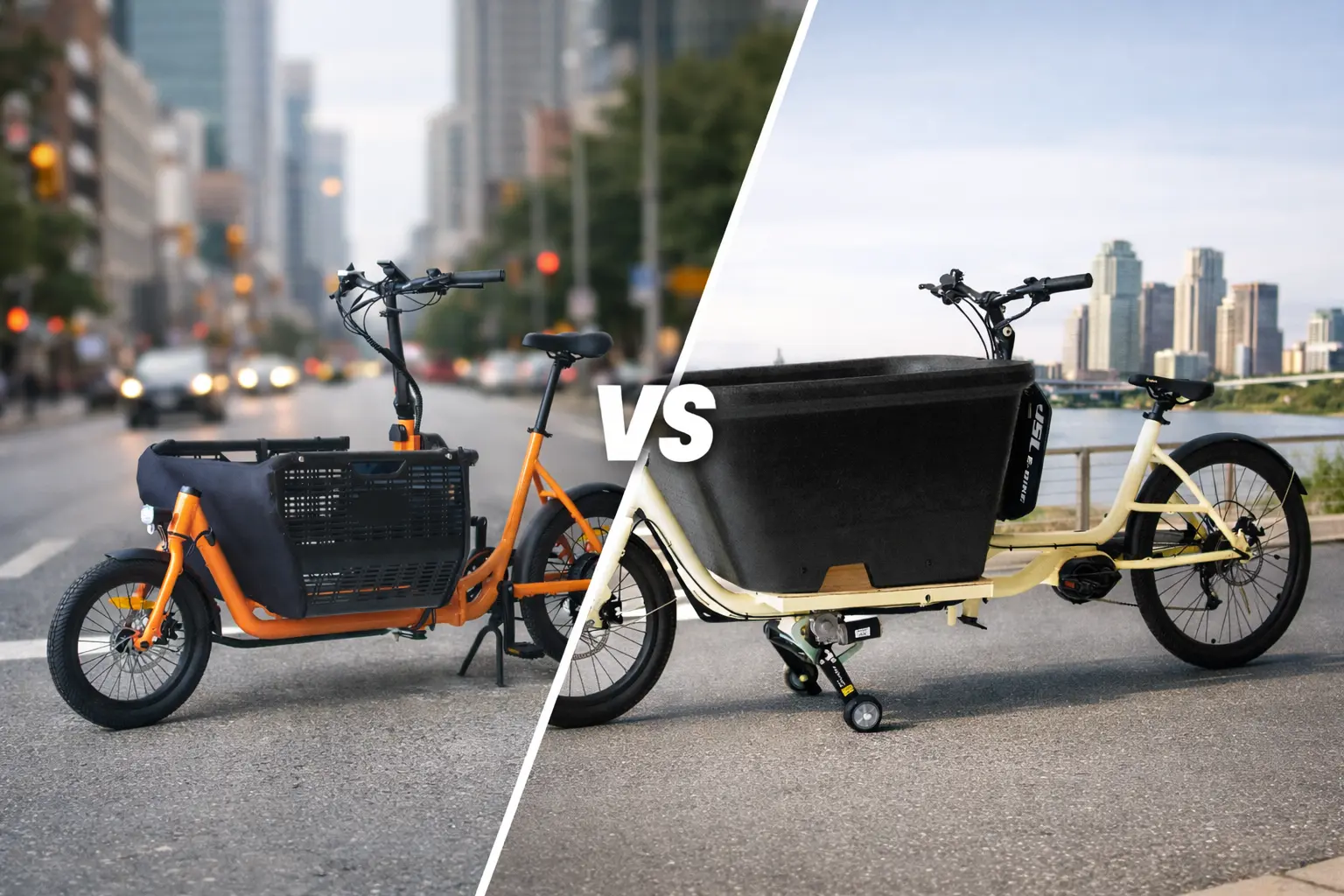
I’ve spent over two decades in the e-bike manufacturing world, and I've seen how a well-engineered cargo e-bike can completely change a business. But what really makes a front-box design safe and reliable? It’s much more than just attaching a box to a bike frame. Let's break down the essential elements that every business owner should understand before they invest in a fleet.
How does frame design ensure the safety of a front-load cargo e-bike?
Worried about your cargo bike tipping over with a full load? A weak or poorly designed frame can lead to serious accidents and damaged products, costing you a lot of money.
A safe frame design focuses on optimal weight distribution to keep the center of gravity low. It must also pass strict cargo-specific tests1, like Europe's EN17860 standard2, ensuring it can handle the stress of heavy, daily use without failing.
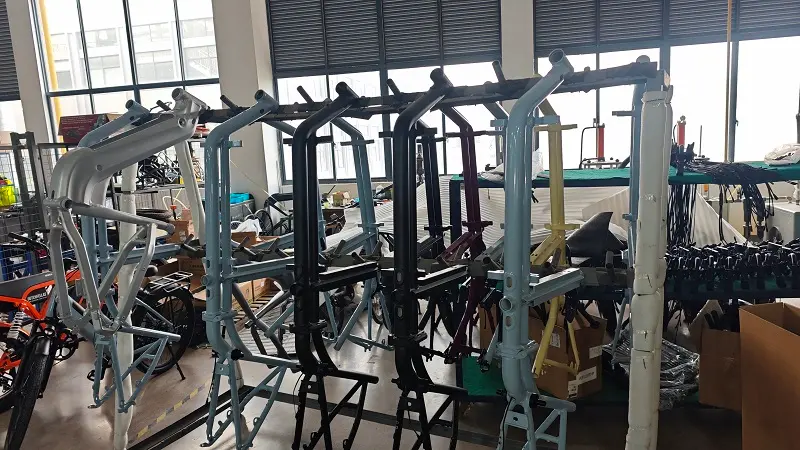
When we talk about cargo e-bikes, safety is not just a feature; it's the foundation of the entire design. A standard e-bike is certified under EN15194, which is fine for personal transport. But a cargo e-bike is a workhorse. It operates under completely different stresses. That’s why the European Union3 created a much tougher standard: EN17860. This certification is a game-changer. For example, it requires the frame to survive 700,000 vibration cycles4 without a single crack. This test simulates years of riding on bumpy city streets with a full load. It's a brutal test, and only the best-engineered frames pass.
Our Journey to a Stable Frame
At our factory, we took this challenge seriously. We studied the market leaders, like Urban Arrow5 and Riese & Müller6, who set the benchmark for safety in Europe. We knew we had to match, or even exceed, their standards. Our engineering team went through dozens of prototypes. We tested different geometries and materials, constantly adjusting the weight distribution. Our goal was to create a frame that felt stable and predictable, even when loaded to its maximum capacity. We didn't want any "top-heavy" feeling. After countless hours of testing and refinement, we finalized our 1.0 and 2.0 frame designs. They are the result of deep engineering work, built to be incredibly strong and perfectly balanced.
The Power of a Good Braking System
A strong frame is only half the story. A bike carrying 100kg of cargo plus a rider needs a braking system that is just as strong. Standard brakes won't do the job. They can overheat and fail under that much load, which is a recipe for disaster. That’s why we only use powerful hydraulic disc brakes7 on our cargo models. They provide consistent, reliable stopping power in all weather conditions, giving the rider full control.
| Feature | Standard E-Bike (EN15194) | Cargo E-Bike (EN17860) | Why It Matters |
|---|---|---|---|
| Frame Test | Basic fatigue tests | 700,000 vibration cycles | Ensures the frame won't break under heavy loads. |
| Braking | Standard brakes sufficient | High-power brakes required | Prevents brake failure when carrying heavy cargo. |
| Stability | Designed for a single rider | Designed for rider + heavy load | Prevents tipping and ensures rider control. |
What makes a front cargo box both strong and practical?
Does your current delivery bike struggle with heavy or bulky items? A weak or poorly constructed cargo box limits your capacity and can break in the middle of a delivery.
A strong and practical cargo box uses durable materials like aluminum to maximize strength while keeping weight down. Key features include a reinforced bottom plate for stability and a design that increases load capacity without compromising the bike's balance.
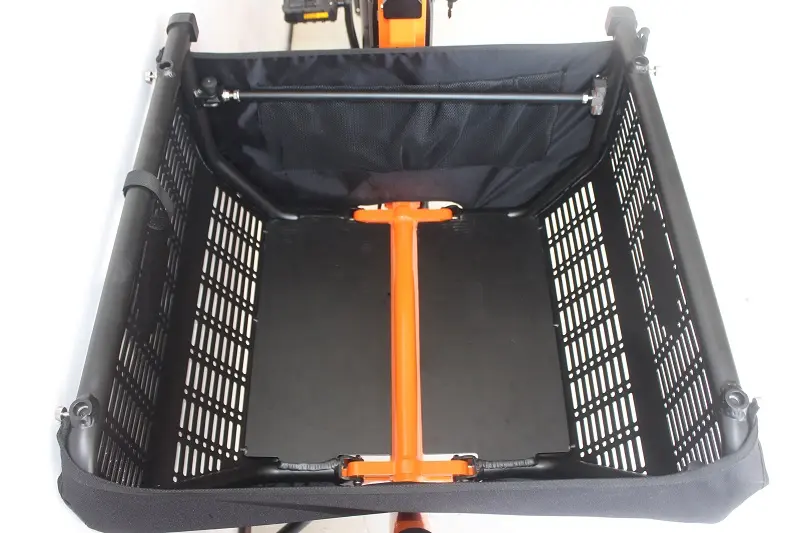
The cargo box itself is where the real work happens. It needs to be tough, spacious, and light. We’ve learned a lot about this over the years. I remember a client telling us their old wooden cargo box cracked after just a few months of use in a rainy climate. That feedback was a turning point for us. We knew we had to build something better, something that could withstand the rigors of daily commercial use in any environment.
The Evolution to Aluminum
We started our journey with a box that had a respectable 50kg load capacity. It worked well, but we knew our clients needed more. We saw businesses trying to deliver heavier goods and knew we could help them. Our team decided to move away from heavier or less durable materials and focus on aluminum. Why aluminum? It has an amazing strength-to-weight ratio8, it's naturally rust-proof, and it can be engineered to be incredibly rigid.
Our latest cargo box is the result of this evolution. We completely redesigned it using high-grade aluminum. The new design doubled the load capacity from 50kg to a massive 100kg. To achieve this, we didn't just use thicker aluminum. We engineered a support structure inside the box and, most importantly, added a solid, thick aluminum plate to the bottom. This plate acts as the backbone of the box. It prevents flexing, distributes the load evenly across the frame, and adds a huge layer of security and durability. Now, our clients can carry almost anything, from stacks of pizzas to heavy toolkits, without ever worrying about the box failing. This upgrade has opened up new possibilities for all kinds of delivery and service businesses.
Why are front-box cargo bikes perfect for city deliveries?
Are crowded city streets and narrow alleys slowing down your deliveries? Delivery vans get stuck in traffic, wasting valuable time and burning expensive fuel every single day.
Front-box cargo bikes are ideal for cities because their design, which started in the Netherlands, is compact and easy to maneuver. They can easily navigate narrow, congested streets where larger vehicles simply cannot go, making them incredibly efficient for urban logistics.
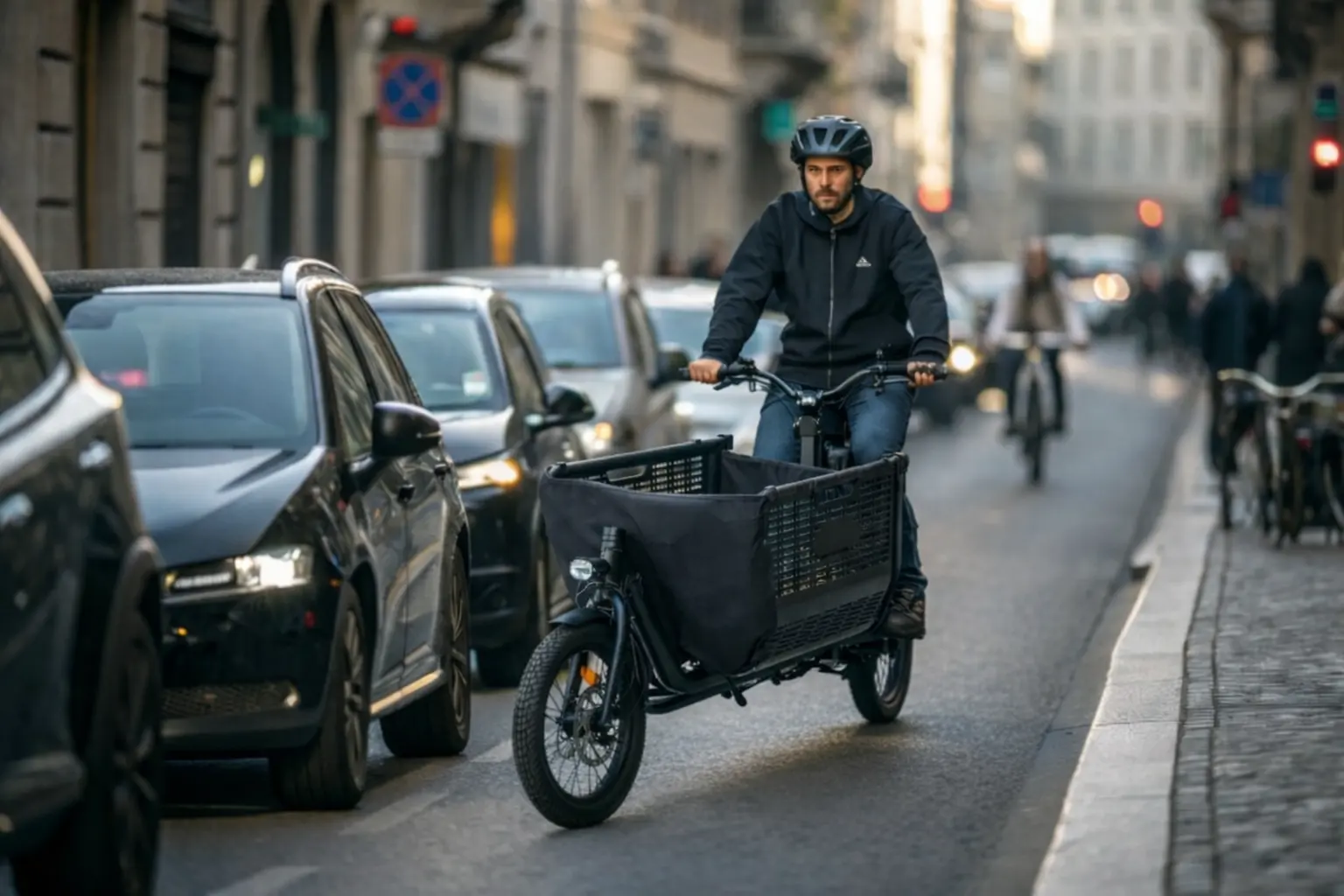
The idea for the front-load cargo bike, or "bakfiets9," came from the Netherlands. The Dutch needed a way to transport goods and children through their narrow, crowded city streets. The design was brilliant in its simplicity: put the cargo area at the front, between the handlebars and the front wheel. This keeps the bike's length short and its handling sharp, making it perfect for tight turns and weaving through traffic. It’s a design born from urban necessity, and it's more relevant today than ever before.
Solving the "Last Mile" Problem
In the world of logistics, the "last mile" of delivery is the most expensive and inefficient part. This is where vans and trucks get stuck. A front-load cargo e-bike is the perfect solution. It can bypass traffic jams, use bike lanes, and even cut through parks or plazas to find the quickest route. This saves time and money. It also means faster deliveries and happier customers. We see our bikes being used for all sorts of urban jobs:
- Food Delivery: The large, flat base of the box keeps pizza boxes and food containers perfectly level.
- Package Couriers: The deep box can hold dozens of small parcels securely.
- Mobile Vending: Businesses are using our bikes to sell coffee, ice cream, or flowers on the go.
- Service Technicians: Plumbers and electricians can carry a full set of tools and parts right to the customer's door.
Another subtle but important benefit of the front-box design is visibility10. The rider can always see their cargo. This makes it easier to keep an eye on valuable goods and helps with maneuvering because the rider can clearly see the front corners of the bike. It’s a small detail, but it makes a big difference in the real world. It’s not just a bike with a box; it’s a purpose-built tool designed for the unique challenges of the modern city.
Conclusion
A well-designed front cargo e-bike is more than a vehicle. It's a safe, stable, and high-capacity tool that can truly elevate your business operations in the city.
Explore the importance of cargo-specific tests in ensuring the durability and safety of e-bike frames. ↩
Learn about the rigorous EN17860 standard that ensures cargo e-bikes can handle heavy loads and daily use without failing. ↩
Understand how the European Union's standards ensure the safety and reliability of cargo e-bikes. ↩
Discover how passing the 700,000 vibration cycle test ensures the durability and reliability of cargo e-bike frames. ↩
Urban Arrow sets the benchmark for cargo e-bike safety in Europe, offering insights into top-tier engineering and design for urban deliveries. ↩
Explore how Riese & Müller sets benchmarks in cargo e-bike safety, offering insights into their innovative designs and engineering excellence. ↩
Understand the importance of hydraulic disc brakes in providing reliable stopping power for heavily loaded cargo e-bikes. ↩
Learn how a good strength-to-weight ratio in materials like aluminum enhances the performance and durability of cargo e-bikes. ↩
Understand the origins and advantages of the bakfiets design for maneuvering through crowded city streets. ↩
Learn how the front-box design improves visibility for riders, enhancing safety and maneuverability. ↩