Are you overlooking a major growth opportunity? While Europe and North America are crowded, the South American e-bike market1 is quietly gaining speed. Let's explore its unique potential.
The South American e-bike market is an early-stage, price-driven opportunity. Its growth is fueled by falling battery costs and a rising need for affordable urban transport. Success here depends on offering value-for-money products, not high-end features. It’s a market about practicality over prestige2.
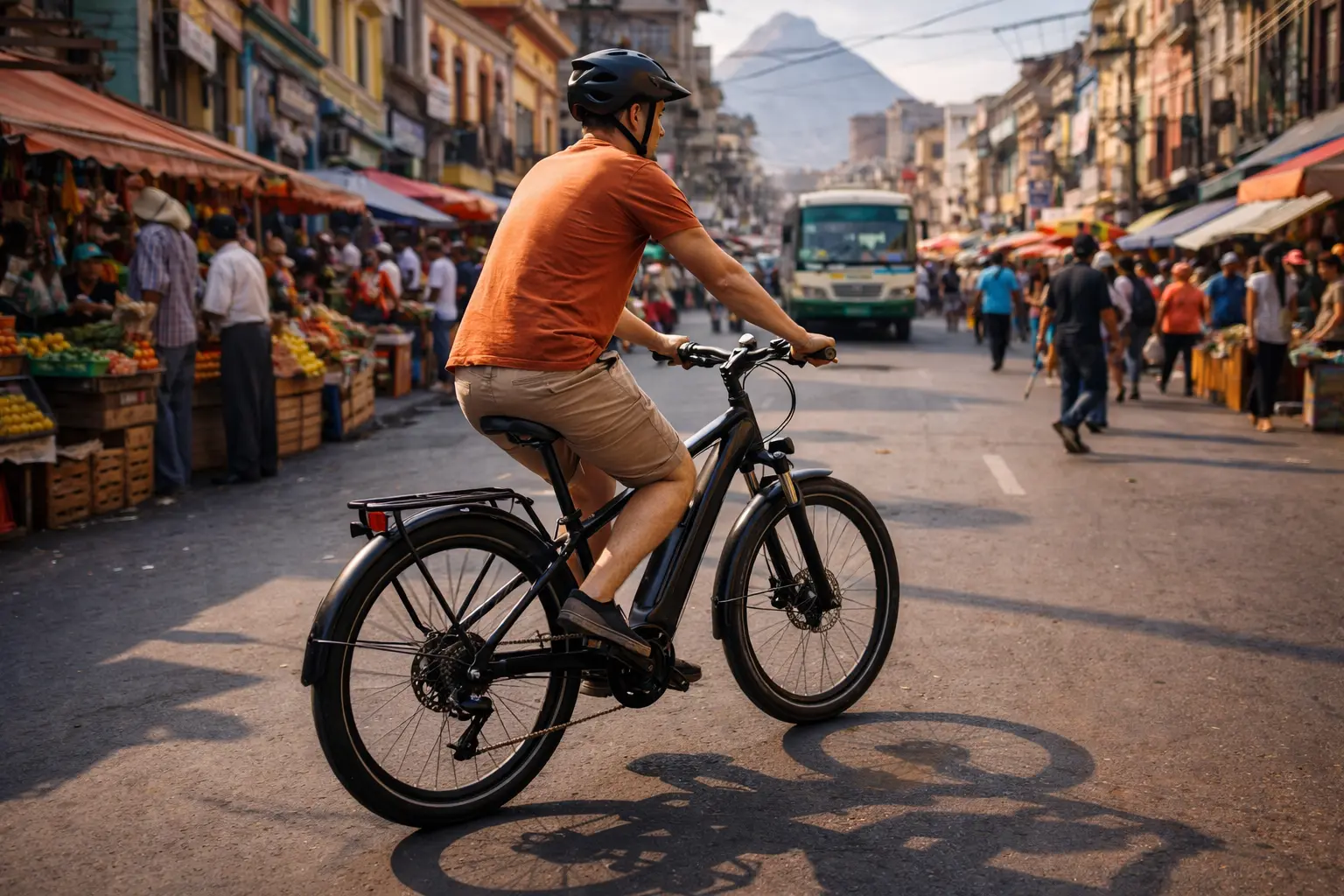
I've been in the e-bike manufacturing business since 1999, and I've seen markets evolve. The patterns in South America are fascinating because they are so different from what we see in Europe. Many brands try to apply the same strategy everywhere, and it often fails. To succeed in South America, you have to understand that you are not just selling a product; you are helping create a new market. Let's break down what that really means for your business and how you can position yourself for success.
What's the Real Engine Behind South America's E-Bike Growth?
You might think e-bike growth is always about green policies or high-tech features. But applying a European mindset to South America can lead to costly mistakes. The customers here have different priorities.
The main driver is simple: cost reduction. As battery prices fall, e-bikes become affordable for more people. This, combined with heavy traffic in cities, creates strong demand for a practical and cheap way to commute. It is about utility, not luxury.
In my experience, a market's core driver tells you everything. In South America, it's not about replacing a car with a fancy e-bike. It's about upgrading from a regular bicycle or finding an alternative to crowded public transport. The entire market is built on this foundation of price and practicality.
The Key Drivers
- Cost is King: The single biggest factor is falling prices. We expect battery costs to drop by up to 50%, and new technologies like sodium-ion batteries could lower them even more. This makes e-bikes a realistic option for the average person.
- Urban Commuting Needs: Cities are congested. People face long, slow commutes. An e-bike is the perfect solution for trips between 5 and 15 kilometers. It's faster than walking and cheaper than a car.
- Bike-Sharing Educates Users: There are over 55 bike-sharing systems in South America, with Brazil leading the way. These systems let people try e-bikes for the first time. After experiencing the benefits, many decide to buy their own.
| Driver | South America | Europe |
|---|---|---|
| Primary Motivation | Price & Affordability | Policy & Environment |
| Main Use Case | Basic Urban Commuting | Commuting & Leisure |
| Customer Journey | Often starts with bike-sharing | Direct purchase, often as a car replacement |
| Government Role | Limited support, basic infrastructure | Strong subsidies & advanced infrastructure |
What Kind of E-Bikes Actually Sell in South America?
You may have a fantastic line of high-performance e-bikes with many features. But trying to sell those premium models in South America will likely lead to low sales. The market just isn't ready.
The winning formula is simple: affordability and reliability. Pedal-assist (PAS) models3 make up about 86% of the market because they are simple and effective. Customers want a basic range of 40–45 km for their daily commute. They want a bike that just works.
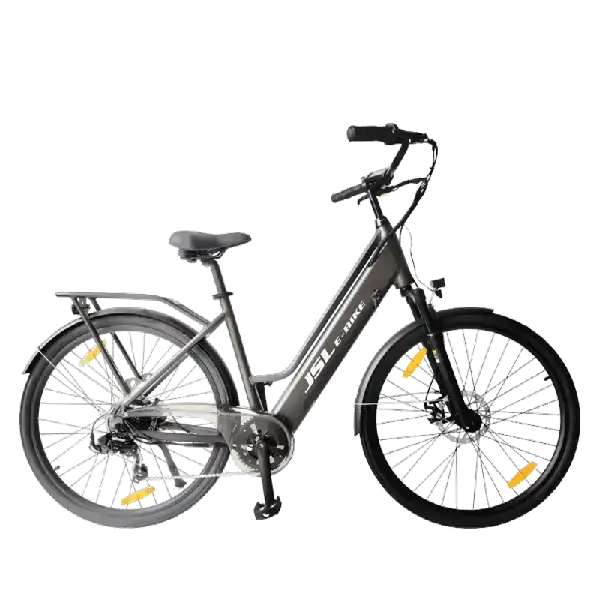
When we design e-bikes for new markets, we always start with the customer's core problem. In South America, the problem is not a lack of high-tech options. The problem is finding a reliable mode of transport that they can afford. So, we focus on building bikes that meet these basic needs perfectly. Forget the bells and whistles; focus on a strong frame, a dependable motor, and a battery that delivers a practical range. That is the key.
The Ideal Product Profile
The market is still in a technology upgrade phase. For example, lithium-ion batteries (around 82% market share) are still replacing older lead-acid technology. This shows that the market is maturing, but it's not yet at the standardized level of Europe. The main application is urban commuting, which accounts for about 83% of use. Niche segments like tourism or cargo delivery are only just beginning to emerge. This means the market is not yet highly segmented.
| Feature | Ideal Specification for South America | Why it Works |
|---|---|---|
| System | Pedal-Assist (PAS) | Familiar, cost-effective, and efficient. |
| Motor | 250W Hub Motor | Provides enough power for city hills without a high cost. |
| Battery | Lithium-Ion, 36V 10Ah | Delivers a practical range of 40-45 km for daily commutes. |
| Key Focus | Reliability & Low Maintenance | Customers need a tool that works every day, not a toy. |
| Price Point | Value-Oriented | The most important factor for the customer's decision. |
How Is South America Different From Europe, and How Should You Adapt?
Your business strategy might work perfectly in Europe. But if you copy and paste that strategy into South America, it will likely fail. The market dynamics and customer mindset are completely different.
South America is an early-stage, price-driven market. This is very different from the mature, policy-driven market in Europe. The key to success here is not brand prestige. It is about wide channel distribution and competitive pricing to reach first-time buyers.
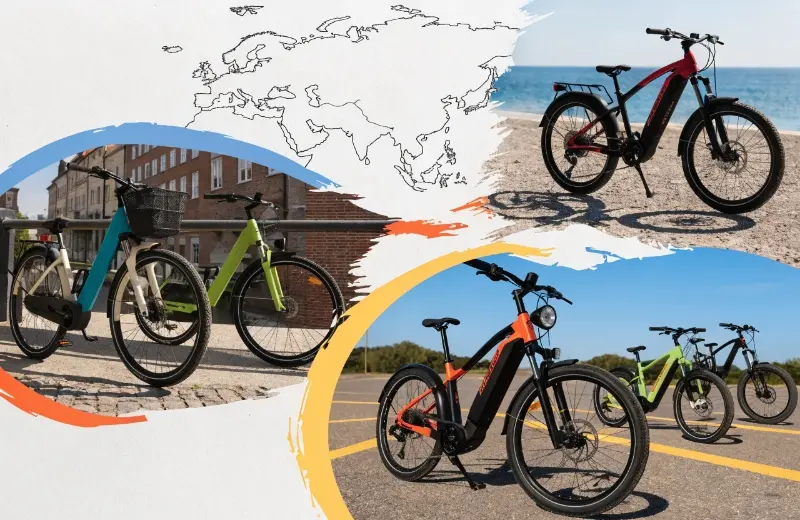
For our OEM partners, we always stress the importance of localization. You cannot treat all markets the same. We help our clients build e-bike lines specifically for their target region. For South America, this means focusing on cost-effective manufacturing, reliable components, and simple designs. The goal is to create a "bestseller" product that hits the perfect balance of price and quality for that market. This is a volume game, not a high-margin one. The competition is a mix of international and local brands, and the winners will be those who understand the local customer and can get their products on the ground efficiently.
A Tale of Two Markets
Let's look at the differences side-by-side. This table shows why a different approach is necessary.
| Dimension | Europe | South America |
|---|---|---|
| Market Stage | Mature | Early Stage |
| Growth Rate | Stable (~3.7%) | Moderate (~4.45%) |
| Core Driver | Policy & B2B Fleets | Price & User Education |
| Product Focus | Standardized, High-Feature | Low-Cost, Practical |
| Customer Type | Strong B2B, Repeat C-End | Primarily C-End (First-Time Buyers) |
| Winning Strategy | OEM for fleets, brand building | Low-price bestsellers, channel distribution |
Understanding these differences is crucial. In Europe, we might focus on building sophisticated fleet solutions for B2B clients. In South America, the strategy is to partner with local distributors and e-commerce sellers to push high volumes of an affordable, entry-level city e-bike.
Conclusion
South America's e-bike market is a price-driven, early-stage opportunity. Success requires affordable, practical products and a strong distribution strategy. Let's build your winning product line for this market together.
Understanding the South American e-bike market can reveal untapped opportunities for growth and expansion in a less saturated region. ↩
Focusing on practicality rather than prestige can lead to better product-market fit and higher adoption rates in cost-sensitive regions. ↩
PAS models offer a cost-effective and efficient solution for urban commuting, aligning with consumer preferences in the region. ↩