Struggling to choose a frame material? The cost is just one piece of the puzzle. The real challenge is finding the material that delivers the best return for your specific project.
The best frame material isn't the most advanced one, but the one that creates the highest commercial return for a specific e-bike category and market. True ROI is a mix of manufacturing cost, product positioning, after-sales costs, and market fit.
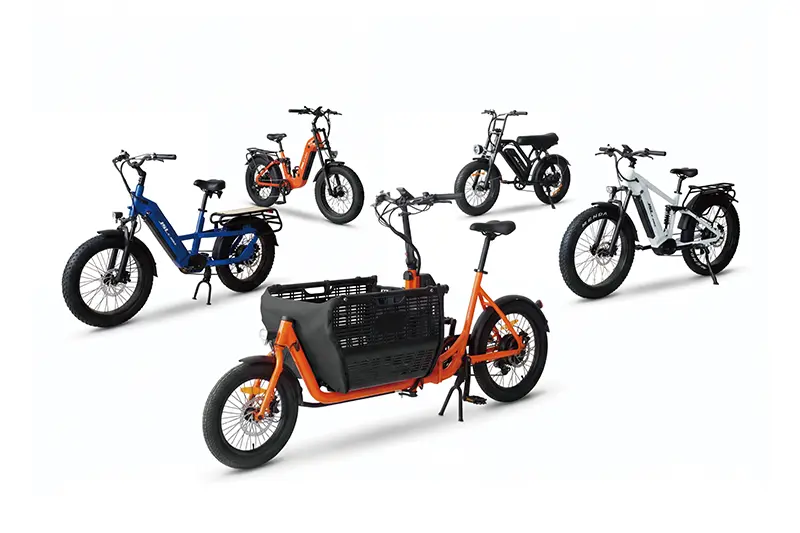
When we talk about the return on investment for an e-bike frame, it's easy to get stuck on the raw material cost. But from our two decades of manufacturing experience, we know that's a mistake. The real ROI is a much bigger picture. It’s about how that material choice affects your entire business model, from the production line to the end customer's satisfaction. Choosing the right material is about finding the one that best supports your target price, market expectations, and long-term business goals. Let's break down how we see it.
Why is aluminum the most balanced ROI for mainstream e-bikes?
Thinking aluminum is just a mid-range option? Many brands overlook its incredible balance. It’s often the key to unlocking a product that looks premium without an impossible price tag.
For most mainstream e-bike projects, aluminum offers the most stable and balanced ROI. It succeeds because it is "good enough" across multiple key areas: cost, weight, modern aesthetics, and ease of mass production, hitting the sweet spot for the largest market segments.

From a factory perspective, the biggest ROI advantage of aluminum isn't that the material is cheap. Its real value is that it helps us build products that meet modern e-bike aesthetics while keeping mass production costs under control. This is the formula for success in the most popular e-bike categories today. For products like city commuters, step-through urban bikes, and trekking models, aluminum is almost always the highest-ROI choice. These markets demand a good-looking bike with a reasonable weight and integrated battery design. Steel can feel too heavy or outdated, while carbon fiber often pushes the final price too high for the average consumer to accept. Aluminum hits the perfect balance. Its ROI advantage lies in its unique ability to satisfy the demands of cost, mass production, appearance, and market premium all at once.
| Feature | Aluminum Frame Performance |
|---|---|
| Cost | Controllable and predictable for mass production. |
| Weight | Reasonably lightweight, offering a good ride feel. |
| Appearance | Easily hydroformed into modern, sleek shapes. |
| Integration | Excellent for integrated and semi-integrated battery designs. |
| Market Fit | High acceptance in mid-to-high-end urban and commuter markets. |
Can steel frames offer a higher ROI than aluminum in some cases?
Defaulting to aluminum because you think steel is "low-end"? This assumption can cost you. In heavy-duty and commercial applications, steel’s strengths can lead to a much stronger business case.
Yes, in heavy-duty, cargo, and commercial use cases, steel often delivers a higher ROI than aluminum. This return comes from its superior durability, easier repairability, and lower long-term operational risk, which are more valuable than weight savings in these segments.
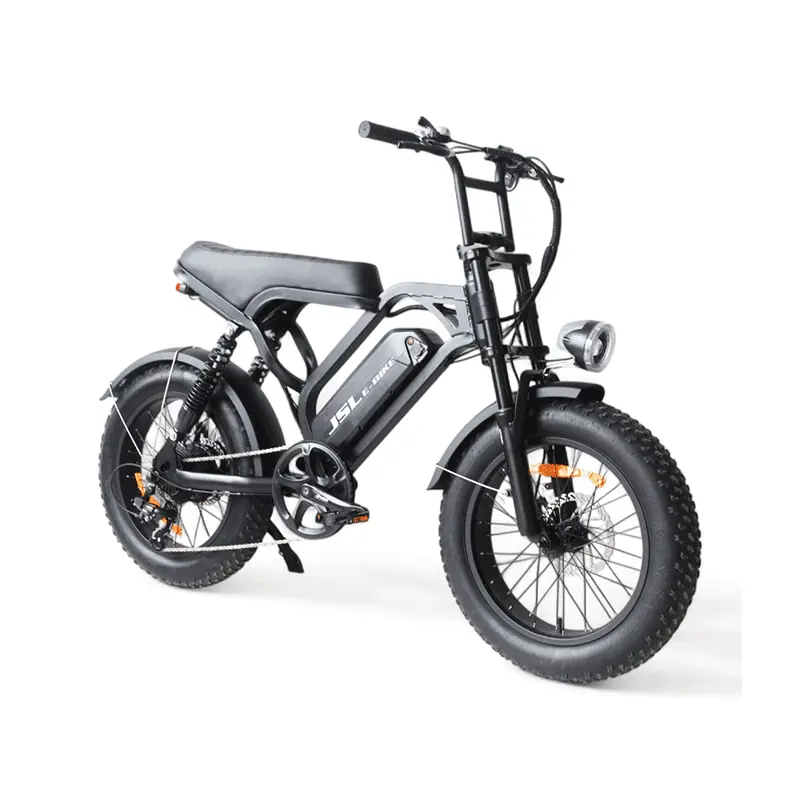
Many of our clients are surprised when we recommend steel. But in markets focused on utility, the ROI calculation changes. For cargo e-bikes, delivery fleets, or utility vehicles in emerging markets, durability is everything. Here, steel's ROI shines. While the frame is heavier, it provides superior impact resistance and structural toughness. This is critical for a bike that is used and abused daily. For a business owner, the most important questions are: "Will this bike work reliably every day?" and "Is it easy and cheap to fix if it breaks?" Steel answers both questions well. A bent steel frame can often be repaired by a local welder, which is a huge advantage over aluminum or carbon fiber.
We also sometimes work with Chromoly steel. It offers better strength and toughness than standard steel, making it great for high-performance cargo structures or special-purpose vehicles. However, Chromoly offers better engineering value, but not always better commercial ROI. Its higher material and processing costs mean it only makes sense if the end customer is willing to pay a premium for that extra structural confidence.
Does a high price tag on carbon fiber automatically mean a high return? This is a common and costly misunderstanding. Carbon fiber’s ROI is extremely selective and carries significant risk.
No, carbon fiber's ROI is highly polarized. It only works when the product's brand value and selling price are high enough to absorb the steep development, tooling, and manufacturing costs. For many projects, it can easily become a high-cost, low-return investment.
Carbon fiber is the material everyone associates with high performance, and for good reason. It’s incredibly lightweight and allows us to create stunning, aerodynamic shapes. It’s the perfect material for telling a premium story. However, from a B2B manufacturing standpoint, its ROI is fragile. The initial investment is huge. Creating the molds is expensive, and ensuring consistent quality during mass production requires intense quality control. Furthermore, carbon fiber is not ideal for heavy-duty commercial use, and any damage is complex and costly to assess or repair.
Therefore, we only see a positive ROI for carbon fiber in very specific situations. This includes high-end performance e-bikes from established brands with strong pricing power. The target market1 must specifically value extreme light weight and be willing to pay a significant premium for the "carbon" label. If your product cannot sell for a high enough price to cover these costs, the ROI will be negative. I once had a client who wanted to build a mid-range city bike with a carbon frame. We had to show them that the market wouldn't pay the necessary premium, and aluminum was the far more profitable path.
How do you choose the right frame material for your business model2?
Torn between materials? The real question isn't which material is "best," but which one best serves your specific business goals and target customer. The material must support your entire strategy.
Choosing the right material means matching its unique ROI logic to your business model. Your decision should be based on your target market, your product's key selling point (price, brand, or utility), and your after-sales capabilities.
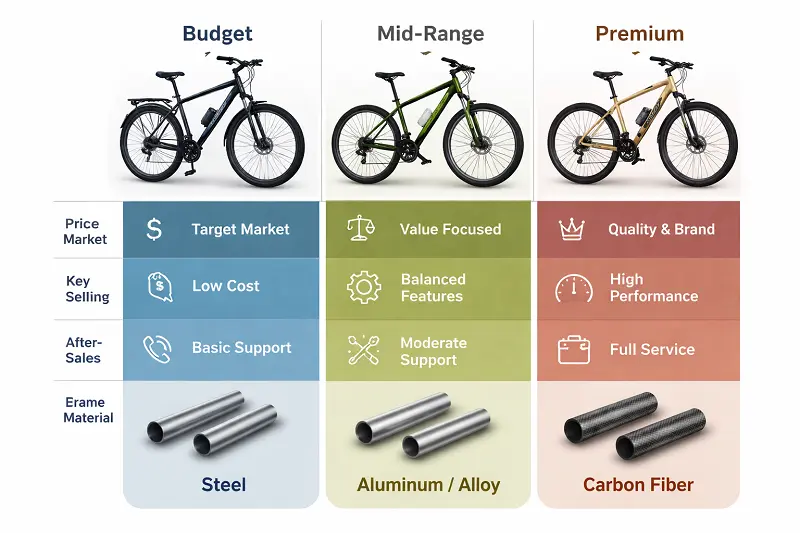
Ultimately, you are not just buying a material; you are investing in a business strategy. The frame material is a tool to help you succeed in your chosen market. To make the right choice, you have to ask the right questions. Is your customer more concerned with weight or durability? Is your main selling point a low price, a premium brand, or a specific function? Are you aiming for high-volume sales or a high-margin niche brand? Your answers will point you to the correct material. From our factory viewpoint, the logic is clear. Frame material ROI is not universal. It depends on whether the material supports the product’s target price, market expectation, and long-term business model.
Here is a simple breakdown to guide your decision:
| Material | Best For | Source of ROI |
|---|---|---|
| Aluminum | Mainstream consumer markets, city bikes, ODM projects. | Balance of cost, aesthetics, and broad market acceptance. |
| Steel | Commercial delivery, heavy cargo, price-sensitive markets. | Low operational risk, high durability, and easy repairability. |
| Carbon Fiber | High-end performance brands, premium niche markets. | Brand premium, lightweight selling point, and high-profit margin. |
Conclusion
The ROI of e-bike frames depends on manufacturing complexity, product positioning3, selling price, and long-term value. The best material is the one that aligns with your target market and business model.
Identifying the target market helps tailor your frame material choice to consumer preferences and maximize ROI. ↩
Aligning frame material with your business model ensures that it supports your market strategy and long-term goals. ↩
Exploring product positioning can guide you in selecting a frame material that aligns with your brand and market strategy. ↩