Are you confused by all the e-bike jargon? You want a new ride but feel overwhelmed by terms like "hub motor1." Let's clear this up so you can choose with confidence.
A hub motor is a type of electric motor2 located directly in the center (the hub) of an e-bike's wheel, usually the rear one. It works by spinning the wheel it's built into, directly pushing or pulling the bike forward with electric power.
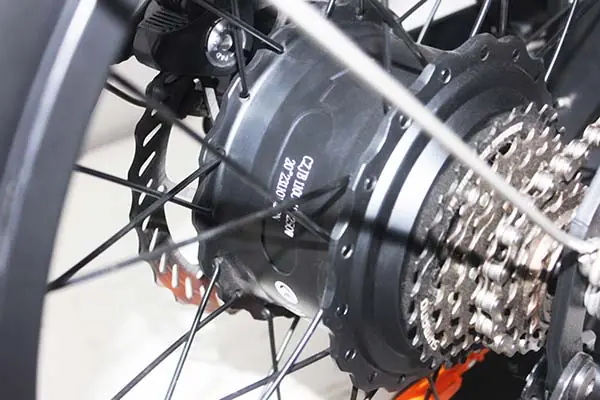
I remember when I first started in this industry over 20 years ago, motors were a new and complex topic for most people. Now, they are the heart of every e-bike, and understanding them is the first step to finding the perfect bike. It’s not as complicated as it sounds, and I want to walk you through it. Let's dive deeper into what a hub motor is, how it works, and if it's the right choice for you.
How does a hub motor actually make an e-bike move?
It seems like magic, but the way a hub motor works is quite simple. You know the motor is in the wheel, but how does that translate to movement? Let's uncover the mechanics.
A hub motor works by using battery power3 to turn a series of magnets inside the motor casing. This rotation is transferred directly to the wheel's axle, causing the entire wheel to spin and propel the bike forward without using the chain or gears.
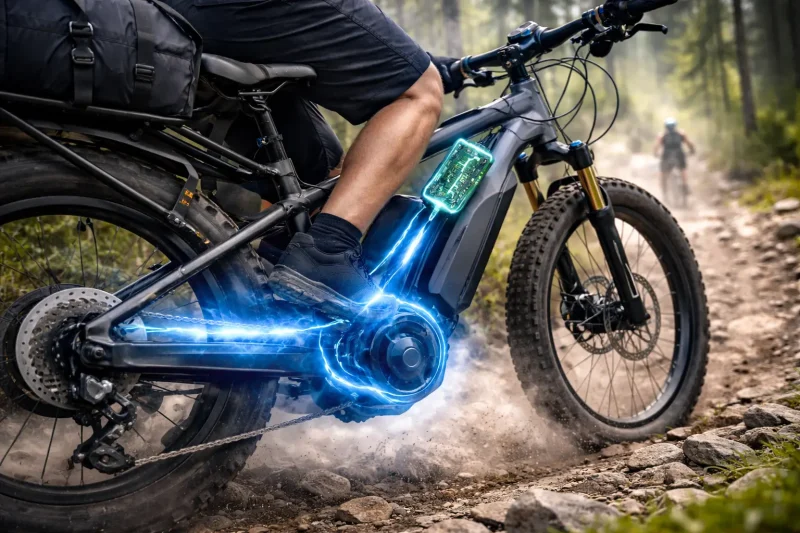
To really get it, picture the motor and the wheel as a single, integrated unit. The motor itself doesn't move; it's fixed to your bike's frame. Inside the hub, there's a set of electromagnets4 (the stator) and a ring of permanent magnets (the rotor). When you hit the throttle or start pedaling, the battery sends a controlled electric current to the stator. This creates a magnetic field that pushes against the permanent magnets on the rotor, causing the outer part of the hub—the part your spokes connect to—to spin. Because this outer shell is the wheel itself, the bike moves. It’s a very direct and efficient way to create motion. This is different from a mid-drive motor5, which powers the crank and uses the bike's chain and gears. The simplicity of a hub motor is its biggest strength; there are fewer moving parts involved between the motor and the ground.
Are all hub motors the same?
You've learned how a hub motor works, but now you see options like "front hub" and "rear hub." This choice really affects how the bike feels and performs on the road.
No, hub motors are not all the same. They are mainly placed in either the front wheel or the rear wheel. Rear hub motors are most common, providing a natural "push" feeling, while front hub motor6s create an "all-wheel-drive" sensation.
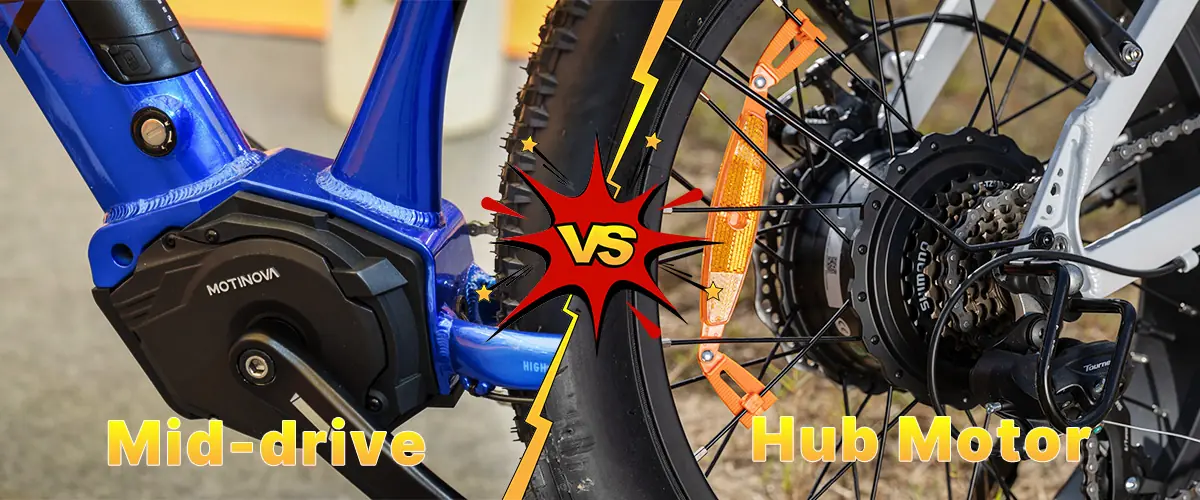
In my experience building thousands of bikes for different brands, the placement of the motor is one of the most critical design choices. It completely changes the bike's character. A motor in the front wheel pulls you along, while a motor in the rear wheel pushes you. Let's break down the differences.
Front Hub Motors
A front hub motor is located in the hub of the front wheel. It effectively pulls the bike forward. This setup is often easier to install and can create a nice weight balance if the battery is mounted on the rear rack. It also leaves the rear wheel and drivetrain untouched, making it simple to fix a rear flat tire. However, they can have less traction, especially on loose gravel or steep, wet hills, which can cause the front wheel to spin out. It can feel a bit unnatural to some riders.
Rear Hub Motors
This is the most common type of hub motor, and for good reason. It's located in the rear wheel hub and pushes the bike forward, which feels very similar to riding a traditional bicycle. Since most of a rider's weight is over the rear wheel, it provides excellent traction for acceleration and climbing. This makes rear hub motor7s suitable for more powerful systems. The main downside is that it concentrates weight at the back and can make changing a rear tire a bit more work.
| Motor Type | Feeling | Traction | Maintenance |
|---|---|---|---|
| Front Hub | "Pulls" the bike | Good | Easy rear tire changes |
| Rear Hub | "Pushes" the bike | Excellent | More complex rear tire changes |
Is a hub motor the right choice for my e-bike?
Hub motors seem simple and affordable, but are there hidden downsides? You don't want to buy a bike only to realize it can't handle your daily commute or weekend adventures.
Hub motors are a fantastic choice for their reliability, low maintenance, and affordability8. However, they can struggle on very steep hills9 and add uneven weight to one wheel, which can affect handling on technical terrain compared to mid-drive motors.

As a manufacturer, we always guide our clients to match the motor to the intended use. A hub motor is not a one-size-fits-all solution, but it is the perfect solution for many riders. I've seen them perform brilliantly on city streets and fail on intense mountain trails. It's all about knowing their strengths and weaknesses.
The Advantages
The biggest plus is their simple, self-contained design. The motor is entirely in the wheel, which means it doesn't put any extra stress on your bike's chain or cassette. This leads to lower maintenance costs and greater reliability over time. From a manufacturing standpoint, this simplicity also makes the bikes more affordable. For the rider, this means a quiet and smooth power delivery that feels like a gentle, consistent push. I personally love that feeling for a relaxing cruise through the city.
The Disadvantages
The main drawback is weight distribution10. Placing the motor's weight in one wheel can make the bike feel front-heavy or back-heavy, which can affect agile handling. On very steep and long climbs, a hub motor can also be less efficient than a mid-drive motor because it can't use the bike's gears to gain mechanical advantage. This can lead to overheating on extreme, continuous climbs. Finally, as mentioned, changing a flat tire on the wheel with the motor can be a little more involved than on a standard bike.
Which e-bikes typically use hub motors?
Knowing the pros and cons is useful, but where do you actually find these motors in the real world? You don't want to look for the wrong features on the wrong bike type.
You'll find hub motors most often in e-bikes where cost-effectiveness and reliability are priorities. This includes city commuter bikes11, folding e-bikes12, casual cruisers, and many cargo bikes13 designed for flatter urban environments.

When we develop a new e-bike line for a client, the first question is always: "Who is the rider?" The answer determines the bike's design, and very often, a hub motor is the best fit. For example, for a brand focused on urban mobility14, a reliable rear hub motor is a no-brainer. It provides the perfect amount of assistance for stop-and-go traffic and getting over small hills without the complexity or cost of a high-performance system.
City & Commuter E-Bikes
These are the most common homes for hub motors. The daily commute doesn't usually involve extreme mountain climbs. It requires reliability, low maintenance, and a good price point. A hub motor checks all those boxes perfectly.
Folding E-Bikes
The compact, self-contained nature of a hub motor is a huge benefit for folding bikes. It doesn't interfere with the folding mechanism and keeps the design clean and simple, which is essential when space is a premium.
Leisure & Cruiser E-Bikes
For riders who just want a simple, comfortable boost for a weekend ride along the beach or through a park, a hub motor is ideal. It provides power on demand without complicating the relaxed, easy-going nature of a cruiser bike.
Conclusion
In short, hub motors are a simple, reliable, and affordable choice for many everyday e-bike riders, especially for city commuting, folding bikes, and relaxed leisure rides.
Understanding the hub motor is crucial for choosing the right e-bike, as it directly affects performance and riding experience. ↩
Exploring how electric motors function can help you appreciate the technology behind e-bikes and make informed decisions. ↩
Battery power is essential for e-bike efficiency and range, making it vital to understand its impact on your ride. ↩
Electromagnets are key components in hub motors, and learning about them can enhance your understanding of e-bike mechanics. ↩
Mid-drive motors offer different advantages, and comparing them to hub motors can guide you in selecting the best option. ↩
Front hub motors offer unique benefits, and knowing them can help you decide if this setup suits your riding style. ↩
Rear hub motors are popular for their natural feel and traction, making them a great choice for many riders. ↩
Hub motors are cost-effective, making e-bikes more accessible to a wider audience without compromising quality. ↩
Understanding the limitations of hub motors on steep hills can help you choose the right e-bike for challenging terrains. ↩
Weight distribution affects balance and handling, and knowing its effects can help you choose the right e-bike design. ↩
City commuter bikes benefit from hub motors due to their reliability and cost-effectiveness, ideal for urban environments. ↩
Hub motors are compact and efficient, making them perfect for folding e-bikes where space and simplicity are key. ↩
Cargo bikes often use hub motors for their power and reliability, essential for transporting goods in urban areas. ↩
Hub motors are ideal for urban mobility, offering efficient and reliable transportation in city settings. ↩