Struggling with the high cost of a new e-bike? You want electric power but don't want to abandon your favorite bicycle. A conversion kit seems like the perfect solution.
The best e-bike conversion kit depends on your needs. For simple commuting, a hub motor kit is cost-effective and easy to install. For performance and hill-climbing, a mid-drive kit is superior. For ultimate simplicity, a clip-on booster1 offers a temporary electric boost without modifications.
As an e-bike manufacturer, I see a lot of businesses and riders asking about conversion kits. They offer a tempting path into the world of electric bikes. But choosing the right one, and knowing when to use one, is key. Let's break down what you really need to know before you invest.
Why is the e-bike conversion kit market growing so fast?
You see more and more converted e-bikes on the street. It feels like this market appeared overnight. You wonder if this is just a temporary trend or a real business opportunity.
The global e-bike conversion kit market is not just a trend; it's a rapidly growing industry. It is expected to grow from around $8 billion to over $13.5 billion by 2031. This growth comes from making e-bikes more accessible and affordable for everyone.
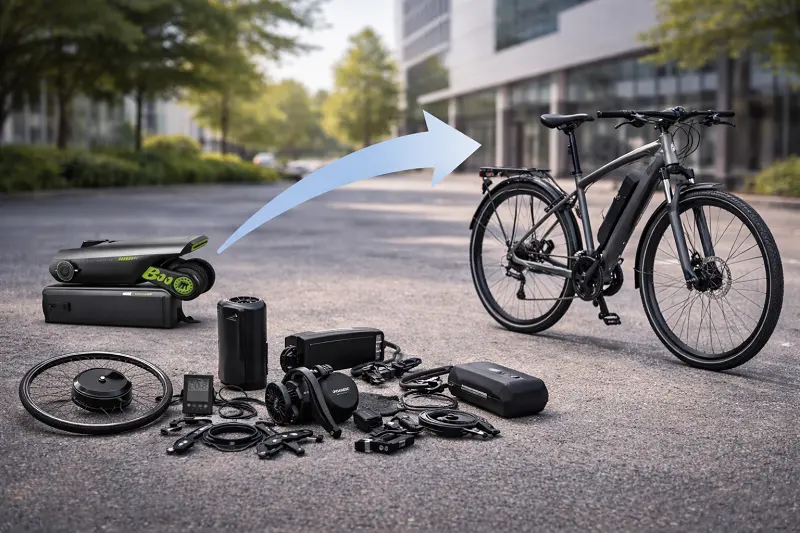
In my 20+ years in this industry, I've seen many trends come and go. The rise of conversion kits is different because it's driven by three powerful factors that are here to stay.
1. The Cost Advantage
The most obvious driver is cost. A brand-new, quality e-bike can be a significant investment. Conversion kits offer a much lower entry price. For many people, especially in price-sensitive markets, this is the only way to get an electric bike. It allows them to "electrify" a bike they already own and love, which saves a lot of money. This is a powerful motivator for both individual riders and businesses looking to build a fleet.
2. The Huge Number of Existing Bikes
Think about how many regular bicycles already exist in the world. It's a massive number, far greater than the number of e-bikes. Every one of those bikes is a potential candidate for conversion. This turns a passive asset—an old bike in the garage—into an active, useful electric vehicle. For businesses, this means they can convert existing inventory instead of buying new stock.
3. Policy and Sustainability Trends
Governments worldwide are promoting green transportation to reduce pollution and traffic. E-bikes are a big part of that. At the same time, the "Right to Repair" movement is gaining strength. People want to be able to fix and upgrade their own products instead of throwing them away. Conversion kits fit perfectly into both of these trends. They promote a circular economy by extending the life of old bikes.
Which types of e-bike conversion kits are available?
You know you want to convert a bike, but the options are confusing. Hub motors, mid-drives, friction drives—what’s the difference? Choosing the wrong one could mean wasted money and a poor riding experience.
The main types are hub motor kits (front or rear), mid-drive kits, and friction-drive kits. Hub motors are the most common and affordable. Mid-drives offer the best performance. Friction drives are the simplest but least powerful option. Your choice depends on your budget and riding style.
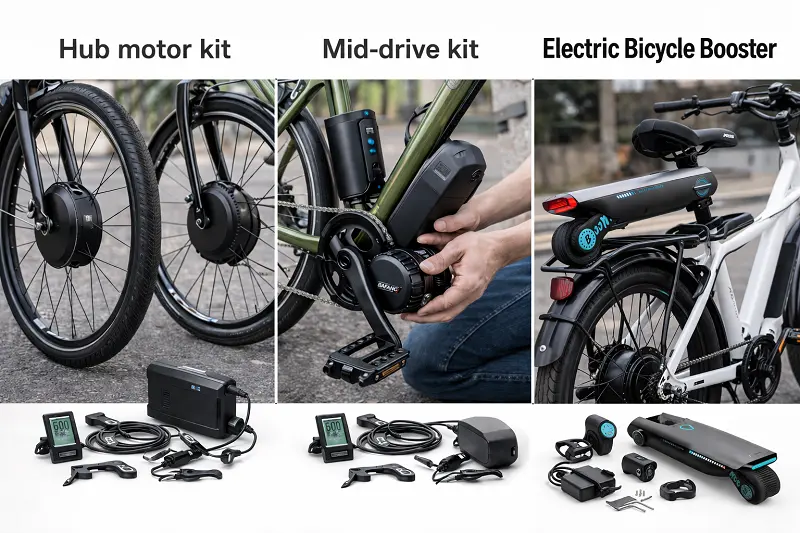
We've worked with all these systems in our OEM/ODM projects, so I can give you a straightforward breakdown. Each type has a specific job it does best. Thinking about how you or your customers will ride is the most important step.
Hub Motor Kits
These are the most popular kits for a reason. The motor is located inside the hub of either the front or rear wheel.
- Front Hub: Very easy to install. You just replace the front wheel. However, it can sometimes make the steering feel heavy and may have less traction on loose surfaces.
- Rear Hub: A bit more complex to install because of the bike's gears. It provides a more natural "pushing" sensation and generally has better traction. Hub kits are workhorses. They are reliable, relatively cheap, and great for general commuting and flat-terrain riding.
Mid-Drive Kits
Here, the motor is mounted in the center of the bike frame, where the pedals are. This is a more advanced system. It drives the chain directly, so it can take advantage of the bike's existing gears. This means you get much better performance on hills and a more balanced ride feel, as the weight is low and centered. These kits are more expensive and complex to install, but they are the top choice for mountain biking and serious performance.
Friction Drives & Clip-on Boosters
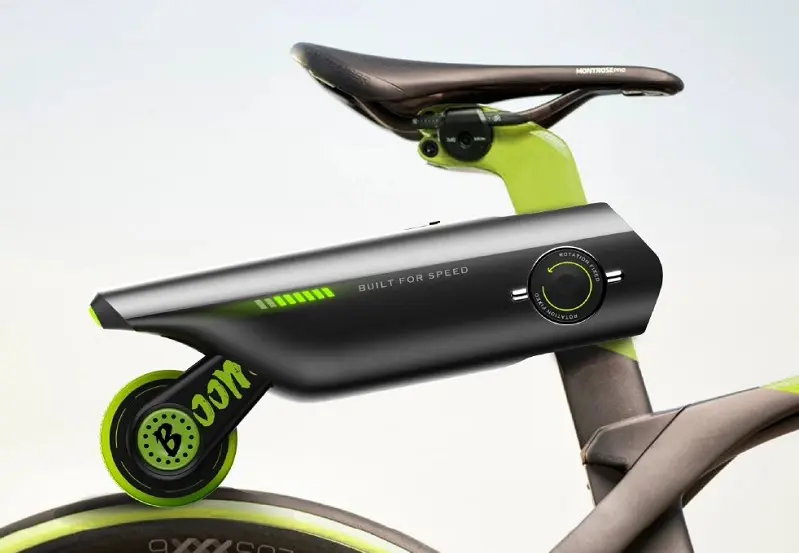
This is a smaller but interesting category. A friction drive motor has a small roller that presses directly against the tire to propel it forward. A new version of this is the "clip-on booster," which is a self-contained unit you can attach and detach easily. The main advantage is simplicity—you don't have to change your wheel or bottom bracket. The downside is they are less powerful, can slip in wet conditions, and cause tire wear. They are best for short, flat commutes where you just need a little help.
| Kit Type | Cost | Performance | Installation | Best For |
|---|---|---|---|---|
| Front Hub Motor | Low | Moderate | Easy | City commuting, flat terrain |
| Rear Hub Motor | Low-Medium | Good | Medium | All-around use, better traction |
| Mid-Drive Motor | High | Excellent | Hard | Mountain biking, hills, performance |
| Friction/Clip-on | Low-Medium | Low | Very Easy | Short trips, portability, occasional use |
Are e-bike conversion kits a good idea for my business?
You're a business owner looking to enter the e-bike market. Kits seem like a low-risk, low-cost way to start. But you worry about the hidden problems with quality, safety, and support.
For businesses, conversion kits are an excellent tool for market testing. They allow you to validate demand and learn about customer preferences with minimal investment. However, they introduce significant risks related to safety, system integration, and after-sales service that can damage your brand long-term.
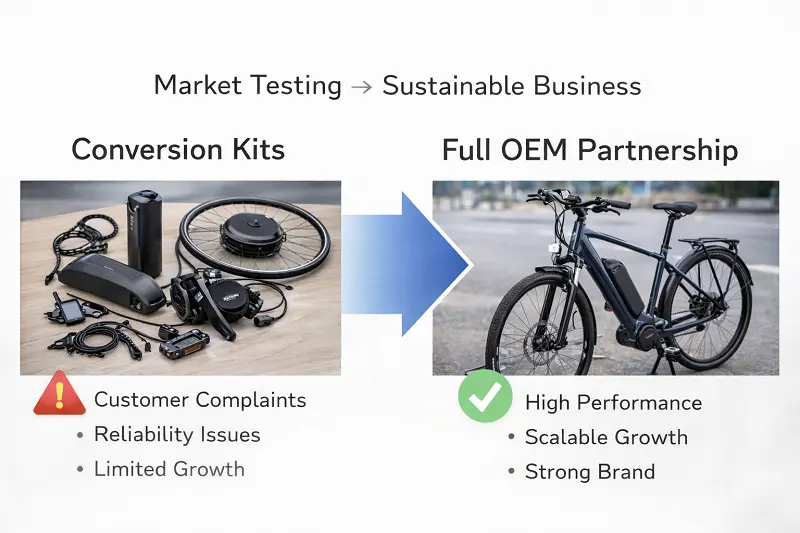
I speak with importers, wholesalers, and brand builders every day. Many of them start by exploring kits. It's a logical first step, but it's crucial to understand both the opportunities and the dangers.
The Upside: Fast and Lean Market Entry
The business case for starting with kits is very clear.
- Low-Cost Entry: You don't need to invest in designing and manufacturing a complete vehicle. You can buy kits in smaller quantities, which keeps your initial capital outlay low.
- Quick Market Testing: You can launch a product in weeks, not months. This allows you to quickly see if there's an appetite for e-bikes in your target market and what kind of performance your customers expect.
- Utilize Existing Resources: If you are a bicycle distributor or retailer, you can convert your existing stock of regular bikes into e-bikes. This clears out old inventory and turns it into a higher-value product.
The Downside: The Hidden Risks
This is the part that many new businesses overlook. The initial savings can be quickly wiped out by long-term problems.
- Safety and Liability: This is the biggest risk. There have been reports of fires caused by low-quality, non-certified batteries and kits. If a product you sell causes a fire or an accident, the liability could be devastating for your business.
- System Mismatch2: A standard bicycle frame is not designed to handle the torque and weight of an electric motor. This can lead to frame stress, or even failure. The weight distribution is often poor, leading to an unbalanced and unsafe ride.
- After-Sales Nightmare: When you build a bike from a kit, the motor, battery, controller, and frame all come from different suppliers. When something goes wrong, who is responsible? The customer comes to you, but you have no single point of contact for a solution. This leads to unhappy customers and a damaged reputation.
Essentially, conversion kits sacrifice system integration for flexibility. For a hobbyist, that's a fine trade-off. For a business, it's a dangerous one.
When should I move from kits to a full OEM e-bike?
Your business has tested the market with kits and seen some success. But now, you're dealing with customer complaints and reliability issues. You wonder what the next step is to grow sustainably.
You should move to a full OEM e-bike when you need reliability, scalability, and a consistent brand experience. Kits are for testing the waters; a dedicated OEM partnership is for building a serious, long-term business and protecting your brand's reputation.
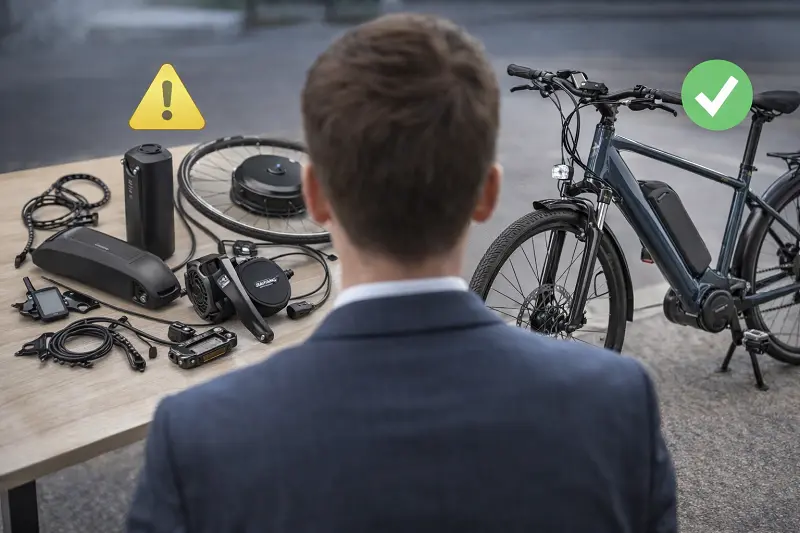
This is a journey I've helped many partners navigate. It's a natural evolution from a startup phase to a growth phase. The transition happens in predictable stages.
Stage 1: The Kit Phase (Market Testing)
In the beginning, you use kits to prove your concept. You sell a small number of converted bikes to learn what works. What motor power do customers want? What battery range do they need? This phase is all about gathering data with minimal risk. You accept the occasional issue as a cost of learning.
Stage 2: The Growing Pains
As you start to sell more, the problems with the kit approach become more apparent. You get more returns and warranty claims. A customer's battery dies prematurely. Another complains that the motor feels jerky. You spend more time on customer service than on selling. At this point, you realize that the lack of system integration is hurting your brand and your bottom line.
Stage 3: The OEM Solution (Scaling for Growth)
This is when you decide to become a real e-bike brand. You partner with a specialist manufacturer like us. We work with you to design a complete e-bike from the ground up. The frame, motor, battery, and software are all designed to work together perfectly. The entire bike is tested and certified for safety and performance. You get a reliable product, a stable supply chain, and professional after-sales support. This is how you scale your business sustainably. Kits help you start fast, but a full OEM solution helps you build to last.
Conclusion
Conversion kits are a great entry point into the e-bike world, offering flexibility and low costs. They are perfect for market testing but lack the integration and reliability needed for a scalable business.