Are you looking for the next big market for your e-bike business? The European market is growing, but knowing where to focus your energy is key to success.
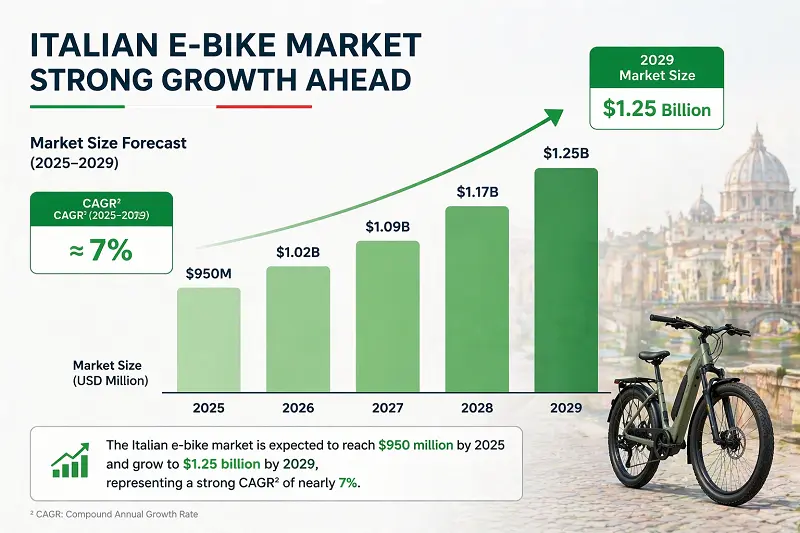
Yes, Italy is rapidly becoming a major hotspot for electric bikes. The market is projected to reach $1.25 billion by 20291, driven by strong government incentives, a massive shift in consumer behavior towards urban commuting, and significant investments in cycling infrastructure.
To really understand the opportunity in Italy, you have to look beyond the surface-level numbers. The real story is in the details—the specific government plans, the types of bikes people are buying, and the technology that's winning the market. As an e-bike manufacturer with over 20 years of experience, I've seen markets like this take off before. Let's dive deeper into what makes Italy such a promising market for anyone in the e-bike industry.
How Big is the Italian E-Bike Market Really Getting?
You see headlines about market growth, but the numbers can feel abstract. Without concrete data, you can't make smart business decisions or justify investing in a new region.
The Italian e-bike market is expected to hit $950 million by 2025 and grow to $1.25 billion by 2029. This represents a strong and steady compound annual growth rate (CAGR)2 of nearly 7%, making it a highly attractive market.
This growth isn't happening by accident. It's fueled by two powerful forces: technological advancements and changing consumer preferences. From our position as an OEM/ODM manufacturer, we see this firsthand. Every year, e-bikes get better. Batteries become lighter and hold more charge, and motors become more efficient and powerful. These aren't just minor tweaks; they fundamentally change the user experience, making e-bikes a more practical and enjoyable choice for daily travel. At the same time, consumers, especially in urban areas, are actively looking for alternatives to cars and public transport. They want greener, healthier, and more convenient ways to get around. This perfect storm of better technology meeting new consumer demands is what's driving these impressive growth figures.
| Year | Projected Market Value (USD) | Key Driver |
|---|---|---|
| 2025 | $950 Million | Increased urban adoption & tech improvements |
| 2029 | $1.25 Billion | Sustained growth from infrastructure & policy |
| CAGR | 6.96% (2024-2029) | A combination of all market factors |
Are Government Policies Actually Helping E-Bike Sales in Italy?
You hear about government support for green transportation, but does it really translate into more sales? Ignoring these programs could mean leaving money on the table that your competitors are using.
Yes, absolutely. Government initiatives, like purchase subsidies that can cover a significant portion of the cost, are directly boosting sales. This financial support, combined with huge investments in new cycling infrastructure, is making it easier and cheaper for Italians to choose e-bikes.
In Italy, programs like the "Bonus Mobilità3" have made a huge impact. By offering citizens a voucher or a tax credit for purchasing an e-bike, the government directly lowers the financial barrier for consumers. This makes a high-quality e-bike much more accessible to the average person. But the support doesn't stop at subsidies. We're also seeing massive infrastructure projects, like Milan's ambitious "Cambio" plan to build a 750 km network of super-cycle corridors. As a manufacturer, this is a clear signal that the government is committed to cycling as a long-term solution for urban mobility. This kind of investment gives businesses like ours the confidence to invest heavily in the market. It confirms there will be sustained demand for well-designed city and commuter e-bikes for years to come, making it a safe bet for our partners.
How Policy Drives the Market
- Purchase Incentives: Direct subsidies lower the upfront cost for consumers, immediately boosting demand.
- Infrastructure Investment: New, safe bike lanes make cycling more practical and appealing for daily commuting.
- Corporate Mobility Programs: Encouraging businesses to provide e-bikes for employees further expands the user base.
What Kind of E-Bikes Do Italian Consumers Actually Want to Buy?
You have a great product line, but you're not sure if it aligns with the Italian market. Pushing the wrong type of e-bike can lead to unsold inventory and missed opportunities.
Italian consumers are overwhelmingly choosing e-bikes for urban commuting. They are looking for a practical, reliable, and sustainable solution to navigate traffic and get to work. City e-bikes that are comfortable and efficient are the clear winners in this market.
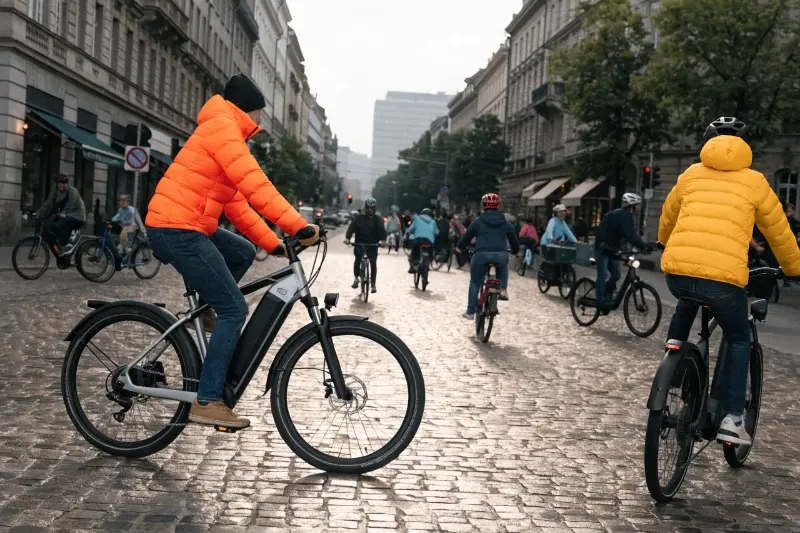
The shift towards e-bikes as a primary mode of transport was accelerated by the pandemic, as many people became wary of crowded buses and trains. This created a new wave of demand for personal mobility solutions. As an OEM manufacturer, this trend dictates our production focus. It tells us that lightweight city e-bikes with comfortable, upright riding positions are in high demand. Features that were once considered premium, like integrated batteries for a sleek look and powerful-yet-quiet motors for navigating hills, are now expected. We work with our partners to develop models specifically for this urban rider, focusing on reliability for daily use and low maintenance. It's not just about getting from point A to B anymore; it's about doing it with style, efficiency, and comfort.
| Consumer Segment | Key Needs | Popular E-Bike Type |
|---|---|---|
| Urban Commuter | Reliability, comfort, traffic solution | City E-Bike |
| Delivery & Logistics | High cargo capacity, durability | Cargo E-Bike |
| Leisure Rider | Long range, powerful motor, durability | E-Mountain Bike, Trekking E-Bike |
Which E-Bike Technologies and Segments Dominate the Italian Market?
To succeed in Italy, you need to know which specific technologies and product categories to focus on. Investing in the wrong segment or outdated tech is a costly mistake.
Pedal-assist e-bikes are the dominant force, making up nearly 80% of the market. Within this category, city and urban models are the most popular. Technologically, lithium-ion batteries are the undisputed standard, powering over 99% of all e-bikes sold.
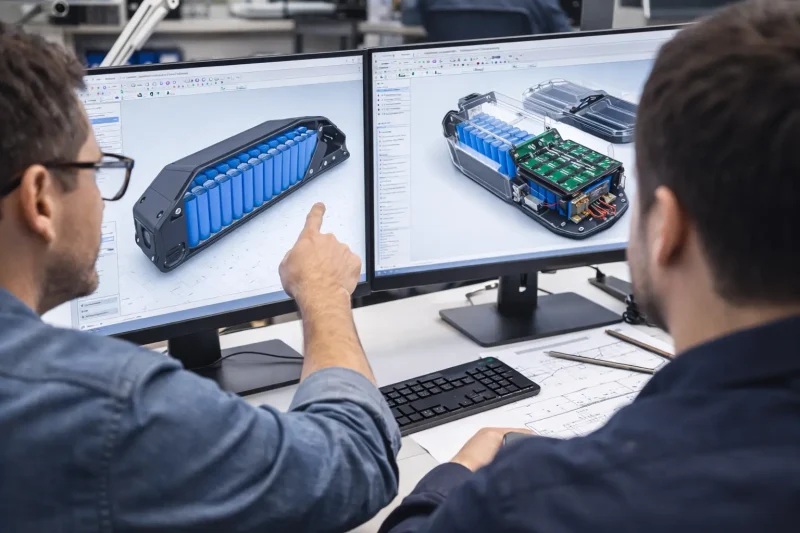
Let's break down the market specifics. The preference for pedal-assist (pedelec) systems shows that Italians still want an active cycling experience, but with a helpful boost. This is crucial for product design. While throttle-on-demand e-bikes are a growing niche, the main market is in pedelecs. In terms of use case, the city/urban segment's 78% market share confirms that commuting is the primary driver. As for components, the dominance of lithium-ion batteries is no surprise. As a manufacturer that also specializes in battery solutions, we've seen this technology evolve dramatically. The costs have fallen while energy density, lifespan, and safety have all improved. This makes Li-ion the only practical choice for building a competitive, high-performance e-bike today.
Dominant Market Segments
- By Assist Type: Pedal-assist systems are preferred, accounting for 79% of the market. They offer a natural riding feel that appeals to a broad audience.
- By Use Case: City/Urban e-bikes hold a 78% market share, highlighting their role in solving daily transportation challenges in congested areas.
- By Battery Technology: Lithium-ion batteries have a near-total market share (99.99%) due to their superior performance, declining cost, and light weight.
Conclusion
The Italian e-bike market4 offers tremendous growth potential. Success depends on understanding urban consumer needs, leveraging government support, and focusing on key innovations in city e-bikes and battery technology.
mordorintelligence.com Italy E-bike Market Size and Share ↩
Knowing the CAGR provides a clear picture of market growth and its sustainability. ↩
This program significantly impacts e-bike affordability, making it essential for consumers and businesses to understand. ↩
Understanding the Italian e-bike market's growth and potential can help businesses identify lucrative opportunities. ↩