High maintenance costs and vehicle downtime can destroy your profit margins. Every bike that is out of service is a loss in revenue and a potential headache for your operations.
To reduce e-bike maintenance costs, you must choose models designed for serviceability1. This means prioritizing features like modular components, standardized parts, and selecting the right motor type for your specific business needs. This approach significantly lowers the total cost of ownership (TCO)2 for your fleet.
We've been building electric bikes as an OEM/ODM partner since 1999. We understand that for our B2B clients, a bike's value is not just its purchase price, but its long-term operational cost. Let's break down how you can make smarter choices to protect your investment. Understanding these details is the first step to saving money and maximizing your returns.
Why Does E-bike Maintenance Seem So Complicated?
You might be familiar with standard bike repairs, but e-bikes introduce new electrical systems. This complexity can lead to difficult diagnoses, extended downtime, and rising costs for your business.
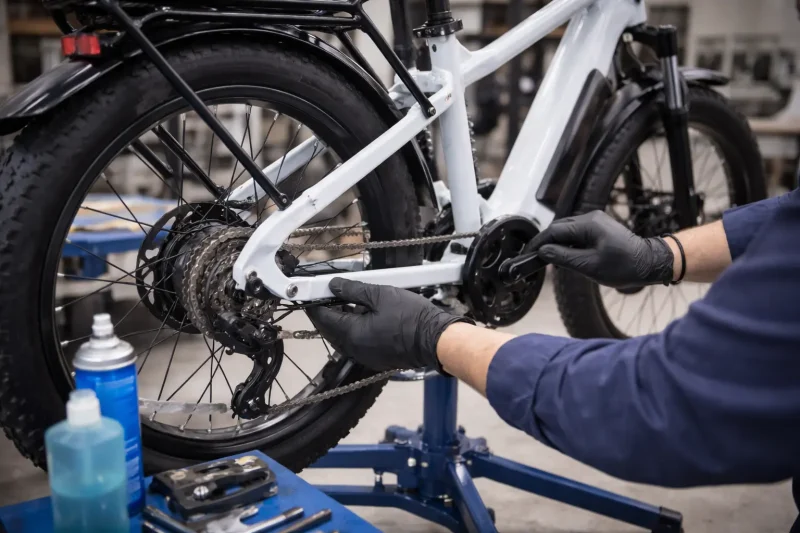
E-bike maintenance is more complex because it involves two distinct systems. First, the mechanical parts wear out 1.2 to 1.5 times faster than on a regular bicycle. Second, the electrical system, including the battery and motor, requires specialized care to ensure reliability and safety.
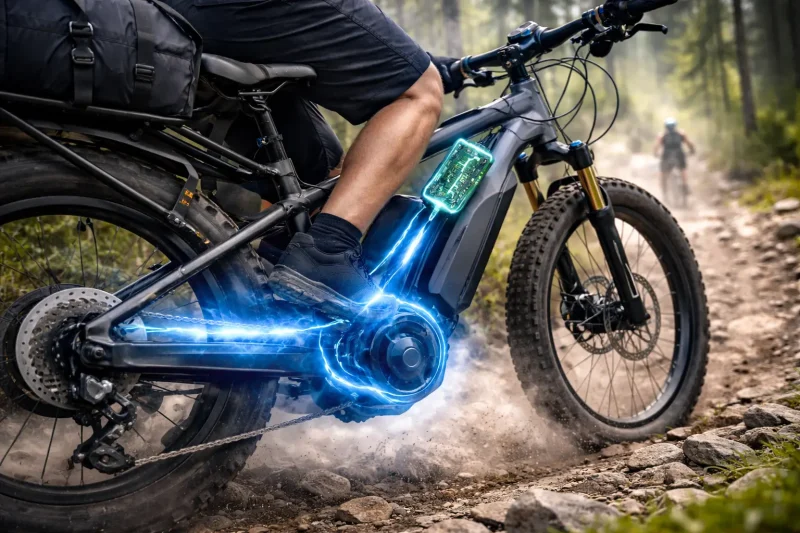
An e-bike is not just a bicycle with a motor attached. It's a complete electro-mechanical system. Understanding how these two sides work together is crucial for creating an efficient maintenance plan. As a manufacturer, we see firsthand how these elements impact long-term costs.
The Mechanical Side: More Wear, More Care
The motor adds power, but it also adds stress to the bike's components. The drivetrain, including the chain and gears, works harder and wears out faster. Tires also wear down quicker due to the extra weight and speed. Brakes are especially critical. E-bikes are faster, so brake systems must be powerful and reliable. For example, hydraulic disc brakes need periodic fluid changes, while cable-actuated brakes require regular tension checks. Neglecting these mechanical checks can lead to failures and accidents.
| Component | Regular Bike Maintenance | E-Bike Maintenance |
|---|---|---|
| Drivetrain | Standard wear and tear | 1.2x - 1.5x faster wear |
| Brakes | Standard checks | Higher stress, more frequent pad/fluid changes |
| Tires | Standard pressure/tread checks | Faster wear, more frequent monitoring |
The Electrical Side: The Heart of the Bike
The electrical system requires a different kind of attention. A typical e-bike battery has a lifespan of 2 to 5 years, and its capacity degrades with each charge cycle. Proper charging habits3 are vital. You should avoid overcharging the battery or letting it run completely empty. Poor habits will dramatically shorten its life. The motor is another key area. The maintenance needs for a hub motor are very different from a mid-drive motor. Finally, wiring and connectors are common failure points. Water damage or a loose connection can take a bike out of service, turning a simple mechanical repair into a complex electrical problem.
How Does Maintenance Impact Different Business Models?
As a B2B buyer, your maintenance needs are unique to your business. A one-size-fits-all e-bike can cause service issues for dealers, profit loss for fleets, and reputational damage for brands.
The impact of maintenance varies greatly. For fleet operators, it is directly tied to profit and loss. For distributors, it's about providing simple after-sales support. For brand owners, it's about protecting their reputation. A good manufacturing partner understands these differences and designs e-bikes accordingly.
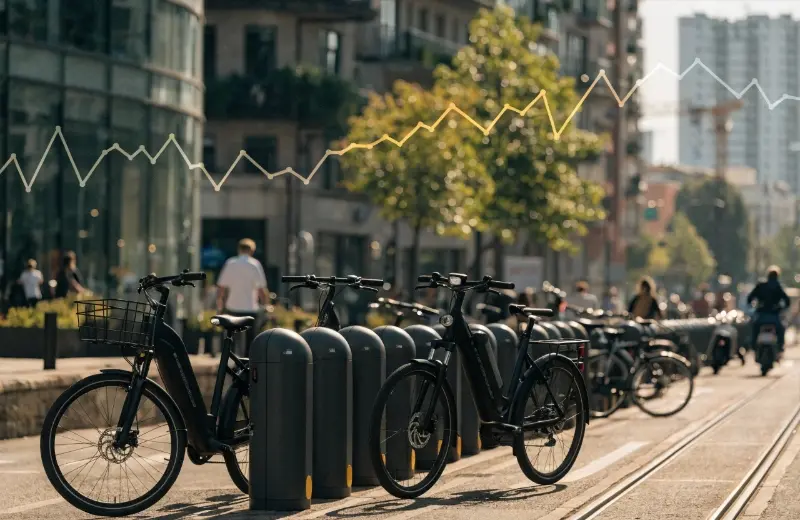
Over the years, we've worked with every type of B2B client. We know that a bike that is perfect for a food delivery fleet might be a poor choice for a private-label brand focused on high-end consumers. The key is to match the bike's design and serviceability1 to your specific operational needs.
For Dealers and Distributors
Your primary concern is providing good after-sales service and handling customer complaints efficiently. You need e-bikes that are reliable and easy for your technicians to repair. This means you should look for models with low failure rates and standardized, easily sourced parts. When a customer has a problem, a quick and simple fix keeps them happy and protects your reputation as a reliable seller. The easier a bike is to service, the lower your support costs will be.
For you, maintenance is profit. Every minute a bike is down for repair is a minute it's not generating revenue. A sudden battery failure means a vehicle is completely offline. Frequent brake replacements drive up labor costs. Difficult-to-diagnose faults lower your team's efficiency. Your goal is to minimize downtime and reduce the Total Cost of Ownership (TCO). As your manufacturing partner, our job is to help you achieve this with robust designs and easy-to-service components.
For Private-Label Brands
Your brand's reputation is your most valuable asset. Frequent repairs or service issues can quickly damage consumer trust and hurt sales. Your after-sales service experience also influences whether a customer will buy from you again. You need to ask if the bike is easy to repair locally. Is there a standard repair manual available? Do you have a reliable spare parts system in place? These factors are critical for building a strong, trusted brand in the marketplace.
Which E-bike Design Features Actually Lower Repair Costs?
You know maintenance is a major expense, but it can be hard to identify which e-bike features truly make a difference. Some are just marketing buzzwords that don't help your bottom line.
To genuinely lower repair costs, focus on e-bikes with designs that prioritize serviceability. This includes external cable routing for easy access, quick-release batteries to minimize downtime, and modular controllers for fast replacement. Using standard interfaces for parts also makes repairs much simpler and cheaper.
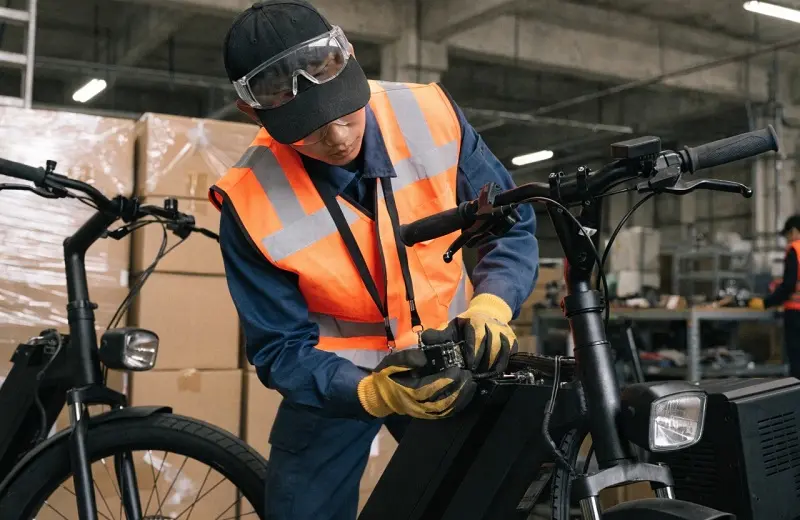
Good design can make maintenance work much more efficient. As a manufacturer with our own frame factory and assembly lines, we can build bikes with these features from the ground up. Small design choices can have a huge impact on your long-term operational costs.
Smart Design Choices for Easy Service
When evaluating an e-bike, look for features that make a technician's job easier. For example, external or semi-internal cable routing allows for quick access to brake and shifter lines without complex disassembly. A quick-release battery lets your team swap out a dead battery in seconds, keeping the bike in service. A modular controller can be replaced quickly if it fails, rather than requiring a complex diagnostic process. Finally, standardized interfaces4 and components mean you can use universal tools and find replacement parts easily, instead of being locked into a single proprietary system.
Choosing the Right Motor for Your Market
The motor is the heart of the e-bike, and your choice has a big impact on maintenance. Hub motors and mid-drive motors serve different purposes and have different service requirements.
| Feature | Hub Motor | Mid-Drive Motor |
|---|---|---|
| Maintenance | Simpler; the entire wheel is often replaced. | More complex; integrated with the drivetrain. |
| Cost | Lower initial and repair costs. | Higher initial and maintenance costs. |
| Wear & Tear | Self-contained, less stress on the chain. | Increases wear on the chain and cassette. |
| Best Use Case | Fleets, rentals, city commuting, entry-level. | High-performance, mountain bikes, cargo bikes. |
For rental or commuter fleets, a hub motor is often the best choice. It's affordable, reliable, and very easy to service. For high-end mountain or cargo e-bikes, a mid-drive motor provides superior performance, but you must plan for the more complex and costly maintenance of the drivetrain.
Conclusion
Choosing the right e-bike is about more than specs or price. It's about investing in a lower total cost of ownership. Smart decisions on design and components will save you money.
Serviceability ensures easy maintenance, reducing costs and improving the longevity of e-bikes. ↩
Understanding TCO helps businesses make informed decisions, optimizing long-term costs and maximizing returns. ↩
Proper charging habits extend battery life, reducing replacement costs and ensuring consistent performance. ↩
Standardized interfaces allow the use of universal tools, making repairs easier and more cost-effective. ↩