Are your e-bikes failing on hills, leading to customer complaints? This damages your brand and increases costs. The solution is viewing climbing ability1 as a total system, not just motor power.
The best e-bike for hilly terrain combines a high-torque motor, a robust battery system2, and the right gearing. Success comes from how these parts work together under load, not from one single specification. This system-based approach ensures reliable performance and customer satisfaction.
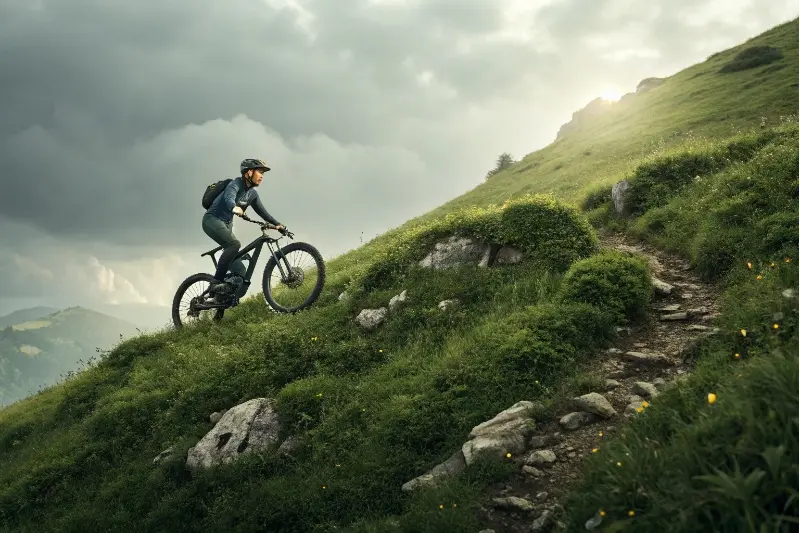
I've talked with many business clients who are frustrated. Their customers complain that bikes lose power on inclines or the battery drains too quickly. These aren't minor issues; they are major risks to their business. Happy customers and low service costs depend on getting the configuration right from the start. We're going to break down exactly what "getting it right" means, looking beyond the simple numbers on a spec sheet to understand what truly creates a great climbing e-bike.
Is a High-Watt Motor All You Need for Steep Hills?
You chose a powerful 750W motor, expecting it to fly up hills. But your bikes are still struggling, and you're getting reports of overheating. Why isn't raw power enough?
No, a high-watt motor alone is not enough for climbing. Torque (measured in Nm) is the rotational force that actually gets the bike moving uphill. A mid-drive motor that uses the bike's gears can multiply this torque, making it far better for climbing than a hub motor.
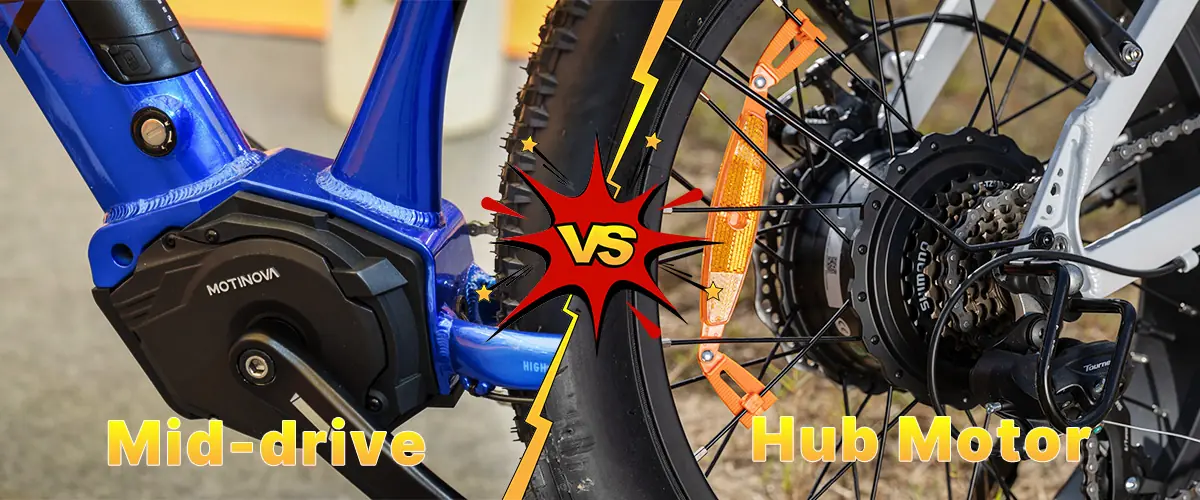
When clients visit our factory, one of the first things we discuss is the difference between power and torque. Many people think a bigger motor (more watts) automatically means better climbing. This is a common mistake. Think of it this way: power is how fast a horse can run, but torque is how much weight that horse can pull. For climbing, you need pulling strength. That is why torque is so important. A motor with high torque can handle inclines much more effectively, even if its watt rating isn't the highest.
The type of motor and its integration with the drivetrain are also critical. This is where we see the biggest performance difference.
| Motor Type | How It Works | Climbing Performance |
|---|---|---|
| Mid-Drive Motor | Powers the crank, sending force through the chain and gears. | Excellent. The rider can shift to a low gear, which multiplies the motor's torque, making steep climbs feel much easier. |
| Hub Motor | Located in the wheel hub and drives the wheel directly. | Fair to Good. The torque is fixed because it doesn't use the bike's gears. It can struggle on very steep or long hills and is prone to overheating. |
A mid-drive motor allows you to use the bike's gearing to your advantage, keeping the motor in its most efficient RPM range while tackling a steep grade. A hub motor doesn't have this advantage, so it has to work much harder on the same hill.
Why Do E-Bike Batteries Suddenly Die on Hills?
Your e-bike shows 50% charge, but the power cuts out completely on a steep hill. This leaves your customers stranded and frustrated, wondering if their bike is defective.
Batteries can "die" on hills because climbing draws a massive amount of current. A lower-quality Battery Management System (BMS)3 or weaker cells can't handle this demand. This causes the voltage to drop, triggering the BMS to cut power to protect the battery, even if it's not empty.
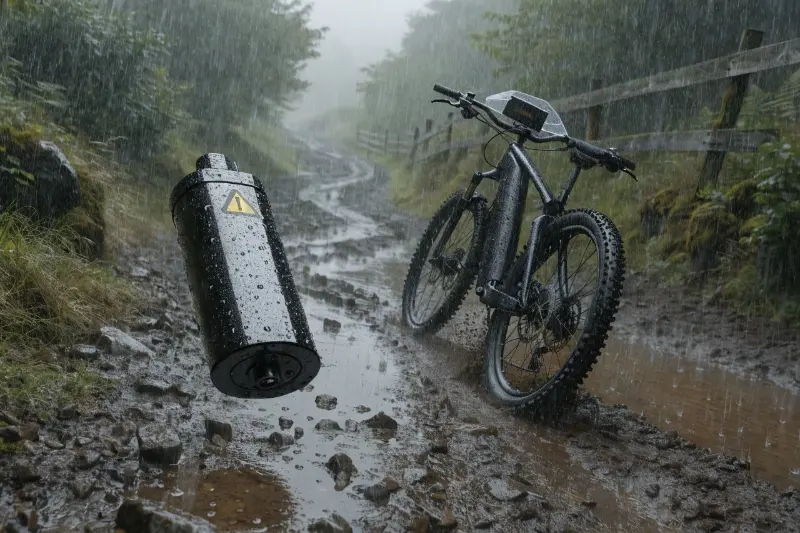
The battery is the heart of the e-bike, and its stability under pressure is everything. When an e-bike climbs, the motor demands a huge surge of current. The battery's ability to deliver that power consistently is what separates a good battery system from a bad one. I remember a client from the US who came to us, extremely concerned. He had been with another factory for years, but recently his bikes started cutting out on hills. His customers were complaining, and his brand's reputation was suffering.
We analyzed the battery pack he was using. The problem was twofold: the battery cells couldn't sustain the high current draw, and the Battery Management System (BMS) was cutting power too early to protect the weak cells. This phenomenon is called "voltage sag." Under heavy load, the battery's voltage temporarily drops. If it drops below the BMS's safety threshold, the power shuts off. For the rider, it feels like the battery is dead, even though the display might still show a decent charge. A well-engineered battery pack from our factory uses high-quality cells and a robust BMS designed to handle these peaks without shutting down. This ensures the rider has consistent power all the way to the top of the hill.
Does a One-Size-Fits-All E-Bike Work for Every Market?
You are trying to sell the same e-bike model in a flat city and a hilly region. While sales are fine in the flat area, you are getting constant complaints about poor performance in the hilly market.
No, a single e-bike configuration rarely succeeds everywhere. European markets often require 250W motors, while US markets with steep terrain need more power (500W-750W) and high torque. The bike's intended use, like carrying heavy cargo for delivery, also demands a completely different design.
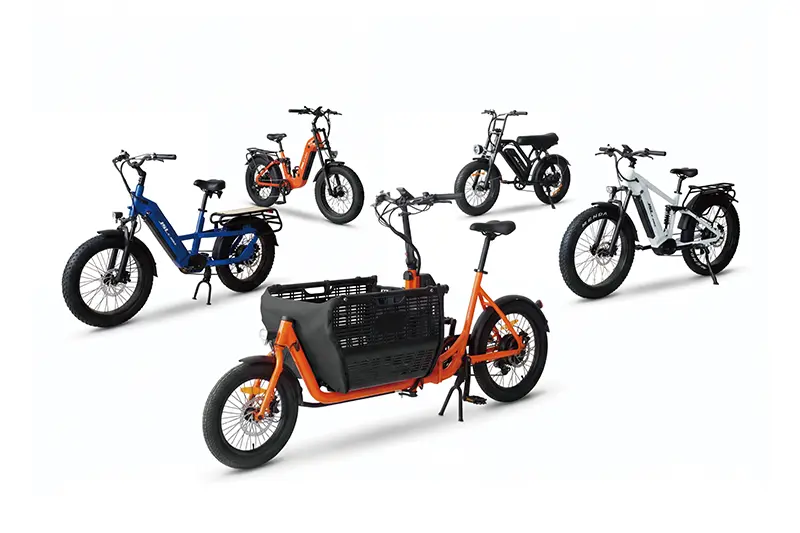
One of the biggest mistakes we see is clients trying to use a standard commuter e-bike for heavy-duty tasks like food delivery, especially in hilly areas. A commuter bike is designed for a single rider with a light backpack. A delivery bike needs to handle a rider plus 50kg or more of cargo, day in and day out. Using the wrong bike for the job leads to disaster. The motor overheats, the battery degrades quickly, and even the frame can fail under the constant stress. This directly hurts the operational efficiency and profitability of a delivery business.
As an OEM/ODM manufacturer, our job is to prevent these problems. We work with our clients to define the exact needs of their target market and use case. This goes beyond just the motor and battery. We consider the frame geometry for stability, the braking system for safety with heavy loads, and the overall durability of every component.
| Use Case | Typical Motor | Key Consideration |
|---|---|---|
| EU Urban Commuting | 250W Hub or Mid-Drive | Compliance with EN15194 regulations, efficiency. |
| US Hilly Commuting | 500W-750W High-Torque | Strong climbing ability and higher speed potential. |
| Cargo / Food Delivery | 500W+ High-Torque Hub | Durability, high load capacity, and battery stability. |
By tailoring the e-bike configuration, we help our clients build a product that is reliable, safe, and profitable for their specific market.
Conclusion
For hilly markets, focus on the complete system: a high-torque motor, a stable battery, and proper gearing. This approach ensures customer satisfaction and protects your long-term investment.
Improving climbing ability in e-bikes enhances performance on hills, leading to better customer satisfaction and reduced complaints. ↩
A robust battery system is crucial for reliable e-bike performance, especially on hills, preventing sudden power loss and enhancing user experience. ↩
A good BMS ensures battery longevity and reliability, especially under heavy loads like hill climbing, preventing unexpected power cuts. ↩