Struggling to understand how e-bike assist levels work? This setting directly controls your ride's power and feel, but getting it wrong can ruin the experience.
Pedal-Assist System (PAS)1 levels determine how much motor power you get while pedaling. A lower level offers gentle, efficient assistance, preserving battery. A higher level provides a powerful boost for climbing hills or accelerating quickly, but uses more energy. Choosing the right level is key.
The right PAS setting can make your e-bike feel like an extension of yourself, but the wrong one can feel jerky and unnatural. As an OEM manufacturer, we spend a lot of time getting this right. It's the difference between a good e-bike and a great one. Let's dive into what PAS really is and how it shapes every moment of your ride.
What Exactly Is The Pedal Assist System (PAS) In An E-Bike?
Ever wonder what makes an e-bike feel so effortless? The magic is in the PAS, but a poorly tuned system can feel more like a nuisance than a help.
The Pedal Assist System, or PAS, is the core technology that provides motor power automatically as you pedal. It’s what gives you that "riding with a tailwind" feeling. It’s not just an on/off switch; it’s a smart system that defines the entire ride.
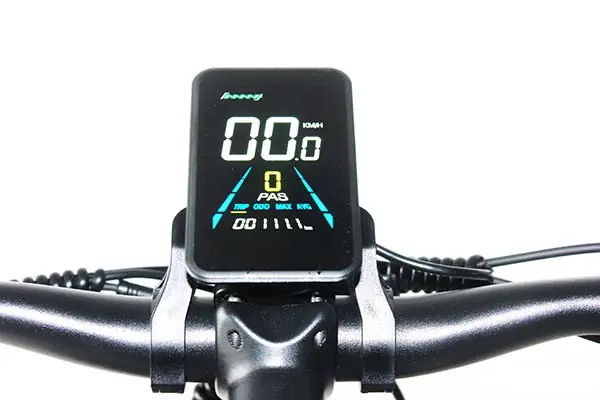
At its heart, the PAS is simple. A sensor detects that you're pedaling and tells the controller to send power to the motor. But the "how much" and "how soon" is where the details matter. This is controlled by the PAS level you select on your handlebar display, usually from 1 to 5. Each level corresponds to a different amount of assistance. It's not just about speed; it's about the ratio of power the motor provides compared to your own effort. For instance, a Level 1 might give you a 30% boost, while a Level 5 could amplify your effort by 200%. I once tested a bike on Level 5, and it felt like it was about to take off. This tuning is critical for our OEM clients, as it defines the bike's character.
| PAS Level | Typical Assist Ratio | Best For |
|---|---|---|
| 1 | 30% | Gentle assistance, maximizing range |
| 2 | 60% | Easy cruising and efficient commuting |
| 3 | 100% | Balanced mode for varied terrain |
| 4 | 150% | Strong boost for steep hills |
| 5 | 200% | Maximum power, near-electric feel |
How Do Different PAS Levels Change Your E-Bike's Performance And Feel?
Does your e-bike feel too aggressive or too weak? The PAS level is the culprit. A mismatched setting can make your ride feel unpredictable and even unsafe.
PAS levels directly control your ride's character. Low levels give a gentle, natural push, perfect for a smooth start. High levels provide a powerful surge for quick acceleration, but can feel jerky if not tuned properly. The goal is a smooth, intuitive power delivery.

The impact of PAS levels is most noticeable in two areas: starting from a stop and accelerating. A high PAS level will make the bike jump forward the moment you touch the pedals. This feels more "electric" but can be jarring in tight spaces. A lower PAS level provides a much gentler, more natural power delivery that feels like your own strength is simply amplified. Another factor is the controller's algorithm2. A well-tuned controller delivers power smoothly as you increase your pedaling speed. A poorly tuned one can feel like it's lurching or giving you a sudden, unwanted shove. From my OEM experience, improper PAS tuning is one of the most common issues that hurt user satisfaction. We've seen projects where high PAS levels were too aggressive, creating safety issues in city traffic. That’s why we conduct extensive real-world ride testing to refine the PAS curve for every model before mass production. It ensures a balanced and safe experience.
Torque Sensor3 vs. Cadence Sensor4: Which One Is Right For Your E-Bike Project?
Confused about why some e-bikes feel incredibly smooth while others feel jerky? The sensor type is a major factor, and choosing the wrong one can compromise the entire product line.
Torque sensors measure how hard you pedal, delivering proportional power for a very natural feel. Cadence sensors simply detect if you are pedaling, providing a set amount of power per PAS level. Torque is smoother and more intuitive; cadence is more cost-effective and powerful.
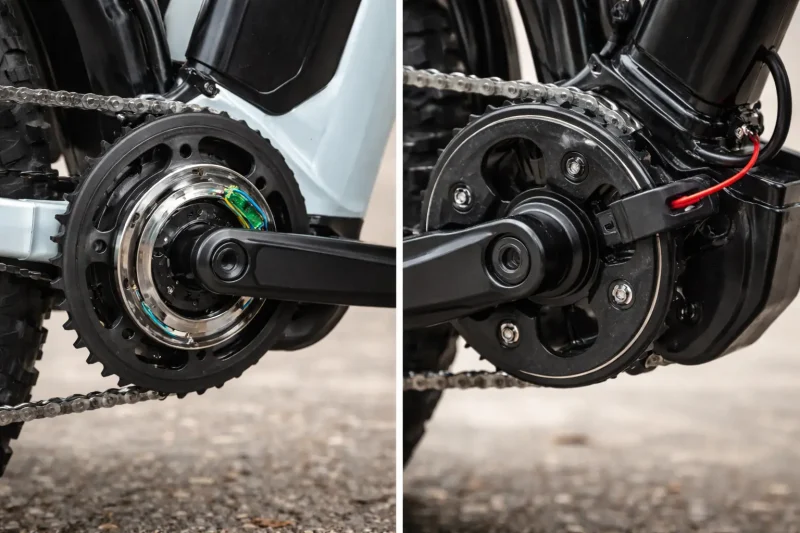
Let's break this down further, as it's a crucial decision in OEM development. A cadence sensor works like a simple on/off switch. Once it detects the pedals are rotating, it tells the motor to deliver a fixed amount of power based on your chosen PAS level. This is why it can sometimes feel like the bike is running away from you, especially at higher assist levels. It's a robust and affordable technology.
A torque sensor, on the other hand, is much more sophisticated. It measures the actual force you are applying to the pedals. If you pedal lightly, the motor gives a small amount of help. If you push hard to climb a hill, the motor responds with a powerful boost5. This creates a ride that feels incredibly intuitive and seamless, as if the bike is reading your mind. It makes the e-bike feel like an extension of your own body. While more expensive, the superior ride quality is why we now primarily use torque sensors in our e-bike projects.
How Much Does Your PAS Setting Really Affect Battery Range?
Worried about your e-bike battery dying mid-ride? Your choice of PAS level is the single biggest factor affecting your range, and using it inefficiently will leave you stranded.
Higher PAS levels demand more power from the motor, which drains the battery much faster. Using a low PAS level like 1 or 2 can significantly extend your range, while constantly riding in the highest level (e.g., PAS 5) can cut your total distance in half.
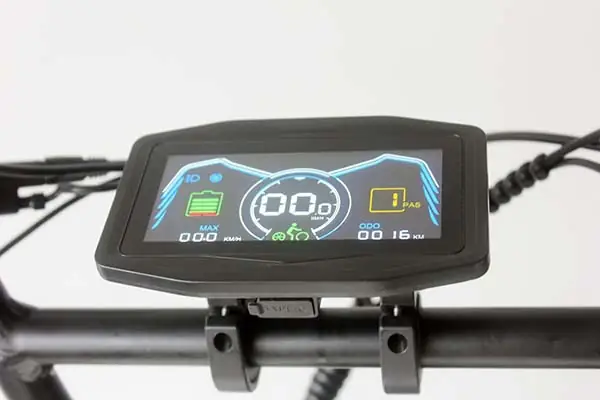
Think of it in simple terms: the motor is doing work, and that work requires energy from the battery. When you're in a high PAS level, you are asking the motor to do most of the work. This draws a large amount of current from the battery, depleting it quickly. In a low PAS level, you are doing more of the work yourself, and the motor is just providing a little help. This draws far less energy. The difference is huge. A bike that can travel 100 km in PAS 1 might only get 50 km or less in PAS 5. This is just like driving a car; flooring the gas pedal burns fuel much faster than cruising at a steady speed. For our OEM partners, we always stress the importance of communicating this to customers. We design and test for optimal range, but the rider's habits and PAS choices ultimately determine the real-world distance they can achieve on a single charge.
What Are The Key PAS Customization Options For An OEM/ODM E-Bike Project?
Want to create an e-bike brand that stands out? A generic, off-the-shelf ride feel won't cut it. Customizing the PAS is essential for creating a unique and desirable product.
For OEM/ODM projects, we can fully customize the PAS. This includes the number of assist levels, the power ratio for each level, the acceleration curve6, and the maximum speed limit. This tuning is what defines the bike's personality and ensures it meets market expectations.
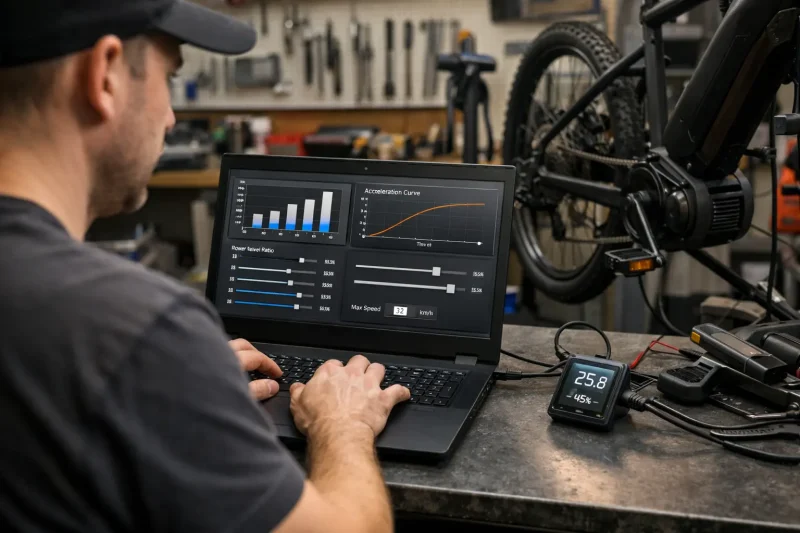
In our e-bike development projects, we know that the ride experience is one of the most critical factors for success. A well-tuned PAS is what turns a collection of components into a fantastic e-bike. Here are the key parameters we can adjust for our clients:
- Number of Assist Levels: Most bikes use 3 to 5 levels. More levels provide finer control over the power output, but they also require more detailed tuning to ensure each level feels distinct and useful.
- Assist Ratios: We can program the exact percentage of motor support for each level. Do you want a very gentle Level 1 for maximum range, or a more powerful one for easy starts? We can set it precisely.
- Acceleration Response: This is also known as the "ramp-up" curve. We can make the power come on instantly for a sporty, responsive feel, or program a gentle, gradual increase for a smoother, more comfortable ride perfect for commuting.
- Speed Limits: We configure the system to cut off motor assistance at the legally mandated speed for the target market, such as 25 km/h in the EU or 20 mph in the US.
How Should You Optimize PAS Tuning For Different Markets Like The EU And US?
Launching an e-bike in both Europe and North America? A one-size-fits-all PAS tuning will fail. Each market has distinct rider expectations and regulations that you must address.
European riders generally prefer a natural, subtle assist that feels like traditional cycling. North American riders often favor a more powerful, on-demand boost, especially at higher PAS levels. We fine-tune the sensor, controller, and motor response to match these regional preferences.
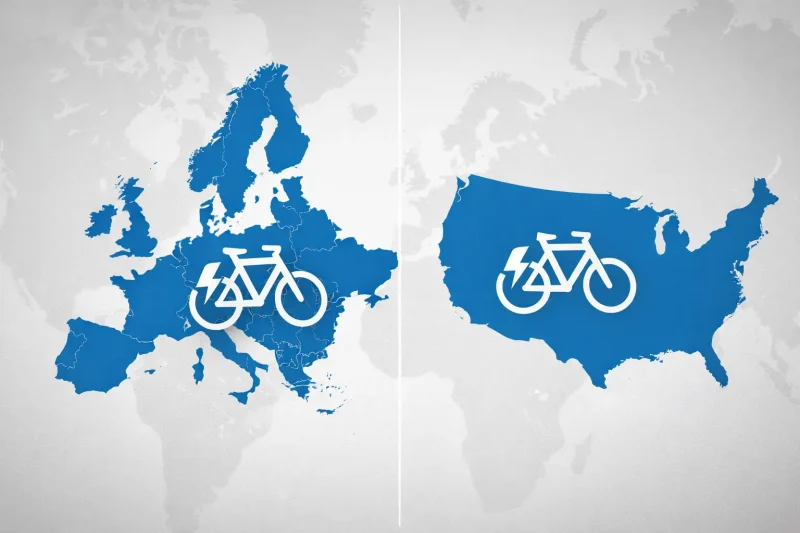
The final ride feel is a complex interplay of factors. It's the sensor type, the controller's algorithm, the motor's response speed, and the display settings all working together. Based on our extensive OEM/ODM experience, we tailor our approach for different regions.
For the European market, the preference is for a ride that complements the cyclist's effort, not one that takes over. Here, a torque sensor combined with multiple, finely-tuned PAS levels delivers that desired smooth, linear experience. The power feels predictable and natural.
For the North American market, riders often want to feel the power. There's a greater appreciation for a strong, noticeable push that delivers a sense of quick acceleration. A system with a well-tuned cadence sensor or a more aggressive torque sensor profile can be very popular.
This is how we approach it:
- Torque Sensor + Multi-Level PAS = A smooth, linear experience (EU favorite).
- Cadence Sensor + High PAS = A sudden, powerful push (US favorite).
We work closely with our partners to tune the PAS for their specific target market, ensuring the final product meets both rider expectations and all local regulations.
Conclusion
Understanding and customizing PAS levels is key to creating a successful e-bike. It defines the ride, manages battery life, and ensures a great user experience.
Understanding PAS is crucial for optimizing your e-bike's performance and ensuring a smooth, enjoyable ride. ↩
Explore how the controller's algorithm influences the smoothness and responsiveness of your e-bike ride. ↩
Understand how Torque Sensors provide a natural and intuitive riding experience by measuring pedal force. ↩
Learn about Cadence Sensors and how they provide consistent power output based on pedal rotation. ↩
Find out how a powerful boost can help you tackle hills and accelerate quickly on your e-bike. ↩
Discover how the acceleration curve affects the responsiveness and comfort of your e-bike ride. ↩