Is your e-bike ride sometimes jerky or not smooth enough? This can ruin the experience, making you feel out of control. Understanding PAS levels is the key to a perfect ride.
Pedal Assist System (PAS) levels control the motor's power output. They directly impact your ride's smoothness, acceleration, and battery range. A well-tuned system provides a natural feel, while a poorly tuned one can feel abrupt. This tuning is a critical part of product design.
 We know that PAS levels are important. But what do they really mean, and how do they change the feel of the ride so much? As a manufacturer, we fine-tune these systems every day. Let's dive deeper into how this works and why it matters for your e-bike business. This will help you understand what makes a great e-bike.
What Exactly Are The Different PAS Levels?
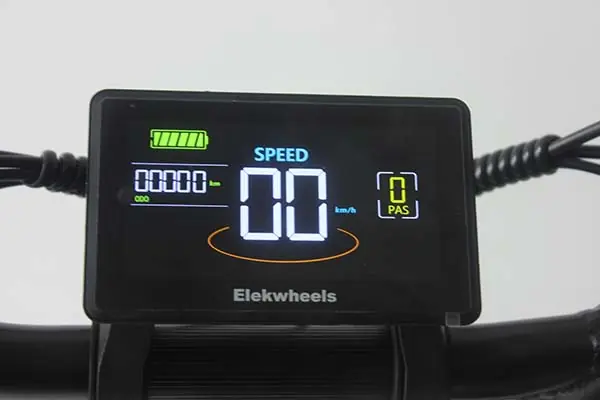
Do you see the numbers 1 through 5 on your e-bike display? They are more than just speeds. Each level provides a completely different feeling and purpose for your ride.
PAS levels are preset settings that determine how much power the motor adds to your pedaling. Lower levels give gentle help, perfect for exercise. Higher levels provide a powerful boost, making hills and long commutes feel effortless. It’s all about matching the power to the situation.
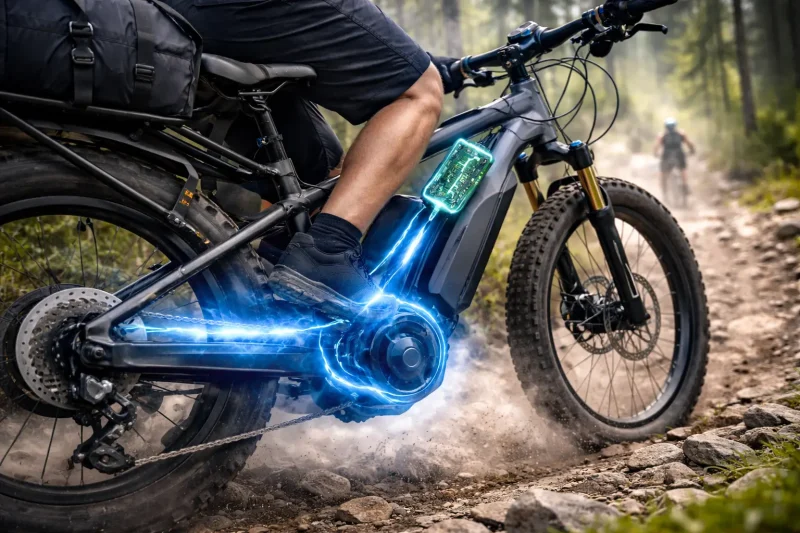 The core of the Pedal Assist System is the controller, which tells the motor how much power to deliver. This is usually set in 3, 5, or even more levels. Think of it as an "assist ratio." For a typical 5-level system, the breakdown looks something like this. At Level 1, the motor might add 30% to your own power. It's a very subtle boost, great for a light workout or extending your range on a long trip. Level 2 could be around 60%, which I find perfect for a relaxed city commute where I want to arrive without breaking a sweat. Level 3 often hits 100%, a balanced mode where the motor matches your effort. Once you get to Level 4 (150%) and Level 5 (200%), the bike feels incredibly powerful. I once rode a prototype on Level 5, and it felt like I was about to fly. The bike just took off with every pedal stroke. This powerful feeling is great for tackling steep hills or getting a quick start at a traffic light. Different systems define these levels differently; some use a "power percentage," while others use "torque multiplication." The goal is always the same: to give the rider control over the e-bike's feel and performance.
 |
PAS Level | Typical Assist Ratio | Best Use Case | Feeling |
|---|---|---|---|---|
| 1 | 30% | Light exercise, max range | A gentle, barely-there push | |
| 2 | 60% | Easy city commuting | A helpful nudge, very natural | |
| 3 | 100% | All-around riding | Balanced power, feels capable | |
| 4 | 150% | Climbing hills, speed | Strong and powerful assistance | |
| 5 | 200% | Maximum power, tough terrain | Almost like a scooter, very fast |
How Does PAS Tuning Impact Ride Smoothness And Acceleration?
Have you ever felt a sudden, jerky push from an e-bike? Or wished the power came on more gently? This is not a flaw in the motor; it's all about PAS tuning.
A well-tuned PAS delivers smooth, predictable power that feels like an extension of your own pedaling. Poor tuning can cause abrupt starts and jerky acceleration, which feels unnatural and less safe. The goal is to make the motor's help feel completely intuitive and controlled.
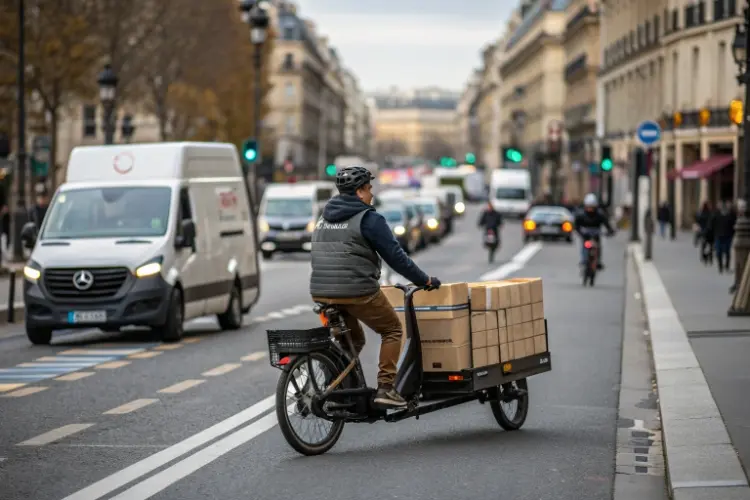 The riding experience is all about how the power is delivered. Two key areas are the initial start and acceleration. With a higher PAS level, the start can feel very abrupt. You push the pedal, and the bike lurches forward. This is more of an "electric" feel. With a lower PAS level, the start is much gentler and more natural, like riding a regular bicycle. The real art, however, is in the acceleration. A well-programmed controller delivers power smoothly as your pedaling speed increases. You feel a consistent, rising wave of support. But if the controller's algorithm is not refined, you can feel a sudden "kick" or "push" as the motor engages. This is very common with simpler cadence-based sensor systems. They only know if you are pedaling, not how hard. So when they kick in, they often give you all the power for that level at once. Torque sensors are much more advanced. They measure your pedaling force and give you proportional assistance. This makes the ride feel incredibly smooth and intuitive. The difference is night and day. That's why we say:
- Torque Sensor + Multi-level PAS = A smooth, linear, and premium experience.
-
Cadence Sensor + High PAS = A powerful but sometimes jerky, sudden push. For our B2B clients, understanding this difference is key to defining their product's target audience and price point. A premium city bike needs that smooth, torque-sensor feel, while a budget-friendly commuter might prioritize the power and cost-effectiveness of a cadence sensor. Feature Torque Sensor System Cadence Sensor System Power Delivery Proportional to pedal pressure On/Off based on pedal rotation Ride Feel Very smooth, natural, intuitive Can be jerky, feels like a sudden push Starting Gentle and controlled Can be abrupt, especially on high PAS Best For Premium city bikes, mountain e-bikes Entry-level e-bikes, flat-terrain commuting Cost Higher Lower How Do Market Preferences Shape E-Bike PAS Tuning?
Did you know riders in Europe and North America want very different things from their e-bikes? The right PAS tuning can make a product a bestseller in one market and a failure in another. European markets generally prefer a subtle, natural assistance that complements the cycling experience. In contrast, North American markets often favor a powerful, high-assist feel that makes riding almost effortless, treating the e-bike more like a vehicle for transportation.
 As an OEM/ODM manufacturer, we pay close attention to these regional differences. It’s a huge part of our product development process. In Europe, especially in countries like Germany and the Netherlands, there's a strong traditional cycling culture. Riders there often want an e-bike that feels like a regular bike, just with a helpful "tailwind." They prefer the subtle, intuitive assistance from a torque sensor. The goal is to enhance the ride, not replace the effort. So, our tuning for the European market focuses on smooth power delivery and a very natural feel, even at higher PAS levels. In North America, the e-bike is often seen as a car replacement or a utility vehicle. The customer wants power. They want to get up hills without breaking a sweat and accelerate quickly from a stop. This market is more accepting of cadence sensors and a more powerful, "on-demand" feel. For our North American clients, we tune the PAS to be more aggressive, with a strong initial kick and high top-end power. The ability to customize this is our strength. We can adjust a whole range of factors to create the perfect ride feel for a specific market.
Here are the key elements we can tune:
As an OEM/ODM manufacturer, we pay close attention to these regional differences. It’s a huge part of our product development process. In Europe, especially in countries like Germany and the Netherlands, there's a strong traditional cycling culture. Riders there often want an e-bike that feels like a regular bike, just with a helpful "tailwind." They prefer the subtle, intuitive assistance from a torque sensor. The goal is to enhance the ride, not replace the effort. So, our tuning for the European market focuses on smooth power delivery and a very natural feel, even at higher PAS levels. In North America, the e-bike is often seen as a car replacement or a utility vehicle. The customer wants power. They want to get up hills without breaking a sweat and accelerate quickly from a stop. This market is more accepting of cadence sensors and a more powerful, "on-demand" feel. For our North American clients, we tune the PAS to be more aggressive, with a strong initial kick and high top-end power. The ability to customize this is our strength. We can adjust a whole range of factors to create the perfect ride feel for a specific market.
Here are the key elements we can tune: - Sensor Type: We help clients choose between torque for a premium feel or cadence for cost-effectiveness and power.
- Controller Algorithm: We write custom firmware to control how quickly the power ramps up and how it responds to pedaling.
- Motor Response Time: We can adjust how instantly the motor engages after the pedals start moving.
- Display Settings: We can fine-tune the power output at each PAS level to match the brand's desired feel.
This deep level of customization ensures our clients' e-bikes are perfectly suited for their target customers, which is a major competitive advantage.
Conclusion
PAS levels are not just numbers; they define the entire character of an e-bike. Proper tuning of the system is what separates a great e-bike from a good one.