Worried your e-bike's range won't meet customer expectations? This uncertainty makes marketing difficult. Understanding what affects range helps you build and sell e-bikes with confidence.
An e-bike's range depends on multiple factors, not just one number. The most important are battery capacity (in Watt-hours), motor power, the terrain you ride on, and your riding style, such as using pedal assist versus a throttle.
It's tempting to look for a single, simple answer to the range question, but the reality is more complex. As a manufacturer, I've seen countless clients focus only on battery size, but that's just one piece of the puzzle. To truly understand how far an e-bike can go, we need to look at the whole system. Let's break down the key elements so you can make informed decisions for your brand or business.
What Factors Determine an E-Bike's True Range?
You see wild range claims on different e-bikes, but they don't always match reality. This damages your brand's credibility when customers don't get the advertised distance.
The four main factors that determine an e-bike's range are battery capacity, motor power, terrain, and riding mode. Smaller influences include rider weight, tire type, and even wind conditions.
When we build e-bikes for our clients, the conversation always starts with range. It’s the most common question from end-users, so it’s critical for your business. Let's dive deeper into what really matters.
Battery is King
The battery is the fuel tank of your e-bike. Its capacity is measured in Watt-hours (Wh). You calculate this by multiplying Volts (V) by Amp-hours (Ah)1. A 48V 10Ah battery has 480Wh of energy, which will provide a longer range than a 36V 10Ah battery with 360Wh. A larger "fuel tank" simply means more energy to power the motor, allowing the bike to travel farther. Of course, an older, degraded battery will hold less charge, which reduces its range over time.
Motor Power Matters
The motor is the engine. A more powerful motor, rated in Watts (W), will consume more energy. A 750W motor will drain a battery faster than a 250W motor under the same conditions, just like a big truck engine uses more gas than a small car engine. While a powerful motor is great for climbing hills or carrying heavy loads, it comes at the cost of range.
Riding Style is Crucial
This is a huge factor. Most e-bikes offer pedal assist and a throttle. If you rely only on the throttle and don't pedal, the motor does all the work, draining the battery quickly. With pedal assist, your effort extends the range significantly. For example, a bike that gets 40 km on throttle alone might get over 100 km using a low level of pedal assist. Speed is also key. Riding at 25 km/h is much more efficient than riding at 50 km/h because of increased wind resistance.
What is the Best E-Bike Battery Capacity for Rental Fleets?
Choosing the wrong battery for your rental fleet can mean constant recharging and unhappy customers. Dead batteries lead to lost revenue and negative reviews for your business.
For city commuting rentals, a 480Wh (e.g., 48V 10Ah) battery is a great starting point. For tourism or hilly areas, consider 720Wh (e.g., 48V 15Ah) or more to ensure all-day use without constant charging.
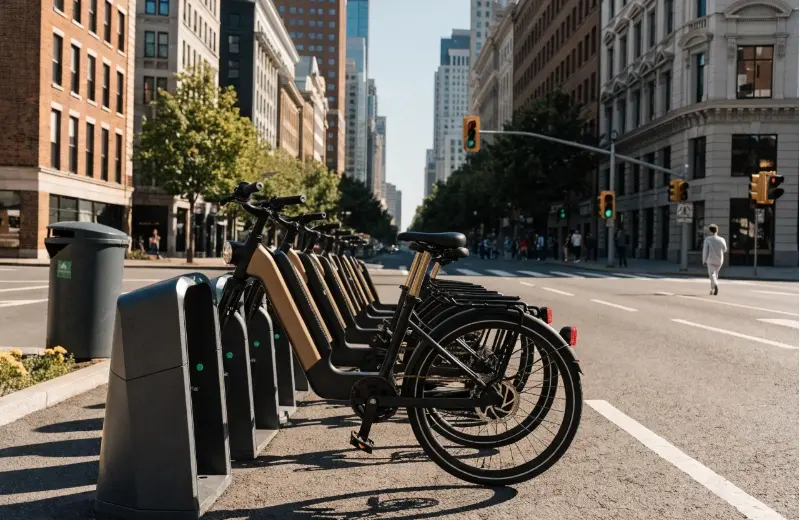
For businesses running rental or shared e-bike fleets, battery choice is about finding the right balance between performance, weight, and operational cost. A battery that dies halfway through a tourist's day trip is a recipe for a bad review. We work with many rental companies, and the conversation always centers on reliability and user experience. A larger battery might cost more upfront, but it can save you money on labor for battery swapping and charging. It also leads to happier customers who can ride all day without "range anxiety."
Here's a simple breakdown we often discuss with clients:
| Use Case | Recommended Capacity (Wh) | Typical Specs | Why it Works |
|---|---|---|---|
| City Commuting | 400Wh - 500Wh | 36V 12Ah or 48V 10Ah | Enough for short to medium trips. Keeps bike weight and cost down. |
| Food Delivery | 500Wh - 750Wh | 48V 13Ah or 48V 15Ah | Riders are on the bike all day, often using the throttle. Needs more juice. |
| Tourism/Tours | 720Wh+ | 48V 15Ah or more | Tourists ride for long periods, often in varied terrain. A large battery is essential. |
As an OEM/ODM partner, we can design and integrate custom battery solutions. If you need IoT-enabled batteries2 for easy fleet management, with features like remote diagnostics and charge monitoring, we can build that. The goal is to provide a seamless experience for both you and your riders.
How Do I Choose the Right E-Bike Motor for My Business?
A motor that's too weak disappoints riders. A motor that's too powerful drains the battery too fast. This mismatch leads to poor performance and customer complaints for your e-bike line.
For city e-bikes on flat terrain, a 250W or 350W hub motor is efficient. For mountain or cargo e-bikes, a 500W or 750W mid-drive motor provides better torque for climbing hills and carrying loads.
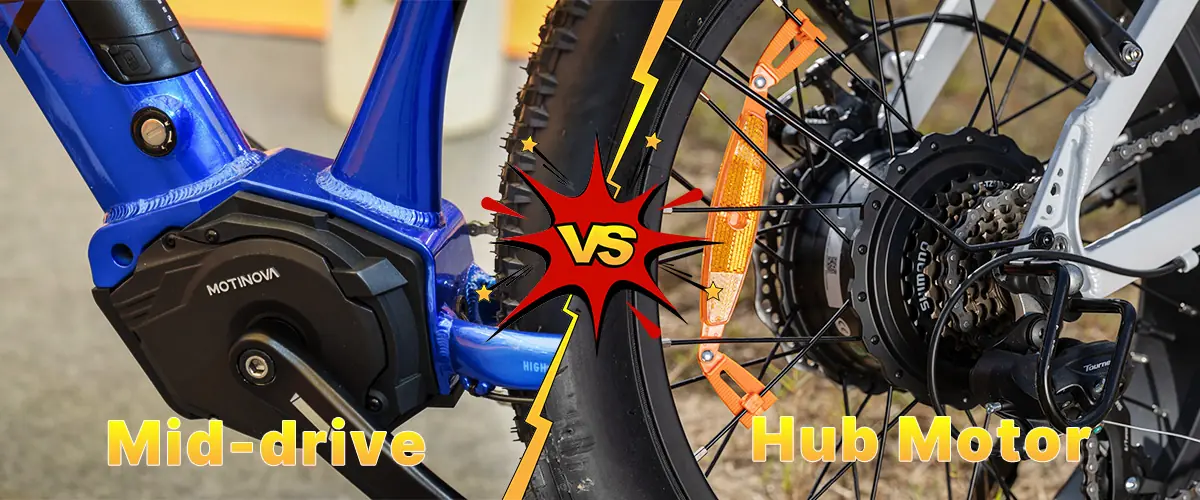
The motor is the heart of the e-bike's performance, but bigger isn't always better. The right choice depends entirely on the bike's intended use. We help our partners select the perfect motor by first asking, "Who is your customer and where will they be riding?" A city commuter values efficiency and reliability over raw power. In contrast, someone buying a fat tire e-bike for riding on sand or snow needs a powerful motor with high torque.
There are two main types to consider:
Hub Motors
These are located in the hub of the front or rear wheel. They are generally more affordable, reliable, and require less maintenance. They are perfect for city bikes and cruisers that will be ridden on mostly flat ground. However, they can sometimes struggle on very steep hills.
Mid-Drive Motors
These are located in the center of the bike frame, where the pedals are. They power the crank, not the wheel directly. This allows the motor to use the bike's gears, making it much more efficient on hills. They provide a more natural riding feel and are the standard for mountain e-bikes and premium cargo e-bikes. They are more complex and typically more expensive.
The choice directly impacts range. A mid-drive motor, used correctly with the bike's gears, can be more efficient than a hub motor on hilly terrain, potentially extending range.
How Do Riding Style and Terrain Affect E-Bike Range?
You give a customer a range estimate, but they run out of battery much sooner. This creates frustration and makes your brand seem untrustworthy, even when it's not your fault.
Using the throttle-only mode can cut your range by more than half compared to using pedal assist. Riding up steep hills or at high speeds also consumes significantly more battery power, reducing overall distance.
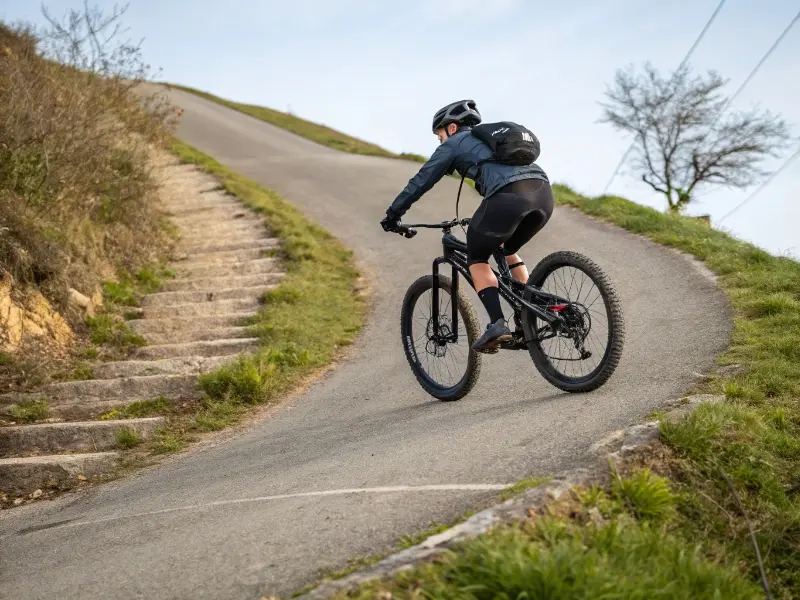
This is where the lab numbers meet the real world. I always tell my clients that the range printed on the box is a best-case scenario. The end user's habits have a massive impact. It’s crucial to help them understand this.
Pedal Assist vs. Throttle
This is the single biggest factor a rider can control. When a rider pedals, they are sharing the workload with the motor. On a low pedal-assist setting, the rider is doing most of the work and the motor is just helping a little. This sips battery power. A throttle, on the other hand, demands full power from the motor without any help from the rider. We’ve seen bikes with a potential range of 100 km on pedal assist get less than 40 km when using only the throttle.
Terrain and Speed
Think of it like walking versus climbing stairs. Riding on a flat, smooth path requires very little energy to maintain speed. As soon as you hit a hill, the motor has to work much harder to pull the weight of the bike and rider upward, which drains the battery rapidly. Similarly, fighting wind resistance at high speeds requires a lot more power. Doubling your speed can require four times the energy to overcome air drag. Educating your customers on these points will help them manage their battery and have a better experience with your product.
Conclusion
An e-bike's range is a balance of battery, motor, terrain, and rider. Understanding these factors helps you build and market the perfect e-bike for your specific customers.