Struggling to understand OEM vs. ODM1 for your e-bike brand? The wrong choice can cost you time and money. I'll explain the key differences to help you succeed.
For e-bikes, OEM means you provide detailed specs for a unique product we build. ODM means you choose from our proven designs and add your brand. OEM offers full customization2, while ODM is faster and lower-risk for new market entrants.
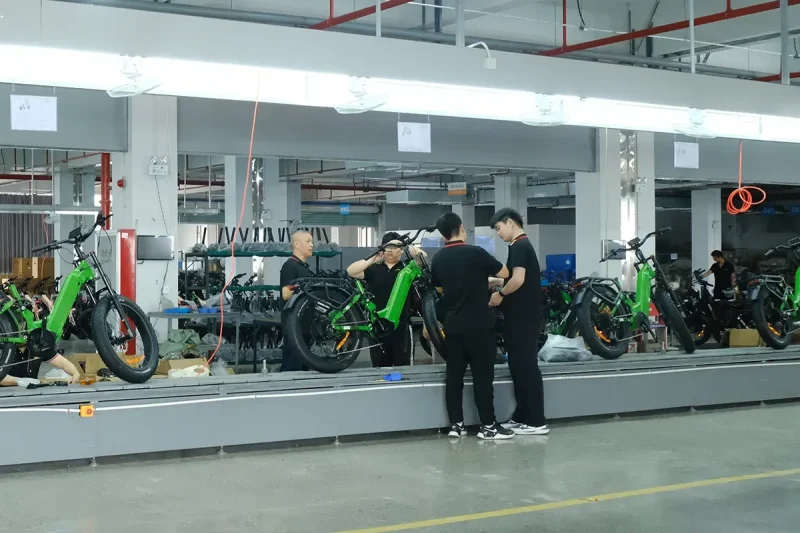
This sounds simple, but there is more to it than just that. For your business, understanding the details behind these two models is very important. Let's break down what these terms really mean for your e-bike brand. Choosing the right path is crucial for your success.
What’s the Real Difference Between OEM and ODM for E-Bikes?
Are you confused about whether to choose OEM or ODM? Making the wrong decision can lead to a product that does not fit your brand. Let us clarify the choice.
OEM is for brands with exact specifications, like a custom frame or battery shape. You give us the blueprint, we build it. ODM is for brands wanting a market-ready bike3 fast. You pick our design, we add your logo and make small changes.
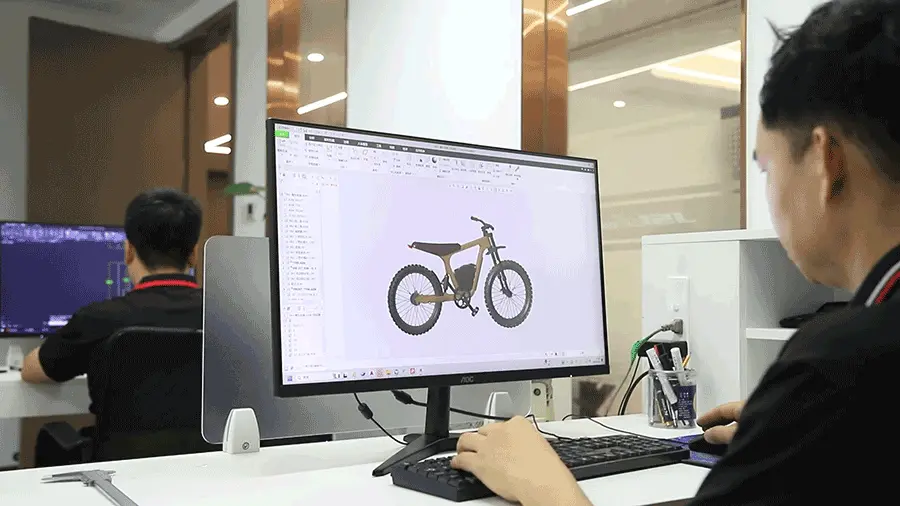
Let's dive deeper into this. The choice between OEM and ODM really depends on how much control and uniqueness you want for your product. For an OEM (Original Equipment Manufacturer) project, you, the client, are in the driver's seat. You come to us with a complete vision. This usually includes detailed technical drawings, specific component requirements—like a certain brand of motor, a specific battery capacity, or a unique software interface for the display. I remember working with a European client who wanted a special battery shape for their e-bikes. The goal was not about performance, but about creating a distinct look that made their brand stand out. That is a perfect example of an OEM project. We used our manufacturing experience to turn their unique idea into a real product.
On the other hand, ODM (Original Design Manufacturer) is a different path. It is ideal for new businesses or brands that want to enter the market quickly. With ODM, we provide the foundation. You choose from our existing, market-tested e-bike models. The heavy lifting of design, engineering, and testing is already done. Your job is to customize it to fit your brand. This usually means light changes like adding your logo, choosing custom paint colors, or maybe swapping a standard battery for one with a longer range. It is a much faster and lower-risk way to launch a product.
Here is a simple table to show the differences:
| Feature | OEM (Original Equipment Manufacturer) | ODM (Original Design Manufacturer) |
|---|---|---|
| Design Input | Client provides full design & specs | Factory provides the base design |
| Customization | Deep (frame, battery, system) | Light (logo, color, components) |
| Ideal For | Established brands with a clear vision | New entrants, market testing |
| Development Time | Long (6-12+ months) | Short (1-3 months) |
| Cost & Risk | High investment, high risk | Low investment, low risk |
Why is an In-House Frame Factory a Must-Have for True OEM?
Many suppliers claim they offer OEM services. But can they actually deliver a truly custom product? Their limitations could derail your entire project. Let us uncover the truth.
A true e-bike OEM partner must have an in-house frame factory4. This gives them the power to create unique frames, control quality, and innovate. Without it, they are just assembling parts from other suppliers and cannot offer genuine, deep customization.
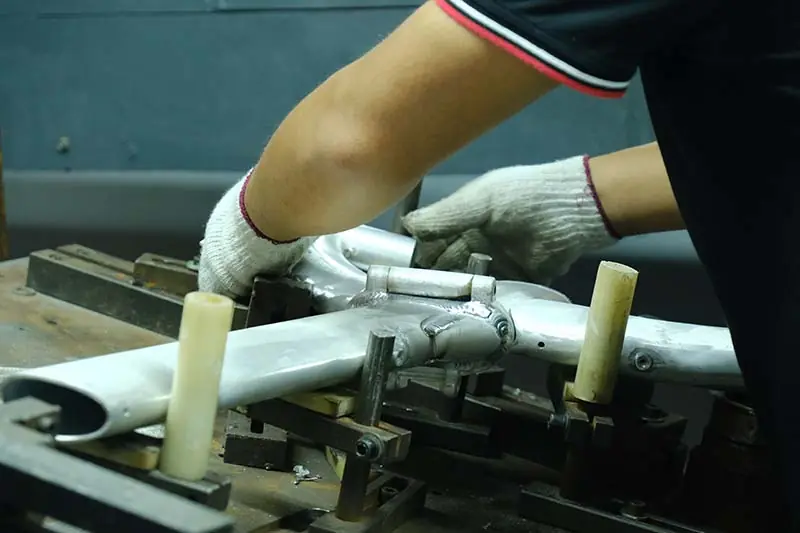
This point is something I cannot stress enough. When you are looking for a real OEM partner, the question about their frame factory is critical. A supplier that outsources its frames is not a true manufacturer; they are an assembler. They take parts from other companies and put them together. Their ability to customize is very limited because they do not control the most important part of the bike: the frame.
Having our own in-house frame factory gives us, and our clients, huge advantages. First is control over design5. We can create new molds and produce unique frame geometries from scratch. This is the heart of a custom e-bike. If you want a specific shape or feature, we can build it. Second is quality assurance6. We oversee the entire process, from welding and heat treatment to painting. We can spot and fix any problems immediately. With an outsourced frame, you are trusting a third party's quality, which is a big risk. Third, our hands-on experience gives us deep expertise. Because we build frames every day, we know what works and what does not. We can advise our OEM clients and say, "This design might create a weak point here, so let's adjust it for better durability." This kind of feedback is invaluable. Finally, it ensures a stable supply chain7. We are not dependent on another supplier's schedule. This means we can deliver your project on time, every time.
Why Are More Buyers Choosing ODM Over OEM Today?
Dreaming of a fully custom e-bike but worried about the risks? The long timelines and high costs of OEM can be scary. There is a smarter, faster way to get started.
Many buyers now prefer ODM because it is faster, cheaper, and less risky. You get a market-tested product without the 12-month development cycle and heavy investment of a full OEM project. It is the quickest way to get your brand on the road.
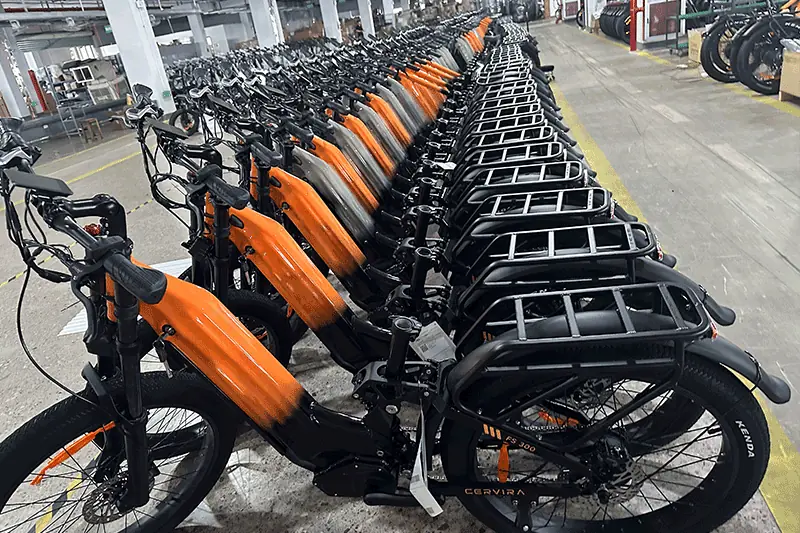
While a fully custom OEM bike sounds amazing, it is not always the practical choice, especially for new brands. I have seen a clear trend in recent years where more buyers are leaning towards ODM, and there are good reasons for it. The first major factor is time to market8. An OEM project is a long journey. It starts with an idea, then moves to 3D modeling, prototyping, tooling for the new frame, and extensive testing. This whole process can easily take a year or more. In a fast-moving market, that is a long time to wait. With ODM, you can have your branded e-bikes ready to sell in just a few months.
The second reason is cost. Developing a new product from scratch is expensive. You have to pay for engineering hours, new molds for the frame, and multiple rounds of prototypes. The financial risk is significant. I have seen competitors in our industry spend millions of dollars and two years developing a new electric motorcycle, only for it to fail in the market. That is a painful loss. ODM avoids these high upfront costs because the design and tooling are already paid for.
Finally, there is the issue of market validation9. An ODM model is typically a proven seller. The factory has already worked out the bugs and knows there is customer demand for that design. With an OEM project, you are betting that customers will love your new, untested idea. It is a big gamble. ODM provides a safety net by giving you a product that already has a track record of success.
How Can You Find the Right E-Bike OEM/ODM Partner?
You are ready to find a partner, but how can you trust their promises? Choosing the wrong factory can lead to poor quality and broken deals. I will give you the right questions.
To vet a partner, ask four key questions. Are frames made in-house? Do you have compliance experience10? Can I see a full customization list11? Is your quality control12 consistent from sample to mass production? Their answers will reveal their true capabilities.
Finding the right partner is the most important step in building your e-bike brand. A good partner will feel like an extension of your own team. To separate the great factories from the average ones, you need to ask sharp questions. Here are the four questions I always recommend you ask:
-
"Are your frames made in-house or outsourced?" As I explained earlier, this is the number one question for any serious OEM project. If their answer is "outsourced," you know their customization ability is limited. For us at JSL, our in-house frame factory is our pride and the core of our OEM strength.
-
"Do you have compliance experience10 for different markets?" E-bike regulations in Europe (like CE and EN1519413) are very different from the rules in the United States (UL standards14). A good partner must have experience navigating these rules. They should be able to ensure your bike is fully compliant, safe, and legal for your target market.
-
"Can you provide a complete customization list, not just a single model?" A truly capable factory should offer a wide range of options. You should be able to customize everything. At our company, we allow clients to choose everything: the motor, battery, display, brakes, tires, and of course, the frame. If a factory only offers one fixed package with minor changes, they are not a flexible partner.
-
"Is your quality control for samples and mass production consistent?" This is a huge one. Some factories will send you a perfect, beautiful sample and then cut corners on the bulk order to save money. You should ask about their quality control process. How do they ensure that bike number 1,000 is the exact same quality as the first sample? A reliable partner will have a clear, documented QC process for every stage of production.
Conclusion
Choosing between OEM and ODM depends on your business goals, budget, and timeline. Understanding these differences and asking the right questions will help you find the perfect manufacturing partner.
Understanding the differences between OEM and ODM can help you make informed decisions for your e-bike brand, saving time and money. ↩
Exploring full customization options can give your e-bike brand a unique edge in the market, tailored to your specific vision. ↩
Choosing a market-ready bike through ODM can accelerate your entry into the market, reducing risk and development time. ↩
An in-house frame factory ensures quality control and customization, crucial for delivering a truly unique e-bike product. ↩
Having control over design allows for greater customization and innovation, setting your e-bike brand apart from competitors. ↩
Quality assurance is vital for maintaining high standards and customer satisfaction in e-bike production. ↩
A stable supply chain ensures timely delivery and consistency, crucial for maintaining brand reputation and customer trust. ↩
Time to market is critical for capturing market opportunities and staying ahead of competitors in the fast-paced e-bike industry. ↩
Market validation provides confidence in product success, reducing the risk of launching an untested e-bike model. ↩
Compliance experience ensures your e-bike meets legal standards, avoiding costly fines and ensuring customer safety. ↩
A comprehensive customization list allows for tailored e-bike solutions, meeting specific brand and customer needs. ↩
Consistent quality control ensures product reliability and customer satisfaction, essential for building a reputable e-bike brand. ↩
CE and EN15194 standards ensure safety and compliance, essential for selling e-bikes in European markets. ↩
UL standards ensure safety and compliance, crucial for entering the U.S. e-bike market successfully. ↩